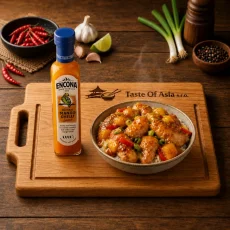
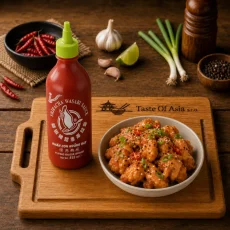
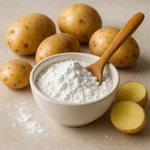
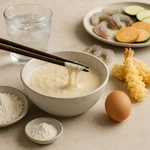
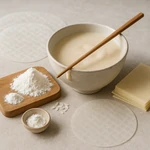
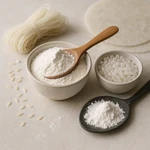
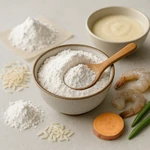
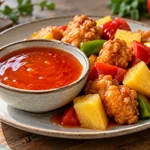
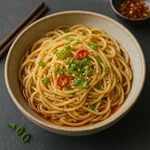
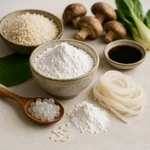
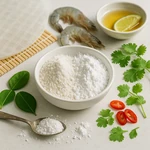
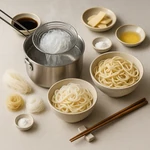
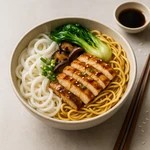
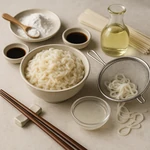
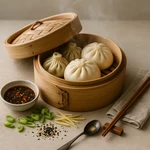
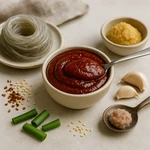
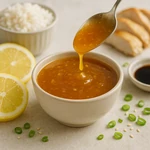
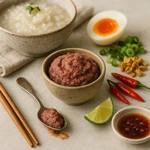
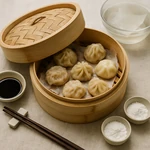
Potato starch doesn’t look like much, but it can change the texture of your cooking in minutes. Used the right way, it turns pan sauces glossy, helps soups feel rounder without tasting “floury,” and creates a light, shatteringly crisp crust on tofu, chicken, mushrooms, or vegetables—one of the small restaurant-style techniques that shows up again and again in Asian home cooking.
Tempura seems simple: coat and fry. But in reality, it relies on texture – on how the coating behaves after cooking. The difference between "lightly crispy" and "heavy and dense" often arises not just from technique, but also from choosing the right mix, flour, and starch.
In Asian cuisine, it is often not just the taste that matters, but mainly the texture: should the coating be crispy and light, the dough elastic and pliable, the sauce delicate and shiny, or the dumpling almost translucent after steaming? This is exactly where the choice of flour, starch, and type of coating makes the biggest difference. This guide will help you choose the right “coating or dough” depending on exactly what you want to cook – and avoid typical label mix-ups.
Flours and starches are inconspicuous in Asian cuisine, but they often decide the most important thing: texture. Thanks to them, the coating can be crispy and light, the sauce smooth and glossy, the dumpling elastic, or the dim sum wrapper delicately translucent. In the article, you will clarify when to reach for rice flour, when for glutinous rice flour, when for tapioca starch, and what to watch out for when reading labels.
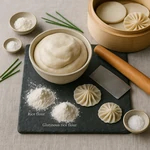
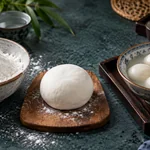
For Asian dumplings, the wrapper is as important to the result as the filling. And for bao, the dough determines whether the bun will be soft and fluffy or dense and "heavy." In practice, it is often not the taste of the flour (which tends to be neutral) but the texture: elasticity, chewiness, crispness, gloss, or translucency. In the article, you can compare the basic types of doughs and wrappers and especially which flour or starch to choose so that the dumplings and bao turn out as you expect.
Flour and starch in Asian cuisine often do not play the "main role" in flavor but very often decide on the most important thing: texture. The choice between rice flour, sticky rice flour, and starches determines whether the dough will be elastic, the coating crispy, the sauce shiny, the soup delicate, or the result glassy translucent.
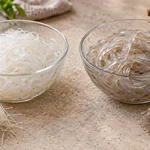
Glass noodles are light, delicate, and perfectly absorb all the flavors you put into them. Ideal for quick Asian dishes, whether in hot soups, stir-fries, or fresh salads. Discover their history, production, and how best to prepare them for authentic and delicious experiences!
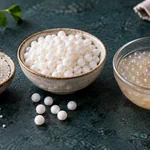
Discover the magic of tapioca pearls that have taken the world by storm! Find out how they are made, why they are so popular in Asian cuisine, and how you can use them in desserts, drinks, and other dishes. In our article, you will learn everything about their production, history, and great recipes that you will love.
A good "Asian pantry" is not about having dozens of sauces and pastes at home. It's about a few functional basics that repeat across many dishes: something for saltiness and umami, something for acidity and sweetness, something aromatic, something starchy and a few quick guarantees for texture. Here is a practical ten that will let you cook a surprisingly wide range of Asian dishes even from common fresh ingredients.
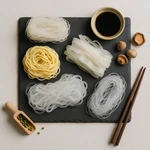
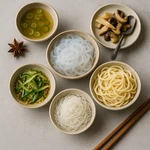
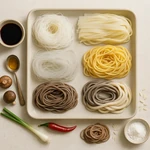
With Asian noodles, the name on the front of the package is often only indicative. Whether the noodles are suitable for broth, wok, or a cold bowl is usually decided by their ingredients, thickness, and pre-treatment. In this guide, we will show you how to read labels, what the main noodle families are (wheat, rice, buckwheat, starch-based, and konjac), and how to choose a type that won’t overcook, fall apart, and gives the dish exactly the texture you expect.
Dumplings (dumplings, pockets, filled buns) are not a single specific dish but a huge family of foods across Asia. They share a simple principle: a dough or starch wrapper holds the filling – or forms a bite on its own without filling. In practice, however, they differ fundamentally: by the type of wrapper, shape, cooking method, and whether they are a quick pan dinner, part of a soup, or dim sum dining. This guide gives you a map to decide by situation, not just by foreign names.
In many Asian kitchens, the outcome is decided not at the stove, but on the cutting board: by chopping, order of preparation, separating components, drying, soaking, and timing. Mise en place (prepared ingredients and components in advance) is not a "professional luxury" here, but a practical assurance that nothing will burn, nothing will remain raw, and the food will have a clean rhythm and flavor.
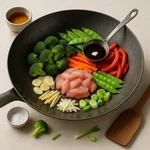
Cooking in a wok (stir-fry) is a fast technique at high temperature. That's exactly why the 'throw everything in at once and stir' approach doesn’t work: some ingredients would burn, others would remain raw, and often instead of sautéing, the food would start to steam. In this article, you'll find practical logic for sorting ingredients ahead of time and putting them into the wok in the right order to achieve a clean flavor and good texture.
With Asian desserts, it's often less about how sweet they are and more about how they feel in the mouth: springy, chewy, jellied, creamy, icy, or crunchy. This article will help you understand the most common textures, why they occur, which ingredients and techniques create them — and, most importantly, how to use texture to guide your choices and first attempts at home.
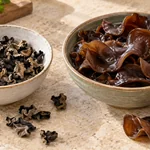
Discover an exceptional mushroom that will surprise you with its texture and taste! Judas ear is an ideal addition to a healthy diet. Rich in fiber and minerals, it brings not only nutritional value, but also health benefits. Use it in Asian dishes or modern vegetarian cuisine. Give your meals a new dimension and support your health with this unique mushroom.
Discover the secrets of this exotic plant that will give your dishes a unique aroma and flavor. Immerse yourself in the fascinating history, uses, and recipes featuring pandan, which will open up new gastronomic horizons!
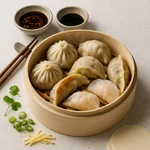
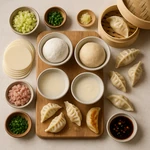
Dumplings (Asian dumplings and pockets) are not "one dish," but a whole family of bites determined by a trio: filling, wrapper/dough, and cooking method. Once you put these three things together, the differences between jiaozi, gyoza, mandu, wontons, or shumai start to make sense – and especially why some dumplings are for soup, others for the pan, and others for steaming.
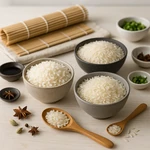
Rice in Asian cuisine is not "just a side dish." In sushi, it determines whether the rice holds its shape and can be eaten with chopsticks; in curry, it affects how the sauce meets the aroma and tenderness; and in fried rice, it decides whether you get a loose wok dish or a sticky mash. This guide will help you choose the type of rice based on the dish – and understand why one universal rice is usually not enough.
A good "Asian ingredient" is not the most expensive nor the one with the prettiest packaging. The difference mainly lies in whether you understand the function of the ingredient (what it is used for in food), its types and composition – and whether you select it for a specific use. This article is a practical guide: it will teach you to quickly read labels, distinguish between basic and flavored products, and choose the right type, for example with coconut, sesame, chili, and starches.
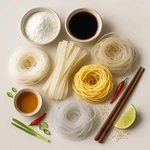
Asian noodles are not a single universal ingredient, but a large family of products. They differ in base (wheat, rice, buckwheat, starch, konjac), thickness, elasticity, and how they react to broth, sauce, or quick stir-frying. When you know what to expect from noodles, you will choose much more easily—and stop struggling at home with clumped or overcooked "mash."
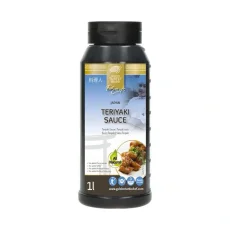
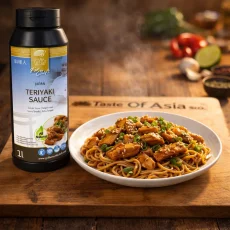
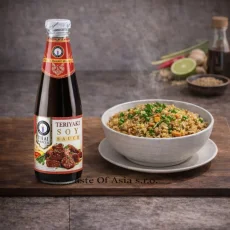
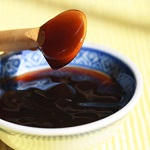
This article will guide you through the secret that gives this Japanese dish its unmistakable character. You will discover why the sauce is key to the perfect balance of flavors and how its sweet and salty profile creates the harmony that makes this dish so exceptional. Read on to learn how it enhances the whole experience and why, without it, the dish would lose its power.
Taiwanese cuisine is not just bubble tea and night markets. It is an independent and vibrant culinary world where local cooking meets various Chinese regional influences, a distinctive Hakka layer, indigenous traditions, Japanese heritage, and modern urban food culture. That's why it makes sense to start with the ingredients: how they taste, their role in the dish, and how to recognize if you've chosen the right type.
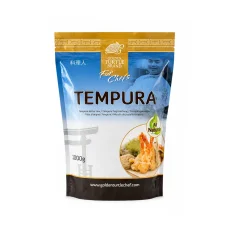
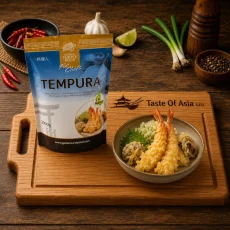
With Gogi Tempura Mix with Spices, preparing tempura with chicken and vegetables is quick and easy. Enjoy crispy, delicious pieces of meat and vegetables that will transport you to the heart of Japan. Try it today and enjoy the authentic taste!
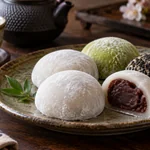
Discover delicious and traditional Japanese delicacies! Mochi, with its soft texture and various fillings, is the perfect way to enjoy a sweet moment. This delicate rice delicacy with anko or matcha filling will win you over with its taste and texture.
Japchae is not “Korean ramen” and ramen is not just noodle soup. In Asian cuisines noodles are often not a side but the very core of the dish – they carry broth, sauce, dip and texture. In this guide you’ll clarify the main types of noodle dishes (from broth bowls to cold noodles), the differences between ramen/udon/soba and why japchae is built on a completely different logic than European “pasta with sauce.”
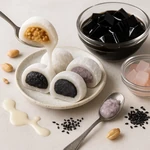
For many Asian desserts, the main point is in the texture – whether the bite is elastic, jellied, pearly, smooth, or icy. In this guide, you will get oriented in mochi, agar jellies, grass jelly, and other "textural" sweets and learn how to taste and combine them so they make sense even without complicated preparation.
With Asian noodles, the most common disappointment doesn’t come from a “low-quality product” but from choosing the wrong type for the particular dish. In this guide, you’ll clarify based on the material (wheat, rice, buckwheat, starch, konjac), thickness, and behavior in broth, in a pan, and after cooling – and you’ll learn to choose noodles as practically as in Asian kitchens.
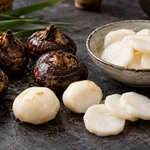
Discover the magic of water chestnuts! This unique ingredient, which is enjoying growing popularity around the world, will bring not only a fresh taste but also an unmistakable crunch to your favorite dishes. Suitable for stir-fries, curries, salads, or spring rolls, water chestnuts are a great choice for anyone looking for healthy and delicious ingredients. Read on to learn how we grow and harvest them, and how you can easily incorporate them into your cooking!
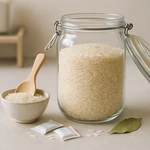
In many Asian cuisines, rice is not just a "side dish" but the foundation around which the whole meal is built. That is why it makes sense to store it so that it remains dry, fragrant (for aromatic types), and above all consistent when cooking. In the article, you will find a practical system for the home pantry, guidance on rice types, and the most common mistakes that lead to bland taste or unexpected texture.
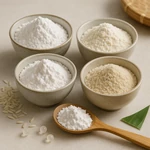
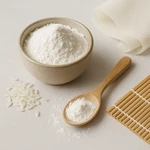
Rice flour is one of those quiet pantry staples that becomes incredibly useful the moment you start cooking Asian dishes more often. It can lighten batters, add crispness to coatings, thicken sauces without a wheat taste, and create textures—from delicate and tender to pleasantly chewy—that regular wheat flour simply can’t replicate.
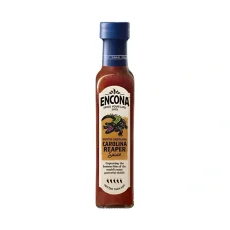
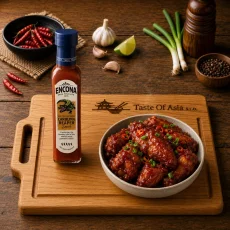
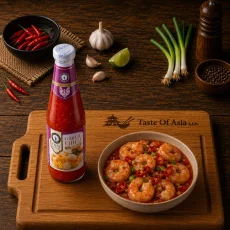
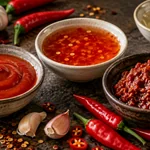
Want to add a new dimension to your dishes? Chili sauces will liven up grilled foods, tacos, soups, or salads. With different levels of spiciness, everyone can find the right one for them. Whether you're looking for a mild flavor or intense heat, chili sauces will give your dishes an exciting taste experience.
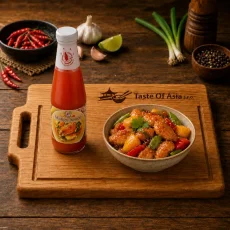
Discover the secrets of sweet and sour sauces. Learn how to make them and use them in various dishes, from fried foods to noodles and dips. This article will show you how to add new dimensions to your favorite meals.
Rice in Asian cuisines is often not just "something to go with the main dish" – it is the foundation upon which the rest of the dish is built. If you choose the wrong type, the sauce won't soak in, the bowl is hard to eat with chopsticks, or the planned fried rice turns into mush. In this guide, you will quickly get oriented in rice types and especially how to select them according to the specific dish.
Light and balanced Asian dishes are not “diet versions” of classics or flavorless meals. In many parts of Asia, lightness is a natural result of how a dish is composed: what forms the base (rice or noodles), what carries the protein, what adds freshness, acidity, texture, and how a sauce or broth is used so that the ingredients are not overwhelmed.
An Asian pantry is not an "exotic list" that you have to buy all at once. It is a thoughtful basic set of ingredients that allows you to repeatedly cook dishes with a clear flavor at home – even when your refrigerator is not full of fresh items. The key is not to think by countries, but by function: to have something for saltiness and umami, something for acidity, something for sweetness, something for spiciness, something for aroma and fat, and a reliable starchy base.
Aglio, olio & pepperoncino is the classic Italian “pantry pasta”: spaghetti tossed with fragrant garlic, olive oil, and chili. The whole dish comes together in the time it takes to boil pasta—provided you treat the garlic gently and use a splash of starchy pasta water to make everything glossy and cohesive.
The first purchase "for Asian cuisine" does not have to be a bunch of random sauces. When you divide your budget (for example around a thousand crowns) according to functions – saltiness and umami, acidity, sweetness, spiciness, fat and aroma, plus rice or noodles – you get a base from which you can cook repeatedly without unnecessary improvisation. The article provides a practical plan: how to choose the entry style of dishes, what makes sense to buy immediately, what to wait for, how to read labels and how to avoid typical beginner mistakes.
In Asian cooking, the result often “breaks” even before you turn on the stove: on the cutting board, in bowls with prepared ingredients, and in how you organize the steps. High temperature, quick stir-frying, and precise order of adding ingredients don't forgive when vegetables are cut haphazardly, aromatics wait next to a hot wok, or wet ingredients fly into the pan. This article summarizes the mistakes that most often ruin texture and taste – and most importantly, what to do about them in practice.
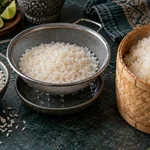
In many Southeast Asian meals, rice isn’t just a side dish—it’s the foundation that carries sauces, balances heat, and makes a bowl feel complete. ST25 is a premium Vietnamese jasmine-style rice known for its gentle floral aroma, tender bite, and everyday versatility. Here’s what makes it different, what to pair it with, and how to cook it (pot or rice cooker) without guesswork.
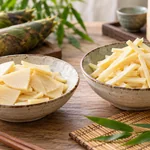
Bamboo shoots are a great addition to any Asian cuisine. Would you like to learn how to prepare them properly and what they can offer your diet? In our article, you will learn all about their nutritional values, uses in the kitchen, and tips for selecting and storing them. Add them to your dishes and discover their fresh and crunchy taste!
Asian cuisine can be great for gluten-free eating – it often relies on rice, legumes, vegetables, coconut, and fermented flavors. However, it can also surprise with "hidden" gluten in sauces, wheat noodles, coatings, or cross-contact during preparation. In the article, we clarify which dishes are naturally gluten-free, which are sometimes gluten-free, and how to navigate this at home and when ordering.
In Asian cooking, you often don’t find a "secret ingredient" but a logic of the place: what can be grown, what can be preserved for a long time, what ingredients the sea or river brings, what flavors develop through fermentation, and how cultural rules and urban rhythms influence dishes. This article shows how to read these contexts – and how to practically apply them at home so you choose the right ingredients and cook with greater confidence.
Noodle dishes in Asia are not "one soup" nor "noodles in a pan." They are entire families of dishes where the type of noodles, handling of broth or sauce, cooking method, and whether it is a quick street food, a hearty bowl, or a light cold dish differ. Once you understand a few basic differences, it will be much easier to pick the right noodles and the right preparation style.
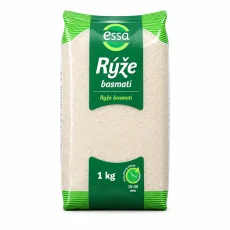
"Rice is just rice" does not work in Asian cooking. The same pot and the same method will sometimes give you a fragrant, tender side dish for curry, other times a mushy mess, or on the contrary dry separate grains that don't suit the dish. In this guide, you will clarify how to choose rice and cook it at home so that it has the right aroma, cohesion, and texture – for jasmine, basmati, sushi, and sticky rice.
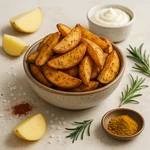
“American potatoes” in Central Europe usually means oven-baked potato wedges with bold seasoning: crisp on the outside, fluffy inside, and made for dipping. This guide breaks down what makes wedges truly crunchy, how to season without burning spices, and how to pair them with punchy (including Asian-inspired) sauces.
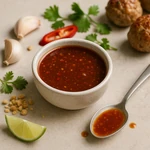
Meatballs are reliably good. The sauce is what makes them memorable: it adds aroma, keeps them juicy, and turns “just meatballs” into a dish you want to eat again tomorrow. Here’s a practical way to build a sauce that balances sweet–salty–sour–spicy, clings to the meatballs, and can lean Asian without feeling complicated.
Discover the world of rice flour! In this article, you will learn about its history, production, and use in Asian cuisine and gluten-free diets. Find out about its health benefits and how to use it in various dishes.
Rice and tapioca flour are fundamental building blocks in many Asian sweets – not because they "replace wheat," but because they help create specific textures: elastic, sticky, slippery, jelly-like, or pudding-like. If you approach them with the same logic as cake flour, you will often end up disappointed. This guide will help you understand how to think about them, how to choose the right technique (steaming, setting, baking…), and what to avoid.
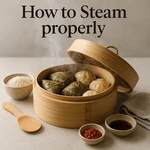
Steaming (cooking with steam) is one of the techniques in Asian cuisine that fundamentally changes the outcome: it preserves a different texture and doesn't soak the ingredient like direct contact with water. That's why it's important to consider not only "what to cook" but also "how to cook" – for dumplings, dim sum, and other delicate bites, the technique often matters more than we admit at home.
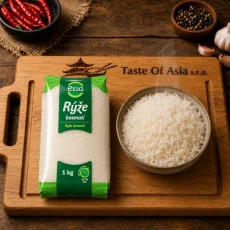
Both jasmine and basmati rice are aromatic varieties where quality is more apparent than anywhere else: in aroma, grain uniformity, and especially in how the rice behaves after cooking. The article features a practical checklist for selection, explanations of the differences between jasmine and basmati, and the most common reasons why home rice sometimes disappoints even from a “good” package.
Asian desserts often can't be squeezed into familiar categories like “cake,” “pudding,” or “cookie.” Instead of heavy buttery pastries, they feature rice, coconut, starches, legumes, fruit, syrups, and especially texture – elastic, gel-like, pearl-like, or icy. This guide will help you understand what is typical for Asian sweets, the main dessert families, and how to practically navigate them.
For Asian noodles, it's usually not a 'secret trick' that matters, but the correct choice of noodle type for a specific dish and the timing of the heat treatment. Noodles behave differently in broth, differently in a wok, differently in cold bowls – and the most common mistake (overcooking) often occurs because the noodles continue to soften until the final serving.
Noodles are a broad family of ingredients in Asian cuisine – and each works differently. When you reach for "some noodles," it often ends up that they get soggy in the broth, break in the wok, or lose texture after cooling. In this guide, we'll show you what to look for in a recipe, how to decide based on the type of dish (ramen, phở, pad thai, stir-fry, cold bowls), and what to watch out for during preparation to ensure the result tastes and looks just right.
Noodles are one of the fastest ways to an "Asian" dinner, but at the same time they often show whether you understand the ingredient and timing. One wrong choice of noodle type, a few extra minutes in the pot, or a too wet sauce and instead of a springy texture, you end up with a stuck block, broken mash, or rubbery mass. In this article, you'll find specific mistakes that happen over and over again, and especially practical ways to avoid them – depending on whether you are cooking a broth bowl, wok, "dry" stir-fried noodles, or a cold bowl.
Taiwanese cuisine is not just bubble tea and night markets. It is a distinct, lively, and very diverse world where local styles meet various Chinese regional influences, a prominent Hakka layer, indigenous traditions, Japanese heritage, and modern urban food culture. If you really want to understand the Taiwanese taste, it pays to focus less on "spices" and more on broth, precise seasoning, and especially texture.
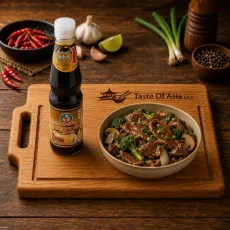
Want to know how to use light soy sauces in the kitchen? Read about their types, flavors, and best uses. Discover how this sauce will enrich your Asian dishes!
Discover the delicious world of custard—a creamy dessert that has won the hearts of gourmets around the world! What is the history of this silky temptation, where did it come from, and how did it become part of our favorite desserts? Read more about how custard is used in cooking and get inspired to make it at home!
Steaming is one of the techniques in Asian dumplings that most determines the outcome: whether the wrapper will be soft and elastic or, on the contrary, soggy, heavy, or "rubbery." In this guide, you'll clarify exactly what steaming means, which types of dumplings and bao are most commonly steamed, how to choose (especially with frozen pieces), and how to avoid mistakes that ruin texture and flavor.
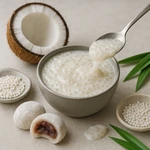
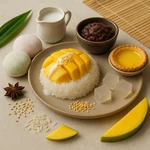
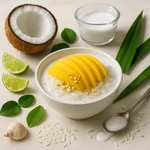
Coconut and rice are among the most common "building blocks" of Asian desserts – but it’s not just about taste. In many countries, texture is equally important (and often more so): the elasticity of mochi, the slipperiness of tapioca pearls, firm agar jelly, or the icy layer of shaved ice desserts. This article provides an overview of the main types of coconut and rice sweets across Asia and practical tips on how to quickly understand them at home.
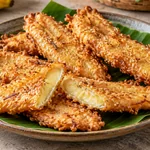
Kloay Kaak fried bananas are a delicious sweet dessert with a crispy coating and a soft banana filling. This Thai dish is ideal for a quick and tasty treat. Perfect for any occasion!
In Asian cuisines rice is often not “something for the sauce,” but the very framework of the dish. With coconut rice (typically nasi lemak style) and sushi rice you can clearly see how dramatically flavor, texture and even what we consider a finished meal can change—simply depending on which rice you choose and how you treat it.
“Rice is rice” only holds until you want a really good curry, fluffy biryani or cohesive sushi. Jasmine, basmati and sushi rice differ in aroma, starch structure and how they behave when cooked — and that determines the final texture and how well the rice carries sauce, holds its shape or can be picked up with chopsticks.
Discover the fascinating world of rice noodles! Whether it's delicate vermicelli noodles, wide slices, or tapioca varieties, these noodles are the basis of many Asian dishes. In our article, you will learn about their history, how they are made, and how you can incorporate them into your own culinary creations. Immerse yourself in traditional flavors and textures that will introduce you to the secrets of Asian cuisine!
Gluten-free Asian cooking often does not depend on whether you buy the "right" vegetables or meat, but on two tricky places: sauces and noodles. The basic ingredients can be naturally gluten-free, but one common soy sauce or wheat noodles can completely compromise the safety of the entire dish. The article provides specific guidance, the main risk situations, and practical procedures on how to handle this at home without unnecessary stress.
Good equipment for Asian cooking is not about "having a special set," but about choosing a few tools that really change the outcome or significantly simplify the work. This applies twice as much for steaming and rice: the right steamer and a sensible approach to cooking rice will help you maintain texture, moisture, and cooking rhythm – without unnecessary purchases based on impressions.
The hardest part at the beginning of Asian cooking is not the "exotic" but the decision of exactly where to start. Different Asian cuisines vary in flavors, techniques, and how much you need to have stocked at home. In this guide, you will find a practical way to choose your first cuisine, how to build a reasonable minimum "Asian pantry," and which habits (cutting, preparation, working with temperature) will quickly raise your level.
How do fast street foods, festive menus, noodle bowls, or dishes based on seaweed and mushrooms differ in Asian cuisine? This guide explains the main types of meals according to the occasion, presents representative examples, and offers practical advice: what to buy at the start, how to combine ingredients, and how to avoid the most common mistakes.
Chicken with rice can be a quick weeknight dinner or true comfort food—the difference is the sauce. Below you’ll find practical “building blocks” for common Asian-inspired sauce styles (bright and tangy, soy-umami, curry, or tomato-spiced), plus easy ways to thicken, balance flavors, and keep chicken juicy.
Asian breakfast is not a single universal category. Depending on the country and region, morning can mean a bowl of rice with side dishes, noodle broth, delicate rice porridge (congee), pancakes made of fermented dough, coconut rice, or even toast and coffee. Often common is that breakfast is salty, warm, practical, and in many places connected to street food.
Steaming is one of the techniques in Asian cuisine that can be incredibly delicate and precise – and that's why mistakes are easily made. They most often appear with dumplings and dim sum: dumplings fall apart, the wrapper loses its texture, or the wrong method is chosen for the wrong type. This article provides practical guidance: what steaming actually means in an Asian context, which types of dishes are typically steamed, and how to recognize when the process (or chosen technique) is not appropriate.
Gyoza, wonton, bao and mandu are often lumped together as “Asian dumplings.” But each of these names actually promises a slightly different experience: a different type of wrapper, a different texture, and often a different role in a meal (pan-fried, steamed, in soup, dim sum…). When you know what to expect, it’s much easier to choose the right style, the right preparation, and the appropriate seasoning.
A rice cooker or steamer is not mandatory equipment – you can cook good rice in a pot and improvise with steam. However, they are among the tools that people often retrospectively call extraordinarily practical: they increase the consistency of the result, reduce errors, and especially free up hands for the rest of the cooking. In the article, we clarify when a rice cooker makes sense, when a pot is enough, and how to think about steaming in a way that matches what you actually cook at home.
On menus and in home cooking, three names for “pan” rice often meet: nasi goreng, fried rice and Cantonese rice. They sound similar but do not mean the same thing. In this guide we'll clarify what is a technique (fried rice), what is a specific national style (nasi goreng) and why it makes sense to ask for clarification with “Cantonese rice.” And most importantly: how to choose the right rice and how to achieve good flavor at home without cooking “by one universal recipe.”
Vietnamese cuisine does not rely on one sauce or one famous dish. It is characterized by freshness, lightness, and the ability to layer multiple flavors so that the result feels lively: rice or rice noodles, herbs and leaves, acidity (lime, tamarind), fermented saltiness and umami (especially fish sauce), and contrasting textures. In this guide, you will find the most important Vietnamese ingredients, their function, and practical tips on how to start using them at home without unnecessary mistakes.
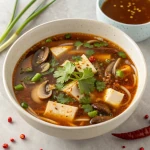
Hot & Sour soup is all about contrast: a warming chilli kick balanced by bright vinegar, plus satisfying textures from mushrooms, tofu, and silky egg ribbons. This home-friendly version comes together fast and is easy to adjust—make it sharper, hotter, or heartier depending on what you crave.
Discover the secrets of sticky rice! Do you know how this type of rice changes traditional dishes? Read about how it is grown, prepared, and used in selected Asian specialties.
Gluten-free Asian cooking is not about a "special diet cuisine," but about good orientation in ingredients, labels, and preparation methods. In this guide, you'll clarify what is naturally gluten-free in Asia, where gluten typically lurks (often in sauces and noodles), and how to set up a simple system at home to ensure results are both tasty and safe.
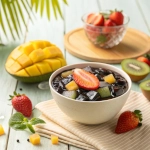
Grass jelly is a classic East and Southeast Asian dessert ingredient with a dark color, a delicate herbal note, and a pleasantly bouncy texture. Because it’s usually sold ready to eat, it’s one of the easiest ways to add “bubble tea” texture and a refreshing finish to summer drinks and fruit-based desserts.
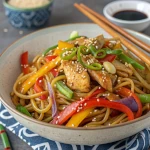
Chow mein is all about speed and heat: springy noodles, crisp-tender vegetables, and a savoury sauce that clings to every strand. This flexible recipe shows you the core technique, then lets you swap chicken for beef, tofu, shrimp—or go veggie-heavy.
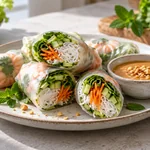
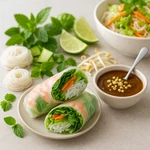
Thin slices are a great ingredient for anyone looking for simplicity, versatility, and flavor variety. Use them to make fresh spring rolls, delicious appetizers, or even sweet desserts. Find out how easily they can become the basis for your favorite dishes!
For Asian ingredients, the simple rules of "this goes in the fridge" and "this is shelf-stable" often don’t apply. Some things may still be safe to eat but taste worse, while others don’t lose flavor but moisture ruins their texture. This article provides a practical way to sort ingredients at home into pantry, fridge, and freezer so they last longer and cooking consistently turns out better.
Taiwanese cuisine is often simplified to bubble tea and night markets, but in reality, it is a distinct and very vibrant culinary world. Typical Taiwanese dishes often rely on rice, noodles, and broths, on small portions and snacking – and especially on texture: delicate vs. crunchy, slippery vs. elastic, starchy vs. broth-based. In this article, you will find an overview of the most famous dishes, how they taste, what makes them typical, and how to practically navigate them.
Asian cold dishes are not "lighter versions" of hot cuisine nor just vegetables with dressing. Their strength lies in freshness, herbs, acidity, a strong umami base (often from soy or fish sauces), clever textures, and a dip or dressing that holds the whole meal together. In summer, this gives you a quick lunch, dinner, or practical meal to-go – and often a full main dish, not just a side.
"Light" Asian food is not about being small or bland. Often, it's actually a full bowl or plate that satiates but doesn’t feel heavy: it’s based on rice or noodles in a reasonable ratio, complemented by vegetables and herbs, with flavor carried by broth or precise seasoning, and the whole is held together by acidity, umami, and contrast of textures. In this guide, you’ll find practical orientation and specific "families" of dishes that make sense for everyday – from warm breakfast bowls to cold noodle salads.
Indian cuisine is not a single unified tradition, but a broad family of regional styles. That's why it's worth looking at "typical Indian ingredients" as practical building blocks: what forms the base (rice, breads, legumes), what gives the dish richness (ghee, yogurt, paneer), what builds aroma (spices, aromatics), and what provides an important contrast (for example tamarind). The article provides an overview of key ingredients, their functions, and concrete advice on how to start using them at home without unnecessary mistakes.
Impression is often not made by the number of courses, but by the menu appearing well thought out: it has a clear "story," is pleasant to eat at the table, and the parts follow each other. Inspiration from festive meals in Asia shows that a truly festive meal is not just about taste – it's also about context, symbolism, sharing, and a well-chosen composition.
The Asian pantry is not a list of “exotic” items you have to buy all at once. It’s a thoughtful foundation that lets you repeatedly cook dishes with a clear character at home – even when you don’t have a full fridge. In this guide, you’ll clarify what is good to buy first, what to add later according to your favorite cuisine, and how to avoid typical shopping mistakes.
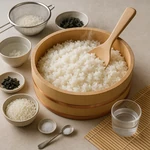
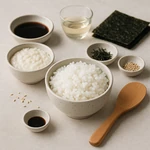
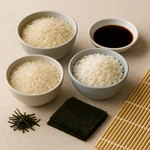
Discover the secrets of perfect sushi rice! In our new article, you will learn everything you need to know—from its history and cultivation to proper preparation and tips for use. Whether you are a sushi lover or a beginner, our advice will help you prepare the best sushi right at home. Don't miss it! Click and read more!
Japanese cuisine is not "just sushi." It is a way of cooking based on respect for ingredients, purity of flavors, seasonality, work with texture, and the effort to highlight the natural character of the food rather than overpowering everything with heavy seasoning or sauce. This guide will give you a practical start: how to navigate washoku and umami, which ingredients make the biggest difference, and how to set your first steps so that Japanese cooking doesn’t frustrate you right from the beginning.
“Asian tea” is not one thing. The word tea covers true tea from the tea plant (Camellia sinensis), flavored blends, and also modern drinks that are based on tea but work with milk, ice, citrus, fruit concentrates, and especially texture (typically bubble tea). This overview gives you a quick orientation: what true tea is, what the major types are and why they taste completely different, how to read packaging, how to choose a style by taste, and what common misconceptions even people who “have been drinking tea for years” encounter.
Vegetarian (and often vegan) Asian cuisine is not a 'deprived' version of cooking with meat. In many parts of Asia, it has its own traditions, techniques, and flavor logics – and good food here is not based on substitutes, but on umami, fermentation, texture, spices, herbs, and smart bases. The article provides an orientation in main styles, solid building blocks (tofu, tempeh, legumes), a practical guide on how to start at home, and what to watch out for in 'hidden non-animal' sauces and broths.
“Asian cuisine” sounds like one category, but in practice it encompasses a large cultural space where food evolved according to climate, available crops, religion, social rules, trade, migration, and daily rhythms of life. When you understand these contexts, it becomes easier to choose a style you will enjoy, and you’ll stop making typical mistakes (like reducing everything simply to spiciness).
Discover a delicious recipe for Japchae with sauce – the perfect combination of rice noodles, fresh vegetables, and great flavor that will delight every lover of Korean cuisine.
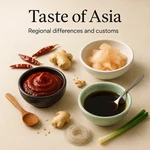
Regional style in Asia is not a minor detail – it is the key to why the same "Asian" dish can be based on broth and fermentation in one place, and elsewhere on coconut, herbs, or spices. In this article, we will create a practical map: what creates regional differences, how they appear in everyday food, and how to choose a direction that will work for you at home according to your taste.
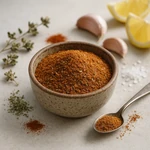
Gyros seasoning isn’t only for pita nights. This herb-forward blend can instantly give chicken, pork, vegetables, or chickpeas a warm Mediterranean character—and it also fits surprisingly well into quick rice bowls and noodle stir-fries. Here’s what it tastes like, how to use it, and how to avoid the most common mistakes.
Discover the secrets of jasmine rice! Learn how to prepare it properly, what its health benefits are, and why it should be a staple in your kitchen. Read our article and get tips for great recipes!
Hom Mali is the jasmine rice people remember: naturally fragrant, gently sweet, and soft without turning mushy. Learn what “Hom Mali” really means, how it differs from other rice styles, and how to cook it so the aroma and texture shine—whether you’re serving curry, stir-fry, or a simple bowl with herbs and lime.
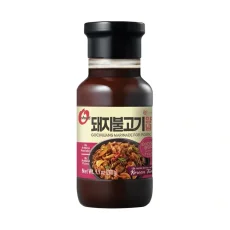
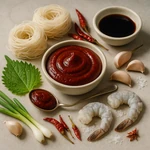
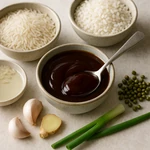
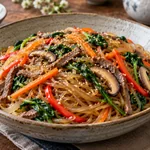
Japchae is loved for its glossy noodles, crisp vegetables, and that unmistakable sweet‑savory aroma. Whether you’re using a ready-made sauce or mixing your own, the right japchae-style seasoning is what helps glass noodles absorb flavor, stay silky, and taste balanced—not bland or watery.
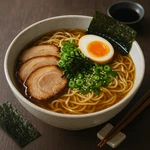
Broth, toppings, aroma oil—ramen gets a lot of attention for what’s on top. But the real backbone of the bowl is the noodle: springy, satisfying, and able to carry flavor. Here’s a practical guide to ramen noodles (fresh, dried, instant), how to cook them for the ideal bite, and how to use them not only in soup but also in quick stir-fries and “no-broth” bowls.
Cookies
This site uses cookies to provide services, customize ads, and analyze traffic. Your consent to the use of cookies will significantly help us to improve our services. More information



 Česky (CZK)
 Slovensky (EUR)
 Deutsch (EUR)
 Austria
 Belgium
 Bulgaria
 Croatia
 Denmark
 Estonia
 Finland
 France
 Germany
 Greece
 Hungary
 Italy
Italy Latvia
 Lithuania
 Luxembourg
 Netherlands
 Poland
 Portugal
 Romania
 Slovenia
 Spain
Spain Sweden