

 Česky (CZK)
 Slovensky (EUR)
 Deutsch (EUR)
 Austria
 Belgium
 Bulgaria
 Croatia
 Denmark
 Estonia
 Finland
 France
 Germany
 Greece
 Hungary
 Italy
Italy Latvia
 Lithuania
 Luxembourg
 Netherlands
 Poland
 Portugal
 Romania
 Slovenia
 Spain
Spain Sweden










🍣 Sushi rice: the base that decides texture, shape, and taste
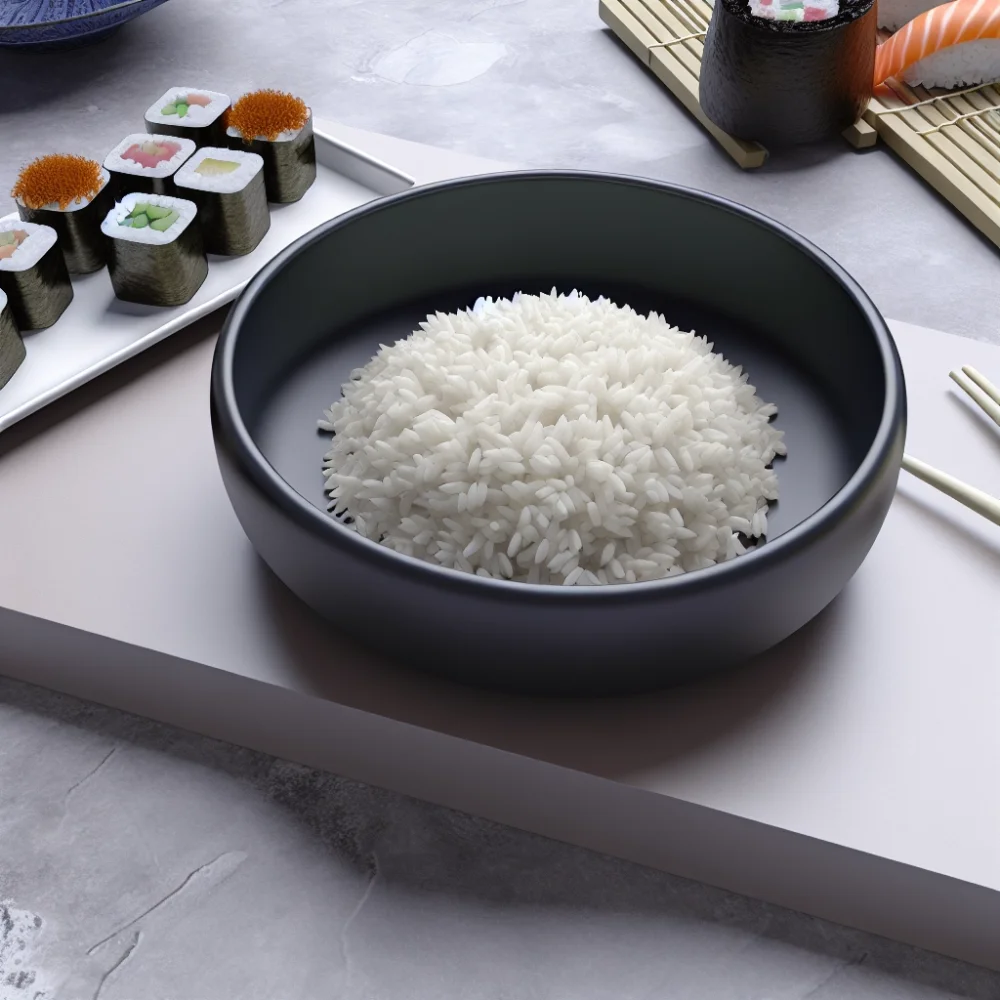
Sushi lives and dies by detail, and the biggest detail is rice. “Sushi rice” isn’t a pre-seasoned product, it’s short-grain japonica rice cooked until it’s glossy, cohesive, and springy. Only then is it seasoned with a mix of vinegar, sugar, and salt. That seasoning turns plain rice into shari – the foundation for nigiri, maki, and chirashi.
Asian ingredients are available at Asian Food Shop
💡 Note: Long-grain rice like jasmine or basmati isn’t suitable for sushi. It cooks fluffy and separate, so rolls won’t hold together as well.
🕰️ History and origin
In Japan, rice is both a cultural staple and a culinary backbone. Early sushi forms were closely tied to preserving fish, with rice acting as the medium for fermentation. Modern edomae-style sushi (nigiri and maki) relies on rice as a main flavor carrier that should be lightly tangy, gently sweet, and balanced with salt.
Fun fact
People often focus on the fish, but rice shapes the whole bite. Temperature, moisture, and seasoning determine whether sushi feels clean and light or heavy and dull.
🧪 Production, types, and ingredients
Sushi rice is short-grain japonica with a higher starch content, which helps it cling without turning mushy. Look for it in Sushi rice and, for a broader selection, in Rice and rice products.
Don’t confuse sushi rice with glutinous rice used for mochi. Glutinous rice is much denser and tends to feel heavy in rolls.
The classic seasoning (sushi-zu) combines rice vinegar, sugar, and salt. Sugar and salt are easy to browse in Sugar and salt.
👃 Flavor profile
- lightly tangy and refreshing
- with a gentle sweet finish
- a salty backbone that lifts umami from seaweed and fish
- springy and cohesive, with distinct grains
✅ Note: If you overdo the seasoning, the rice aroma disappears. The goal is balance, not sharp vinegar punch.
🍳 Kitchen uses
Sushi rice is used for nigiri and maki, but it’s also great in chirashi bowls and bento-style meals. For rolling and essentials, check Preparing Sushi. At the table, Soy sauces are the usual companion, and a crisp vegetable layer helps with contrast from Vegetables and mushrooms.
🫶 Health notes
Sushi rice is primarily a source of carbohydrates and energy. A practical upside is that well-balanced seasoning often reduces the need for heavy sauces. You can adjust vinegar, sugar, and salt to match what you’re serving with it.
✅ How to choose sushi rice
- grain type short-grain japonica made for sushi
- cooked texture glossy, cohesive, never mushy
- pack size 1 kg for occasional sushi, larger bags for frequent cooking
- seasoning rice vinegar has a big impact on the final profile
- storage keep sealed and dry so the rice doesn’t absorb moisture or odors
🛒 Product picks
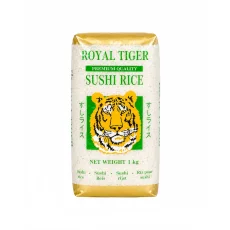
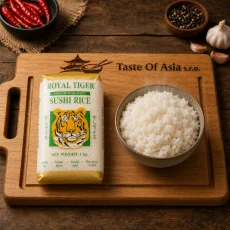
- Royal Tiger sushi rice 1 kg a solid 1 kg bag for home nigiri and rolls, easy to work with and consistent
- ESSA Sushi Rice 5 kg a cost-effective choice if you make sushi often or cook for a bigger group
- P.R.B. Sweetened Rice Vinegar 500 ml a convenient shortcut for a gently sweetened sushi profile when you want quick seasoning
🥒 Recipe: Kappa maki (cucumber hosomaki) with properly seasoned sushi rice
A simple classic that highlights rice quality instantly. With cucumber, you’ll notice right away if the rice is springy, balanced, and if the roll holds its shape.
Ingredients
- sushi rice 300 g
- water for rinsing and cooking
- rice vinegar 4 tbsp
- sugar 2 tbsp
- salt 1 tsp
- nori sheets 4 sheets
- cucumber 1 piece
- soy sauce to serve
- pickled ginger optional
- wasabi optional
- sesame optional to finish
Method
- Rinse the rice in cold water until the water is almost clear. Let it rest for 15 to 20 minutes, then drain well.
- Cook the rice. A useful starting ratio is 1 part rice to about 1 to 1.1 parts water. After cooking, let it steam for 10 minutes with the lid on.
- Make sushi-zu: mix rice vinegar with sugar and salt until dissolved. The goal is a smooth seasoning, not caramelization.
- Transfer hot rice to a wide bowl, drizzle with the seasoning, and fold gently with a paddle or spatula. Don’t press or mash the grains. Cool to body temperature.
- Cut cucumber into long, thin batons, removing the watery core.
- Place nori on a mat, spread a thin layer of rice, and add cucumber in the center. Roll tightly and press the seam briefly to set.
- Slice with a sharp, damp knife into even pieces. Serve with soy sauce, and optionally pickled ginger, wasabi, and sesame.
✅ Note: Sushi rice is usually not refrigerated. Cold temperatures make rice firm up quickly and lose its spring. If it needs to wait, keep it covered so it doesn’t dry out.