

 Česky (CZK)
 Slovensky (EUR)
 Deutsch (EUR)
 Austria
 Belgium
 Bulgaria
 Croatia
 Denmark
 Estonia
 Finland
 France
 Germany
 Greece
 Hungary
 Italy
Italy Latvia
 Lithuania
 Luxembourg
 Netherlands
 Poland
 Portugal
 Romania
 Slovenia
 Spain
Spain Sweden










Coconut Products in Asian Cooking
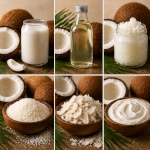
This guide focuses on coconut products used across Asian cuisines and explains what they are, how they differ in taste and texture, and where they typically appear in everyday cooking—from creamy curries and soups to desserts and drinks. You’ll find practical context on common coconut-based ingredients and how they fit into broader pantry staples and cooking styles.
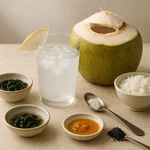
When to use coconut water (and when to avoid it in a recipe)
Coconut water is often confused with coconut milk – and this mix-up is exactly why curry tastes "watery," desserts don't hold their structure, or soups lack roundness. Coconut in Asian cuisine is a whole family of products with distinctly different functions. In this article, we will show when coconut water makes sense, when the recipe actually needs coconut milk or cream, and how to quickly decide based on the desired result.
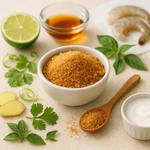
Coconut sugar: what it is, how it tastes, and when it makes sense in Asian cuisine
Coconut sugar is important in Asian cuisine mainly because it sweetens differently than regular white sugar: it adds not just "pure sweetness" but also a warmer, caramel tone. To make it work well, you need to understand two things: it is not made from coconut flesh and its taste is not "coconut" in the sense of coconut milk. In the article, we will show which dishes it suits, how to start using it at home, and what to watch out for when choosing and using it.
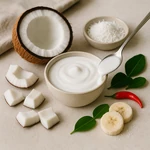
How to work with coconut in savory and sweet dishes: milk, cream, desiccated coconut and oil
Coconut in the kitchen does not mean “one ingredient.” Under the same word are hidden coconut milk, cream, concentrated creams, desiccated coconut, oil, sugar and other products – and each behaves differently. In this guide you will clarify the differences, learn to read labels and gain practical rules for how to use coconut in curry, soups and desserts so that the food is neither watery nor excessively “coconutty.”
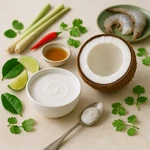
Coconut products in Asian cuisine: how to understand milk, cream, and cream
Coconut is one of the most versatile ingredients in tropical Asia – and at the same time one of the most frequently confused. "Coconut" in a recipe can mean coconut water, milk, cream, concentrated base, dried pulp, and other products that differ in taste, density, and what they do to the final dish. This guide will clarify the differences and especially how to choose the right type for the specific use.
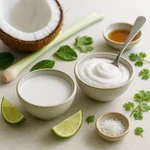
Coconut milk vs. coconut cream: what is the difference and when to use which
Coconut milk and coconut cream are not just two differently named "coconut things." They mainly differ in fat and water content – and consequently in how they thicken curry, soften soup, or behave in pudding or cream. In the article, we will show practical rules for cooking and desserts, how to read the label, and how to avoid the most common mistakes.
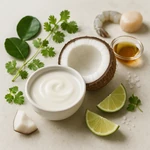
How to choose coconut milk: fat, consistency, and the right type for curry, soups, and desserts
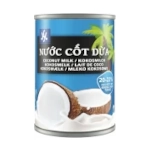
Coconut milk is one of the most important ingredients of tropical Asia – in Thai curries, soups like tom kha, Filipino dishes called "ginataan," but also in various desserts. At the same time, it is a category where significantly different products are sold under the same name. In practice, it is often not that the recipe "doesn't work," but that you have chosen the wrong type (or too thin a variant) for the specific dish.
For a deeper dive into selection and kitchen use, see How to Choose Coconut Products ; for nearby pantry context, explore Sauces and Pastes and Spices and Herbs .