Česky (CZK)
 Slovensky (EUR)
 Deutsch (EUR)
 Austria
 Belgium
 Bulgaria
 Croatia
 Denmark
 Estonia
 Finland
 France
 Germany
 Greece
 Hungary
 Italy
Italy Latvia
 Lithuania
 Luxembourg
 Netherlands
 Poland
 Portugal
 Romania
 Slovenia
 Spain
Spain Sweden










Rice Dishes: Ideas, styles, and how they’re made
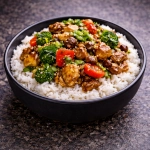
This guide focuses on rice-based dishes in Asian cuisines, explaining common styles, typical components, and what makes each dish distinct in texture and serving format. You’ll find articles that clarify how rice is used as a base, a filling, or a main element, and how different preparations shape the final result.
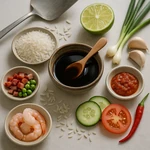
Nasi goreng, fried rice and “Cantonese” rice: how to tell them apart and what to expect on the plate
On menus and in home cooking, three names for “pan” rice often meet: nasi goreng, fried rice and Cantonese rice. They sound similar but do not mean the same thing. In this guide we'll clarify what is a technique (fried rice), what is a specific national style (nasi goreng) and why it makes sense to ask for clarification with “Cantonese rice.” And most importantly: how to choose the right rice and how to achieve good flavor at home without cooking “by one universal recipe.”
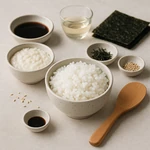
Coconut rice vs. sushi rice: why rice itself makes a difference in “ready” rice dishes
In Asian cuisines rice is often not “something for the sauce,” but the very framework of the dish. With coconut rice (typically nasi lemak style) and sushi rice you can clearly see how dramatically flavor, texture and even what we consider a finished meal can change—simply depending on which rice you choose and how you treat it.
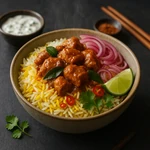
Donburi, biryani, and other one-bowl meals: how they work and how to understand them
One-bowl meals are not shortcuts or emergency meals in Asia – they are often well-thought-out rice dishes where rice is not a side dish but the center around which flavor, aroma, and texture are arranged. In this guide, we will show you how a bowl like Japanese donburi differs from layered biryani, what rice bowls have in common, and how to choose the right rice and style at home according to what you crave and how much time you have.
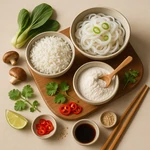
Asian rice dishes: a basic overview (from bowls to festive rice)
In many Asian cuisines, rice is not "just a side dish," but the center of the entire meal. In this overview, you will clarify the main types of rice dishes (bowls with toppings, mixed dishes, fragrant flavored rices, and festive layered dishes) and understand why texture and aroma of the rice are as important as what lies on top.
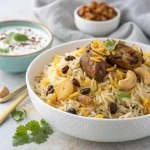
Indian Chicken Biryani Rice (Layered, Aromatic & Restaurant-Style at Home)
Biryani is the iconic Indian layered rice dish where fragrant basmati, warmly spiced meat, and caramelized onions come together in one pot. This home-friendly version keeps the classic “par-cook, layer, steam” method—so you get fluffy grains and deep flavor without complicated equipment.
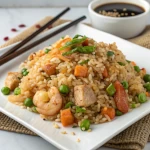
Cantonese Fried Rice (Quick Canton-Style Rice with Egg, Chicken & Veg)
This Canton-style fried rice is the kind of flexible, weeknight-friendly dish you can build from what’s already in your fridge: cold rice, eggs, a little meat (or seafood), and crisp vegetables. The key is simple technique—high heat, quick cooking, and rice that’s properly cooled—so every grain stays separate and flavorful.
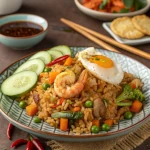
Nasi Goreng (Indonesian Fried Rice) – Easy Weeknight Recipe
Nasi Goreng is Indonesia’s iconic fried rice: smoky, savoury-sweet, and endlessly adaptable. The key is simple—use cold, dry rice and cook everything fast over high heat for that irresistible “wok” aroma.
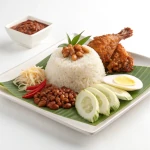
Nasi Lemak (Malaysian Coconut Rice) with Sambal, Anchovies & Peanuts
Nasi lemak is Malaysia’s iconic comfort meal: fragrant coconut rice served with spicy sambal, crunchy peanuts, salty fried anchovies, cucumber, and egg. This home-friendly version keeps the classic balance of creamy, hot, sweet, and crisp—perfect for brunch, lunch, or a quick “rice bowl” dinner.
To explore nearby topics, continue with Noodle Dishes for another staple-based format, Curries and Sauces to understand the pairings that often accompany rice, or How to Choose Rice for guidance on matching rice types to dishes.