Česky (CZK)
 Slovensky (EUR)
 Deutsch (EUR)
 Austria
 Belgium
 Bulgaria
 Croatia
 Denmark
 Estonia
 Finland
 France
 Germany
 Greece
 Hungary
 Italy
Italy Latvia
 Lithuania
 Luxembourg
 Netherlands
 Poland
 Portugal
 Romania
 Slovenia
 Spain
Spain Sweden










Desserts and Sweet Dishes

This guide gathers articles on Asian desserts and sweet dishes, explaining what defines them, how they are typically served, and how sweet flavours, textures, and cooking methods vary across different styles of cuisine.
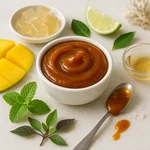
Syrups, fruits, and sweet ingredients in Asian desserts: how to understand them and how to use them
Asian desserts often don't rely on baking and butter creams but on smart combinations of textures, temperatures, and "sweet pantries": preserved fruit, syrups, pastes, and creams. In this guide, we will clarify why fruit in syrup is a full-fledged ingredient, what role syrup plays as an ingredient (not just a sweetener), and how to assemble your first simple desserts at home so they work in flavor and texture.
Dry Petha
Discover the secrets of a traditional Indian sweet – dry peth. This delicious dessert, known mainly in Agra, is made from white pumpkin and cooked in sugar syrup, which gives it a unique texture – a crunchy surface and a juicy interior. The history of petha dates back to the Mughal Empire, and its production is a true art form. Would you like to know more about its origins and uses? Read our article and find out how dry petha is prepared and what its modern uses are!
Custard
Discover the delicious world of custard—a creamy dessert that has won the hearts of gourmets around the world! What is the history of this silky temptation, where did it come from, and how did it become part of our favorite desserts? Read more about how custard is used in cooking and get inspired to make it at home!

Sweetened Condensed Milk
Sweet condensed milk – a creamy sweetness with endless uses! Ideal for desserts, drinks, and baking, it also has a rich history that is worth exploring.
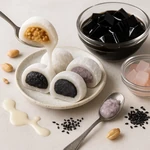
Mochi, grass jelly and other desserts with a "different" texture: how to understand them and what to expect
For many Asian desserts, the main point is in the texture – whether the bite is elastic, jellied, pearly, smooth, or icy. In this guide, you will get oriented in mochi, agar jellies, grass jelly, and other "textural" sweets and learn how to taste and combine them so they make sense even without complicated preparation.
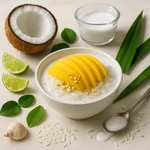
Coconut and rice desserts across Asia: how to navigate flavors and textures
Coconut and rice are among the most common "building blocks" of Asian desserts – but it’s not just about taste. In many countries, texture is equally important (and often more so): the elasticity of mochi, the slipperiness of tapioca pearls, firm agar jelly, or the icy layer of shaved ice desserts. This article provides an overview of the main types of coconut and rice sweets across Asia and practical tips on how to quickly understand them at home.
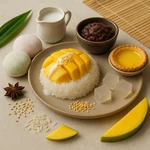
Asian desserts: what to expect from them (and why their texture will surprise you the most)
Asian desserts often can't be squeezed into familiar categories like “cake,” “pudding,” or “cookie.” Instead of heavy buttery pastries, they feature rice, coconut, starches, legumes, fruit, syrups, and especially texture – elastic, gel-like, pearl-like, or icy. This guide will help you understand what is typical for Asian sweets, the main dessert families, and how to practically navigate them.
To explore other dish-focused guides, continue with Rice Dishes , Noodle Dishes , or Baking and Sweet Preparation .