Česky (CZK)
 Slovensky (EUR)
 Deutsch (EUR)
 Austria
 Belgium
 Bulgaria
 Croatia
 Denmark
 Estonia
 Finland
 France
 Germany
 Greece
 Hungary
 Italy
Italy Latvia
 Lithuania
 Luxembourg
 Netherlands
 Poland
 Portugal
 Romania
 Slovenia
 Spain
Spain Sweden










Dry Petha
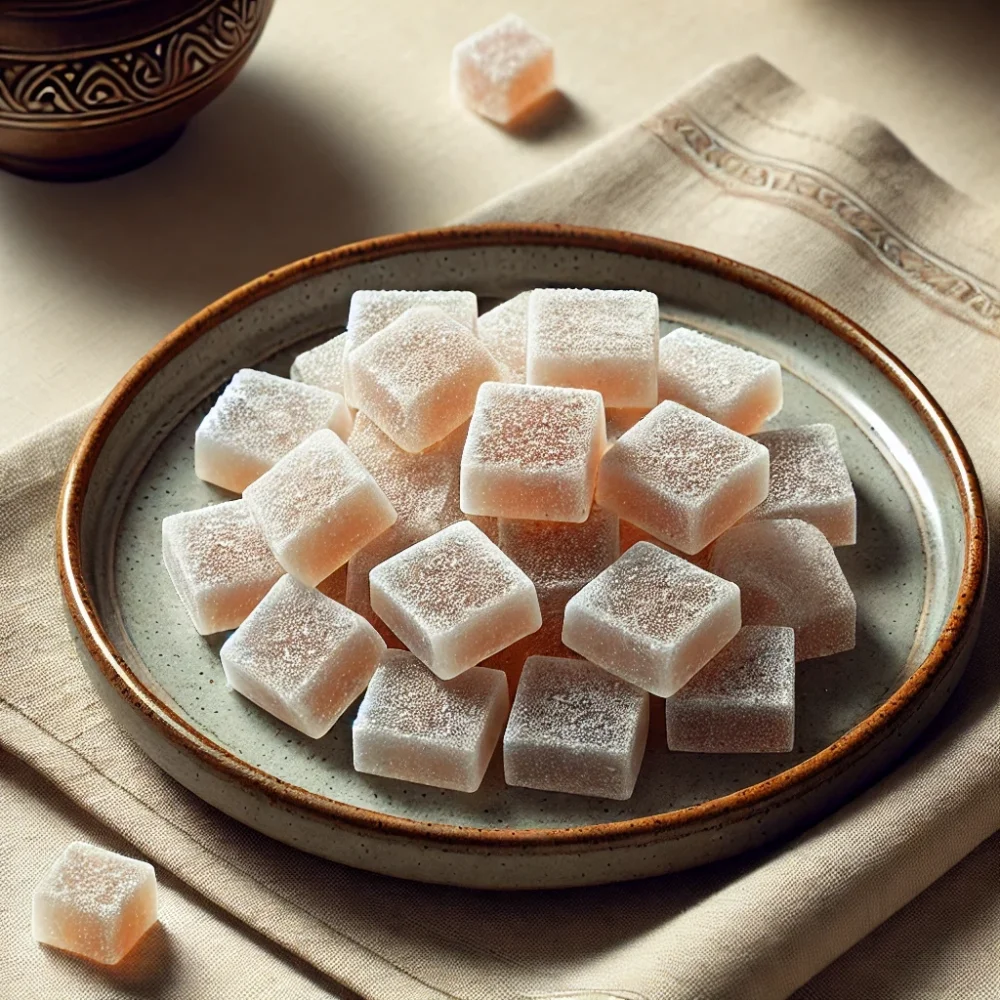
🍬 Dry Petha: Indian candy with a crisp sugar “shell” and a chewy centre
Dry petha is all about texture. It’s firmer and drier than syrupy sweets, often with a lightly crystalline surface and that signature chewy bite. Traditionally it’s made from ash gourd and sugar, so the flavour is clean and simple, but the mouthfeel is what keeps you coming back. If you like sweets you can nibble slowly with tea, this is that kind of treat.
Ingredients for Asian cooking and sweet experiments are available at Asian Food Shop
💡 Tip: Dry petha is great for storing and gifting. It’s less sticky than syrup-style pieces and travels well
🕰️ History and origin
Petha is most commonly associated with Agra and is often brought home as an edible souvenir. There are many regional and flavoured versions, but the core idea stays the same: sugar, firm gourd pieces and time.
🧪 How it’s made, types and ingredients
The traditional process is surprisingly methodical. Ash gourd pieces are first firmed up, briefly cooked, then gradually saturated with sugar syrup. The result turns more translucent and keeps its shape.
Why the “dry” version exists
- less leftover syrup, a cleaner finish
- a more crystalline sugar coating
- a firmer, chewier bite compared to juicy versions
If you enjoy Indian-style sweets, browse Sweets and desserts to build a proper sweet pantry.
👃 Flavour and texture profile
- 🍬 a clean, straightforward sweetness
- 🧊 a lightly crisp or crystalline outer layer
- 🍈 a subtle gourd note underneath the sugar
- 🌸 in flavoured versions you may find rose-like aromas
✅ Tip: Eat it in small bites. Petha shines through texture, not through big, heavy sweetness all at once
🍳 How to use dry petha
☕ With tea or coffee
The classic move. One piece with strong tea is often enough.
🍨 As a chewy add-in for desserts
Dice it small and add it to milk puddings, rice desserts or jar sweets. It gives a fun chew against smooth creams.
🍚 In rice desserts
If your rice dessert feels too soft, petha adds bite and layered sweetness.
🎁 For gifting
The dry style is practical for storing and carrying.
🫶 Wellness notes
Think of dry petha as a treat. It’s sugar-forward, so portion size matters. The upside is that a couple of small pieces often satisfy the sweet craving quickly.
✅ How to choose good dry petha
- texture firm but not rock-hard, chewy inside
- surface light crystallisation is good, an overly hard crust is not
- aroma if flavoured, it should smell clean rather than harsh
- storage keep it dry and tightly sealed
🛒 Our picks
- Essa Unrefined cane sugar 1 kg a great base for syrups and candying with a slightly deeper sweetness
- Lotus Palm sugar 1 Kg a bold, caramel-like sweetness for Indian and Southeast Asian desserts
- Monika White coconut gel Nata de coco 340 g chewy cubes for puddings and jar desserts when you want a similar bite
🍬 Recipe: Homemade dry petha from ash gourd
This is a patience recipe. The gourd is firmed up first, then soaked in syrup, then dried until the surface turns dry and lightly crystalline.
Ingredients
- ash gourd 1 kg peeled and cut into cubes
- sugar 700 g to 900 g
- water 700 ml to 900 ml
- food-grade calcium hydroxide 1 to 2 tbsp
- lemon 1
- salt a small pinch optional
- rose water or kewra a few drops optional
Method
- Remove seeds and the soft centre from the gourd, then cut into larger cubes.
- Dissolve the food-grade calcium hydroxide in water, add the cubes and leave for 2 to 4 hours to firm up.
- Rinse the cubes very thoroughly several times in clean water.
- Boil briefly for 8 to 12 minutes until slightly tender but still holding shape.
- Make a syrup with water and sugar, add lemon juice and optionally a pinch of salt.
- Add the gourd to the syrup, warm gently, then remove from heat. Rest in the syrup ideally overnight.
- Next day, warm the syrup again briefly and let it cool. Repeat once more if you want a deeper candying.
- Lift the pieces out, drain, then dry on a rack or in a low oven with the door slightly open until dry and lightly crystalline.
- Add rose water or kewra at the very end so the aroma stays clean.
✅ Tip: The dry finish comes from drying. Too short and it stays syrupy. Too long and it turns overly hard

Read next
If you want to continue with the same topic, here are more related articles to explore: