

 Česky (CZK)
 Slovensky (EUR)
 Deutsch (EUR)
 Austria
 Belgium
 Bulgaria
 Croatia
 Denmark
 Estonia
 Finland
 France
 Germany
 Greece
 Hungary
 Italy
Italy Latvia
 Lithuania
 Luxembourg
 Netherlands
 Poland
 Portugal
 Romania
 Slovenia
 Spain
Spain Sweden










Noodles in Asian Cooking: Types and Uses
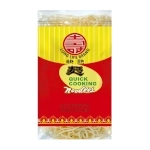
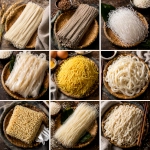
This guide focuses on noodles as a key ingredient in Asian cooking, explaining how different noodle types are used across dishes and what to consider when matching noodles to a cooking method. You’ll find practical context on texture, thickness, and preparation, so it’s easier to understand why certain noodles suit soups, stir-fries, or cold dishes.
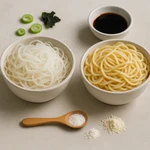
Rice vs. wheat noodles: when to choose which (and why it's not just "about taste")
Rice and wheat noodles behave similarly at first glance, but they serve completely different roles in the bowl. The difference is not just in the ingredient – it reflects in elasticity, "bite", behavior in broth, in the wok, and how easily the noodles overcook. This guide will help you pick the right type based on the dish (pho, pad thai, ramen, udon, mie goreng…) and avoid the most common mistakes.
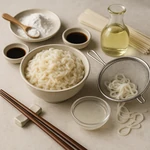
The most common mistakes when working with noodles (and how to quickly fix them at home)
Noodles are one of the fastest ways to an "Asian" dinner, but at the same time they often show whether you understand the ingredient and timing. One wrong choice of noodle type, a few extra minutes in the pot, or a too wet sauce and instead of a springy texture, you end up with a stuck block, broken mash, or rubbery mass. In this article, you'll find specific mistakes that happen over and over again, and especially practical ways to avoid them – depending on whether you are cooking a broth bowl, wok, "dry" stir-fried noodles, or a cold bowl.
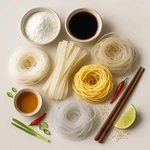
Asian noodle guide: how to choose the right type for soup, wok, and cold bowls
Asian noodles are not a single universal ingredient, but a large family of products. They differ in base (wheat, rice, buckwheat, starch, konjac), thickness, elasticity, and how they react to broth, sauce, or quick stir-frying. When you know what to expect from noodles, you will choose much more easily—and stop struggling at home with clumped or overcooked "mash."
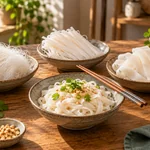
Rice noodles
Discover the fascinating world of rice noodles! Whether it's delicate vermicelli noodles, wide slices, or tapioca varieties, these noodles are the basis of many Asian dishes. In our article, you will learn about their history, how they are made, and how you can incorporate them into your own culinary creations. Immerse yourself in traditional flavors and textures that will introduce you to the secrets of Asian cuisine!
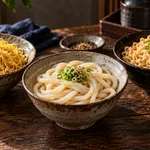
Wheat noodles
Discover the history, production, and different types of wheat noodles that dominate world cuisine. Learn how to prepare them properly and use them in popular recipes such as Kake Udon, Miso Ramen, or Zaru Soba. Read more about their versatile uses!
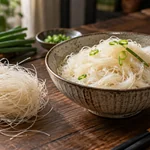
Corn noodles
Discover corn noodles – a healthy and gluten-free alternative to regular noodles! They are ideal for quick and tasty meals, full of fiber and easy to prepare. Read our article and learn more about their history, production, and uses in the kitchen!
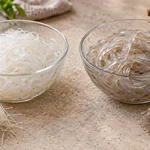
Glass noodles
Glass noodles are light, delicate, and perfectly absorb all the flavors you put into them. Ideal for quick Asian dishes, whether in hot soups, stir-fries, or fresh salads. Discover their history, production, and how best to prepare them for authentic and delicious experiences!
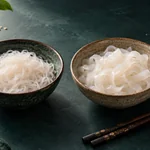
Konjac (Shirataki) Noodles: How to Prep, Cook, and Make Them Taste Great
Shirataki noodles—often called konjac noodles—are translucent, springy strands made from the konjac root. They’re naturally low in digestible carbs and quick to prepare, but they do have their own “rules”: rinse well, dry them properly, and let your sauce do the talking. Here’s how to use shirataki in soups, stir-fries, and cold salads without disappointment.
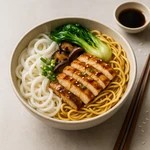
How to choose noodles according to the recipe: so they hold in soup and don't fall apart in the wok
Noodles are a broad family of ingredients in Asian cuisine – and each works differently. When you reach for "some noodles," it often ends up that they get soggy in the broth, break in the wok, or lose texture after cooling. In this guide, we'll show you what to look for in a recipe, how to decide based on the type of dish (ramen, phở, pad thai, stir-fry, cold bowls), and what to watch out for during preparation to ensure the result tastes and looks just right.
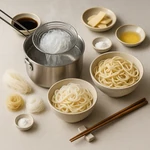
How to properly cook Asian noodles: choose the right type and do not overcook them
For Asian noodles, it's usually not a 'secret trick' that matters, but the correct choice of noodle type for a specific dish and the timing of the heat treatment. Noodles behave differently in broth, differently in a wok, differently in cold bowls – and the most common mistake (overcooking) often occurs because the noodles continue to soften until the final serving.
To explore connected basics, continue with How to Choose Noodles , or broaden your ingredient knowledge with Sauces and Pastes and Spices and Herbs .