

 Česky (CZK)
 Slovensky (EUR)
 Deutsch (EUR)
 Austria
 Belgium
 Bulgaria
 Croatia
 Denmark
 Estonia
 Finland
 France
 Germany
 Greece
 Hungary
 Italy
Italy Latvia
 Lithuania
 Luxembourg
 Netherlands
 Poland
 Portugal
 Romania
 Slovenia
 Spain
Spain Sweden










What are shirataki noodles? 🍜
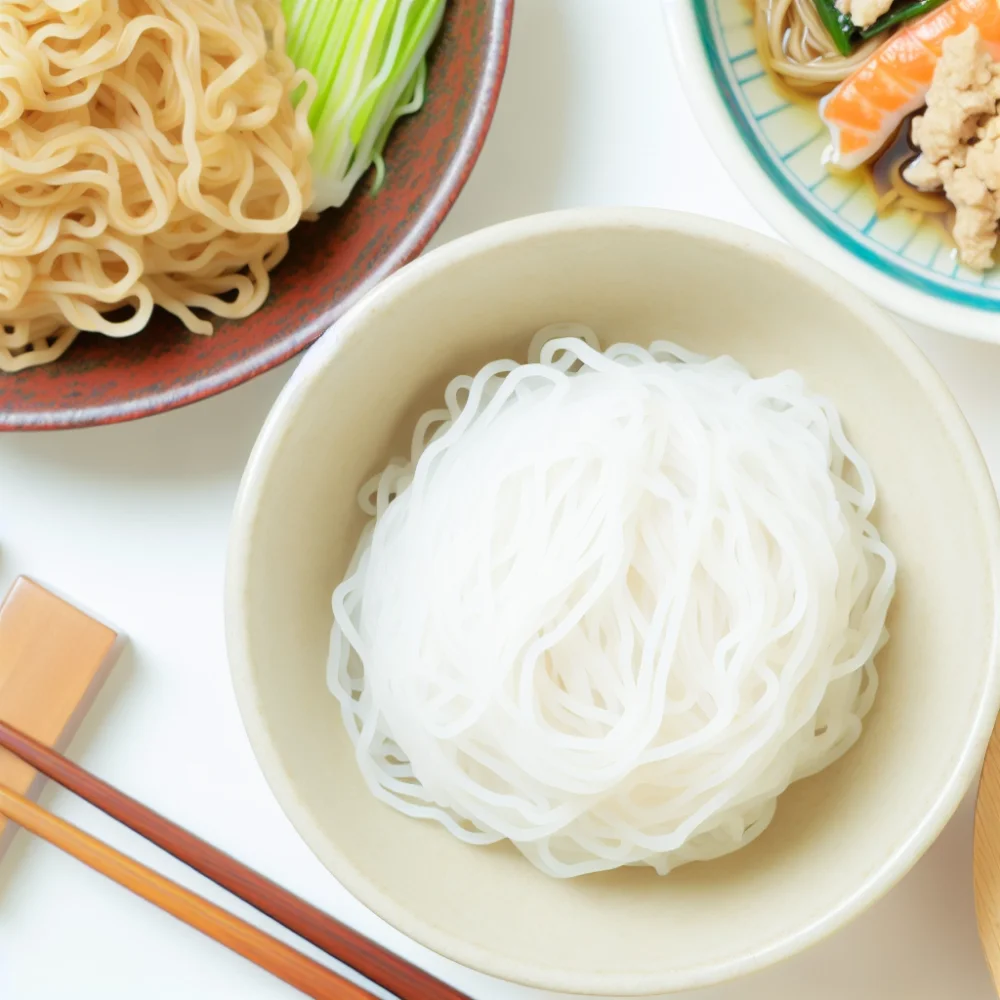
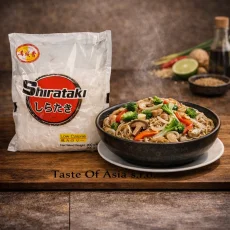
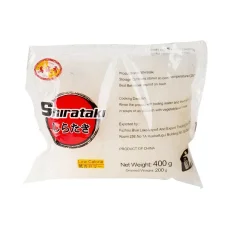
Shirataki noodles are made from konjac (also spelled konnyaku), a plant native to Southeast Asia. The key ingredient is glucomannan, a soluble fiber extracted from the konjac corm. Mixed with water, it forms a gel that can be shaped into noodles and then packed in liquid to keep them fresh.
In Japanese, shirataki is often explained as “white waterfall,” a nod to their pale, glossy look. You’ll see them in Japanese hot pots and everyday home cooking as a light, sauce-friendly noodle option.
Texture and flavor: what to expect ✅
Think of shirataki as a neutral carrier rather than a noodle with its own wheat-like taste. They’re:
- Mild to nearly flavorless (they take on broth, sauces, and aromatics very well)
- Springy and slightly chewy (more elastic than wheat noodles)
- Very moist straight from the pack, which matters for stir-fries
Many packs have a noticeable “sea” or “briny” aroma when opened. That’s normal and easy to remove with the right prep.
How they’re made (and why they’re so light) 🧪
Traditional shirataki production starts with konjac being processed into glucomannan flour. The flour is mixed with water, then set with an alkaline coagulant (commonly calcium hydroxide) to form a stable gel. The gel is shaped into noodles, cooked, and finally packaged in liquid. Because the noodles are mostly water and fiber, they’re very low in calories compared with wheat pasta or rice noodles.
How to prepare shirataki properly (the 3-step method) 🔥
If you’ve tried shirataki once and didn’t love it, prep is usually the reason. This method improves both smell and texture:
- Rinse thoroughly in a colander under cold running water for 30–60 seconds. Separate the strands with your fingers.
- Blanch briefly (optional but recommended): simmer in unsalted water for 1–2 minutes, then drain well.
- Dry-fry: add noodles to a hot nonstick pan without oil and stir for 2–4 minutes until excess moisture evaporates and they squeak slightly. Now they’re ready to soak up sauce instead of watering it down.
Tip: Salted boiling water is usually unnecessary—shirataki don’t absorb salt the way wheat noodles do. Season through your sauce, broth, or dressing instead.
Best ways to use shirataki noodles 🍲
1) Soups and broths
Add pre-rinsed noodles directly to a hot soup near the end. They won’t turn mushy, but they can dilute flavor if you add them straight from the pack (too much liquid). Great for miso-style soups, chicken broth with ginger, or spicy tofu broths.
2) Stir-fries
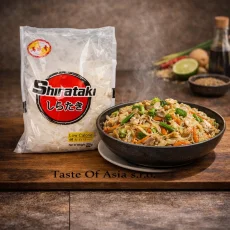
Shirataki work especially well in saucy, high-aroma stir-fries—garlic, ginger, chili, soy sauce, oyster sauce, sesame, and scallions all shine. The dry-fry step is what keeps the sauce glossy instead of watery.
3) Cold salads 🥗
After rinsing (and optionally blanching), cool the noodles and toss with crisp vegetables and a bold dressing. Sesame-peanut, soy-lime, or a simple rice-vinegar + sesame oil dressing will give them character.
Choosing the right shape (thin, wide, round)
Shirataki are sold in several cuts. Picking the right one makes the final dish feel more “natural”:
- Thin noodles: best for light soups, quick stir-fries, and “ramen-like” bowls.
- Wide noodles: better for saucy stir-fries (they feel closer to flat noodles) and hearty bowls.
- Round/thicker noodles: good when you want a bouncy bite and a satisfying chew—think hot pot or simple soy-butter style pan sauces.
Common mistakes (and how to avoid them)
- Skipping the rinse: leads to lingering aroma. Rinse well, and blanch if needed.
- Putting wet noodles straight into sauce: the pan fills with water and the flavor gets diluted. Dry-fry first.
- Expecting wheat-pasta behavior: they won’t “al dente” the same way. Treat them like a sauce sponge with a springy bite.
- Under-seasoning: because shirataki are neutral, they need a confident sauce, broth, or dressing.
Storage and leftovers
Unopened: keep at room temperature as the package directs (usually a cool cupboard).
Opened: store noodles submerged in clean water in a sealed container in the fridge. Change the water daily and use within 2–3 days for best texture and freshness.
Freezing: not recommended—texture often becomes rubbery and unpleasant.
Quick 10-minute serving idea: garlic-soy sesame noodles
After rinsing and dry-frying the noodles, stir-fry minced garlic and sliced scallion in a little neutral oil, add the noodles, then season with soy sauce and a splash of rice vinegar. Finish with toasted sesame oil and sesame seeds. Add a handful of spinach or bean sprouts right at the end for crunch and color.
Our picks
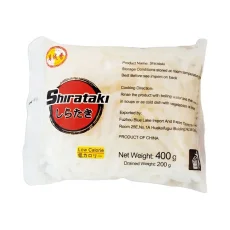
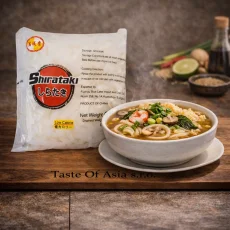
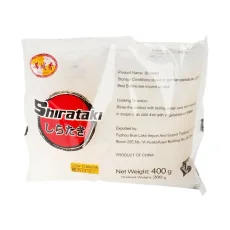
- City Aroma Shirataki Thin Noodles – a versatile choice for soups and quick stir-fries.
- City Aroma Shirataki Noodles Wide – ideal when you want more surface area for sauce.
- City Aroma Shirataki Noodles Round – satisfying chew for hot pot or simple pan sauces.
FAQ ❓
Do shirataki noodles taste like regular pasta?
Not exactly. Their flavor is very neutral and their texture is springier. They’re best when you lean into bold broths, stir-fry sauces, and aromatic seasonings.
Why do they smell when I open the pack?
The packing liquid can have a distinctive odor. A thorough rinse—and especially a quick blanch—removes it.
Are shirataki noodles gluten-free?
Konjac-based noodles are typically gluten-free, but always check the label for any added starches or shared-facility warnings if you’re sensitive.