

 Česky (CZK)
 Slovensky (EUR)
 Deutsch (EUR)
 Austria
 Belgium
 Bulgaria
 Croatia
 Denmark
 Estonia
 Finland
 France
 Germany
 Greece
 Hungary
 Italy
Italy Latvia
 Lithuania
 Luxembourg
 Netherlands
 Poland
 Portugal
 Romania
 Slovenia
 Spain
Spain Sweden









Vietnamese Cuisine: key dishes, flavours and basics

This guide gathers articles focused on Vietnamese cuisine, explaining the flavour balance, everyday ingredients, and common dish types that shape Vietnamese cooking. Readers can use it to understand how Vietnamese meals are structured, what to expect from typical seasonings and condiments, and how Vietnamese food fits within the wider landscape of Asian cuisines.
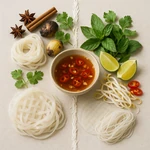
North and South of Vietnam in the kitchen: how to recognize differences in taste and cook “Vietnamese” at home
Vietnamese cuisine is not a single uniform flavor – striking differences between the north, central region, and south are one of the main reasons the same “Vietnamese” dish can taste slightly different each time. In this article we will show what is typical for the north, how the central region is more pronounced, and why the south is often described as sweeter. And most importantly: how to use these differences when choosing ingredients and seasoning at home.
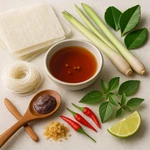
Typical Vietnamese ingredients: what makes Vietnamese food "Vietnamese"
Vietnamese cuisine does not rely on one sauce or one famous dish. It is characterized by freshness, lightness, and the ability to layer multiple flavors so that the result feels lively: rice or rice noodles, herbs and leaves, acidity (lime, tamarind), fermented saltiness and umami (especially fish sauce), and contrasting textures. In this guide, you will find the most important Vietnamese ingredients, their function, and practical tips on how to start using them at home without unnecessary mistakes.
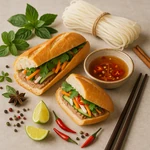
Typical Vietnamese dishes: how to navigate rice, noodles, soups, and street food
Vietnamese cuisine often overlaps with what is common for a large part of Asia: rice and noodles are not just side dishes, soup is often a full meal, and street food is a thoughtful system of quick specialties. In this guide, we will show a practical map of typical groups of dishes, according to which you can orient yourself both on the menu and at home and more easily choose what you will enjoy.
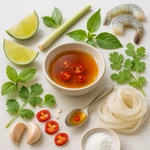
How to start with Vietnamese cuisine: first ingredients, first dishes, and most common mistakes
Vietnamese cuisine is based on balance and freshness: herbs, rice and rice noodles, broths, fermented seasonings (mainly fish sauce) and smart balancing of salty, sour, sweet, spicy, and umami. This guide is a practical onboarding – after reading it, you will know what to buy first, how to put together simple first dishes without stress, and what to watch out for so that the flavors "stick together."
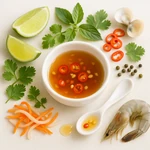
The taste of Vietnamese cuisine: why it feels light, fresh, yet full
Vietnamese cuisine is not just phở (noodle soup broth) and bánh mì (baguette filled with meat and vegetables). It is based on freshness, lightness, and especially on the ability to combine multiple layers of flavor so that the food feels lively but not heavy. In practice, it means thoughtful balancing of salty, sour, sweet, spicy, and umami – and a big role of herbs, rice, noodles, broths, and fermented seasonings.
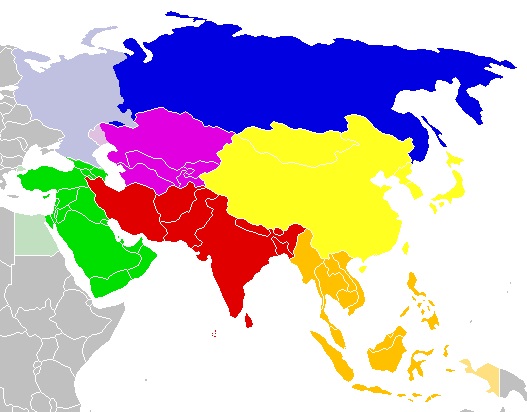
To place Vietnamese cooking in a broader context, you can compare it with neighbouring traditions in Thai Cuisine and Chinese Cuisine , or zoom out to cross-country patterns in Regional Styles of Asia .