


 Česky (CZK)
 Slovensky (EUR)
 Deutsch (EUR)
 Austria
 Belgium
 Bulgaria
 Croatia
 Denmark
 Estonia
 Finland
 France
 Germany
 Greece
 Hungary
 Italy
Italy Latvia
 Lithuania
 Luxembourg
 Netherlands
 Poland
 Portugal
 Romania
 Slovenia
 Spain
Spain Sweden










Typical Vietnamese ingredients: what makes Vietnamese food "Vietnamese"
Vietnamese cuisine does not rely on one sauce or one famous dish. It is characterized by freshness, lightness, and the ability to layer multiple flavors so that the result feels lively: rice or rice noodles, herbs and leaves, acidity (lime, tamarind), fermented saltiness and umami (especially fish sauce), and contrasting textures. In this guide, you will find the most important Vietnamese ingredients, their function, and practical tips on how to start using them at home without unnecessary mistakes.
Vietnamese cuisine in a nutshell: freshness, rice, herbs, and layers of flavor
What people often perceive as the "typical Vietnamese taste" does not come from one dominant ingredient. Vietnamese dishes are usually built as a whole: a starchy base (rice or rice products), aromatic herbs and leaves, an acidic component, a salty/umami component, and often fresh chili. Textures also play an important role – crunchy sprouts, fresh leaves, or pickled components.
Vietnamese cuisine is also distinctly regional: differences between the north, center, and south are important even in the selection of ingredients. Coconut, which appears more in southern and coastal styles, is often given as a good example.
Rice and rice products: side dish, noodles, and wrapper for rolls
Vietnamese cuisine cannot be well understood without rice. It's not just a side dish – rice is reflected in noodles, wrappers for rolls, flour, and some desserts. Practically, this means that "rice" is not one thing, but a whole family of products with different uses.
Rice noodles: phở, bún, and other forms are not the same
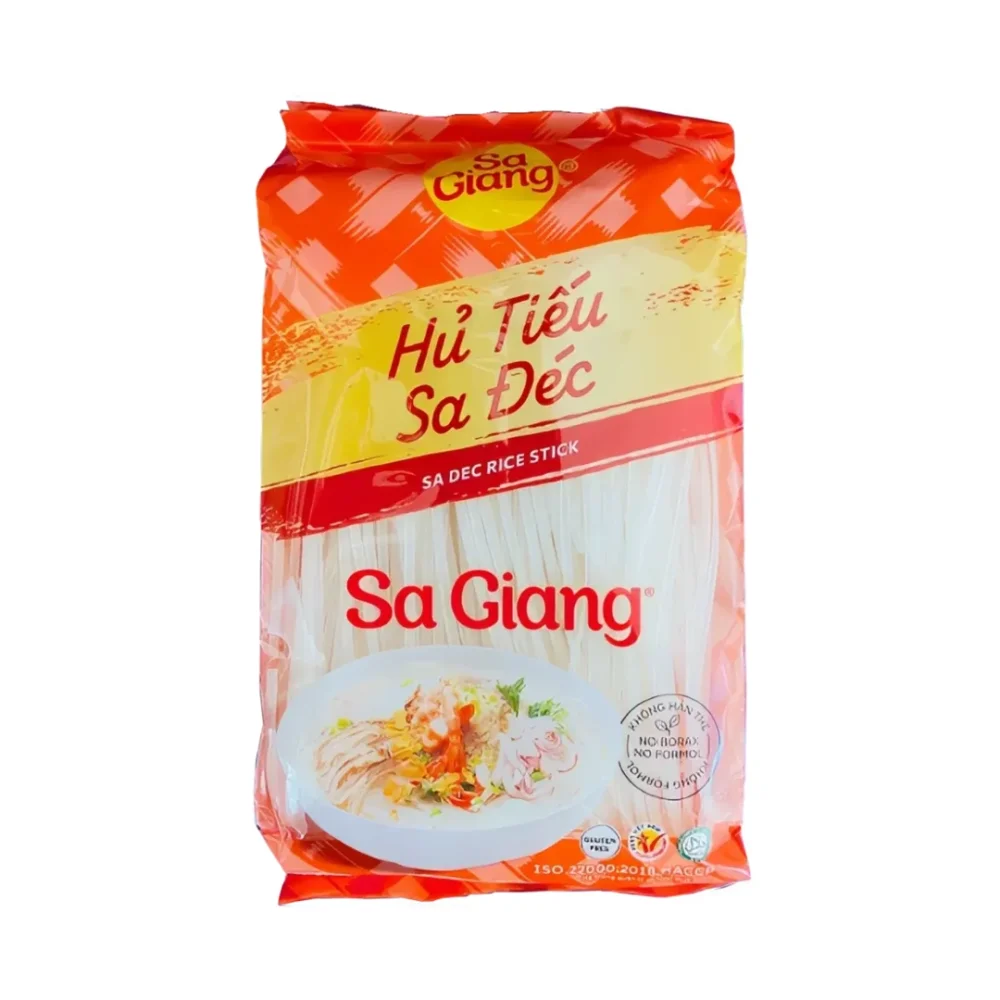
Different rice noodles vary in shape, elasticity, and how they carry broth or sauce. In practice, it is useful to keep a simple rule in mind: some types are designed for soup broths (such as in phở – a distinct Vietnamese noodle soup), while others work better in bowls and salad-type compositions like bún (rice noodles served with herbs, vegetables, and dressing).
If you want to compare multiple types for home cooking in one place, a good directory is the category rice noodles. And if you are looking for specific noodles that often pleasantly coat with sauce thanks to a combination of rice flour and tapioca starch and also work in soups, a good start might be Sagiang tapioca rice noodles 400 g.
Rice paper: an ingredient for texture and "structure" of the dish
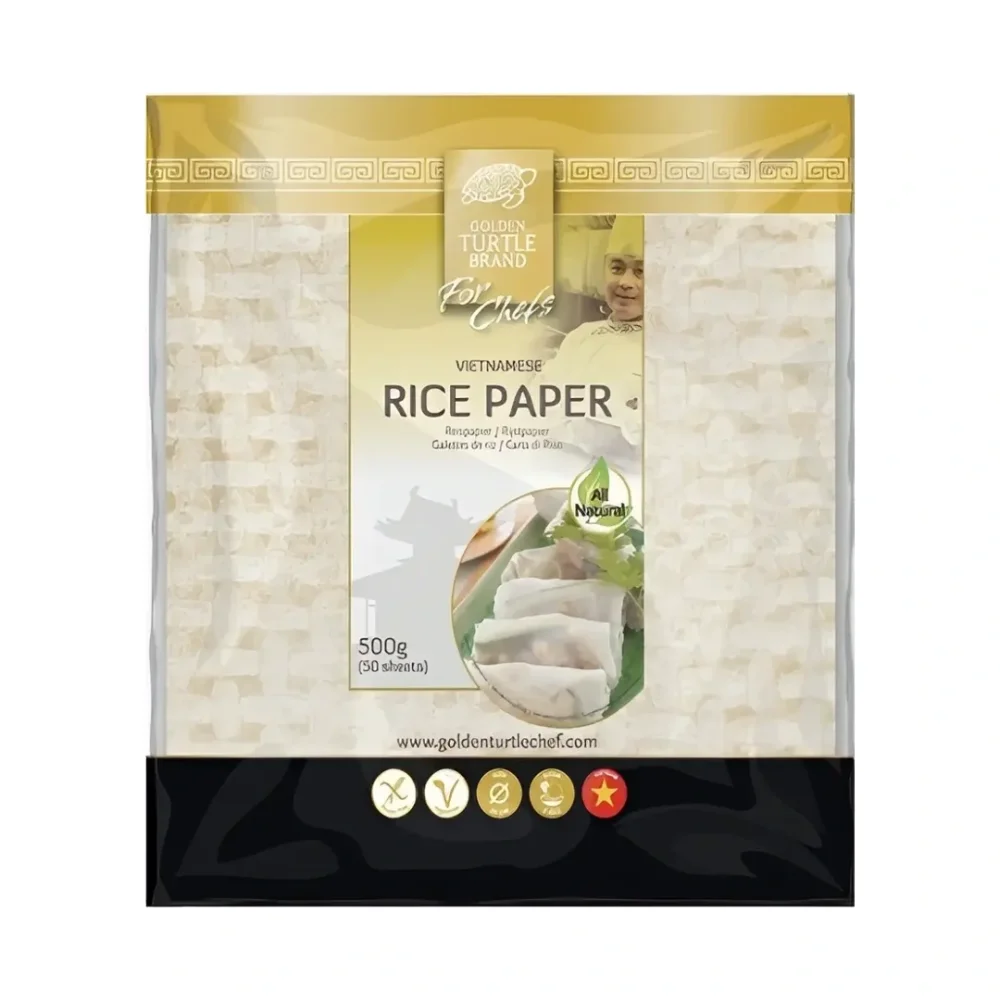
Rice paper is a typical Vietnamese ingredient for rolls – both fresh and those that are then prepared crispy. Unlike dough or flatbreads, rice paper is primarily a “wrapper” with a neutral taste that gives structure: it holds the filling and helps create a contrast between soft, juicy, and crispy.
A basic directory that fits well is the category rice paper. For homemade rolls, the square sheet format can be practical, for example, Golden Turtle Chef square rice paper 500 g. In general, rice paper works best when moistened briefly – soaking too long often leads to disintegration or stickiness.
Fish sauce (nước mắm): saltiness, umami, and base for dips
Fish sauce is one of the most important seasoning bases of Southeast Asia and has a privileged position in Vietnam. It is not used just as “extra salt”: in small amounts, it adds depth, a long finish, and umami, and it can connect other ingredients into a more cohesive flavor.
In Vietnamese cuisine, it functions mainly in two ways: as a seasoning during cooking and as a base for nước chấm (Vietnamese dipping and seasoning sauce). Differences between average and higher-quality fish sauce are often most noticeable in dips and cold cuisine.
How to recognize (and choose) fish sauce that will work
- Purity of taste and depth: better fish sauce doesn’t just taste aggressively salty; it tends to be more complex and less “flat sharp.”
- Labeling and ingredients: the simpler, the better. Typically a fish component + salt, possibly water; sugar may appear, but it’s good to know that then the sauce won’t be as universally “clean.”
- Appearance: good fish sauce is clear, from light amber to darker reddish brown. Heavy cloudiness or “muddy” sediment is not a plus (mild salt crystals aren’t usually a problem).
- Nitrogen (N) marking: if indicated, a higher value usually means a higher concentration of broken-down proteins – thus a more intense umami base.
In the Vietnamese style, traditional production areas are often mentioned; a well-known example is Phú Quốc, where the origin label relates to place and production tradition. For home practice, however, the most important thing is to be able to choose a bottle that you will like in simple combinations with lime, garlic, and chili.
Herbs, leaves, and crunchy additions: why they are not just decoration
Fresh herbs are not decoration in Vietnamese cuisine. They are a full component of the dish – bringing freshness, aromatic precision, and often a feeling of “lighter” food, even when the base is broth, meat, or noodles.
Typical herbs and leaves
Coriander, Thai basil, mint, Vietnamese coriander, culantro, perilla, chives, spring onions, and other greens are often used. It is important to consider that different “corianders” and similarly named herbs are not automatically interchangeable – even though they can be combined in some dishes, their aroma differs, and the flavor result can be noticeably different.
👃 Fresh aromatic components: garlic, chili, and lemongrass
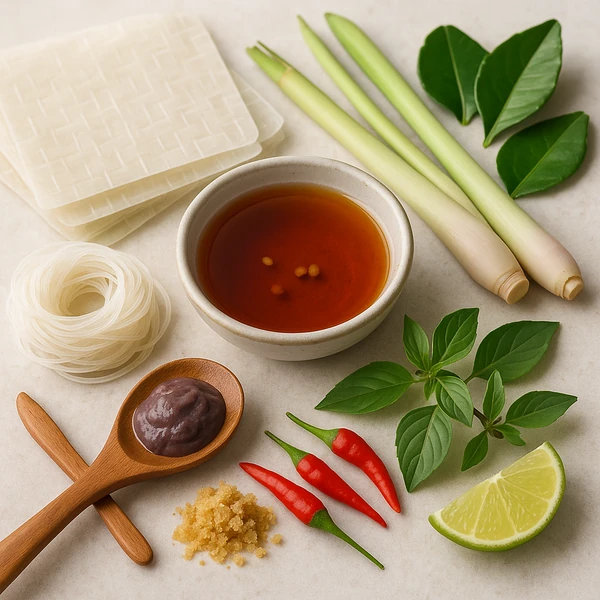
Alongside herbs, garlic, chili, and lemongrass regularly appear. In typical combinations they don’t act as “heavy” spices, but rather as a way to open the dish and make it distinctive yet still fresh. A practical rule: garlic and chili often manifest very quickly – it’s better to start with less and adjust than to overpower other layers.
Crunchiness and freshness: sprouts and green papaya
Bean sprouts and green papaya appear in the Vietnamese context as fresh, crunchy components. They are not just “filler vegetables” – they serve the function of texture and contrast that balances broths, noodles, sauces, and proteins.
Acidic components: lime, tamarind, vinegar, and pickling
Acidity in Vietnamese cuisine is as fundamental as saltiness. It provides lightness, contrast, and helps “lift” the flavor even in dishes based on broth or fermented seasonings.
- Lime is typical for final seasoning and for dipping sauces.
- Tamarind brings a specific type of acidity and pairs well with umami bases.
- Vinegar and pickled components expand acidity options beyond citrus – and often add additional flavor layers.
In practice, the acidic component is often what most “Vietnamese-styled” home cooking lacks when sticking only to salt and chili.
Tofu, seafood, pork, and beef + southern coconut
Typical Vietnamese ingredients are not just seasonings and rice products. Tofu, shrimp, and other seafood, as well as pork and beef, are often worked with. These proteins are then combined into dishes with herbs, acidity, and fish sauce so they don’t feel heavy.
Coconut is also worth mentioning, which according to knowledge sources appears more in southern and coastal styles. It is good to consider it as a regional “touch,” not as a universal feature of the whole Vietnamese cuisine.
How to start with typical ingredients at home (practical onboarding)
The worst strategy is to buy "everything Vietnamese" all at once. It’s better to think functionally: what will give you saltiness and umami, what acidity, what fresh aromatics, what starch base, and what texture. This way you’ll start cooking dishes with a clear character faster and avoid blind purchases.
1) The base that repeats across dishes
- Saltiness and umami: fish sauce (whether for cooking or dips).
- Acidity: lime, or tamarind or vinegar depending on what you want to cook most.
- Spiciness: fresh chili (preferably dose gradually).
- Aromatics: garlic, lemongrass, and mainly fresh herbs.
- Starchy base: rice noodles or rice paper (depending on whether you prefer soups/bowls or rolls).
- Texture: sprouts, leaves, or crunchy vegetable components like green papaya.
2) How to dose fish sauce so it doesn’t overpower the dish
Fish sauce is strongest where it’s supposed to support other flavors, not cover them up. If you’re starting with it, it works well to proceed in small steps: add a small amount, stir, taste, and only then adjust acidity (lime), sweetness, and chili. For dips and cold dressings, it’s often worth using a higher-quality bottle – because that’s where fish sauce flavor is most “front and center.”
3) How to choose the right type of rice product (and why it matters)
With rice noodles and rice paper, it makes sense to watch what they’re intended for and how they behave after preparation: elasticity, ability to carry broth or sauce, and whether you like the resulting texture. The most common home disappointment is not a “bad brand” but a badly chosen type for a specific dish (different noodles work better in soup than in sauce).
4) Freshness is key in Vietnam
Vietnamese food is often decided at the end: herbs, lime, chili, crunchy elements. Weak herbs or wilted vegetables can significantly worsen the whole impression, even if you have a good broth and proper seasoning. So if you have to choose where to “pay attention,” it’s the fresh layer.
Most common mistakes and misunderstandings ⚠️
- Confusing “authenticity,” strength, and quality: a strong taste doesn’t necessarily mean the ingredient is good quality or suitable for your use. For fish sauce and other seasonings, clarity of taste matters, not just intensity.
- Buying by category name instead of the right type: “rice noodles” are not one thing. If you choose a type that suits another preparation, the result will feel unbalanced even if you follow the method.
- Ignoring labels on sauces and pastes: it’s worth reading the ingredients and noticing what the main component is and how much sugar is added. Often it’s not that the product is bad – it just may not meet what you expect from it.
- Underestimating acidity: when lime/tamarind/vinegar is missing, the dish easily slides into “heavy saltiness.” Acidity adds lightness and opens up herbs and umami.
- Excessive stockpiling of specialties without a plan: some ingredients aren’t bad, just too narrowly usable for a first purchase. A warning sign is unclear expectations about what you will actually use them in.
What to take away from the article
- You understand Vietnamese cuisine best through the function of ingredients: starchy base (rice), fresh aromatics (herbs), acidity, saltiness/umami (fish sauce), and texture.
- Rice noodles and rice paper are not just “rice in another form” – each type has a different use and creates a different result.
- Fish sauce (nước mắm) is a tool for depth and flavor integration; with dips and cold preparations, it’s worth watching for clarity of taste and ingredients.
- Herbs are not decoration: they form one of the main flavor layers. Freshness is key in Vietnamese dishes.
- Most mistakes arise because people buy the “right category” but the wrong type for the specific use – or underestimate acidity and the fresh layer.

Read next
If you want to explore this topic further, continue with these related blog guides and articles:
