

 Česky (CZK)
 Slovensky (EUR)
 Deutsch (EUR)
 Austria
 Belgium
 Bulgaria
 Croatia
 Denmark
 Estonia
 Finland
 France
 Germany
 Greece
 Hungary
 Italy
Italy Latvia
 Lithuania
 Luxembourg
 Netherlands
 Poland
 Portugal
 Romania
 Slovenia
 Spain
Spain Sweden










Fermentation in Asian Cooking
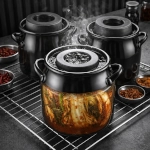
This guide focuses on fermentation as a core technique in Asian cooking, explaining what the process is, why it is used, and how it changes flavour, aroma, and texture in everyday dishes. You will find articles that clarify key terms and methods, outline typical uses in the kitchen, and place fermentation alongside other foundational techniques so you can understand when and why it matters.
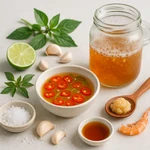
Basics of home fermentation for beginners: how to get oriented and start without unnecessary mistakes
Fermentation is not just a 'preservation trick'. In Asian cuisines, it is one of the main ways to create umami, smooth out sharp taste edges, change the texture of ingredients, and build a huge palette of sauces, pastes, side dishes, and soups from a few basics. This article will give you solid foundations: what fermentation means in the kitchen, why it is not the same as probiotics, what types of ferments exist, and how to start with them at home practically (even if you haven't fermented anything yourself yet).
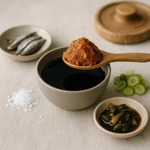
How flavor fermentation works: why miso, kimchi, or fish bases make food "complete"
Fermentation in the kitchen is not just a way of preservation. In Asian traditions, it is mainly about creating flavor: umami, acidity, aroma, depth, and often a new texture. In this article, we will clearly explain what happens during fermentation, why different ferments taste completely different (and cannot be substituted), and how to practically use them at home so that food is not just salty but truly "layered."

How to safely store fermented foods: sauces, pastes, and "live" side dishes
Fermented foods in Asian cuisine are more than just "something healthy": they often form the flavor backbone of a dish, bringing umami, depth, and a characteristic aroma. That's why it makes sense to address storage practically – so that the ferments remain safe, but also retain the best taste, aroma, and texture for as long as possible.
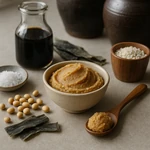
Fermentation in Asian cuisine: why it is the key to umami, depth and a "finished" flavor
Fermentation is one of the oldest ways to preserve, transform and, above all, deepen the flavor of food. In Asian cuisines it is not just "preservation" — it is a technology that can turn a few simple ingredients into an enormously complex base: acidity, pronounced umami, new aromas and different texture. That is why fermented sauces, pastes and condiments are one of the most reliable ways to bring homemade Asian food from "good" to "has depth."
To place fermentation in context with other kitchen methods, continue with Marinating and Seasoning for flavour-building approaches, Broths and Base Sauces for foundational liquids, or Wok Cooking for high-heat technique.