


 Česky (CZK)
 Slovensky (EUR)
 Deutsch (EUR)
 Austria
 Belgium
 Bulgaria
 Croatia
 Denmark
 Estonia
 Finland
 France
 Germany
 Greece
 Hungary
 Italy
Italy Latvia
 Lithuania
 Luxembourg
 Netherlands
 Poland
 Portugal
 Romania
 Slovenia
 Spain
Spain Sweden










Fermentation in Asian cuisine: why it is the key to umami, depth and a "finished" flavor
Fermentation is one of the oldest ways to preserve, transform and, above all, deepen the flavor of food. In Asian cuisines it is not just "preservation" — it is a technology that can turn a few simple ingredients into an enormously complex base: acidity, pronounced umami, new aromas and different texture. That is why fermented sauces, pastes and condiments are one of the most reliable ways to bring homemade Asian food from "good" to "has depth."
🌶️ What fermentation is and why it determines the result in Asian cooking
Fermentation is a controlled transformation of ingredients by microorganisms and their enzymes. In foods, bacteria, yeasts and molds most commonly play a role. They break down sugars, starches or proteins — and in the process create new tastes, scents and textures.
From a cook’s perspective the important thing is what fermentation can "produce": acidity, stronger umami, a softer or conversely firmer texture, greater aromaticity and often longer shelf life. Equally important is to understand that fermentation is not a single thing: vegetable fermentation in salt works differently than soy fermentation with koji, fish sauce aging is different, and tempeh fermentation with the Rhizopus mold is different again.
In Asian kitchens fermentation plays various roles: in some places it forms the basis of the everyday table (side dishes, soups, sauces), elsewhere it serves more as a concentrated seasoning that "binds" a dish and gives it fullness even when you cook quickly.
Fermented foods vs. probiotics: an important distinction without myths
Fermented foods can contain live microorganisms and some can be a source of live cultures. But it is not true that every fermented food is automatically probiotic.
For kitchen practice this has a simple consequence: it’s best to understand fermentation primarily as a flavor and technological category. Health expectations should be formulated soberly — among other reasons because many fermented products are further heated, pasteurized or otherwise processed, which changes their microbial profile.
Why fermented bases have such a strong position in Asia
Historically and today, fermentation in Asian cuisine addresses several needs at once:
- Umami and depth – fermented products often carry a pronounced umami taste that can "round out" even a simple dish and give it a sense of fullness.
- Complex flavor without complex cooking – a few drops of fish sauce, a spoonful of miso or some doenjang can provide depth that would otherwise require a long-simmered stock or a complex reduction.
- Preservation – fermentation helped preserve food outside the harvest season and better utilize grains, legumes, fish and vegetables.
- Regional identity – many fermented products are closely tied to specific regions, communities and rituals; they are not just "ingredients" but also cultural knowledge.
Main groups of fermented foods in Asian cuisine (and what to expect from them)
Fermented vegetables: kimchi as a model example
Vegetable fermentation in a salty environment is widespread across Asia and has many regional forms. The best-known example is Korean kimchi — and even that is not a single thing, but dozens to hundreds of variants depending on region, season, main ingredient and seasoning. Besides the most well-known version made from napa cabbage there are common variants from radish, cucumber or spring onion.
The typical taste of kimchi is built on a combination of acidity (from fermentation), saltiness, chili heat, garlic and ginger, and also umami, which can come from fermented marine components. Time is important too: kimchi can be fresh and crunchy, but with age it becomes deeper, more acidic and more pronounced.
In the kitchen it then functions in two ways: fresher kimchi as a side dish and contrast to rice and other foods, older kimchi rather as a flavor "base" for cooking, where its depth is used to the fullest.
Fermented soy pastes and sauces: miso and (quality) soy sauce
Another big world is fermented soy products: pastes and sauces that bring saltiness, umami and often a specific aroma. Practically, they are great because they can very quickly add a "finished taste" even to simple dishes.
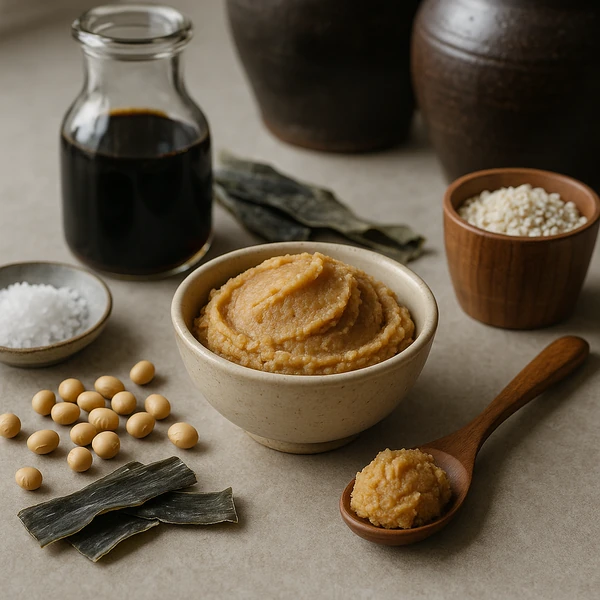
Miso is a Japanese fermented paste, most often from soybeans, salt and koji. It can also contain rice or barley and there are many styles. Miso shows how much one category can vary by region, type of koji and aging time: lighter, sweeter styles will behave differently than darker, more robust ones.
In the kitchen miso is used in soups, sauces, marinades, glazes and dips (and sometimes in modern cuisine even in sweet preparations). A key practical note: miso should not be treated as merely "salty" — when overheated or used improperly it loses its finer nuances.
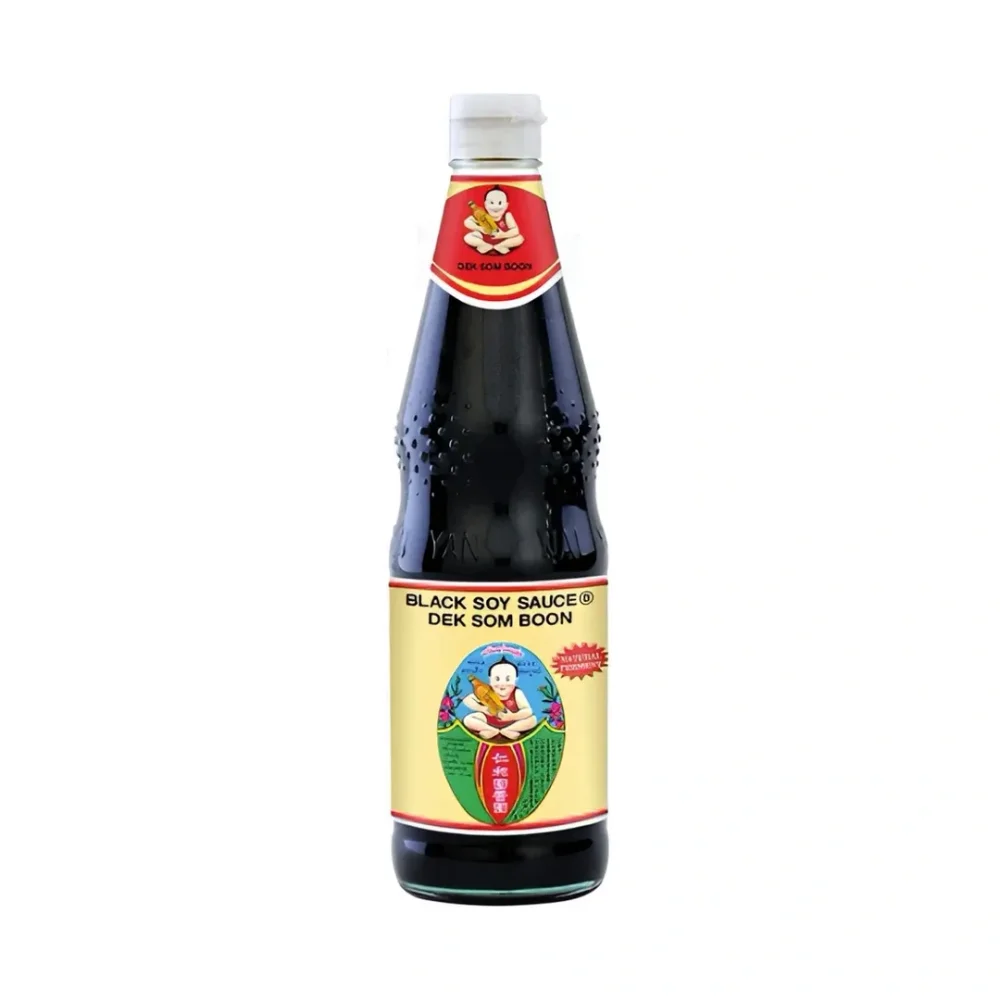
Similarly important is fermented soy sauce (shoyu), which in many households is the quickest route to umami. If you want to work with a darker type for bolder dishes, a practical start can be, for example, Dek Som Boon dark soy sauce — treat it as a seasoning that needs to be dosed with respect to the overall saltiness of the dish.
Koji and meju: "starters" and the basic logic of fermentation in Japan and Korea
In Japanese (and partially wider East Asian) cuisine a fundamental concept is koji: an ingredient inoculated with the mold Aspergillus oryzae, which breaks down starches and proteins and prepares the ground for the development of deep flavor and umami. Without koji it would be hard to talk about miso, shoyu, sake and other classic Japanese fermentations.
In the Korean tradition a similarly central role is played by meju — fermented blocks of soybeans from which jang products like ganjang and doenjang are then made. Meju is a good example that fermentation is not just a production method but also cultural knowledge passed down in families.
Fermented legume products, fish and marine bases, fermented batters
The "fermentation map" of Asian cooking also includes other groups worth mentioning simply because they often appear as examples of how different fermentation can be:
- Fermented legume products — for example tempeh or natto.
- Fish and marine bases — typically fish sauces or some fermented marine components that add umami even where you don’t want a "fishy taste" but rather depth.
- Fermented batters and doughs — for example rice and legume batters for dosa or idli, where fermentation changes both flavor and structure.
How to incorporate fermented foods into everyday cooking (concrete starting points at home)
The best approach is not to start with extremes, but with small, repeatable steps.
1) Start with one "base" product
For most households a good first step is one of these bases: miso, quality fermented soy sauce, kimchi, fish sauce or tempeh. It’s important to choose one and learn what it does to flavor — instead of bringing five strong ferments home and not knowing how to tame them.
2) Use a ferment as a seasoning (first), not as the main ingredient
In practice, often a small amount is enough:
- miso: roughly a teaspoon into a sauce or base where you want to add umami and rounding,
- kimchi: a little with rice or in bowls as a contrast and a "sour juice" in the dish,
- fish sauce: even just a few drops into a soup or noodles when you feel the flavor is flat.
This logic (little but targeted) is one reason fermentation fits so well into quick home cooking: it adds depth without long preparation.
3) Expect an "acquired taste" and choose the right context
Some ferments can be intense for a beginner (typically natto, some shrimp pastes or very aged ferments). That doesn’t mean they are bad — they just need the right context and dosing.
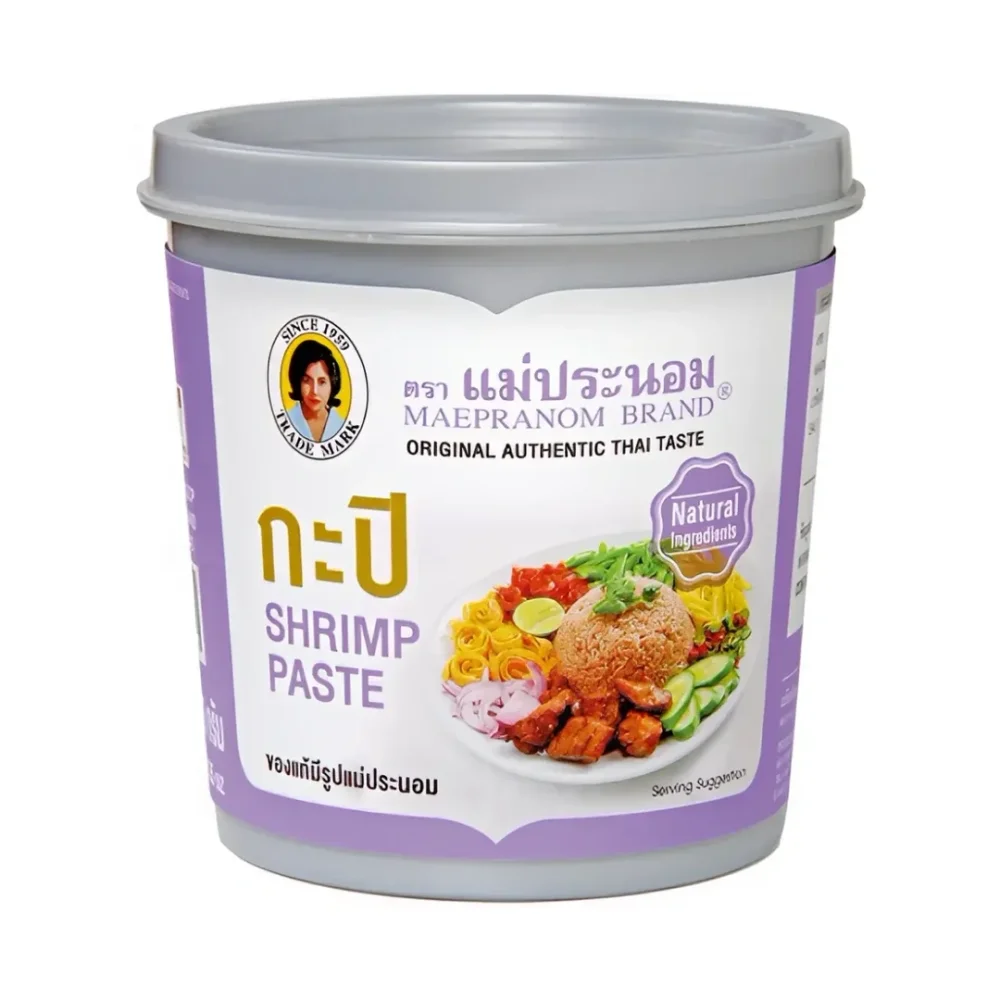
If you want to try pronounced marine umami in a small dose, you can start with something like Maepranom shrimp paste. In practice that means not adding it "as a sauce" but as a very small seasoning to a curry, sauce or stir-fry where its character will disperse through the whole dish.
🍳 4) Watch temperature and style when using miso
With miso it’s worth keeping two things in mind: first that there are milder and sweeter styles as well as darker and more robust ones, and second that overheated or improperly used miso loses its finer nuances. Practically this means being careful not to turn miso into just a "salty mash" — the goal is its flavor character, not just the salt.
Common mistakes and misunderstandings (and how to avoid them)
- "Fermented = probiotic" — no. Some fermented foods may contain live cultures, but not every fermented food is automatically probiotic and many products are further processed.
- Confusing different fermentations — vegetable fermentation in salt, koji fermentation for soy, fish sauce aging or tempeh are distinct processes. When you understand the difference you can better predict what to expect in flavor and how to cook with them.
- Starting with "the most intense" — natto or some marine pastes can be off-putting without context. Start with a more approachable base and return to more intense ferments later.
- Too large doses — ferments often carry saltiness and concentrated umami. If you add too much, spices won’t save the dish; you’ll likely have to "dilute" it with rice, stock or another ingredient.
- Overheating miso and flattening its flavor — miso is not just salt. If you use it regardless of temperature and style you lose part of why it’s worth having at home.
What to take away from the article
- Fermentation is a controlled work of microorganisms that creates acidity, umami, aroma, texture and often better storability in the kitchen.
- In Asian cooking fermentation is key because it can add depth without long preparation and often carries regional identity.
- Fermented foods are not automatically probiotics — it’s better to keep a sober, cook’s perspective.
- For a practical start one base is enough (miso / soy sauce / kimchi / fish sauce / tempeh) and small doses: a teaspoon, a bit, a few drops.
- Some ferments are an "acquired taste" — there’s no need to start with the most intense ones.

Read next
If you want to explore this topic further, continue with these related blog guides and articles:
