

 Česky (CZK)
 Slovensky (EUR)
 Deutsch (EUR)
 Austria
 Belgium
 Bulgaria
 Croatia
 Denmark
 Estonia
 Finland
 France
 Germany
 Greece
 Hungary
 Italy
Italy Latvia
 Lithuania
 Luxembourg
 Netherlands
 Poland
 Portugal
 Romania
 Slovenia
 Spain
Spain Sweden









Japanese Cuisine: guides to dishes, ingredients and basics

This section of the Guide to Asian Cuisine focuses on Japanese cuisine, bringing together reading that explains core flavours, common ingredients, and how Japanese dishes are typically structured and served. Expect clear context for well-known staples as well as practical orientation for how Japanese cooking fits alongside other country-based cuisines in this guide.
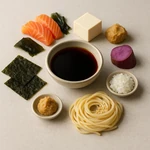
Regions of Japanese cuisine: why Hokkaido tastes different from Tokyo and Kyoto
Japanese cuisine is not uniform in taste. Besides shared principles (respect for ingredients, seasonality, purity of flavors), there are important regional differences based on climate, proximity to the sea and mountains, and historical availability of ingredients. In this guide, you will clarify the main areas and how to recognize them even when cooking at home.
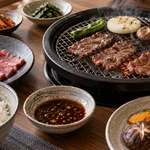
Recipe for Yakiniku sauce and dish
Discover the taste of Japan with our recipe for Yakiniku – juicy meat, delicious marinades, and grilling right at your table! Simple, quick, and irresistibly delicious!
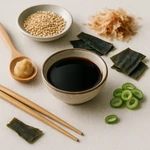
Typical Japanese ingredients: how they work, how they differ, and how to get started at home
Japanese cuisine is based on respect for ingredients, purity of flavors, seasonality, and the effort to highlight the natural character of the food – not to "override" it with heavy seasoning. That is why typical Japanese ingredients often function as precise tools: they add saltiness, umami, gentle acidity, or light sweetness, but they are meant to let the main ingredient on the plate shine. This guide will give you a quick orientation in the main groups and, above all, a practical start so you can cook Japanese food at home without unnecessary mistakes.
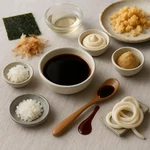
Typical Japanese dishes: how to understand them (and why it's not just about sushi)
Typical Japanese dishes are often reduced to a few "icons" like sushi, ramen, and tempura. In reality, though, they make sense mainly when you understand the logic of Japanese cuisine: cleaner flavors, seasonality, working with texture and umami – that is, the taste "depth" that doesn't have to rely on heavy seasoning. In this guide, we'll show the main families of dishes, how they differ, and how to start Japanese cooking at home practically and without unnecessary shortcuts.
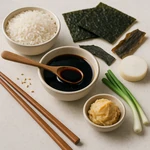
How to start with Japanese cuisine: simple orientation, first purchase and first meals
Japanese cuisine is not "just sushi." It is a way of cooking based on respect for ingredients, purity of flavors, seasonality, work with texture, and the effort to highlight the natural character of the food rather than overpowering everything with heavy seasoning or sauce. This guide will give you a practical start: how to navigate washoku and umami, which ingredients make the biggest difference, and how to set your first steps so that Japanese cooking doesn’t frustrate you right from the beginning.
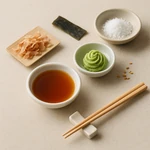
The taste of Japanese cuisine: why it is so clean, delicate, and yet distinctive
Japanese cuisine is based on respect for ingredients, purity of flavors, and thoughtful balance. The distinctiveness is often not achieved by "heavy" seasoning, but by working with umami, delicate seasoning, and a final touch at the table. In the article, you will compare how this logic works and how to safely translate it into home cooking.
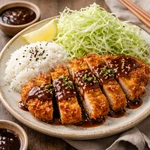
Recipe for Tonkatsu with Sauce
Discover the magic of Japanese cuisine with this recipe for a crispy dish that will amaze you with its simplicity and great taste. When tender pork chops meet a delicious sauce, the result is a dish that is perfect for any occasion. Be inspired by this recipe and experience a unique combination of flavors right in your own kitchen!
To compare approaches across the region, you can continue with Korean Cuisine , look at broader foundations in Chinese Cuisine , or explore cross-border influences in Regional Styles of Asia .