


 Česky (CZK)
 Slovensky (EUR)
 Deutsch (EUR)
 Austria
 Belgium
 Bulgaria
 Croatia
 Denmark
 Estonia
 Finland
 France
 Germany
 Greece
 Hungary
 Italy
Italy Latvia
 Lithuania
 Luxembourg
 Netherlands
 Poland
 Portugal
 Romania
 Slovenia
 Spain
Spain Sweden










The taste of Japanese cuisine: why it is so clean, delicate, and yet distinctive
Japanese cuisine is based on respect for ingredients, purity of flavors, and thoughtful balance. The distinctiveness is often not achieved by "heavy" seasoning, but by working with umami, delicate seasoning, and a final touch at the table. In the article, you will compare how this logic works and how to safely translate it into home cooking.
Japanese food often feels surprisingly "clean": you can recognize individual components at the first taste, nothing is unnecessarily overwhelmed, and yet it does not seem that something is missing from the dish. This impression is no coincidence – it is the result of culinary logic that relies on the natural character of ingredients, seasonality, a balanced composition of the dish, and careful work with seasoning.
The good news is that this flavor culture can be brought into everyday home cooking. Not through a "secret ingredient," but through a few repeatable principles: how to build a base, how to add umami, when to season, and what to leave for the final touch.
🌶️ What is typical for the taste of Japanese cuisine
Japanese cuisine is not just sushi, ramen, or tempura. It can be understood as a broader cooking and eating system that is based on respect for ingredients, subtle seasoning, balanced dish composition, and also an emphasis on the appearance and arrangement of the dish. The goal is often not to "overpower" the ingredients with sauce but rather to support what is naturally good in them.
In the Japanese environment, the traditional food culture is referred to as washoku. It does not mean just a set of recipes but a broader framework: from working with ingredients to processing and preparation, and to the way of serving and consumption. For taste, it is especially important that washoku generally aims for harmony – not maximalism.
Balanced dish composition: flavor is spread out, not "packed"
A typical Japanese meal often consists of several smaller parts. In practice, this means that distinctiveness is not created by a single heavy sauce but by layering small contrasts: something delicate, something saltier, something crunchy, something juicy. Even if you have one main dish, it is usually accompanied by other smaller components that keep the whole in balance.
Umami: the “fullness” that holds delicate tastes together
Japanese cuisine is closely associated with umami – a taste often described as fullness or savoriness. In practice, umami is one of the reasons why seasoning can be delicate yet the dish feels distinctive: instead of burnt spiciness or heavy sweetness, you get a clean, long-lasting flavor.
Main principles and “building blocks” of flavors: how they differ
When people say “Japanese taste,” they often mainly imagine soy sauce. It is important but alone cannot save anything – Japanese taste is rather a combination of three layers: base (neutral center), delicate seasoning during cooking and final touch.
1) Neutral center: rice and simple side dishes
In many Asian cuisines, rice does not function only as a side dish but as a stable, neutral center of the plate. Thanks to that, you can afford more delicate seasoning – rice and simple sides create a "canvas" where details stand out.
2) Delicate seasoning: better to layer than to pour all at once
Japanese cuisine often uses smaller amounts of seasonings and builds flavor gradually. Typically: you add something during preparation (to meld flavors), and leave something until the end (to keep it readable and fresh).
3) Final touch: sauces, dips, and the “last millimeter” of flavor
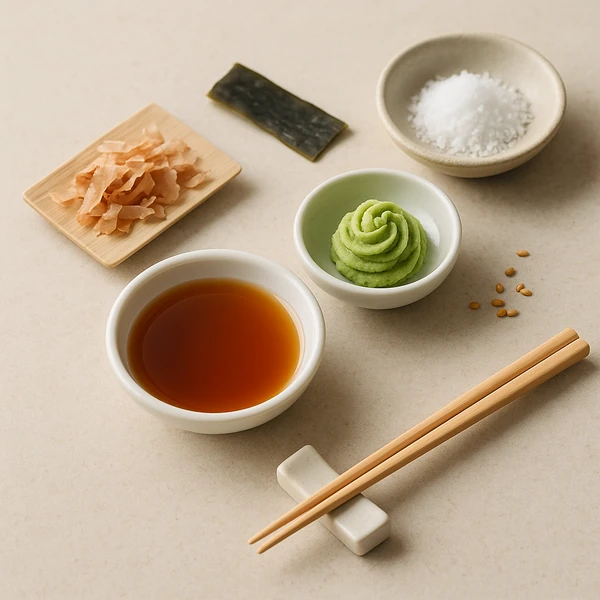
What makes Japanese food so precise is often this final touch – seasoning at the table or just before serving. Instead of drowning everything in one sauce, you have the option to fine-tune each bite exactly: a few drops of soy sauce, a small pinch, a light dip.
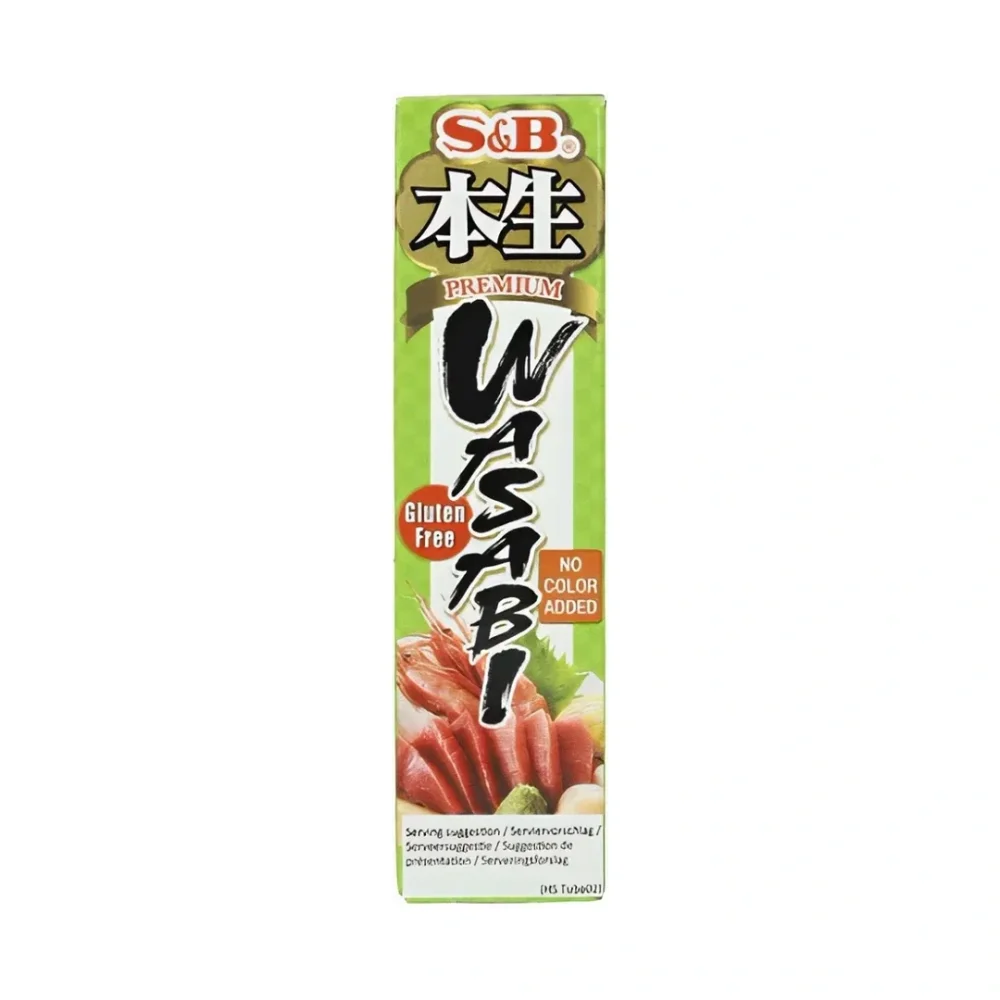
A typical example is the combination of soy sauce and wasabi: intense but in a small amount. If you want to start simply at home, good for use is S&B premium wasabi paste – think of it more as a "spice" than a sauce: really only a small amount is needed.
Family of soy products: from neutral tofu to fermented pastes
Soy in Japanese (and generally Asian) cooking is not one interchangeable ingredient. Alongside delicate and neutral products like tofu, there are strong fermented ingredients that work as seasonings. For tofu, texture is crucial – silken/soft (delicate, creamy) behaves differently than firm/extra firm (firmer, suitable for frying). For fermented pastes, intensity matters and typically only small amounts are needed.
Noodles: soba vs. udon (and why it matters)
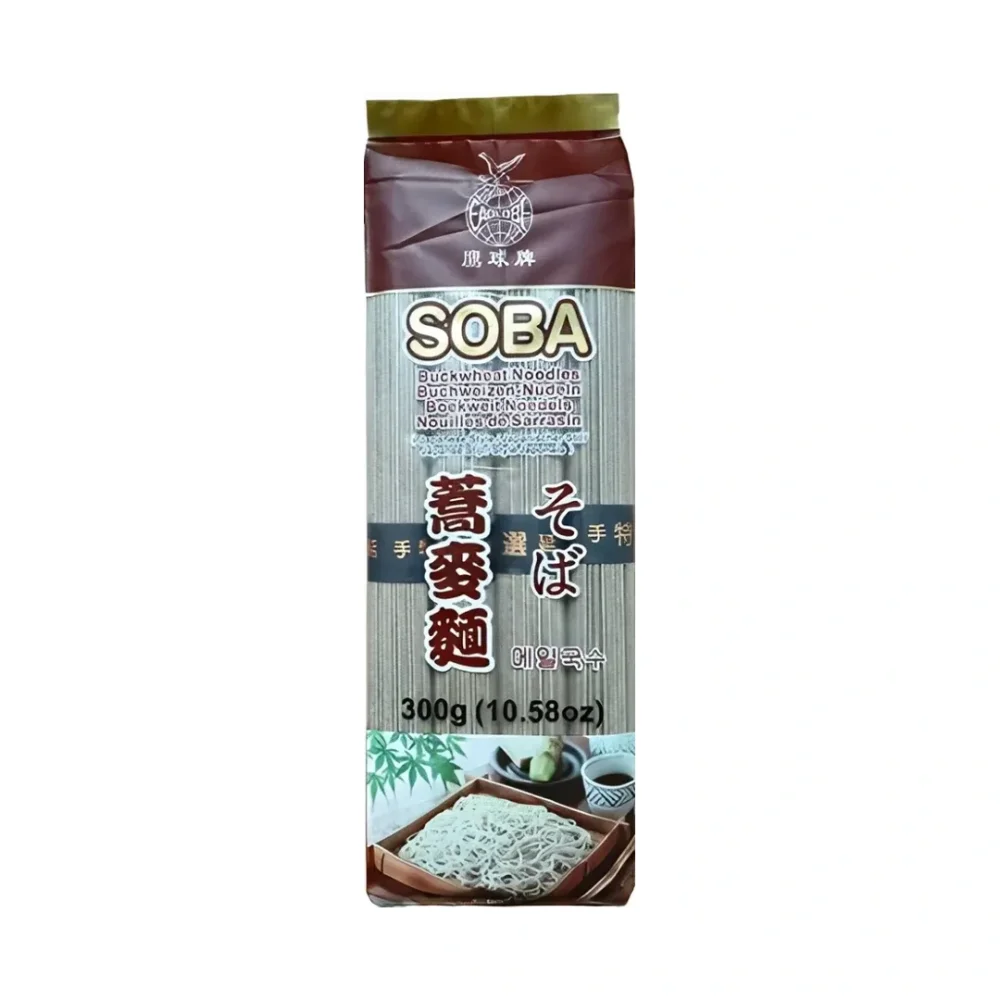
Japanese noodles differ not only in shape but also in character. Soba are associated with buckwheat (having a stronger, "nutty" tone), while udon are usually wheat-based, thicker, and flavor-wise more neutral. If you want to taste a more pronounced but still clean profile, a good start can be soba noodles.
How to apply these principles to home cooking
The biggest improvement is not made by buying ten ingredients but by learning a few certain "micro-decisions": when to season, how to salt carefully, how to work with umami, and how to leave room for final adjustment.
Step 1: Build the dish on a neutral center
- Rice or simple noodles as a base allow you to season more delicately yet have a result that's "readable" in a Japanese way.
- When the base is neutral, you don't need an aggressive sauce. Smaller, precise seasoning is enough.
Step 2: Add umami intentionally (and in small amounts)
In home cooking it's worth thinking of umami as "depth" added drop by drop. A practical tip: if you feel the dish "lacks something," don't immediately reach for more salt. First, try adding a small amount of an ingredient that provides fullness (umami), and only then adjust saltiness.
Step 3: Treat soy sauce as a spice, not the main liquid
For the Japanese taste, it's important that soy sauce does not overpower the rest. Practically, this means two things: choose the right style and dose carefully.
- As a guide, the category Japanese soy saucescan serve, which directly targets the Japanese flavor profile.
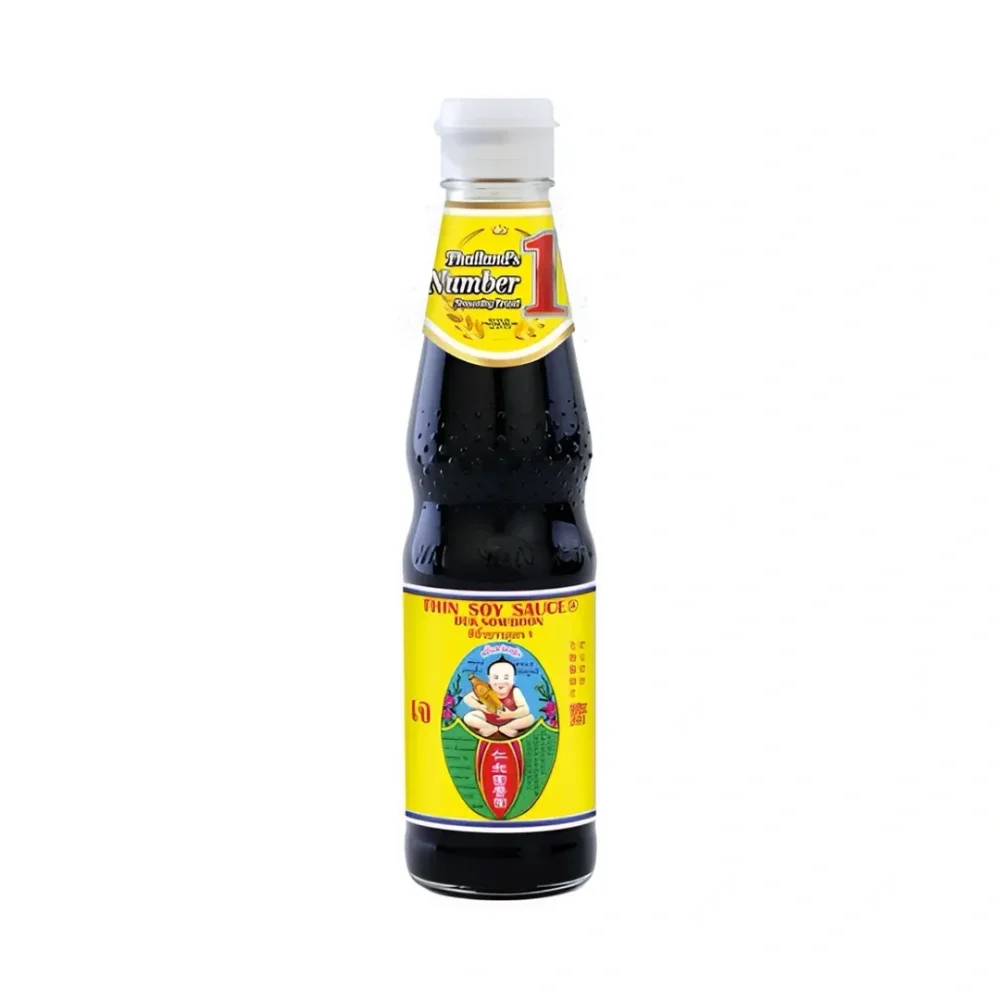
- If you use other styles at home, perceive them as different ingredients. For example, Dek Som Boon light soy sauce is a Thai type – it can work great but flavor-wise it's not "the same" as a Japanese sauce. For delicate Japanese dishes, dose even more carefully and taste continuously.
Practical dosing: start rather at the level of a teaspoon for the whole pan/bowl (depending on quantity) and add gradually. For a dip with the meal, put a small amount in a bowl and dip lightly – the goal is to season the bite, not to "paint it over."
Step 4: Simplify sushi rice (without complicated mixing)
If you want to taste the typical "sushi" line (gently sweet and sour, clean) at home but don't want to deal with everything from scratch, ready-made seasoning helps. Golden Turtle Chef sushi seasoning can be taken as a quick path to the characteristic rice flavor: add in small amounts to warm rice, stir carefully, and taste continuously to keep the rice balanced and not overwhelmed by acidity.

Step 5: Learn one "final touch"
Final seasoning in Japanese cooking is often the moment when delicate flavors become distinct. Two simple home choices:
- Wasabi + soy sauce: don’t make it a thick paste. Put some soy sauce in a bowl and add wasabi really in small pinches to get a fresh sharpness, not a spicy dominance.
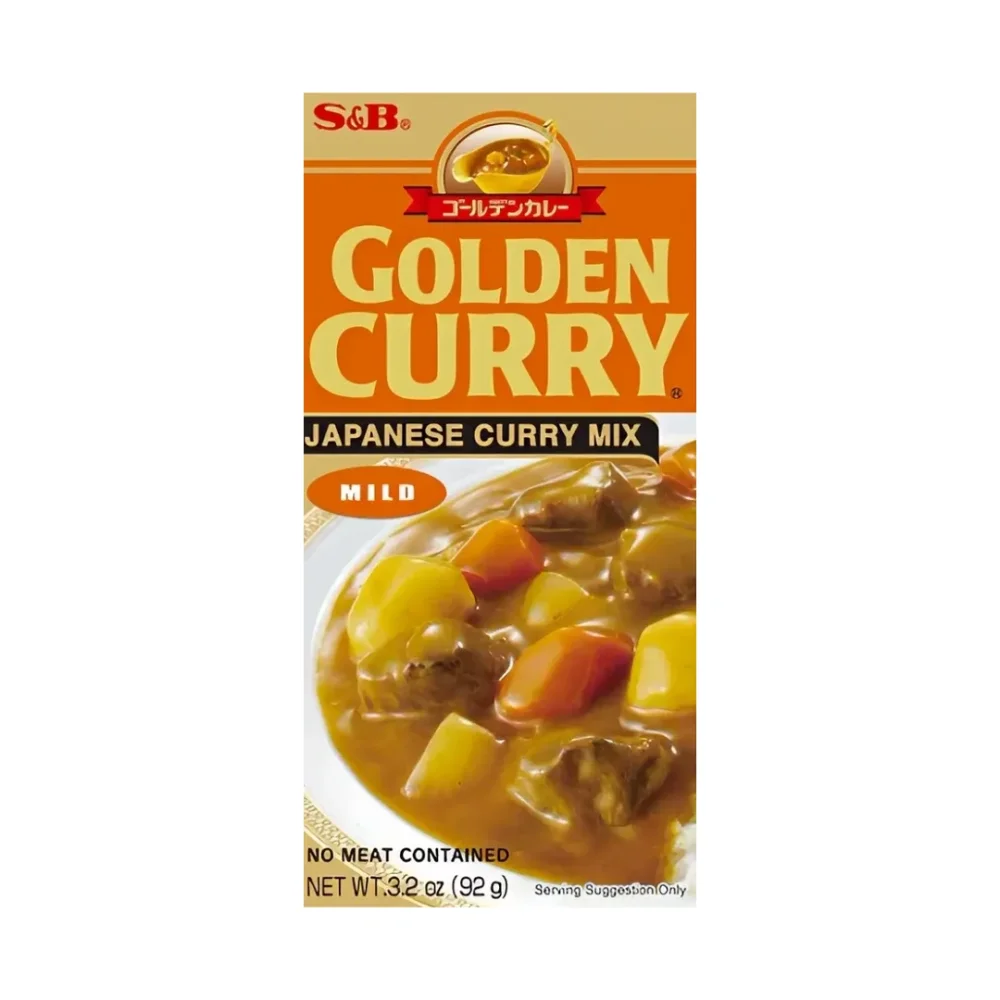
- Japanese curry as a “comfort” style: Japanese curry is known for milder spiciness and a slightly sweet profile. If you want a flavor-accessible start without sharp edges, S&B curry seasoning paste can be handy (same rule: add gradually and adjust to taste).
💡 What to watch out for: common mistakes and confusions
1) “If it’s Japanese, it must be heavily flavored with soy sauce”
A common mistake is making soy sauce the main flavor. Japanese logic usually aims for the exact opposite: the flavor should be readable and balanced. The solution is simple but requires discipline: season gradually, use small doses, and leave some seasoning for the final touch.
2) Confusing “rice wines”: mirin, sake, and cooking wine
There is often confusion around “rice wine”: mirin, sake, and various Asian cooking wines are not automatically the same. If you want a Japanese result, treat them as different ingredients with different roles in the kitchen (not as one interchangeable item).
3) Fermented paste as paste: miso is not doenjang
Fermented soy pastes differ between countries. If you choose a Korean type, you get a Korean character – which can be great, but good to know beforehand. A typical example is Sempio doenjang: expect the result not to be “Japanese miso” but a different style of fermented flavor.
4) “Tempura” on the package does not always mean the same flavor profile
Tempura is known rather for a light, clean batter. But in practice, there are mixes that are more flavor-shifted (for example, more heavily spiced). If you want to maintain Japanese delicacy, it's good to consider that not every mix will be neutral – for instance, Gogi tempura mix with seasoning may influence the final taste more than expected.
5) Confusing soy sauces across cuisines
Different soy sauces are not universally interchangeable. Even within one type (light/dark etc.), they can have different characters depending on origin. If you cook deliberately Japanese style, stick to Japanese style; if you experiment, treat it as a conscious change of profile. As a guide outside Japanese style, the category other soy sauces can serve – just fairly expect a different result than with Japanese sauces.
What to take away from the article
- The "clean" taste of Japanese cuisine is based on respect for ingredients, balanced dish composition, and more delicate seasoning.
- Distinctiveness often does not arise from a strong sauce but from umami and a precise final touch.
- Practically, a three-layered approach works: neutral base (rice/noodles), delicate seasoning during cooking, and small finishing touches at the table.
- Use soy sauce as a spice – and consider that different styles are not "the same."
- Watch for confusions: mirin vs. sake, miso vs. doenjang, and “tempura” mixes with strong seasoning can change the character of the dish.

Read next
If you want to explore this topic further, continue with these related blog guides and articles:
