

 Česky (CZK)
 Slovensky (EUR)
 Deutsch (EUR)
 Austria
 Belgium
 Bulgaria
 Croatia
 Denmark
 Estonia
 Finland
 France
 Germany
 Greece
 Hungary
 Italy
Italy Latvia
 Lithuania
 Luxembourg
 Netherlands
 Poland
 Portugal
 Romania
 Slovenia
 Spain
Spain Sweden










Steaming in Asian Cooking
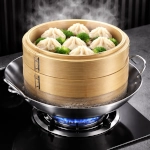
This guide focuses on steaming as a core Asian cooking technique, explaining what it is, when it is used, and what results it creates in finished dishes. You’ll find practical topic coverage such as basic setup and timing ideas, how to manage steam and moisture, and how steaming fits into everyday home cooking alongside other methods.
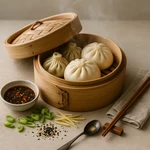
Steaming dumplings and bao: how to achieve the right texture, selection, and common mistakes
Steaming is one of the techniques in Asian dumplings that most determines the outcome: whether the wrapper will be soft and elastic or, on the contrary, soggy, heavy, or "rubbery." In this guide, you'll clarify exactly what steaming means, which types of dumplings and bao are most commonly steamed, how to choose (especially with frozen pieces), and how to avoid mistakes that ruin texture and flavor.
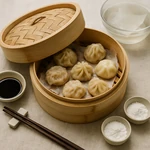
The most common mistakes when steaming in Asian cuisine – and how to avoid them
Steaming is one of the techniques in Asian cuisine that can be incredibly delicate and precise – and that's why mistakes are easily made. They most often appear with dumplings and dim sum: dumplings fall apart, the wrapper loses its texture, or the wrong method is chosen for the wrong type. This article provides practical guidance: what steaming actually means in an Asian context, which types of dishes are typically steamed, and how to recognize when the process (or chosen technique) is not appropriate.
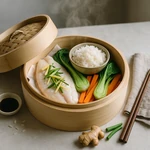
Steaming fish, vegetables, and rice: a gentle technique that makes a big difference
Steaming (cooking with steam) is one of the most important techniques in Asian cuisines – and also one of the most underestimated. When done correctly, it gives the food a pure flavor of the ingredient, juiciness, and a delicate texture without the need for a large amount of fat. In this guide, we will explain why fish, vegetables, and certain types of rice are steamed, how the goals differ for each, and what to watch for at home to avoid dry or overly soft results.
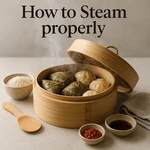
How to steam properly: when to choose steam and how not to ruin dumplings, bao, or dim sum
Steaming (cooking with steam) is one of the techniques in Asian cuisine that fundamentally changes the outcome: it preserves a different texture and doesn't soak the ingredient like direct contact with water. That's why it's important to consider not only "what to cook" but also "how to cook" – for dumplings, dim sum, and other delicate bites, the technique often matters more than we admit at home.
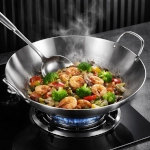
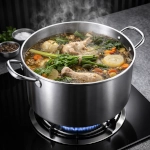
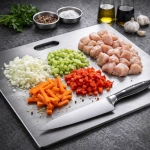
To explore nearby techniques, continue with Wok Cooking for high-heat stir-frying, Broths and Base Sauces for building flavour foundations, or Cutting and Ingredient Prep for knife skills and mise en place.