


 Česky (CZK)
 Slovensky (EUR)
 Deutsch (EUR)
 Austria
 Belgium
 Bulgaria
 Croatia
 Denmark
 Estonia
 Finland
 France
 Germany
 Greece
 Hungary
 Italy
Italy Latvia
 Lithuania
 Luxembourg
 Netherlands
 Poland
 Portugal
 Romania
 Slovenia
 Spain
Spain Sweden










The most common mistakes when steaming in Asian cuisine – and how to avoid them
Steaming is one of the techniques in Asian cuisine that can be incredibly delicate and precise – and that's why mistakes are easily made. They most often appear with dumplings and dim sum: dumplings fall apart, the wrapper loses its texture, or the wrong method is chosen for the wrong type. This article provides practical guidance: what steaming actually means in an Asian context, which types of dishes are typically steamed, and how to recognize when the process (or chosen technique) is not appropriate.
Why steaming mistakes are so visible
In Asian cuisine, technique often decides how the dish ultimately feels. The same ingredient can taste completely different depending on whether it is cooked at high heat, slowly simmered, pan-fried, or steamed. Steaming is especially sensitive because the goal is usually a delicate texture and a “clean” expression of ingredients – which is easily lost when something is overcooked or when a method unsuitable for the dish type is used.
At the same time, the general logic of Asian techniques applies: emphasis on preparation beforehand, working with texture, and the ability to select the right cooking method for a specific dish. Steaming is not a universal “fix” for everything – but where it makes sense (such as with dim sum) it is irreplaceable.
🍽️ What "steaming" exactly means in practice (and what it's often confused with)
In everyday domestic speech, “steaming” is often confused with any gentle cooking. In the Asian context, however, it makes most sense to consider it as one of the equivalent techniques alongside boiling, pan-frying, or combined methods.
A typical source of confusion is when people take a favorite dough/dumpling and try to prepare it “their own” way regardless of what that type actually requires. Meanwhile, with dumplings, there are variants for which steaming is key, and others that shine better in water or soup.
Which types of dumplings are usually steamed – and which are not
Dumplings (filled pockets, dumplings, and related bites) are not one specific product but a broad family of dishes. They differ in wrapper (wheat versus starch/translucent), thickness, filling, and in how they tolerate different techniques without losing texture.
Steaming: a typical choice for delicate and “dim sum” pieces
- Dim sum pieces in general – many of them are designed for a delicate texture that is easily destroyed by excessive boiling.
- Har gow – translucent starch wrapper with shrimp filling (very sensitive to overcooking).
- Siu mai (shumai) – open dumplings, often with a wheat wrapper.
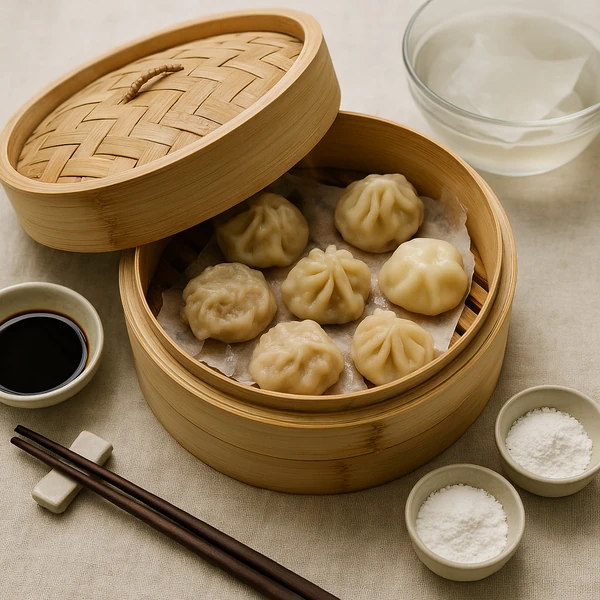
- Xiao long bao – soup dumpling with a liquid interior, where delicate steaming is essential.
- Bao / baozi – leavened buns and filled buns typically behave differently from thin dumplings; that is why it’s important not to confuse them with “pan-fried dumplings.”
Other techniques make more sense elsewhere: water, pan, or broth
- Boiling in water fits firmer dumplings like jiaozi (and some mandu): the result is soft and tender.
- Pan-frying and finishing in steam is the classic approach for gyoza and other pan-fried dumplings: crispy bottom + soft top + juicy filling.
- Soup / broth is a natural environment for wontons, which tend to be delicate and often “designed” to work directly in a bowl of broth.
How to start at home: a simple check before you begin steaming
The best “onboarding” to steaming is not to chase universal times but to quickly learn to recognize, the logic behind a specific dumpling and what mistakes typically destroy it. This short check will help:
- Name the type: is it gyoza/jiaozi (more robust dumpling), wonton (more delicate, often for soup), or dim sum piece (har gow/siu mai/xiao long bao)?
- Estimate the wrapper's sensitivity: the thinner and more delicate the wrapper, the more at risk the texture is of being lost through long heat exposure.
- Choose technique according to the goal: do you want a purely soft and delicate result (steaming), texture contrast (pan-frying + steam), or attachment to broth (wonton in soup)?
- Prepare the service beforehand: with delicate pieces, it’s important to start serving right away so that the texture doesn’t unnecessarily “disappear due to waiting.”
If you want a stronger dip for steamed dumplings, follow the same logic known from dim sum culture: delicate bites don’t need an aggressive sauce that overpowers everything. On the contrary, more robust types (gyoza, some jiaozi) often tolerate more pronounced flavor.
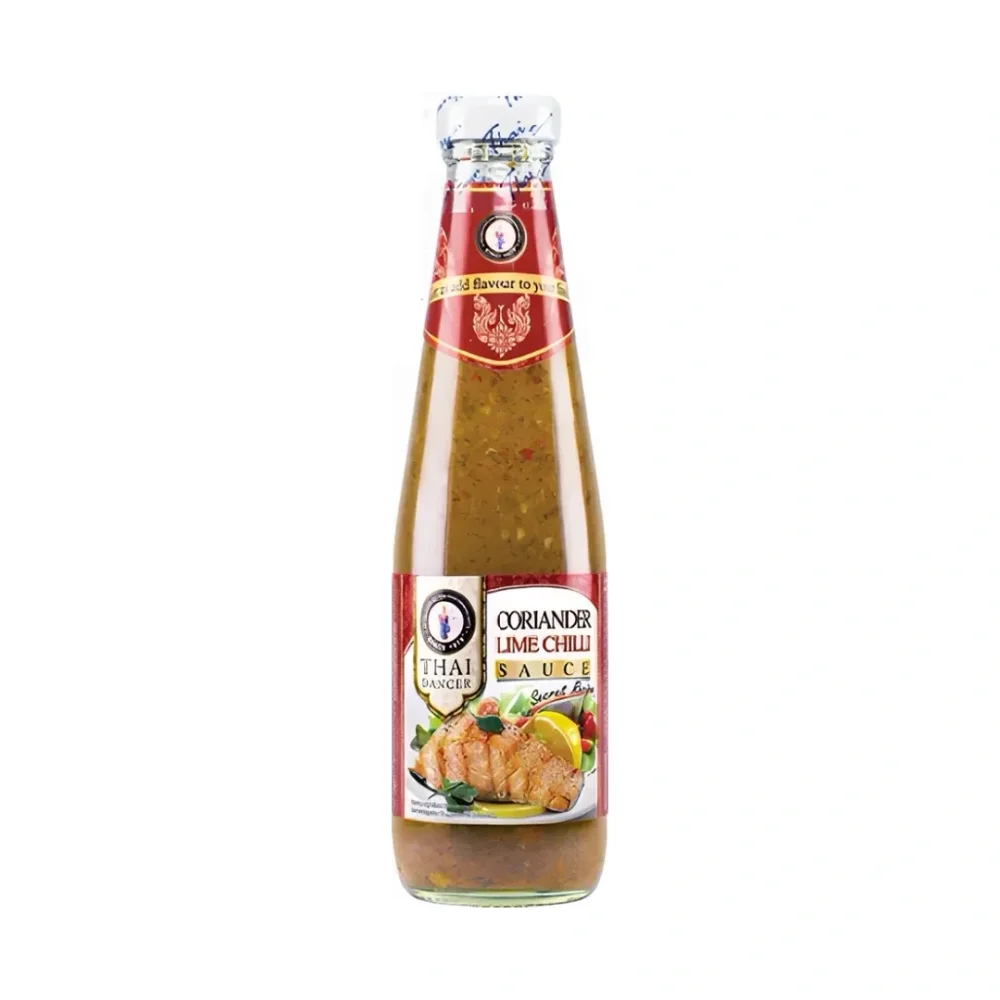
As an example of a stronger dip to handle moderately (and better to dose rather than to "drown" the delicate bites), Thai Dancer lemon chili sauce with coriander.
The most common steaming mistakes (and how to spot them)
1) Wrong method for the wrong type of dumpling
This is the biggest and also most common mistake: trying to prepare different types of dumplings with one single method. A typical example from practice:
- Bao in a pan without steam won't work the same as gyoza.
- Wonton dry-frying loses its advantage (delicacy) and often works better in broth.
- Xiao long bao need gentle steaming – precisely because of their liquid interior and thin wrapper.
If you repeatedly “fail,” it is often not a matter of skill, but a bad choice of technique.
2) Overcooking delicate pieces
With thinner types (for example wontons, har gow, and generally more delicate dim sum pieces), overcooking is a typical way to make the wrapper lose structure and the result feel “tired.” In Asian techniques, delicate things are generally easy to overdo – and with steaming this happens very quickly.
A practical tip: if you feel like “a little longer just to be sure,” for delicate wrappers that is often exactly the moment when the texture starts to deteriorate.
3) Defrosting without a plan (when it’s better to cook/steam straight from frozen)
With many frozen dumplings, it is practical (and often better) to cook or steam them directly from the frozen state. Unplanned defrosting can damage the wrapper – which then tears or loses shape more easily during cooking.
4) Dip or sauce that overpowers the whole dish
Delicate dim sum pieces typically do not need an aggressive dip. When the taste is “too loud,” what steaming is meant to showcase is lost: purity and texture. On the other hand, more robust types (such as gyoza) often call for a stronger dip – but it’s good to think of this as a conscious choice, not an automatic one.
5) Underestimating preparation beforehand (especially for delicate techniques)
Asian techniques generally rely on preparing ingredients in advance: cutting, portioning, order, service. With steaming, this is practical mainly because the window of “ideal texture” can be short. When improvising at the moment of serving, the result is often harmed by unnecessary waiting.
6) Expecting one technique to solve everything
⚠️ A common mistake in Asian cooking is trying to use one technique for dishes that require a different approach. Steaming is great, but some dishes build their identity on other heat treatments (for example quick stir-frying). And there different typical mistakes apply, like using too much sauce.
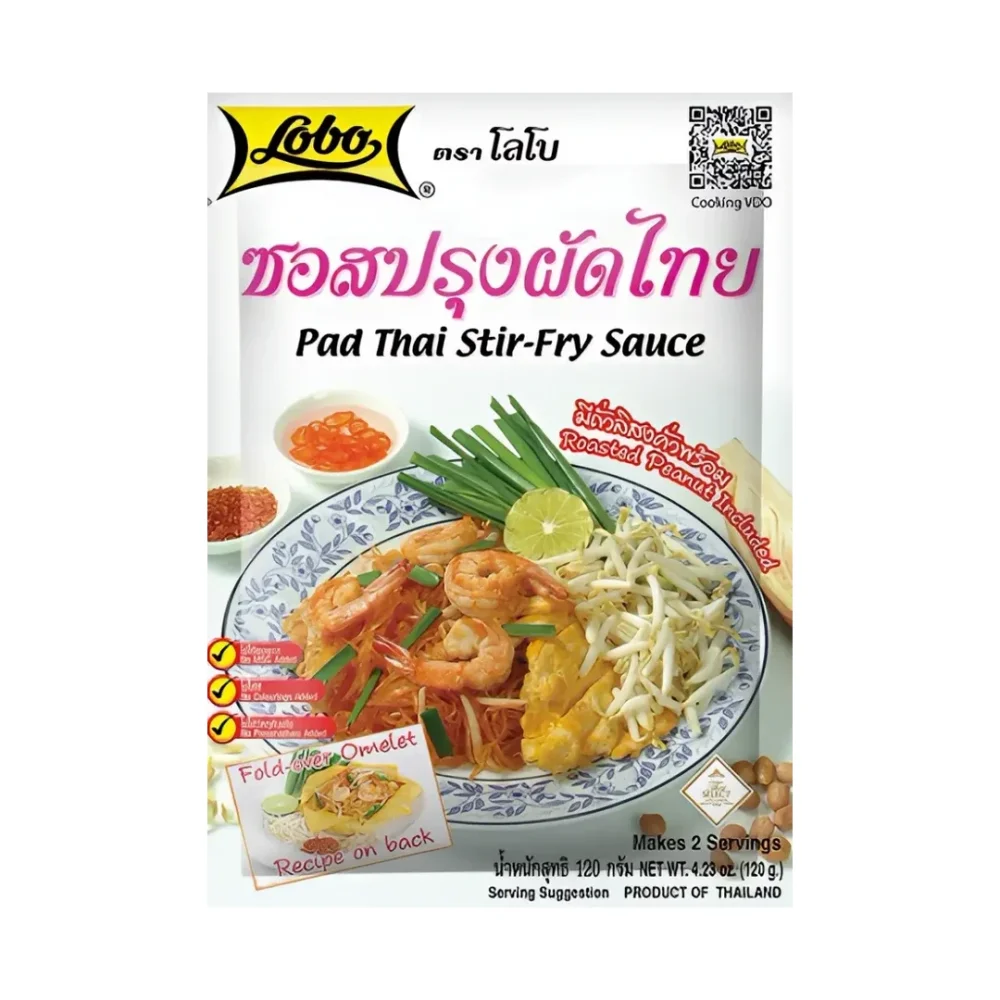
If you try dishes like Pad Thai at home, it makes sense to treat the sauce as a tool that “binds” to the ingredients, not drowns them. An example of a ready sauce base for this style can be Pad Thai roasted peanut sauce Lobo – more important than the brand is the principle: technique and dosing make the difference.
What to take away from the article
- Steaming is not a universal process– first clarify what type of dumpling you are preparing (gyoza/jiaozi vs. wonton vs. dim sum pieces).
- Delicate wrappers overcook easily– with har gow, wontons, or xiao long bao, timing is critical and texture is lost quickly.
- Don’t confuse families of dishes– bao (leavened buns) don’t behave like thin dumplings; wontons often belong in broth; gyoza typically benefit from a combination of pan-frying and steaming.
- Dip is part of the experience but shouldn’t overpower everything– delicate bites call for gentler accompaniment, more robust ones can handle stronger flavor.
- Preparation beforehand is half the success– with techniques where texture is decisive, it pays to have a plan and not let the finished bite wait unnecessarily.

Read next
If you want to explore this topic further, continue with these related blog guides and articles:
