


 Česky (CZK)
 Slovensky (EUR)
 Deutsch (EUR)
 Austria
 Belgium
 Bulgaria
 Croatia
 Denmark
 Estonia
 Finland
 France
 Germany
 Greece
 Hungary
 Italy
Italy Latvia
 Lithuania
 Luxembourg
 Netherlands
 Poland
 Portugal
 Romania
 Slovenia
 Spain
Spain Sweden










The taste of Vietnamese cuisine: why it feels light, fresh, yet full
Vietnamese cuisine is not just phở (noodle soup broth) and bánh mì (baguette filled with meat and vegetables). It is based on freshness, lightness, and especially on the ability to combine multiple layers of flavor so that the food feels lively but not heavy. In practice, it means thoughtful balancing of salty, sour, sweet, spicy, and umami – and a big role of herbs, rice, noodles, broths, and fermented seasonings.
🌶️ What is truly typical of Vietnamese cuisine (definition and orientation)
The most concise shortcut is three concepts: freshness, lighter impression and balance.
- Freshness and lightness: dishes often rest on rice or rice noodles, vegetables, herbs, and broths. The taste should be lively and “clean,” not overloaded.
- Herbs and leaves: they are not just decoration. Herbs and leafy greens are a full flavor layer that fragrances and lightens the dish.
- Fermented seasonings: a key role is played by fish sauce and other fermented bases – they provide umami, depth, and a long finish.
- Rice and rice products: form a neutral “canvas” on which the seasoning and contrasting textures stand out.
- Balancing flavors: salty, sour, sweet, spicy, and umami should not overpower each other. The goal is for them to complement each other.
It is also important that Vietnamese flavor often works as a puzzle: some components are adjusted only at the end (such as seasoning, sourness, herbs), so you have great control over the result.
Main “layers” of flavor: what it consists of and how it differs
Vietnamese cuisine is diverse, but some flavor layers recur across different meal styles. Here's a practical way to start “reading” it:
1) Base: rice, rice noodles, and broths
Rice and rice noodles give the dish calmness and space for seasoning. Broths and soup bases allow the dish to have depth without necessarily being heavy.
👃 2) Aromatic layer: herbs and leaves
Herbs and leafy greens push the dish toward freshness. It’s not just “a bit of green on top” – often it’s a full component that determines the final impression.
3) Saltiness and umami: fish sauce and fermented bases
Fish sauce in Southeast Asia does not work as “extra fishy flavor.” In small amounts, it adds saltiness, depth, a long finish, and distinct umami, and helps connect other ingredients into a more compact, complete taste.
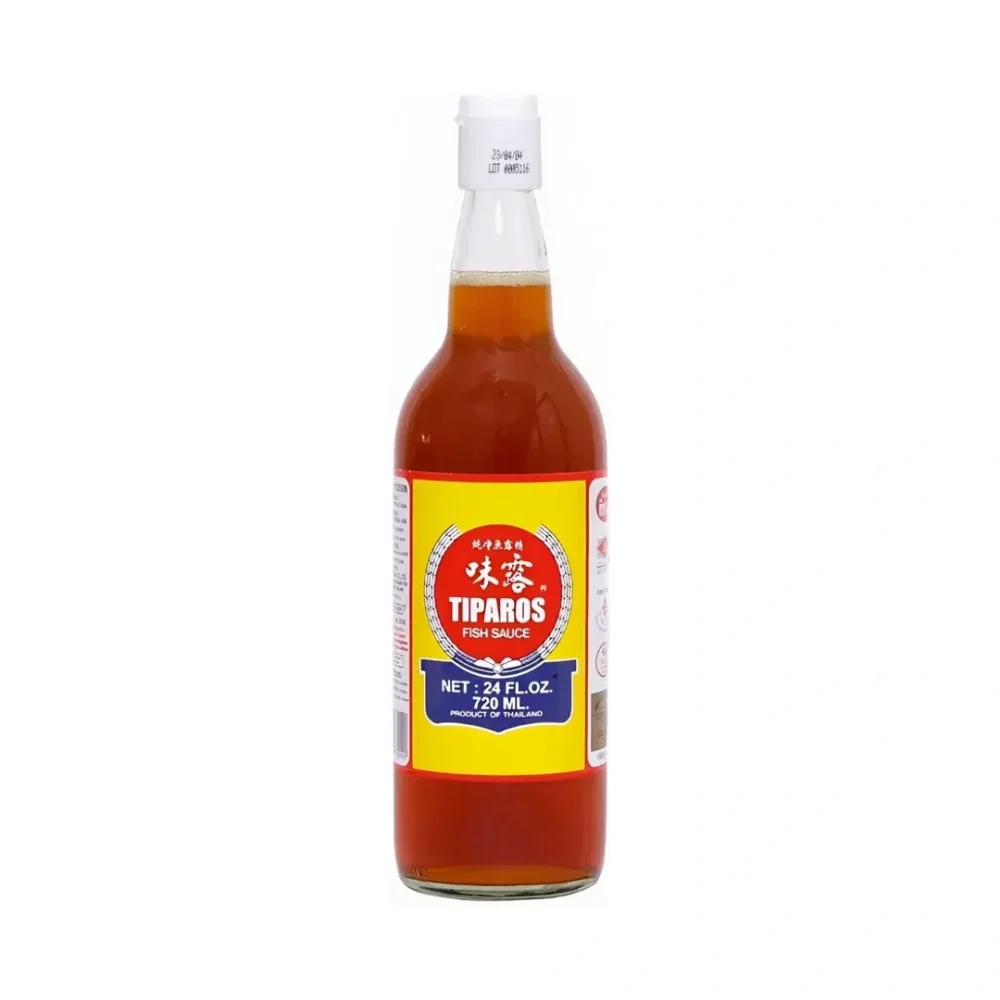
A concrete example is Tiparos fish sauce – typically a strongly salty and aromatic seasoning base, which makes sense to use drop by drop.
4) Sourness and “spark”
Sour ingredients are important for balancing saltiness and umami. Sourness also lifts the aroma of herbs and makes the flavor “livelier.”
5) Sweetness and spiciness as tuning, not dominance
Sweetness and spiciness often work as fine-tuning. The point is not to make the dish sweet or extremely hot, but to use these tastes to support balance.
How to assemble Vietnamese flavor at home (practical onboarding)
If you want to understand the Vietnamese flavor profile in practice, try to think in two steps: first build the base, then fine-tune the balance.
Step 1: Build a neutral base
- Choose a “carrier” component: rice, rice noodles, or broth base.
- Add a fresh component: treat herbs and leaves as a flavor layer, not just decoration.
Step 2: Fine-tune saltiness and umami with fish sauce (carefully)
👉 Start with a very small amount. The rule with fish sauce is: you can always add, you can’t remove. Practically, this means adding a few drops (or a small amount on the tip of a spoon), stirring, letting it bloom for a moment, and only then deciding if more is needed.
Fish sauce is good for seasoning broths, sauces, marinades, and dips. As a universal starter, the Tiparos fish saucecan be used, but more important than the brand is the style of work: small doses and continuous tasting.
Step 3: Balance sourness, sweetness, and possibly spiciness
Once you have the basic saltiness/umami, it makes sense to then fine-tune sourness and sweetness. In practice, it’s good to proceed in small steps and taste: sourness “lifts” the flavor, sweetness can round it, and spiciness adds energy.
Step 4: Pay attention to texture
Vietnamese dishes often rest also on contrasts of texture (soft vs. crunchy). It’s not a detail – when a dish feels “flat,” it’s often not just lacking salt, but also contrast.
How to choose fish sauce (what to look for to ensure a clean taste)
If you want more control over the result, orientation by general quality signs helps:
- Longer fermentation usually leads to fuller, rounder, and more complex flavor.
- “First extract” is perceived as a milder and higher quality variant.
- Cheaper bottles more often contain dilution, sugar, coloring, or flavor enhancers, which change the character of the sauce.
- On labels, you may find the marking N (total nitrogen) – a higher value usually means a higher concentration of broken-down proteins, hence more intense umami.
What if you don’t want fish sauce (or you cook plant-based)
Fish sauce is typical for Vietnamese flavor, but if you don’t use it for any reason, it makes sense to think about what it replaces in the dish: saltiness and umami that connect other ingredients. In such a case, an umami sauce on another base can help – for example, mushroom vegetarian sauce Dek Som Boon.
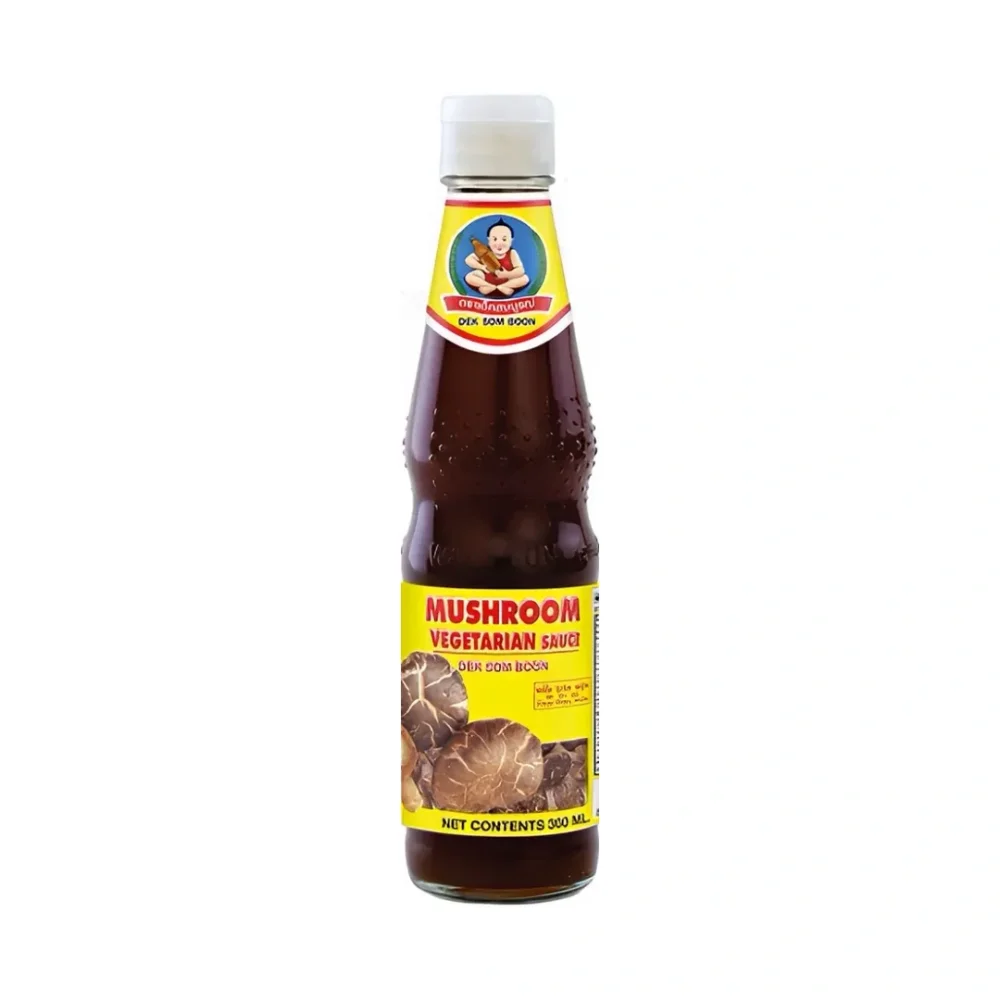
Important note: it is not “the same as fish sauce” nor an authentic substitute. It is just a practical tool for building depth of flavor more easily in plant-based dishes.
If you often work with salty umami flavor also beyond fish sauce, a guide Other soy sauces – more as inspiration for different seasoning styles than as a “Vietnamese rule.”
Common mistakes and misunderstandings (and how to fix them)
1) “Fish sauce = fishy taste”
A common mistake is to expect fish sauce to make the dish fishy. In reality, it works as a concentrated seasoning tool for saltiness and umami. If you taste it as dominant in the dish, it usually means there is simply too much.
How to fix it: next time dose drop by drop and balance with sourness and a bit of sweetness. It also helps to add more “neutral” base (rice/noodles/broth).
2) Over-reliance on one taste
When the dish is only salty, only sour, or only spicy, it loses typical Vietnamese lightness. The Vietnamese flavor is based on no component being “domineering.”
How to fix it: fine-tune gradually: first saltiness/umami, then sourness, then sweetness, and finally spiciness. Always in small doses and with tasting.
3) Too few herbs and leaves
The dish may be technically properly seasoned, but without herbs and leaves, it often feels heavier and flatter.
How to fix it: treat herbs as a real ingredient and add them so they are flavorfully present in the dish, not just “for looks.”
4) Confusing “fermented” with “automatically probiotic”
Fermentation is essential in Asian cuisines mainly because it builds umami and depth of flavor and helps change the texture and aroma of ingredients. However, not every fermented food is automatically probiotic – some fermented foods may contain live microorganisms, but this is not a universal rule.
5) Trying to start “Asian cuisine” as one bundle
Asian cuisines differ in flavor, technique, and how they work with aromatic components. If you try to cook “Asian” without a specific direction, you will easily create flavor chaos.
How to fix it: choose one clear style (for example, Vietnamese emphasis on freshness, herbs, and balance) and stick to its logic when seasoning.
What to take away from the article
- Vietnamese flavor is mainly about balance and layering, not about one universal sauce.
- The core consists of rice and rice products, herbs/leaves, fermented seasonings (mainly fish sauce), and sour components.
- Fish sauce provides saltiness and umami – dose it in small steps and fine-tune with other flavors.
- Fermentation in cuisine means mainly flavor depth; “fermented” is not automatically “probiotic.”
- When a dish does not feel fresh, it often lacks not salt but herbs, sourness, or texture.

Read next
If you want to explore this topic further, continue with these related blog guides and articles:
