


 Česky (CZK)
 Slovensky (EUR)
 Deutsch (EUR)
 Austria
 Belgium
 Bulgaria
 Croatia
 Denmark
 Estonia
 Finland
 France
 Germany
 Greece
 Hungary
 Italy
Italy Latvia
 Lithuania
 Luxembourg
 Netherlands
 Poland
 Portugal
 Romania
 Slovenia
 Spain
Spain Sweden










North and South of Vietnam in the kitchen: how to recognize differences in taste and cook “Vietnamese” at home
Vietnamese cuisine is not a single uniform flavor – striking differences between the north, central region, and south are one of the main reasons the same “Vietnamese” dish can taste slightly different each time. In this article we will show what is typical for the north, how the central region is more pronounced, and why the south is often described as sweeter. And most importantly: how to use these differences when choosing ingredients and seasoning at home.
Why even consider north and south: Vietnamese cuisine is built on balance and details
Vietnam is often simplified in cuisine to a few icons (typically phở or bánh mì), but in reality it is a broad and finely divided cuisine. It is characterized by freshness, lightness, and the ability to layer multiple flavors so that a dish feels lively but not heavy.
For orientation it is useful to stick to a few fixed points that repeat across Vietnamese cuisine between regions:
- herbs and leafy greens are not decoration, but a fully-fledged ingredient,
- rice and rice products (including rice noodles and rice paper) form the basis of many dishes,
- fish sauce and other fermented bases provide saltiness, depth, and umami,
- flavor is built by balancing salty/umami, sour, sweet, spicy, and herbal freshness.
Differences between regions are often not about “completely different ingredients,” but about how sparingly or intensely they are used and how they are combined together.
North, central, and south Vietnam: what changes in taste and in the structure of dishes
Northern Vietnam: gentler, more restrained, and very much about purity
Northern Vietnamese cuisine is often associated with a gentler, more restrained, and very balanced taste. Compared to the south it often feelscleaner and less sweet
- A strong emphasis on broth clarity and precise seasoning (more restrained than overdone).
- Lighter and more delicate profile – the flavor is not usually built on one dominant component.
- The strong role of Hanoi and the Red River Delta as an important regional background.
Practically this means that when you head “north,” it pays to watch mainly the quality of the base (broth, noodles) and season in small steps.
Central Vietnam (Huế and the central coast): more intense and often spicier
Central Vietnam, especially the area of Huế and the central coast, is associated with bolder flavors, higher intensity and often spiciness. Besides flavor, the central region is also typical for richer visual composition.
- Stronger and often sharper profile than in the north.
- Emphasis on variety and richness – dishes can seem "more composed."
- Significant is the history of the imperial court in Huế and at the same time the connection between "court" and folk tradition.
- There appear specific noodle and rice specialties (regional distinctiveness is important for the central region).
If you want to imitate central Vietnam at home, it helps to think about the food as a composition: more contrasts, more layers and often a higher intensity of seasoning.
South Vietnam: sweeter compared to the north
For the south, one clear guideline is often mentioned compared to the north: the north tends to be less sweet than the south. So if you prefer a more restrained profile, you'll feel closer to the north; if you like a somewhat more pronounced sweet "arc" in the flavor, you will probably head more toward the south.
At the same time, regional differences in Vietnam are generally pronounced – which is why it's good not to expect that "Vietnamese taste" is always the same.
How to use the differences at home: broth vs. pan, noodles vs. papers and smart work with fish sauce
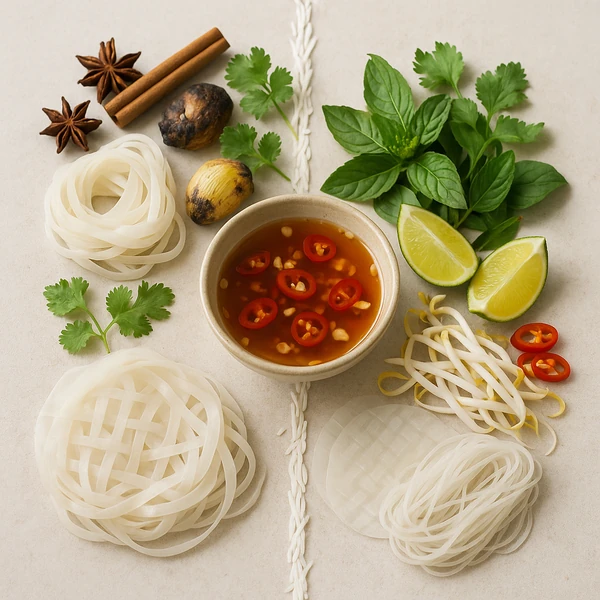
Vietnamese cuisine often works as a system where the individual parts complement each other: broth, herbs, lime (or other acidity), sauce, possibly pickled vegetables, chili and rice or noodles. When you want to hit a more northern or southern impression at home, it helps to stick to three practical decisions.
1) Do I want a clear broth or a quick pan?
Northern style is strongly associated with the clarity of the broth and precision. Whether you make a noodle soup or just a broth bowl, it's worth choosing noodles that in the broth hold their shape and don't seem fragile. For Vietnamese soups and bowls, typically used are rice noodles (for example for phở or bún), the choice of which you can start through the crossroads rice noodles.
On the other hand, for the pan (stir-fry / wok) you need noodles that withstand tossing and short intense heat – the key is not to overcook them before throwing them into the pan.
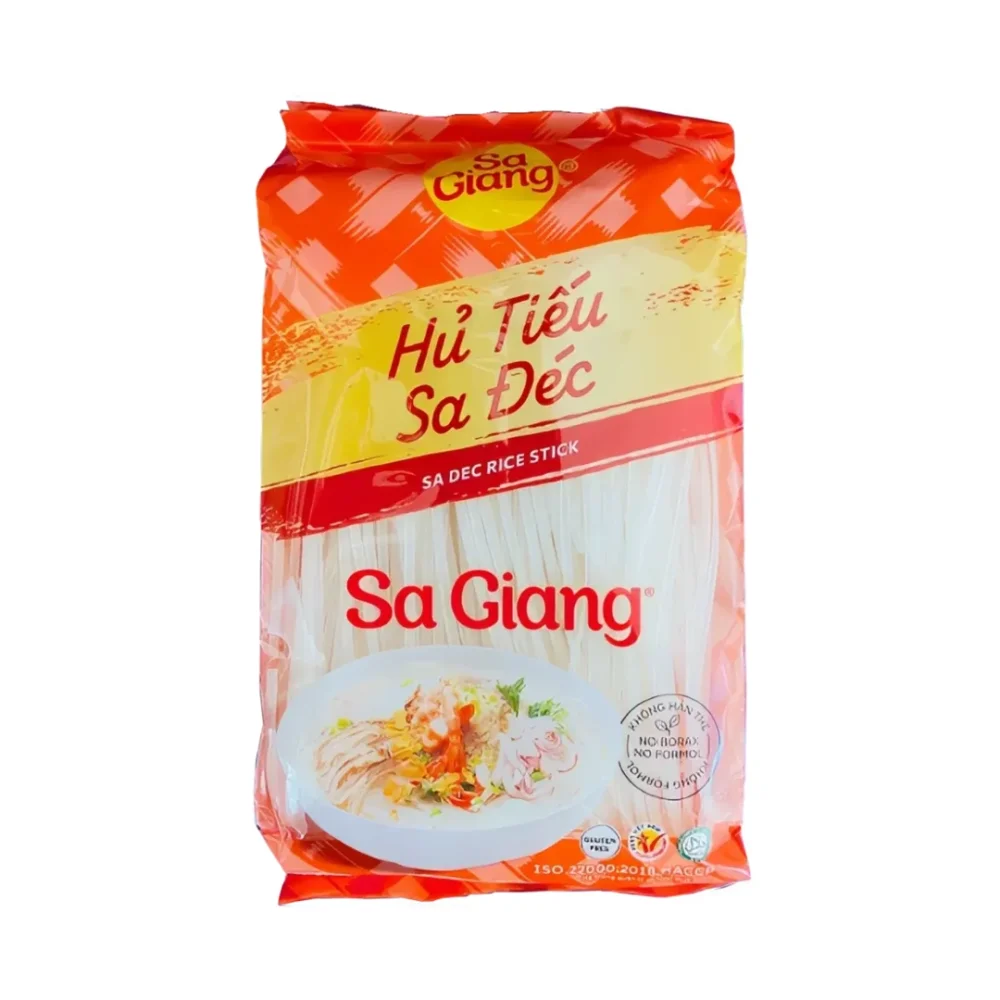
If you want versatile rice noodles that coat well with sauce and also work in soup, a practical choice can be Sagiang tapioca rice noodles (the combination of rice flour and tapioca starch leads to a smoother texture and good "coating" with sauce).
2) What role will fish sauce have: cooking, or a dip?
Fish sauce in Vietnamese cuisine is not just a salty addition. In small amounts it gives a dish saltiness, depth, a long finish and umami and works as a tool that “connects” the other ingredients.
The practical difference is in where the fish sauce will play the main role:
- For everyday cooking and pan-frying a reliable mid-range product is usually enough – what matters is a clear label and reasonably simple ingredients.
- For dips, dressings and cold dishes it's worth getting a better bottle – cleaner flavor and aroma are more noticeable because the sauce isn’t “hidden” by heat and other ingredients.
If you want to be more precise in your choice, fish sauce is the kind of ingredient where the label tells you a lot: the simpler the composition, the better; anchovy/anchovy extract is usually a good sign; the appearance should be clear (from light amber to darker reddish-brown) and a higher nitrogen (N) statement usually means a higher concentration of broken-down proteins. At the same time, some bottles use dilution, sweetening or other industrial shortcuts – for cold use this is usually easiest to notice.
3) How to arrange flavors so they make “Vietnamese” sense
Vietnamese seasoning often doesn’t rely on a single dominant flavor, but on balancing several layers:
- saltiness and umami (fish sauce or a fermented base),
- acidity (typically lime, possibly tamarind or vinegar),
- sweetness (sugar, palm sugar or the natural sweetness of ingredients),
- heat/spiciness (chili),
- aroma and freshness (herbs).
If you want to aim for the north, stick to more moderate seasoning and watch that the flavor doesn’t overwhelm the base (broth, noodles, meat/fish). If you want to go closer to the south, expect that sweetness can be generally more pronounced than in the north – but it still makes sense to treat it as part of the balance, not as a purposeless “extra sugar.”
Where rice paper fits in: lightness, herbs and textural contrast
Rice paper is typical for dishes where freshness, herbs and textures play a big role. If you want to start simply, a useful starting point is rice paper and for everyday home rolling a specific format is practical – for example Golden Turtle Chef round rice paper (the circular sheets are easy to roll after soaking and suit both fresh summer rolls and crispy rolls).
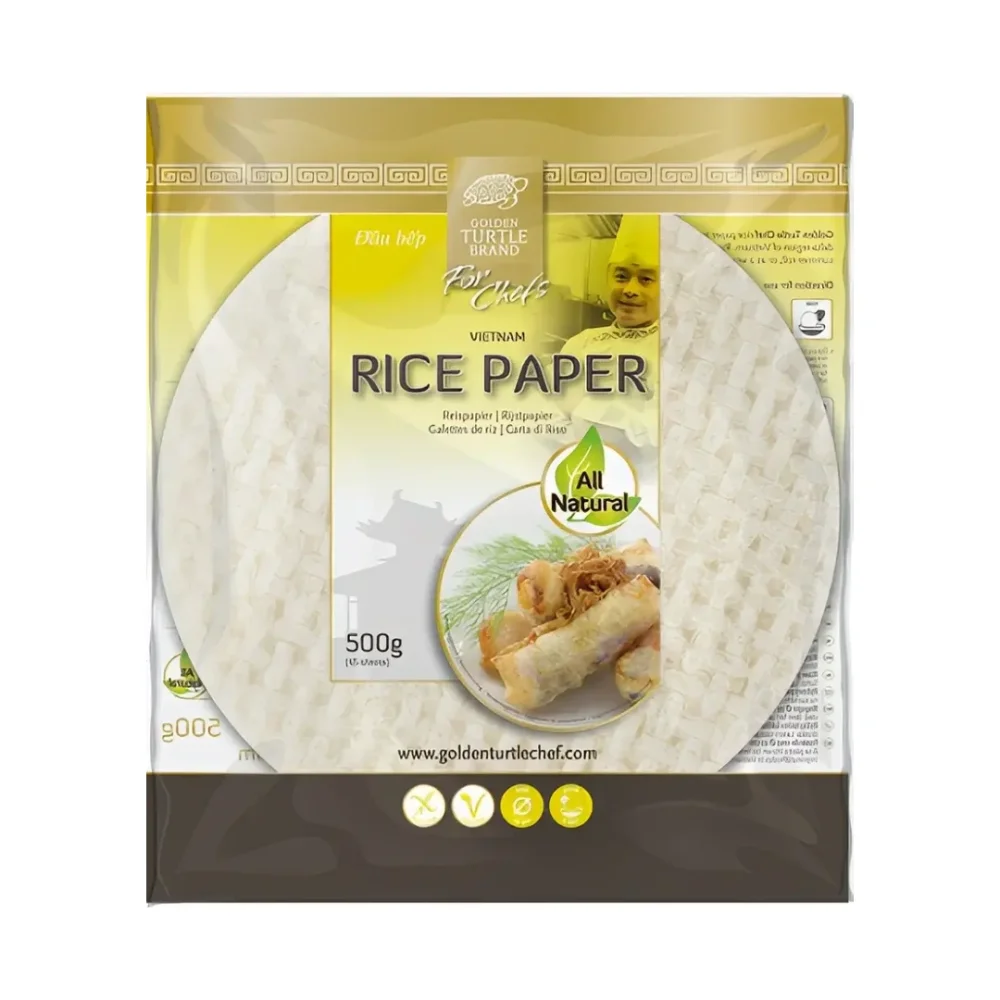
Tip for a “Vietnamese” impression: even if the paper and filling are simple, the final effect is often made by accompanying the roll with something that adds saltiness/umami, acidity, a bit of sweetness and chili – and by treating herbs as a full-fledged component, not a garnish.
Common mistakes and shortcuts that distort north vs south
“Vietnamese cuisine is mainly phở.”
Phở is important, but it’s only one part of a wide culinary world. If you want to understand north and south, it’s more useful to perceive the principles (broth, noodles, herbs, sauces, balance) than to cling to a single icon.
“All Vietnamese dishes taste the same.”
They don’t. Regional differences between the north, central and south are pronounced – the north tends to be more restrained and less sweet than the south, the center often has a more intense (and sometimes spicier) profile and its own strong identity.
“Fish sauce is just a sharp salty add-on.”
In Vietnamese cuisine it acts as one of the main carriers of umami and a tool for building flavor. When used skilfully, it shouldn’t add an “extra fishy taste,” but support the whole and connect other components.
“Herbs are just decoration.”
They aren’t. They are often a full ingredient – without them a dish can feel flat and “non-Vietnamese,” even if you have good noodles and broth.
“Vietnamese cuisine is always light and diet-friendly.”
Not always. It can be light and fresh, but there are also heartier, more robust and festive forms. This is important for regional perception: “light” does not automatically mean “always the same.”
What to take away from the article
- The north vs south difference often appears as a more restrained and less sweet north versus a sweeter south; the center (Huế) tends to be more intense and often spicier.
- Vietnamese flavor is built by balancing: umami (fish sauce) + acidity + sweetness + heat + herbs.
- If you want a “northern” impression, focus on the clarity of the broth, quality noodles and restrained seasoning.
- With fish sauce distinguish whether you need it for cooking, or for dips and cold dishes – that’s where the quality shows most.
- For a home start, rice basics are practical: rice noodles (for broth and pan) and rice paper (for fresh and crispy rolls).

Read next
If you want to explore this topic further, continue with these related blog guides and articles:
