


 Česky (CZK)
 Slovensky (EUR)
 Deutsch (EUR)
 Austria
 Belgium
 Bulgaria
 Croatia
 Denmark
 Estonia
 Finland
 France
 Germany
 Greece
 Hungary
 Italy
Italy Latvia
 Lithuania
 Luxembourg
 Netherlands
 Poland
 Portugal
 Romania
 Slovenia
 Spain
Spain Sweden










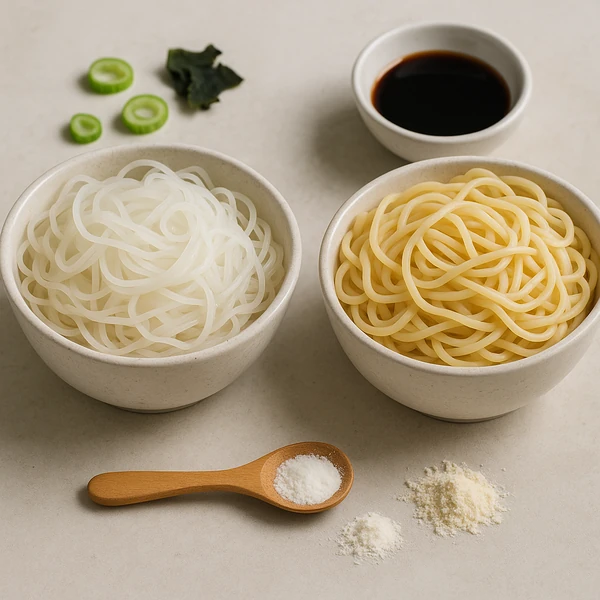
Rice vs. wheat noodles: when to choose which (and why it's not just "about taste")
Rice and wheat noodles behave similarly at first glance, but they serve completely different roles in the bowl. The difference is not just in the ingredient – it reflects in elasticity, "bite", behavior in broth, in the wok, and how easily the noodles overcook. This guide will help you pick the right type based on the dish (pho, pad thai, ramen, udon, mie goreng…) and avoid the most common mistakes.
Why it's worthwhile not to lump rice and wheat noodles into one bag
"Noodles" in European habits often mean one universal ingredient. In Asian cuisine, however, it is more practical to think in several broad categories according to what the noodles are made of – because that determines texture, elasticity, fragility, absorbency, and whether the noodles can handle hot broth or aggressive heat in a wok.
The basic categorization is simple: wheat noodles, rice noodles, buckwheat (soba), starch and glass noodles, as well as special variants like konjac. This article focuses on the first two branches – rice vs. wheat – and mainly on how to decide in practice.
If you want a quick overview of all types in one place, the category Noodlesserves as a good orientation.
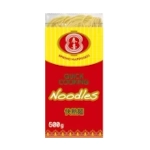
What exactly we compare: ingredient = texture and "function" in the dish
A sensible choice does not start with the question "which are best," but with the question "what do I expect from the noodles". In noodle dishes, noodles are not just a side – they often carry the sauce, structure, and rhythm of the dish. And Asian noodle dishes are not one technique: somewhere broth is the center, elsewhere the wok, somewhere noodles are eaten almost dry, elsewhere how they hold texture after cooling is considered.
That is why for home cooking it is useful to watch four things:
- material (rice vs. wheat),
- width and thickness (thin, wide, "hair-like", flat…),
- preparation (cooking, blanching, rinsing, soaking),
- context of the dish (soup / wok / cold / thick sauce).
Wheat noodles: elasticity, "bite", and durability in broth and wok
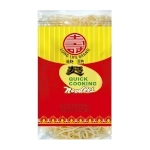
Wheat noodles are a big family: among them are ramen, udon, a number of Chinese noodles, wonton noodles, lo mein, chow mein, somen, hiyamugi, and other regional styles. The common practical denominator: wheat noodles are usually elastic, denser and usually tolerate mixing better and longer contact with hot broth.
For home use, it helps to look at wheat noodles "functionally":
- thin and elastic for quick stir-fry or lighter soups,
- thicker and denser for broths and heartier dishes (typically udon),
- thin and smooth for cold dishes and dips (e.g., somen/hiyamugi),
- alkaline ramen noodles with typical elasticity and "bite".
If you want to focus exclusively on wheat types, the natural directory is the category Wheat noodles.
🍳 Rice noodles: delicacy, quick preparation, and sensitivity to overcooking
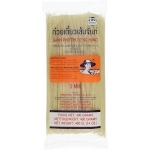
Rice noodles are based on rice flour or rice starchsometimes with a small addition of other starches for texture. They are typical for many cuisines of Southeast and East Asia – and in specific dishes often make sense because of their finer structure.
From practice, it is important to consider that rice noodles are usually more delicate, often cook or soak faster and are also more sensitive to overcooking. If you overdo heat or time, they lose shape more easily and can feel "mushy" instead of elastic and separate.
In dishes like phở (pho), various "bun" bowls or pad thai the type of rice noodle plays a major role: thin vs. wider, and especially how well they handle final reheating in broth or wok.
For a quick narrowing of choices, the category Rice noodlesis useful. And if you are interested in rice as a broader ingredient family (flours, papers, and other related products), there is the category Rice and rice products.
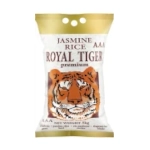
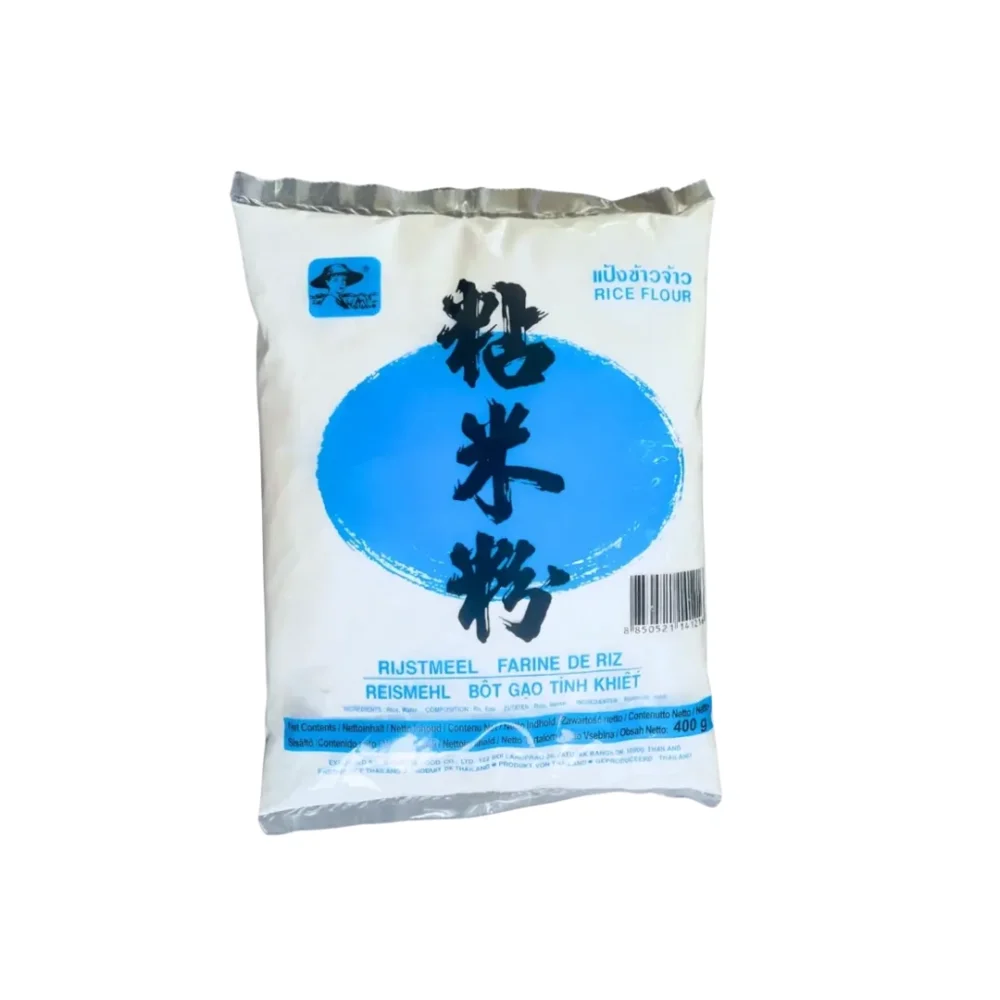
If you want to touch the "building block" of rice products at home, it is good to know that rice flour is flavor-neutral and behaves differently in the kitchen than wheat flour – a typical example is rice flour.
How to choose noodles by dish: soup, wok, "dry," and cold bowls
The same type of noodles can look "right" in the package but fail in a specific dish. Below is a practical logic for choosing based on what you cook.
1) For soup: texture must survive hot broth
For soup, you need noodles that hold their shape even after contact with hot broth and don't start tearing or falling apart immediately. Practically, these choices are often encountered:
- ramen and udon (wheat types, usually with higher elasticity),
- soba for lighter Japanese broths,
- rice noodles for pho and other Southeast Asian soups,
- some glass noodles for lighter and clear soups.
Generally speaking: for stronger broths noodles with higher elasticity often fit better; for finer herbaceous broths, rice variants often work.
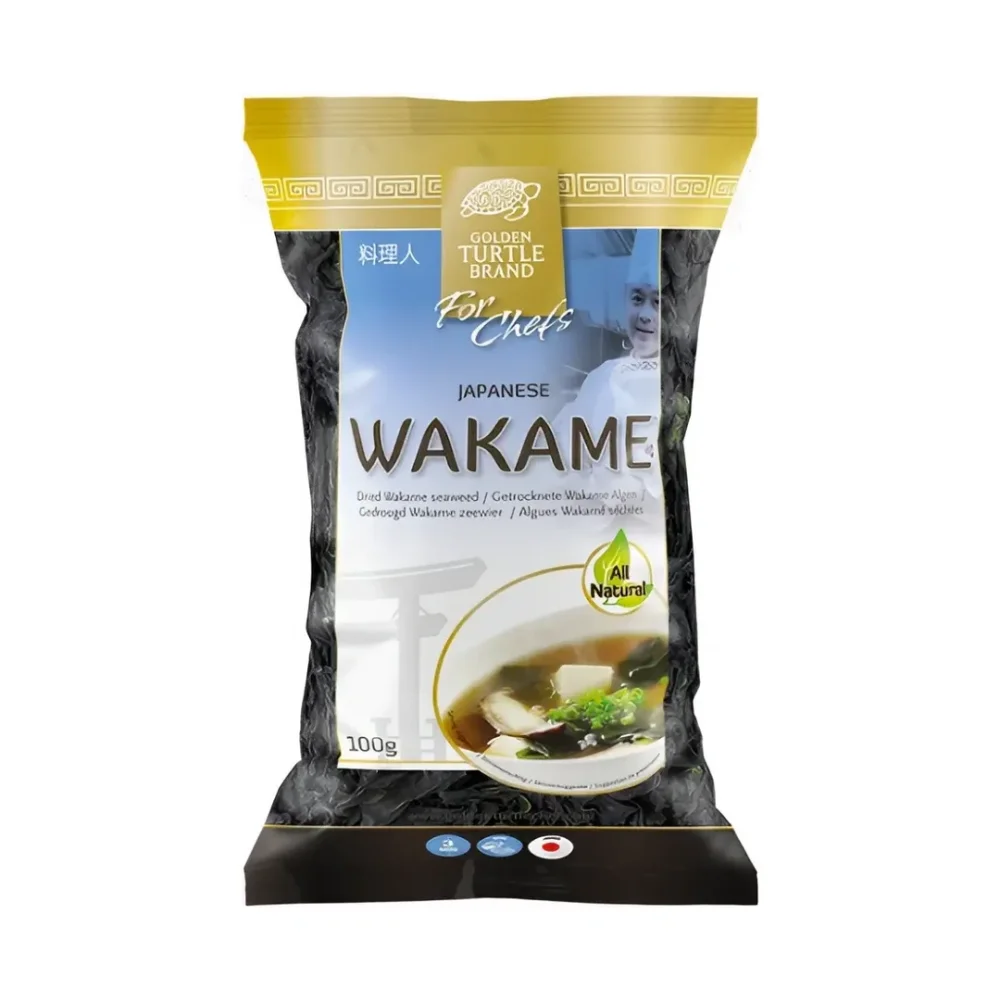
As a small practical addition to ramen and miso soups, seaweed is often used – typically dried wakamewhich softens after soaking and adds a delicate "sea" note.
2) For stir-fry and wok dishes: resistance to mixing and timing matters
For the wok, you need noodles that can withstand stirringcontact with oil and sauce, and short, intense heat. Typically proven are:
- wheat wok noodles,
- wider rice noodles,
- some ramen noodles for dryer preparations,
- glass noodles if you want a lighter and "slipperier" texture.
The most important rule for wok: don't overcook noodles before putting them in the pan. If they are overcooked during the pre-preparation, they cannot be "saved" in the wok – they will fall apart, stick together, or absorb the sauce so that the final dish feels heavy and shapeless.
Pad thai is a good example where not only the noodles but mainly the sauce and timingmatter. Typical mistakes include overcooking noodles, too wet a sauce, and loss of contrast (sourness / sweetness / saltiness).
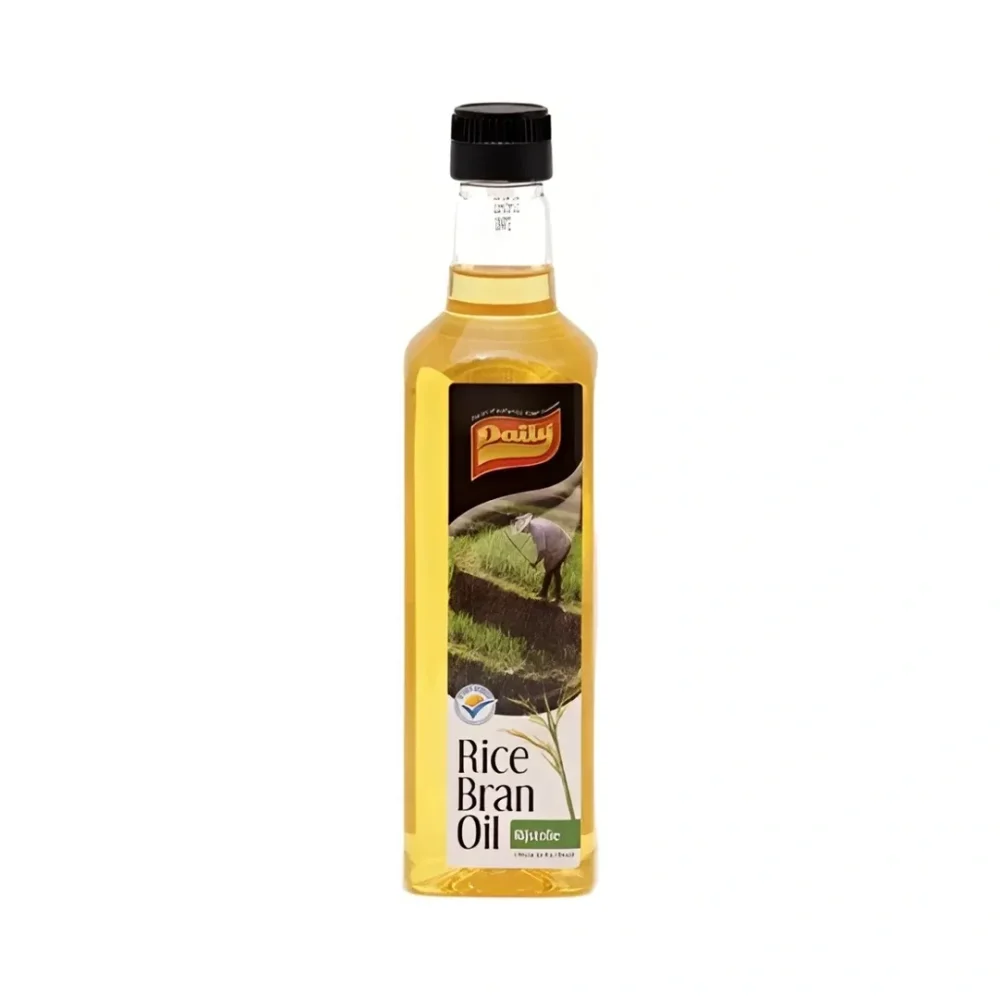
For wok, it is good to work with oil that does not overpower the flavor of ingredients – a typical example is rice oil.
3) "Dry," mixed, and strongly flavored noodles: here the style of cuisine shows
For dishes that are neither soup nor classic "saucy" pasta, it’s good to think about what character the final bowl should have: more elastic and denser, or finer and lighter.
Indonesian mie goreng shows how much the final impression can be changed not only by the noodles but also by the type of seasoning: often they feature a sweeter and darker profile, the role is important kecap manis, chili, eggs, and various fried or crispy toppings. In such a dish, wheat noodles often prove their worth precisely by their resistance during stirring and their ability to carry strong seasoning.
4) Cold and salad noodles: watch what happens after cooling
In cold dishes, it is crucial that the noodles maintain texture even after cooling. Thin, smooth wheat types often work well here (if you want a “clean” and elastic impression), but also rice noodles in some salad bowls – especially when you don’t overcook them and keep them separated and elastic.
How to recognize (and test at home) better quality noodles without complicated rules
Quality is not just a matter of price. With noodles in general, a good sign is:
- clearly stated composition and a reasonably short list of ingredients (without unnecessary “chaos”),
- typical raw material aroma when opened,
- after cooking good texture (not a quick mush),
- ability to hold shape even after a short stay in a sauce or broth.
For specific noodle families, specific signals are then monitored. For ramen elasticity, resistance to overcooking, and a clean “bite” are often discussed. For rice noodles a good test is whether they do not fall apart into a mushy mass after proper preparation but remain elastic and separated. For soba the ratio of buckwheat to wheat is also important – if you buy them for the buckwheat flavor, you can’t just rely on the name.
The most common mistakes and misconceptions (and how to quickly sort them out in your head)
- “All noodles are interchangeable.” They aren’t. The material and style of the noodle change the texture and suitability for a particular dish. When you swap the type, often not only the “taste” changes but the entire structure of the dish falls apart.
- “Pad Thai, chow mein, and mie goreng are almost the same.” They aren’t. Everything can be stir-fried, but they differ in noodle type, flavor profile, and cultural context (and thus in what to expect from the dish).
- “Noodle soups are just about broth.” No. Equally important is the proper texture of the noodles, toppings, and serving method – the noodles must hold the broth and not disappear.
- “Ramen sums up the whole Asian noodle culture.” Ramen is just one famous branch. Next to it, there are vast worlds of rice soups, wok noodles, dry bowls, and cold noodles.
- “Rice noodles are always light and wheat noodles always heavy.” This is not universally true. It depends on shape, thickness, cooking, and whether it’s a broth, wok dish, or a dry dish.
Bonus “quick comparison” when you’re confused in the store: if you want elasticity and durability when stirring or in broth, wheat types will more often support you. If you want a finer texture and a typical Southeast Asian expression (pho, pad thai, salad bowls), the rice branch makes more sense – just watch out for overcooking.
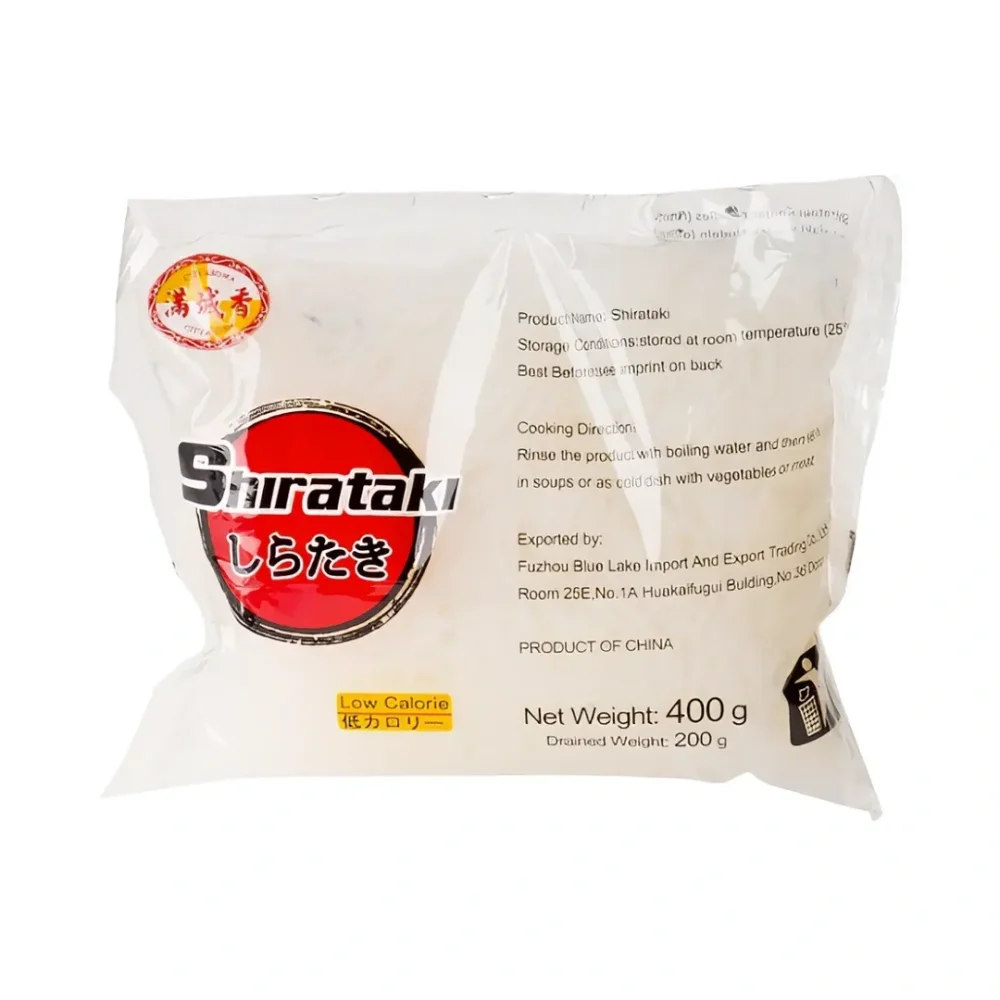
And when you don’t want rice or wheat: there are special variants too, for example konjac noodles. A typical example is shirataki (konjac) “hair-like” noodles, which have a neutral taste and are often used where the sauce or broth plays the main role.
What to take away from the article
- Rice vs. wheat noodles are not just a cosmetic difference: the raw material fundamentally changes texture and behavior in food.
- Wheat noodles typically better withstand stirring and prolonged contact with broth; elasticity and “bite” are also important in ramen.
- Rice noodles are usually finer, often quicker to prepare, and more sensitive to overcooking; the right type and timing are key in pad thai and pho.
- It’s worth choosing according to whether you are cooking soup, wok, dry bowl, or cold noodles – and also choose width and thickness accordingly.
- One of the biggest home improvement tips: don’t overcook noodles in advance (especially in wok preparations) and watch if they hold their shape in sauce or broth after cooking.

Read next
If you want to explore this topic further, continue with these related blog guides and articles:
