


 Česky (CZK)
 Slovensky (EUR)
 Deutsch (EUR)
 Austria
 Belgium
 Bulgaria
 Croatia
 Denmark
 Estonia
 Finland
 France
 Germany
 Greece
 Hungary
 Italy
Italy Latvia
 Lithuania
 Luxembourg
 Netherlands
 Poland
 Portugal
 Romania
 Slovenia
 Spain
Spain Sweden










Asian desserts: what to expect from them (and why their texture will surprise you the most)
Asian desserts often can't be squeezed into familiar categories like “cake,” “pudding,” or “cookie.” Instead of heavy buttery pastries, they feature rice, coconut, starches, legumes, fruit, syrups, and especially texture – elastic, gel-like, pearl-like, or icy. This guide will help you understand what is typical for Asian sweets, the main dessert families, and how to practically navigate them.
🌶️ What is typical for Asian desserts (and why it’s good to change your expectations)
Asian desserts often don't follow the same logic as classic Central European or French pastries. Instead of layering butter, cream, and chocolate, different “building blocks” repeat – ingredients and techniques that create a completely different experience on the tongue.
You will most frequently encounter these axes:
- Rice and rice flour – from rice porridges to cakes, mochi, and various dumplings or doughs.
- Coconut – coconut milk, coconut cream, sometimes even coconut sugar; coconut often provides “body” and smoothness.
- Starches and gelling agents – tapioca, agar-agar, starches from various plants; here elasticity, gels, and “slippery” textures are born.
- Legumes and pastes – typically adzuki or mung beans; sweet pastes are used as fillings and dense components.
- Fruits and syrups – not only as flavor, but often as a “wet” component that connects layers or balances structure.
- Aromas – for example pandan, matcha, black sesame, ginger, rose water, jasmine; the aroma is often as important as the sweetness.
- Texture contrasts – elastic vs. crunchy, gel-like vs. creamy, warm vs. icy. This aspect is decisive for many Asian desserts.
It is also important that “sweet preparation” in many Asian cuisines is not just about baking in the oven. Besides baking, it is common to steam, jellify and set, cool, press or fry. So if you expect an “Asian dessert” like a cake, you might miss a large part of the reality.
Texture: the main “language” of Asian desserts
In the world of Asian sweets, texture often serves several functions at once: it carries the main experience of the food, differentiates individual types of desserts, creates contrast between layers, helps define seasonality, and sometimes relates to symbolism or traditional techniques. Two desserts with the same taste may feel completely different just because they have different structures.
For initial orientation, it helps to perceive several recurring texture worlds:
Elastic and sticky texture
Typical mainly for mochi, daifuku, dango, and some rice cakes. It is chewy and elastic – and importantly, it does not come from wheat gluten, but mainly from sticky rice or sticky rice flour.
Gel and jelly texture
This includes desserts with agar (in Japan you may also encounter the name kanten) or for example grass jelly – a dark herbal jelly popular in the Chinese cultural sphere and Southeast Asia. Grass jelly is valued for its cooling effect and contrast to milk, ice, syrup, or fruit; it is not necessarily a dessert based on intense sweetness.
Pearl and “slippery” texture
An important role is played by tapioca (starch from manioc/cassava), which creates translucent, textured elements in desserts – typically pearls for drinks and bowls.
Icy and layered texture
In some cuisines, the contrast between ice, milk, and “inclusions” is important – the dessert then works more like a combination of flavors and textures rather than one compact pastry.
Main families of Asian desserts: how to recognize them
Asian desserts do not form one unified style. Next to each other exist Japanese finer sweets with an emphasis on seasonality and texture, Chinese and Southeast Asian desserts based on rice, beans, coconut, starches, and fruit, as well as bold, layered urban desserts with ice, syrups, and jelly. Practically, you can start by dividing them into several “families” based on their base.
A) Rice and flour desserts
Rice and rice flour appear in rice porridges, cakes, dumplings, and doughs. Here you will encounter textures that European pastry often does not address: elasticity, stickiness, chewiness – and the ability to “hold shape” even without wheat flour.
B) Coconut and “milky” desserts
Coconut (coconut milk/cream) is one of the most common carriers of flavor and texture across Asia. Combined with rice, it forms a base to which sweetness (sugar or syrup) and contrast (fruit, a pinch of salt, sesame, or bean paste) are added. This logic also gives rise to well-known desserts like mango sticky rice, coconut puddings, or various layered sweets.
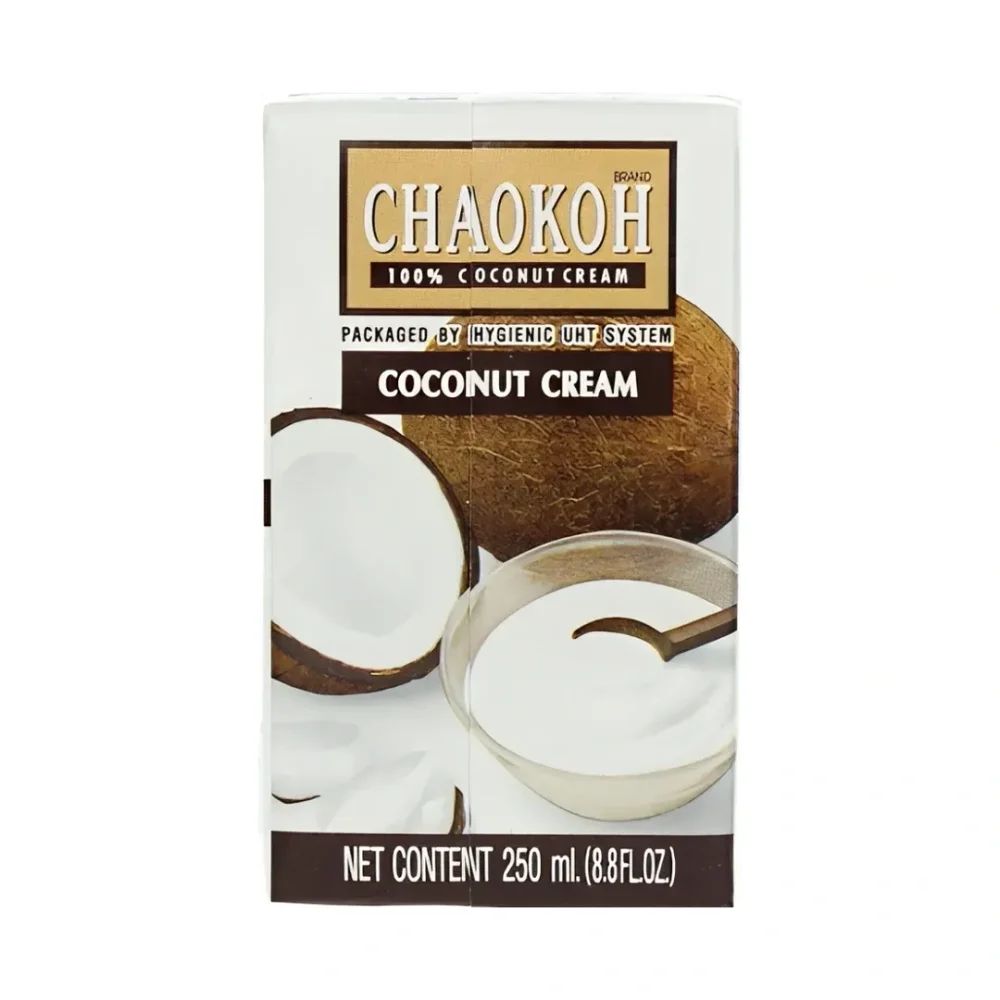
If you want to understand at home why coconut works so well in Asian desserts, the easiest is to use an ingredient that can provide “velvet” without complicated creams: Chaokoh coconut cream.
C) Bean, sesame, and nut sweets
For European tongues, it may be surprising that beans are commonly sweetened and turned into pastes in Asia. In East Asia, this is a standard practice – for example, adzuki beans are made into a sweet paste used in a variety of sweets (including filled desserts and confections like mooncakes, baozi, daifuku, dorayaki, taiyaki, or anmitsu).
In texture terms, bean paste is important because it:
- adds smooth or grainy density,
- creates contrast to elastic dough or gel layers,
- allows making filled desserts even without dairy creams,
- gives sweets a more earthy, less “creamy” profile.
D) Jelly, puddings, and desserts with unusual texture
A large part of Asian dessert originality happens here. Agar-agar is a gelling agent extracted from red algae. It forms clear, firmer, and relatively transparent gels and behaves differently from gelatin (and is plant-based). It is used for fruit jellies, coconut jellies, top layers of desserts, or traditional Japanese and broader Asian confections.
In the same world belongs grass jelly – a jelly often functioning more as a refreshing textural ingredient in bowls, drinks, or icy desserts.
E) Icy, layered, and “mixed” desserts
Filipino halo-halo is a prime example of a dessert that is hard to translate into one European category. It's a mix of ice, milk, and a whole range of ingredients – it may include sweet beans, coconut jelly, ube halaya, tapioca, fruit in syrup, leche flan, ice cream, roasted rice, and other textural elements.
The essence of halo-halo is not the “purity” of one flavor, but the layering of many flavors and textures in one glass or bowl. Similar logic applies to other Asian shaved ice desserts.
Mochi, wagashi, and Japanese sweet tradition: what the names exactly mean
Japanese sweets are often described as visually more modest and seasonal but certainly not “simple.” They often rely on precise work with water, starch, and texture – and bean paste plays a big role in them too.
Mochi
Mochi is a Japanese rice sweet made from sticky rice. Traditionally prepared from the mochigome variety (steamed and pounded into an elastic mass), nowadays you can commonly encounter production from mochiko or shiratamako flour. Typical features: elastic, chewy texture, smaller size, often with filling and good pairing with, for example, anko (sweet bean paste), sesame, matcha, or fruit.
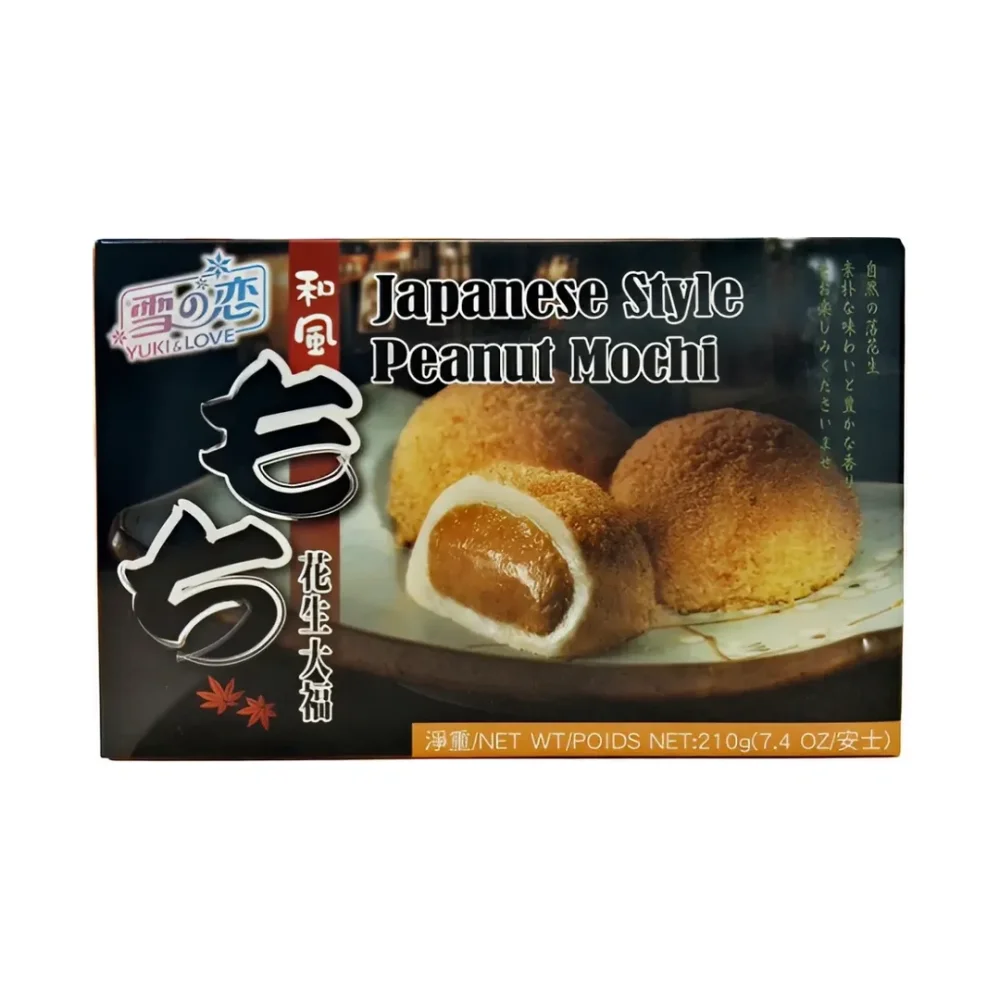
For a quick “calibration” of how mochi should feel, a ready-made variant can serve – for example, Yuki&Love mochi cakes with peanut filling. It's not a lesson in traditional production but a good way to get a feel for the elasticity and richness of this dessert type.
Daifuku, ice cream mochi, and warabi mochi
- Daifuku is mochi with a filling (often bean paste).
- Ice cream mochi is a modern commercial version with ice cream.
- Warabi mochi is a different dessert than classic mochi: it is made from starch and has a different, more gel-like texture. It's useful to distinguish this because the name “mochi” is sometimes used loosely in everyday speech, but the resulting mouthfeel is different.
How to start with Asian desserts at home (without complicated recipes): practical onboarding
The easiest path isn’t to look for the “most famous dessert,” but to choose one texture and build your first attempt around it. Only then expand the repertoire.
1) First, decide what texture you want
- I want something elastic and chewy → the world of mochi and rice doughs.
- I want something gel-like and clear → agar jelly, kanten, grass jelly.
- I want something layered and icy → shaved ice and desserts in the style of “mixed” bowls.
- I want something dense without cream → bean pastes, sesame, and nut fillings.
2) Build a dessert on one main base + one contrasting component
In practice, it often works like this: one ingredient creates the “body” (rice, coconut, bean paste, jelly), the other creates contrast (fruit, syrup, a pinch of salt, sesame, ice). Halo-halo has more contrasts – but the principle is the same: layering textures.
👃 3) Start carefully with aromas and fine-tune in small steps
Aromas like pandan, matcha, black sesame, ginger, rose water, jasmine, or coconut can significantly enhance a dessert – often only a small amount is needed. A practical rule for starting: season gradually and always let it “mature” a bit (in creams and jellies, aroma often develops more after resting or cooling).
4) Monitoring temperature is part of the recipe, not a detail
Asian desserts often work with the contrast of warm and cold components (for example jelly or bean component vs. ice or chilled milk). Even in simple serving, keep in mind that if you want the layers to be distinct, plan what should be really cold and what should carry a “warm” aromatic sensation.
5) What is useful to have as a starting point for ingredients
- Ready-made sweets for texture orientation: as a starting point, you can use sweets and desserts.
- Rice for rice desserts: if you want to try rice types, pay attention to the type of rice and expected texture. For short-grain styles, it’s useful to look at sushi rice, while for unconventional types, a guide to other rices. (It’s not that all rices behave the same – quite the opposite.)
💡 Most common mistakes and what to watch out for
- "If a dessert is chewy, it's a mistake." It is not. In mochi, tapioca, or sticky rice, chewiness is often intentional – it is a style definition, not a failed result.
- "Jelly is only for kids." It is not. Agar (and Asian) jelly can be a culturally important and technically refined ingredient – it just works with a different type of gel than classic gelatin.
- "Beans in dessert don't make sense." In East Asia they do – sweet bean paste is one of the key fillings and structures.
- "Asian desserts are less elaborate than baked European ones." No. They just rely on different technology and priorities (steam, starch, gelling, temperature contrast, layering textures).
- Mix-up of names: mochi vs. warabi mochi. Both names sound similar, but warabi mochi is not classic rice mochi – the resulting texture is different.
- Wrong rice choice = different dish. Some desserts rely on stickiness and cohesion that ordinary aromatic long-grain rice does not provide. A typical example of aromatic long-grain rice is jasmine rice Hom Mali – it smells great and makes a fluffy side dish, but for textures like mochi or distinctly “sticky” rice desserts, a different rice base is usually sought.
What to take away from the article
- Asian desserts often don’t rely on buttery baking but on rice, coconut, starches, legumes, fruit, aromas, and contrast of textures.
- Texture is often key: elasticity (mochi), gel (agar, grass jelly), pearls (tapioca), ice and layers (halo-halo).
- For orientation, divide them into families by base: rice-based, coconut-based, bean/sesame-based, jelly/puddings, ice layered.
- Start with one style and one texture – and only then expand.
- Watch out for common mistakes: chewiness is not a mistake, jelly is not “for kids,” and sweet beans are common in Asia.

Read next
If you want to explore this topic further, continue with these related blog guides and articles:
