


 Česky (CZK)
 Slovensky (EUR)
 Deutsch (EUR)
 Austria
 Belgium
 Bulgaria
 Croatia
 Denmark
 Estonia
 Finland
 France
 Germany
 Greece
 Hungary
 Italy
Italy Latvia
 Lithuania
 Luxembourg
 Netherlands
 Poland
 Portugal
 Romania
 Slovenia
 Spain
Spain Sweden










Coconut and rice desserts across Asia: how to navigate flavors and textures
Coconut and rice are among the most common "building blocks" of Asian desserts – but it’s not just about taste. In many countries, texture is equally important (and often more so): the elasticity of mochi, the slipperiness of tapioca pearls, firm agar jelly, or the icy layer of shaved ice desserts. This article provides an overview of the main types of coconut and rice sweets across Asia and practical tips on how to quickly understand them at home.
Why coconut and rice are so important in Asian desserts
Asian desserts often don’t follow the same logic as Central European or French confectionery. Instead of focusing on butter, cream, chocolate, and baking in the oven, they very often rely on several recurring fundamentals: rice (and rice flour), coconut, starches and gelling agents, pulses and pastes, fruit and syrups, and bold aromas (such as pandan, matcha, black sesame, ginger, or jasmine).
Coconut and rice are exceptionally versatile in this world:
- Rice can be crumbly or creamy, shapeable or mushy, and primarily creates a wide range of “starchy” textures – from smooth porridges to elastic chewy dough.
- Coconut brings creaminess and rounded flavor, but also a characteristic aroma. Combined with starch (rice, tapioca), it creates the typical “coconut-milk” profile known from many Southeast Asian sweets.
A common denominator is often contrast: warm and cold layers, creamy and elastic elements, firm jelly and slippery pearls, along with fruit in syrup or strong aromatic components.
Rice in desserts: grain, flour, and “stickiness”
Rice in desserts is not a single ingredient. Differences in variety and starch composition significantly change the outcome – thus determining whether you get loose grains, creamy porridge, or an elastic chewy dessert.
Glutinous rice (glutinous/sweet rice) is neither wheat nor "overcooked rice"
Glutinous rice is used where you want an elastic, cohesive, and chewy texture – typically in desserts, rice cakes, and dumplings. It is important that the term "glutinous" describes the behavior after cooking (stickiness and cohesion), not gluten content from wheat.
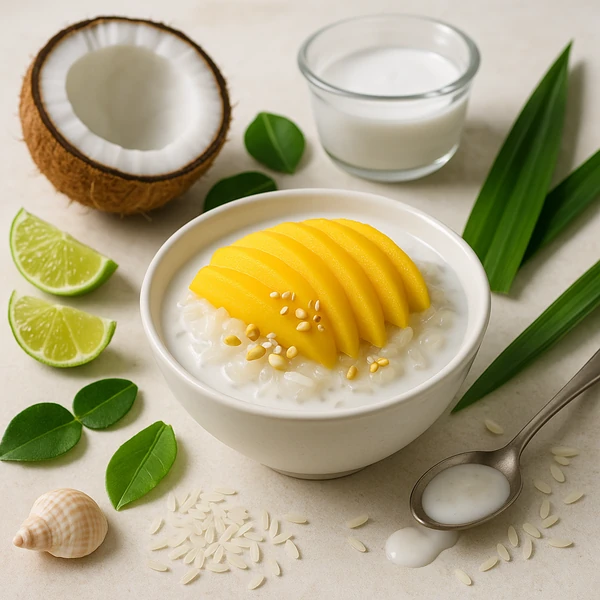
Glutinous rice is key for desserts like mango sticky rice and many other sweets where you want the rice to hold together and have a "chewy" impression.
Short-grain (sushi) rice vs. glutinous rice
Short-grain rice varieties are more cohesive after cooking than long-grain types, so they are suitable for dishes where rice should hold its shape. However, they are not automatically the same as glutinous rice – in desserts, they often behave differently than expected.
Rice flour and glutinous rice flour: two different roles
In desserts, you often encounter not just the grain but also flour:
- Rice flour is neutral in flavor and is used in doughs, for thickening, and in some desserts.
- Glutinous rice flour is essential where you want elasticity, stretchiness, and typical chewiness – for example in mochi or some dumplings.
If you’re tempted by desserts like mochi, this is one of the most important "reference points": the same aroma can be adjusted later, but the texture comes precisely from the type of rice base.
Rice "for cooking" is not automatically rice "for dessert"
Aromatic long-grain varieties (such as jasmine rice) are great as a side dish but often don’t provide what you expect in typically elastic rice desserts. If you want to taste how differently rice can behave in practice, a classic jasmine rice – for instance ESSA Jasmine Rice Hom Mali – which many associate primarily with savory dishes because of its aroma and "side dish" character, illustrates this well.
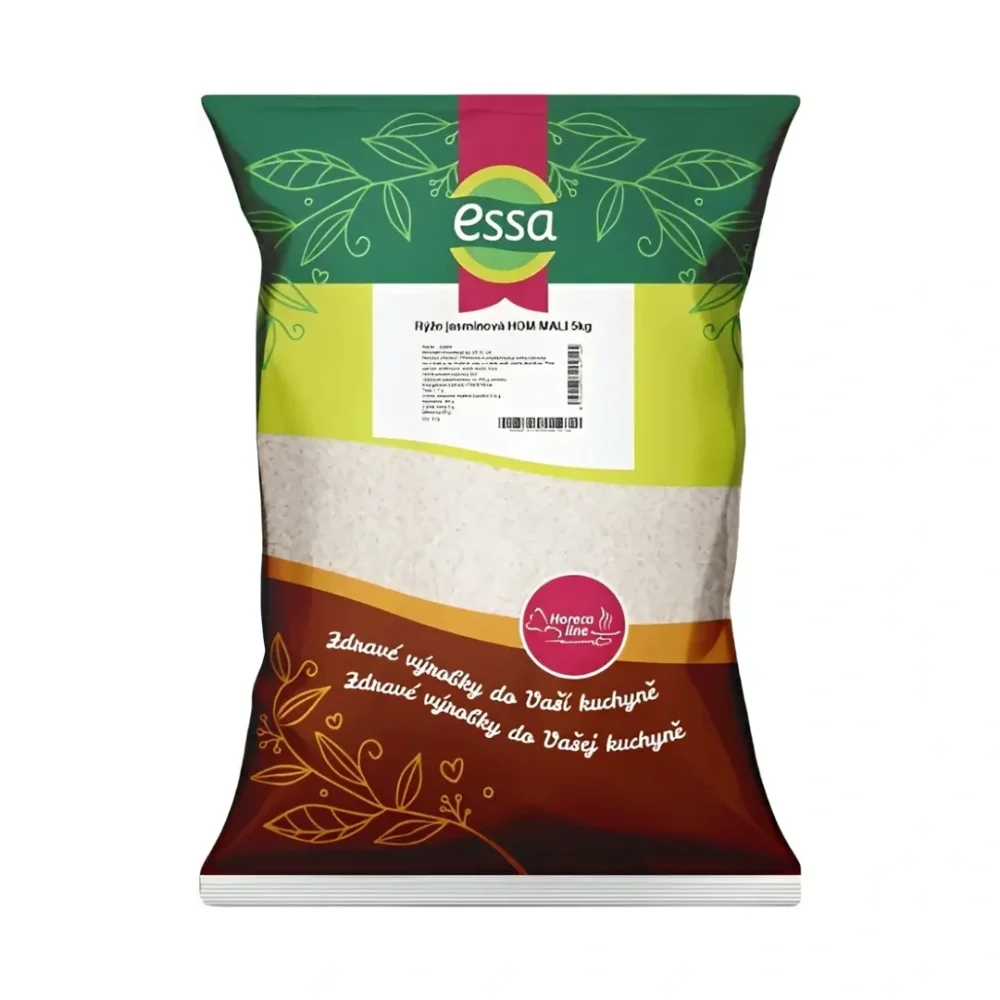
A helpful guide for wider orientation in rice types and related rice products is the directory Rice and rice products.
👃 Coconut milk in desserts: creaminess, aroma, and simple "milky" logic
Coconut in Asian desserts is not just shredded coconut. It often involves working with coconut milk, coconut cream, coconut sugar, or coconut syrups. Coconut milk is also practical for home preparation: it can be used in porridges, creams, and "pudding" desserts and combines well with fruit, syrups, and starchy textures.
If you want to start simply, it makes sense to reach for coconut milk with more pronounced creaminess – for example H&S Coconut Milk 17–19%. Generally, coconut milk in dessert often acts as the "soft" part that balances the elastic or gel component (rice dough, agar jelly, tapioca).
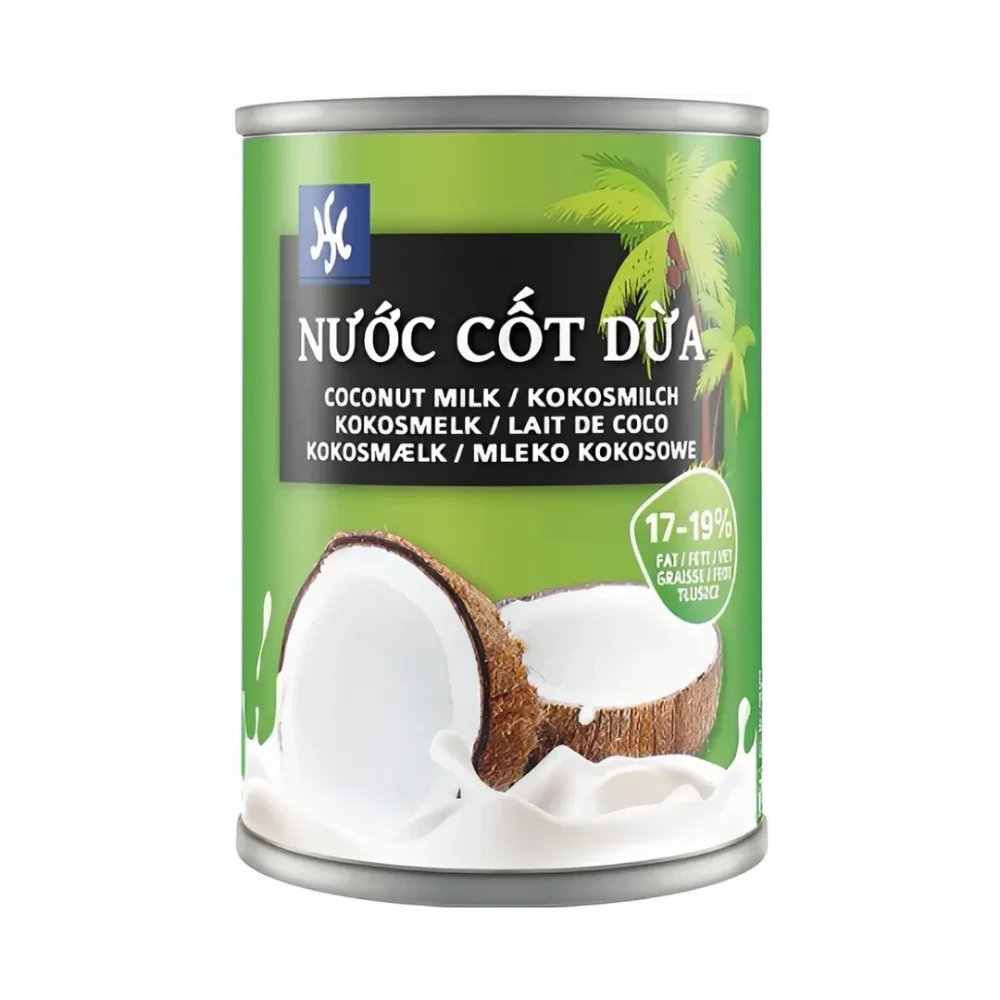
Further orientation is provided by the category Coconut milk.
Textures that repeat in coconut and rice desserts (and why they matter)
In the Asian sweet world, texture often serves several functions simultaneously: it carries the main food experience, differentiates dessert types, creates contrast between layers, and is often linked to traditional techniques. That’s why two desserts with the same flavor can feel completely different – just because of texture.
Elastic and sticky texture: mochi, daifuku, dango, and glutinous rice
This is the "chewy" world typical for mochi, daifuku, dango, some rice cakes, and desserts made from glutinous rice. It’s important that this elasticity does not come from wheat gluten but primarily from glutinous rice or glutinous rice flour.
Gel and jelly texture: agar (kanten) and grass jelly
Agar-agar is a gelling agent from red algae. It creates cleaner, firmer, and relatively clear gels and behaves differently from gelatin. In the Japanese context, you may also come across the name kanten. It is used in desserts for fruit or coconut jellies and for top layers of layered sweets.
Besides that, there is also grass jelly (dark herbal jelly), popular mainly in the Chinese cultural sphere and Southeast Asia. It is often valued for its cooling effect and slightly herbal taste – and functions more as a refreshing textural component in a bowl, drink, or icy dessert than as a candy built solely on sweetness.
Pearl and slippery texture: tapioca and pearls
Tapioca is made from cassava starch. When cooked, it creates a translucent, gelatinous, and slippery texture that is essential for bubble tea, sago/tapioca desserts, coconut puddings, and some layered and cold bowls. Compared to agar gels, tapioca typically feels softer and more "mobile."
Icy and brittle texture: shaved ice and layered bowls
Icy desserts exemplify how important layering contrasts is: the ice itself is just the base on which creamy elements (milk, coconut), syrups, fruit, and textural inserts (jelly, beans, pearls) shine.
Dessert "families" across Asia: where rice, coconut, and layers meet
Instead of one "Asian sweet," there are several typical directions that repeat across different countries. Below are examples that clearly show the logic of coconut and rice desserts.
Japan: mochi as a textural base
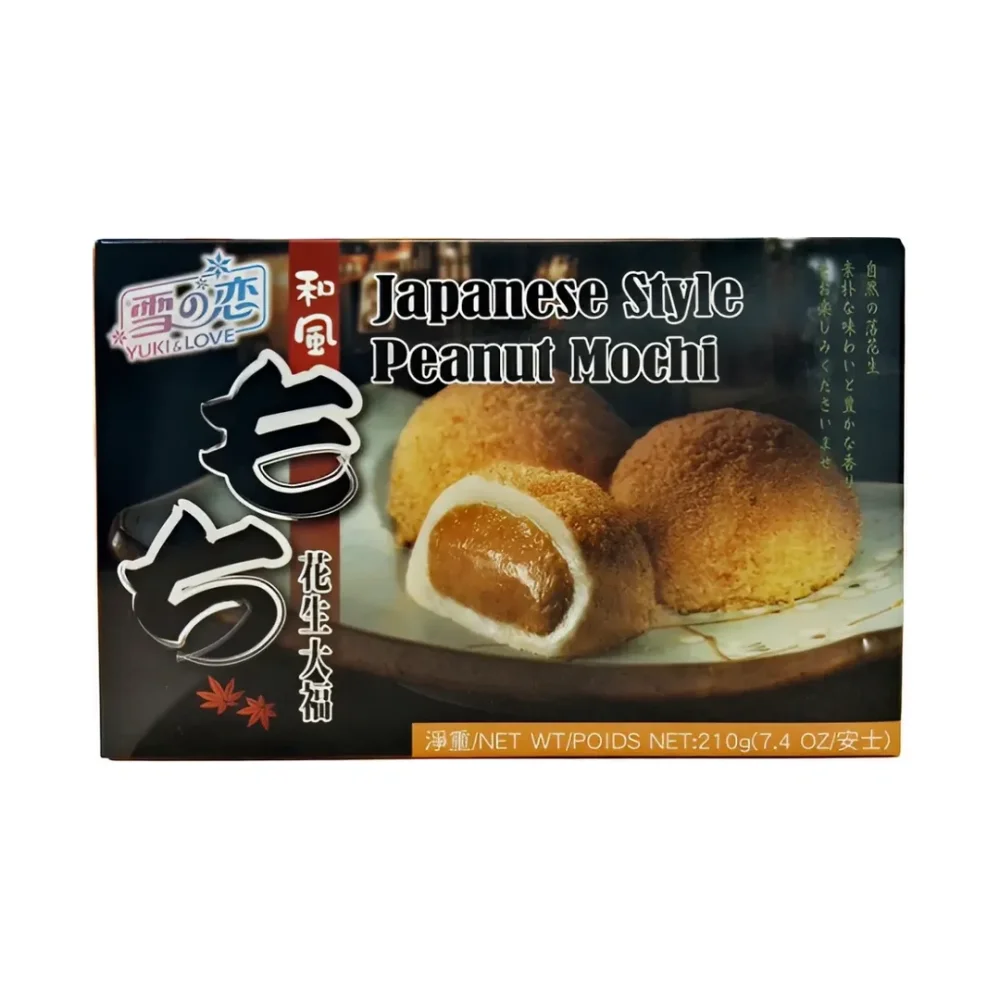
Mochi is a typical example of a dessert where texture is the main star: elastic, chewy, cohesive. It is often filled (for instance with sweet pastes or nut fillings) and eaten as smaller "pieces" with tea. If you want to start tasting without complicated home preparation, a good reference is ready-made mochi – for example Yuki&Love Mochi Cakes Peanut – which gives you an easy idea of how elastic rice texture should feel.
Chinese and Southeast Asian circle: jelly as refreshment (not just sweetness)
Grass jelly is often combined with milk, ice, syrup, or fruit and acts as a "cooling" contrast. It is important to consider that it is not necessarily a dessert based on intense sweetness – rather a textural element that balances creaminess and sweet components in a bowl.
Southeast Asia: coconut as a creamy binder and rice as the body of the dessert
In Southeast Asia, you often encounter desserts where coconut milk rounds the flavor and rice (or starchy components) provides structure. This is a typical environment for glutinous rice in desserts, coconut porridges, layered puddings, and desserts that work with aromas like pandan.
Philippines: halo-halo as a “mix” of many textures in one glass
Filipino halo-halo is a showcase dessert that is hard to translate into a single European category. It is a mix of ice, milk, and a variety of ingredients. It may contain sweet beans, coconut jelly, tapioca, fruit in syrup, and often additional layers and textural elements. The essence of halo-halo is not the "pure" flavor but the layering of many flavors and textures in one bowl or glass.
How to assemble a coconut or rice dessert at home without complicated confectionery
Many Asian desserts can be understood as smart pantry assembly, not long baking. Practically, this means: choosing a textural base, adding a creamy coconut component, adjusting aromas, and assembling inserts (fruit, syrups, jellies, pearls).
1) Start with texture: what should be the "main bite"?
- Elastic/chewy: mochi and other rice “chewy” desserts (typically from glutinous rice or glutinous rice flour).
- Gelatinous: agar or herbal jelly (keep in mind agar behaves differently from gelatin and makes a firmer gel).
- Pearl/slippery: tapioca pearls or sago/tapioca in a coconut base.
- Icy: shaved ice logic (ice + milk + inserts).
Tip: When trying a new type of dessert for the first time, don’t do everything at once. Choose one "main" texture and a maximum of two complementary ones.
2) Add the coconut component so that the texture does not disappear
Coconut milk should soften the dessert, not "dissolve" it. A practical tip: if you want to highlight mochi elasticity or keep jelly firm, use the coconut component more as a creamy accompaniment (sauce, topping, layer) rather than the only liquid in which everything floats.
3) Use fruit in syrup as a full-fledged ingredient
Canned or prepared fruit is not just an emergency substitute in Asian desserts. It is often a full ingredient because it has stable flavor and texture, is ready to use, and the syrup itself is another ingredient (for sweetening, pouring, or layering).
Lychee, longan, jackfruit, papaya, and other tropical fruits typically fit well into layered and icy desserts – and often their syrup is just as useful as the fruit itself.
4) Assemble the layers just before serving
For dessert types like halo-halo or various bowls, it is crucial that textures do not get "drowned." Practically, this means: keep gel components, pearls, fruit, and ice separate and combine them only at the end. You get a stronger contrast – and contrast is the main magic in many Asian desserts.
💡 What to watch out for: most common mistakes in coconut and rice desserts
- "Glutinous" ≠ wheat gluten. Glutinous rice is not a wheat product and "stickiness" is a property after cooking, not a sign of overcooking.
- Confusing glutinous rice and sushi rice. Both are more cohesive than long-grain types but behave differently and the resulting dessert texture can be surprising.
- Improper preparation of glutinous rice. Soaking and subsequent steaming are common for glutinous rice – this helps achieve elasticity without a mushy result.
- Agar is not gelatin. Agar creates firmer, clearer gels and cannot be simply substituted 1:1 in recipes that call for gelatin.
- Don’t expect grass jelly to be "very sweet jelly." It often works more as a refreshing, slightly herbal contrast to milk, ice, and syrup.
- Mixing all layers too early. If you mix ice, milk, syrup, and texture inserts too early, many components soften and lose contrast – and contrast is the reason these desserts work.
What to take away from the article
- Coconut and rice desserts across Asia are linked by less "heavy" confectionery and more work with starch, steam, cold, and contrasts.
- Rice in desserts means several different worlds: grain, rice flour, and glutinous rice flour create completely different structures.
- Coconut milk often acts as a creamy binder that balances elastic, gel, or pearl textures.
- For orientation, it’s quickest to think through texture: elastic (mochi), gel (agar/kanten, grass jelly), pearl (tapioca), icy (shaved ice, halo-halo).
- At home, it pays off to build a dessert from the "pantry": ready or prepared components (fruit in syrup, jelly, pastes) simplify preparation and are typical for the Asian style.

Read next
If you want to explore this topic further, continue with these related blog guides and articles:
