


 Česky (CZK)
 Slovensky (EUR)
 Deutsch (EUR)
 Austria
 Belgium
 Bulgaria
 Croatia
 Denmark
 Estonia
 Finland
 France
 Germany
 Greece
 Hungary
 Italy
Italy Latvia
 Lithuania
 Luxembourg
 Netherlands
 Poland
 Portugal
 Romania
 Slovenia
 Spain
Spain Sweden










Syrups, fruits, and sweet ingredients in Asian desserts: how to understand them and how to use them
Asian desserts often don't rely on baking and butter creams but on smart combinations of textures, temperatures, and "sweet pantries": preserved fruit, syrups, pastes, and creams. In this guide, we will clarify why fruit in syrup is a full-fledged ingredient, what role syrup plays as an ingredient (not just a sweetener), and how to assemble your first simple desserts at home so they work in flavor and texture.
Why syrups and the "sweet pantry" are so important in Asian desserts
In many Asian sweets, the key is texture (elastic, gel-like, pearl-like, icy…) and contrast of temperatures (warm vs. cold vs. icy), often more than the actual sweetness intensity. Therefore, many desserts at home are not made "from scratch" like European pastries but from pre-prepared and stable components: fruit in syrup, jelly, coconut creams, bean or sesame pastes, condensed milk, flavorings like pandan or matcha.
Practical consequence: when you have a few right components, you can quickly assemble a layered cup, icy dessert, or coconut bowl – and it can still feel authentic because these ready-made elements are not a "last resort" but are a common and well-thought-out part of Asian sweet cuisine.
🍜 Fruit in syrup: a full-fledged ingredient (and syrup is not waste)
Preserved or prepared fruit in syrup is used in Asian desserts because it has several advantages that are really important for the final taste and structure:
- Stable taste and texture – the fruit behaves predictably in cold bowls, cups, and frozen desserts.
- Immediate usability – no peeling, no searching for the right ripeness, and no risk that the fruit will "ripen" later in the finished dessert.
- Syrup is another ingredient – it can be used as a flavoring for a coconut base, sweetening a jelly layer, or as a "binder" for layering.
- It helps layered and icy desserts – in these, the sweet syrup often connects the ice, jelly, and creamy components.
Typical examples of fruit that often appear in the Asian sweet world include lychee, longan, jackfruit, papaya or various palm fruits.
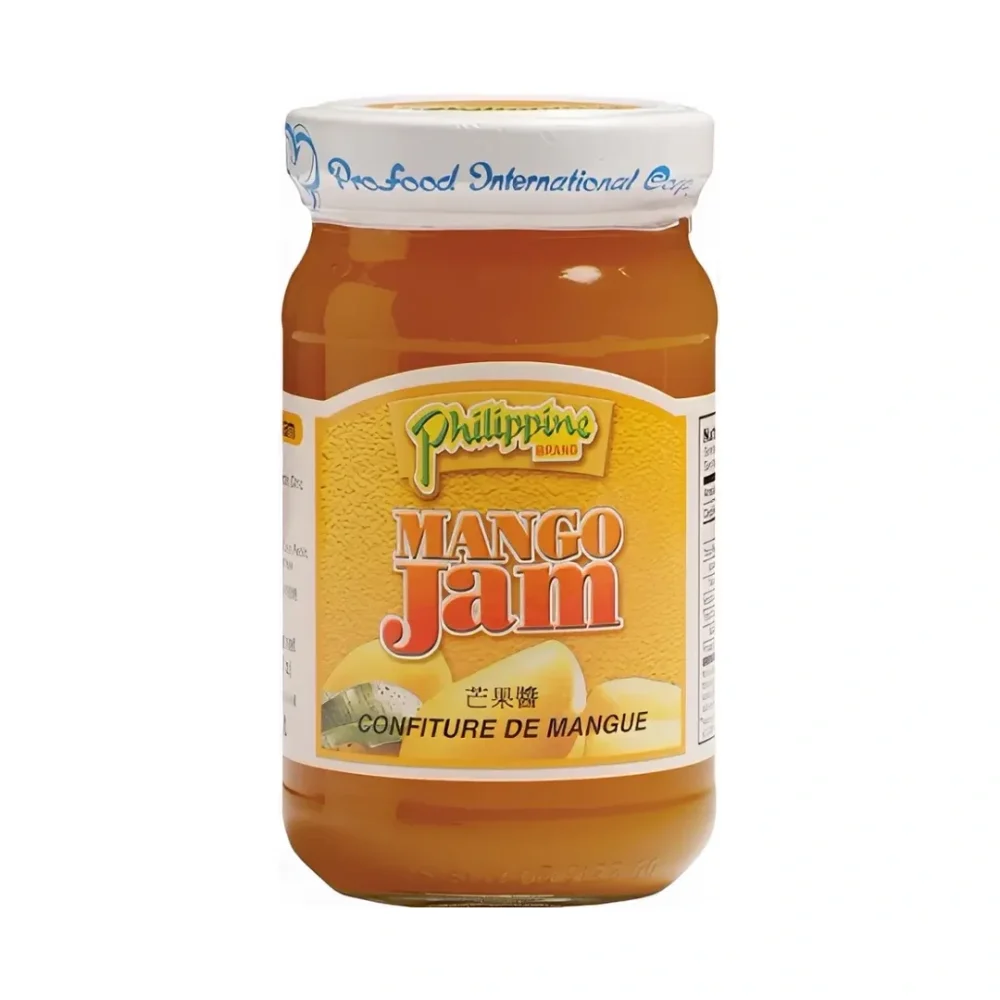
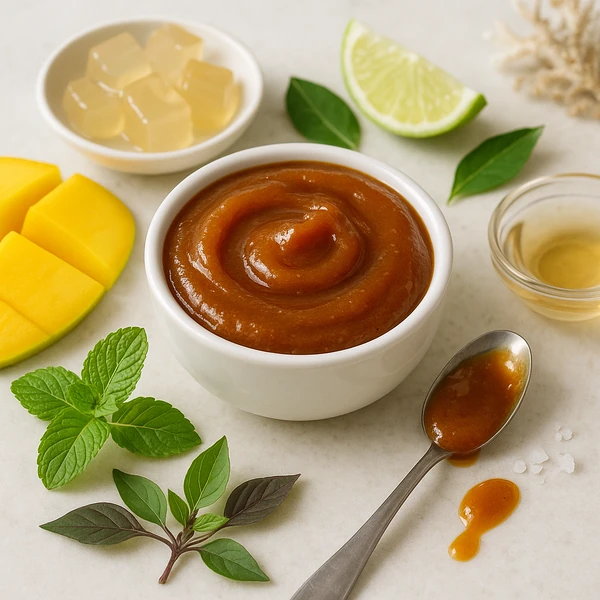
If you want to simplify homemade assembly even without "exotic" fresh fruit, a quality mango jam can play a similar role as a quick fruit component in fillings and cups – for example Philippine Brand Mango Jam 300 g (works as a ready flavor layer that can be added by spoons).
Sweet pastes, creams, and ready textures: what they add to the dessert
Alongside fruit in syrup, "semi-prepared" ingredients are often used in Asian desserts, bringing flavor and also addressing consistency:
- Ube jam (halaya) – sweet purple yam paste (typical for the Filipino style).
- Pandan custard / pandan paste – a strong aroma that needs to be dosed carefully.
- Coconut creams – creaminess, fullness, and "coconut saltiness" as a pleasant contrast to sweetness.
- Bean pastes (e.g. anko) – earthier sweetness and denser texture, especially important in East Asia.
- Sesame pastes – nutty depth, often with a distinct aroma.
- Condensed milk – sweetness and creaminess in one, typical for some Southeast Asian and modern "urban" desserts.
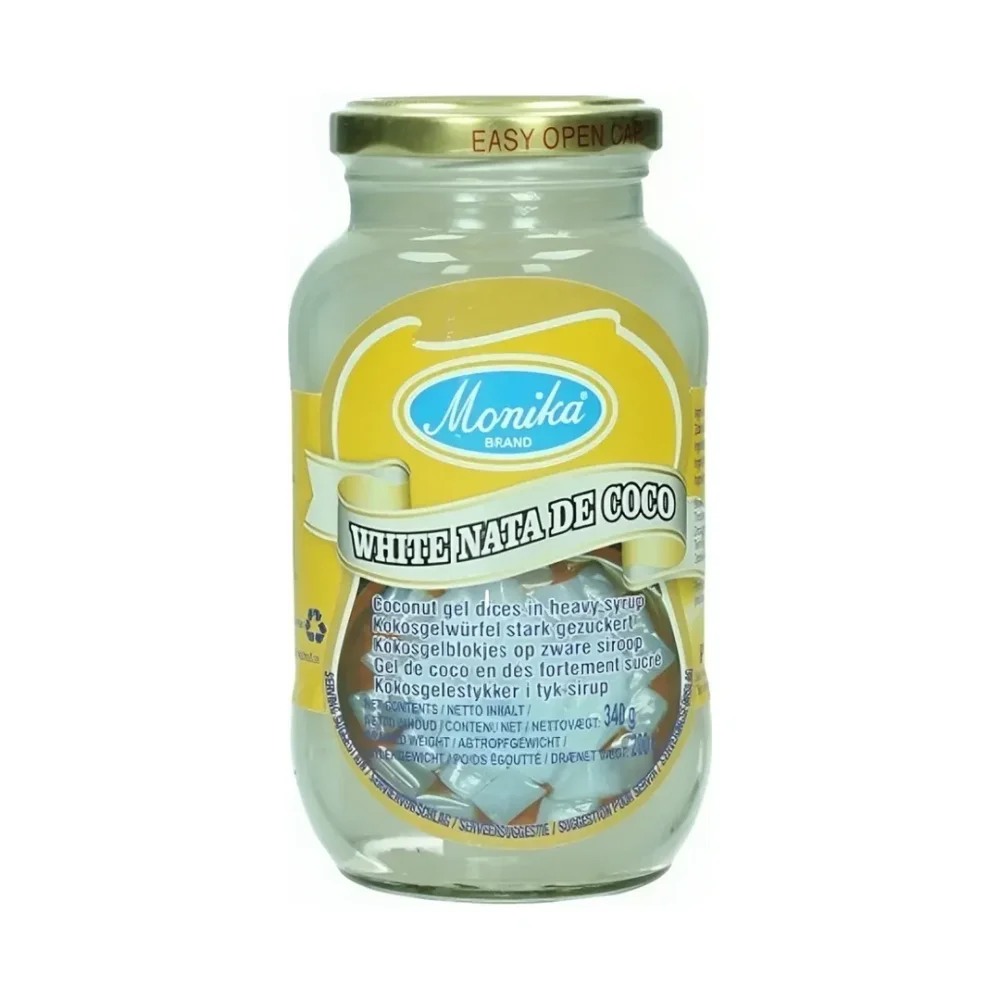
This group also includes ready "textural" elements that behave differently in cups and frozen bowls than European pudding. A great example is nata de coco (elastic coconut gel). If you want to understand why chewiness is often intentional in Asian desserts, this is an ideal ingredient for first experience: Monika White Coconut Gel Nata de Coco 340 g.
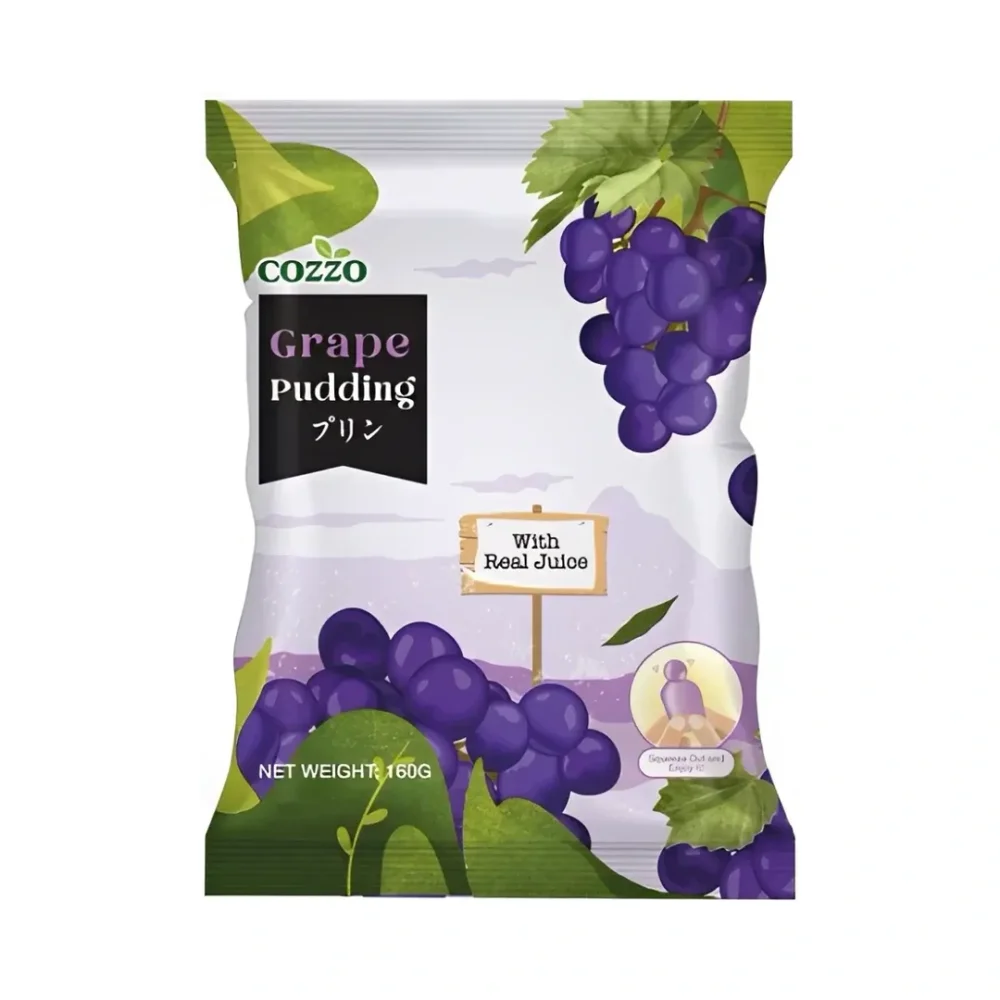
And if you want to quickly test how a "dessert built on a ready gel/pudding layer" works, you can also use a ready fruit pudding for layered cups: Cozzo Jelly Grape Pudding 160 g.
How to assemble a dessert at home: 4 practical formulas (without a complicated recipe)
It pays off to think of Asian desserts in simple building blocks: base (coconut/milk/rice), sweetener (syrup, condensed milk), fruit (fresh or in syrup) and texture (jelly, pearls, elastic cubes). Below are four formulas that work well as a start.
1) Coconut bowl + fruit in syrup (quick and “safe”)
Put the creamy component (typically a coconut base) in the bowl and on top put the fruit in syrup. For the first attempt, it’s advisable to start cautiously: 1–2 tablespoons of syrup per serving, mix, taste, and add more if needed. The goal often isn’t extreme sweetness but contrast: coconut richness vs. fruity freshness.
Tip: do not pour all the syrup at once. Keep some aside as a “seasoning” that you can add at serving – this way you better control the sweetness.
2) Layered glass: creamy layer + gel layer + fruit
Layering is common in Asian desserts because it beautifully works with the contrast of textures. A simple homemade principle:
- bottom: gel/elastical component (e.g., nata de coco),
- middle: creamy component (coconut or milk base),
- top: fruit in syrup + a few tablespoons of juice.
It is important to ensure not all layers are equally sweet. When the fruit and creamy layer are both sweet, keep the gel part without added sugar – let the sweetness “pull” mainly from the top.
3) Ice dessert: fruit + syrup + “something crunchy” or elastic
In ice and shaved ice styles (typically layered, mixed, and urban desserts), syrup often acts as a binder that connects ice and other components. At home, you can start simply: ice, fruit, a little syrup, and one pronounced texture (jelly, nata de coco, pearls). Sweetness in ice desserts is usually perceived more intensely, so start with less syrup and add gradually.
4) Rice base + mango (or other tropical fruit): when you want the “classic”
The combination of rice, coconut, and tropical fruit is extremely popular across Asia. If you want to try the direction of mango sticky rice, it is good to know two practical things:
- Sticky rice is often used sticky rice (which holds together and has a typical elastic texture).
- “Sticky” doesn’t mean it contains gluten – it’s a property of the rice and resulting structure.
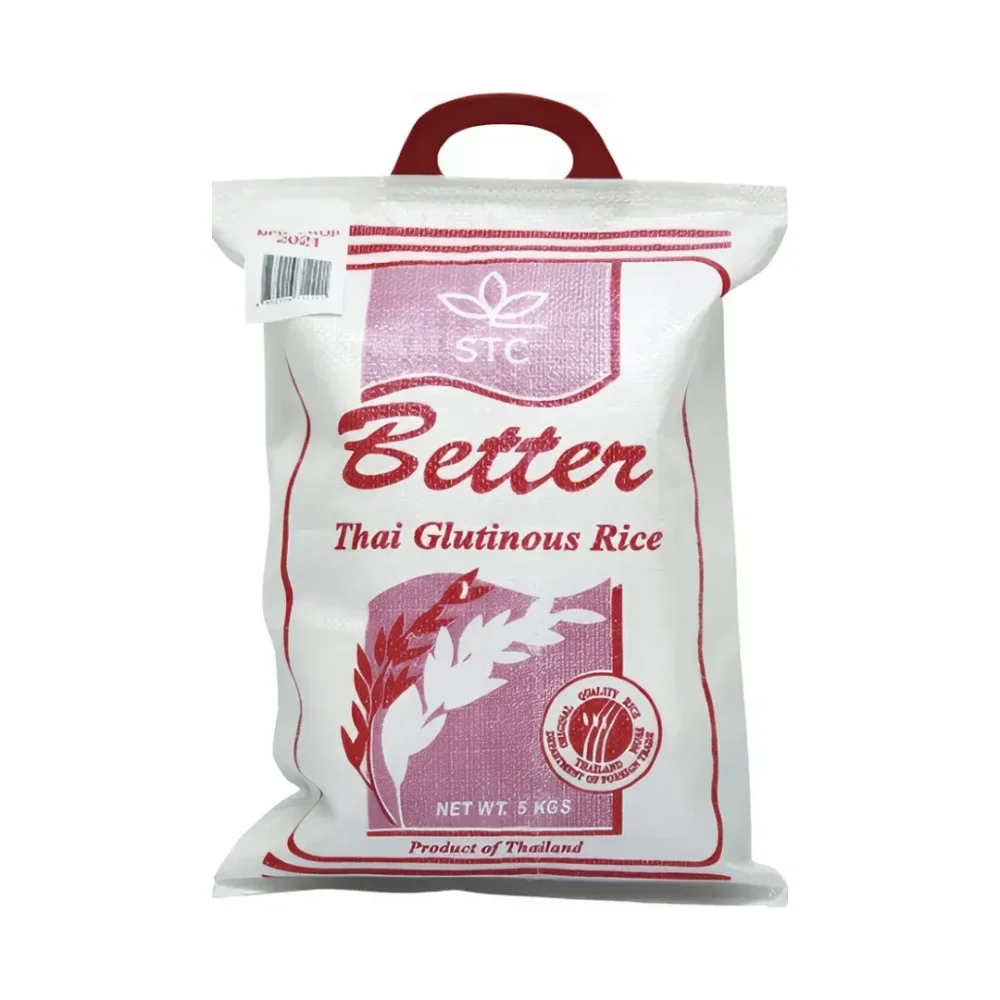
As a starting ingredient for this texture type of desserts, you can use Better Brand Sticky Rice 5 kg. And if you don’t have mango at ideal ripeness, the fruit portion can be assembled from a ready mango layer (e.g., jam) and sweetened with “syrup” according to taste.
If you want to navigate ingredients quickly: for a simple start, the combination of sticky rice or rice flour, coconut, fruit (fresh or in syrup), tapioca, and one flavor like pandan or matcha often works well. If you want more texture, elements like tapioca pearls, agar, mochi products, or jelly cubes are added.
Common mistakes and misunderstandings (and how to fix them)
1) “Asian dessert must be very sweet”
Not necessarily. Many desserts rely on milder sweetness and contrast with other elements – coconut richness, tea bitterness, the earthiness of bean pastes, or the cooling effect of jelly. If your first try tastes overly sweet, the quickest fix is: reduce the syrup and add a more neutral creamy component or “empty” texture (unsweetened jelly, nata de coco, ice).
2) Misunderstanding texture: expecting pudding but getting elasticity
In mochi, tapioca, sticky rice, or gel desserts, chewiness and elasticity are often intentional, not a mistake. It helps to think that two desserts can have a similar taste but a completely different “mouthfeel” – which is their main point.
3) Confusing similarly named ingredients
In sweet preparations, small differences in the name and composition matter. Typical confusions that can ruin the result:
- regular rice flour vs. sticky rice flour,
- pandan flavor vs. pandan paste,
- ube vs. taro,
- coconut milk vs. coconut cream,
- agar vs. gelatin.
If you want to keep the final texture under control, it pays off to read labels carefully: look for the type of starch/flour, added flavors, and whether it’s a “base for preparation” or a finished dessert component.
4) Poor handling of tapioca and starches
Tapioca is not just for bubble tea – it is important in desserts for thickening and pearl texture. When pearls stay hard inside or fall apart, it’s most often an issue of time and liquid ratio. It helps to follow a specific procedure for the given type of tapioca and not estimate “like semolina.”
👃 5) Overdoing flavorings
Pandan, rose water, matcha, or sesame can be beautiful but easily overpower everything else. For the first attempt, it’s better to start gently and add in small steps – especially if you already have pronounced fruit in syrup or sweet paste.
What to take away from the article
- Fruit in syrup in Asian desserts is not a substitute – it is a common ingredient with stable taste and texture that saves time and supports layering and ice desserts.
- Fruit syrup should be treated as an ingredient: it can be dosed, diluted, used to flavor creamy bases, and as a “binder” between layers.
- Sweet pastes and creams (ube, pandan, coconut, beans, sesame, condensed milk) are not just about sweetness, but mainly about character and consistency.
- In Asian sweets, texture is often more important than sweetness level – and differences like agar vs. gelatin or rice flour vs. sticky rice flour aren’t details but fundamentals.
- The best start is to build the dessert from 3–4 blocks (cream + fruit + syrup + texture) and adjust sweetness only at serving.
If you want to explore sweet components and finished textures further, a practical guide can be the category Sweets and Desserts. And if you are interested in the fruit side (fresh and processed), related choices can be found in the category Vegetables and Mushrooms. To understand sweet-spicy and “street food” combinations (fruit with salt, sugar, and chili), it may also be useful to explore the category Sweet Chili Sauces.

Read next
If you want to explore this topic further, continue with these related blog guides and articles:
