


 Česky (CZK)
 Slovensky (EUR)
 Deutsch (EUR)
 Austria
 Belgium
 Bulgaria
 Croatia
 Denmark
 Estonia
 Finland
 France
 Germany
 Greece
 Hungary
 Italy
Italy Latvia
 Lithuania
 Luxembourg
 Netherlands
 Poland
 Portugal
 Romania
 Slovenia
 Spain
Spain Sweden










Coconut products in Asian cuisine: how to understand milk, cream, and cream
Coconut is one of the most versatile ingredients in tropical Asia – and at the same time one of the most frequently confused. "Coconut" in a recipe can mean coconut water, milk, cream, concentrated base, dried pulp, and other products that differ in taste, density, and what they do to the final dish. This guide will clarify the differences and especially how to choose the right type for the specific use.
Why coconut is so important in Asian cuisine
Coconut in food typically brings three things at once: fat, a subtle sweetness and roundness of flavor. That is why in many Asian cuisines it works as a counterbalance to sharper and stronger ingredients – chili, lime, fish sauce, fermented sauces, curry pastes, or sour broths.
In practice, this means that coconut milk or cream are not "exotic decorations" but often the main carriers of texture and flavor. You typically recognize this in Thai curries, where coconut milk softens the spiciness and ties the spices into a smooth sauce. In Filipino cuisine, coconut is used both in savory dishes like ginataan, as well as in desserts and drinks. In Indonesia and Malaysia, it is essential for dishes like rendang or laksa (and for various sauces and sweet dishes). In southern India and Sri Lanka, coconut is a basic ingredient not only as milk but also as grated pulp or oil.
Basic families of coconut products: a quick guide
From one fruit, a whole "family" of products can be made, which look similar only at first glance. In the kitchen, they differ in:
- taste and coconut intensity,
- texture and density,
- fat content (and thus how the "body" of the dish behaves),
- water content (whether it thickens the sauce or rather dilutes it),
- whether it is a basic or already processed/flavored product.
The types most commonly used in everyday Asian-style cooking are:
- coconut water (more of a beverage component),
- coconut milk (a universal base for curries, soups, sauces, and some desserts),
- coconut cream (thicker and richer variant),
- concentrated coconut cream and various forms of coconut cream (watch out for different meanings),
- light coconut milk (lighter, but behaves differently in dishes),
- dried/grated coconut and coconut chips (texture, body, topping, sweet and savory use),
- and marginally also coconut oil, coconut sugar, coconut vinegar and coconut flour (each with a different role).
Coconut water: when it makes sense and when it doesn't
Coconut water is typically the least "creamy" part of the coconut world – its taste is mild and in recipes behaves more like a liquid than a fat base. If a recipe uses coconut water, it usually refers to a beverage or a lighter coconut line without milky richness.
In practice, the most useful thing to remember is this: coconut water is not a substitute for coconut milk. If you use it instead of milk in curry or soup, you lose exactly what coconut adds to these dishes – fat and creamy body.
Coconut milk: the most versatile base (but not one "standard")
Coconut milk is made from the white pulp of a mature coconut: the pulp is crushed, pressed, and extracted with or without water. The result is a white emulsion – a mixture of water and fat – with a subtle sweetness and typical coconut aroma.
It is one of the key ingredients for Thai curries, soups like tom kha, Filipino dishes like ginataan, and many Malaysian and Indonesian dishes and desserts. However, an important warning applies: not all coconut milk is the same. The difference between thin and full coconut milk is really noticeable in curries or soups – a thin product can feel watery and less "rounded."
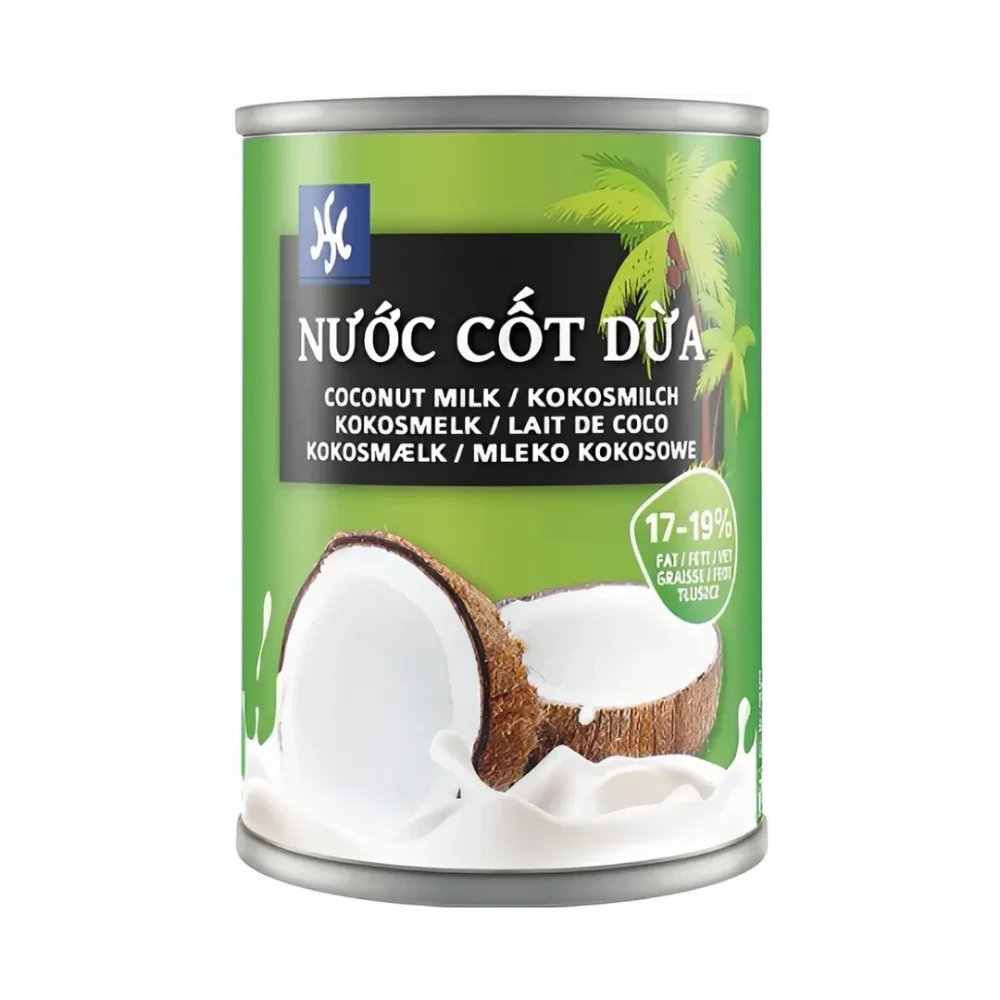
A practical example of a full-fat type suitable for cooking and desserts is H&S coconut milk 17–19% (400 ml).
Coconut cream: when the sauce should be thick and coconut should play the main role
Coconut cream is generally a thicker and fattier variant than coconut milk. It makes sense wherever coconut should create a rich, creamy body – typically:
- in dishes where coconut is the main flavor (not just supportive),
- in richer sauces and curries,
- in desserts (creams, puddings, thick coconut bases).
A practical tip that often works without complicated recalculations: if you're making a tom kha type soup and want a richer result, it is useful to use coconut milk as a base and add a smaller amount of cream for "rounding out."
Concentrated coconut cream and coconut cream: similar names, different products
This is where much confusion arises.
Concentrated coconut cream: coconut intensity with minimal water
Concentrated coconut cream is especially useful when you need high coconut intensity and minimal water. You typically appreciate this in thick bases, creams, and situations where you don't want to dilute the sauce but rather build it on a strong coconut flavor.
Coconut cream: can be culinary or dessert
The term coconut cream can refer to two different things: either a purely culinary product (usable like cream), or already partly a "dessert" product (it can be processed, thickened, or styled differently). Without reading the label, you can't automatically tell – and this is often where frustration arises when someone expects a neutral base for curry but gets a product more suitable for sweet cuisine.
Light coconut milk: lighter variant but behaves differently in dishes
Light coconut milk makes sense when you deliberately want a lighter result (for example, a less fatty beverage or a "milder" profile). However, it is good to expect that in dishes where coconut forms the structure of the sauce, the light variant can seem thinner and less full.
In other words: light coconut milk is not "the same milk, just diet." In curries and creamy soups, it can behave as a functionally different ingredient.
Dried coconut, grated coconut, and coconut chips: texture for sweet and savory dishes
These products come from pulp that is dried and further processed. Their main role is not an emulsion of fat and water (like milk), but texture, body and subtle coconut sweetness.
Grated and dried coconut
is used in Asian cuisine for:
- desserts and fillings,
- sweet rices and puddings,
- some curries and regional sauces,
- coatings and toppings.
In savory recipes, it can add body, texture, and subtle sweetness – typically in South Indian, Sri Lankan, Malaysian, and Indonesian cuisine.
Coconut chips
Coconut chips are suitable as a snack, topping, or decoration. Culinary wise, they make sense where you want to keep larger pieces and crunch (unlike fine grated coconut which tends to "disappear" in the texture).
🍳 How to choose coconut products by use (practical cheat sheet)
It is most useful to choose coconut based on what it is supposed to do in the dish – not based on what it "just happens to be called." These are the most common situations in home cooking:
For Thai curry
- Look for full-fat coconut milk or coconut cream depending on the desired thickness.
- Important is a higher fat content and a full flavor – coconut is often not just an addition but the base of the sauce.
This is true for kha and similar soups
- The base is usually coconut milk.
- For a richer result, a combination of milk and a smaller part of cream (if you want more creaminess but don’t want the soup to be “heavy”).
For desserts, creams, and puddings
- Often suitable is coconut cream or high-quality full-fat coconut milk.
- For creams and puddings, a thicker variant is usually more practical – you can more easily achieve a creamy consistency without the result being watery. – you can more easily achieve a creamy consistency without the result being watery.
For marinades and dressings
- Depending on the recipe style, it may make sense to use coconut sugar and sometimes even coconut vinegar.
- Add coconut milk only where it is meant to create a creamy body (not as a universal liquid). Add coconut milk only where it is meant to create a creamy body (not as a universal liquid).
For frying
- If you don’t want a strong coconut aroma, refined coconut oilis usually more suitable.
- If you don't mind the coconut trace (or even want it), virgin coconut oilmakes sense.
For baking and gluten-free experiments
- Coconut flour works but only in recipes designed for it. It's not a universal wheat flour substitute “1:1” and without recipe support you can easily miss the expected result.
How to read the label for coconut milk and cream
Coconut milk is a typical category where packaging can mislead. Differences are usually in fat content, density, and how the product is stabilized.
What to watch for when choosing
- What type you want: thick coconut milk for cooking vs. lighter variant.
- Ratio of coconut component to water: will affect whether you thicken the sauce or rather thin it out.
- Stabilizers: can affect consistency and behavior when heated.
- Behavior after opening and heating: coconut milk commonly separates – the thicker fat part can settle on top and the more liquid part below. This is not automatically a defect but a property of the emulsion.
Practical rule for home cooking
- For curries and richer dishes, often a fuller typeis suitable.
- For drinks or lighter recipes, a milder variantmay make sense.
- For desserts, not only taste but mainly consistencymatters.
In general, it pays to follow a simple principle: always clarify whether you are buying a basic building block or an already modified/flavored product. This applies especially to coconut “creams.”
Most common mistakes (and how to avoid them)
1) “Coconut milk is always the same”
It's not. In curry or soup, the difference between thin and full coconut milk is fundamental. If your dish turns out watery and the coconut flavor is faint, it's often not a “bad recipe” but a coconut milk type that is too light for the intended use.
2) Confusing coconut cream, concentrated cream, and coconut cream
Similar names do not mean the same function. Concentrated coconut cream is suitable where you need intensity and minimum water. Coconut cream can be culinary or partly dessert-oriented – and without reading the label, it can’t be reliably guessed.
3) Ignoring that coconut milk can separate
For shelf-stable coconut milks it is common that they separate into fat and liquid parts. Before you start thinking the product is “weird,” try to remember that you’re working with an emulsion. In the kitchen, it often helps to stir the contents before use (and in some dishes work specifically with the fat part if you want more creaminess).
Key takeaways from the article
- Coconut in Asian cuisine is not one ingredient, but a family of products with different flavors, fats, and uses.
- Coconut most often provides fat, gentle sweetness, and roundness – which is why it works as a counterbalance to chili, lime, fish sauce, fermentation, and curry pastes.
- Coconut milk is a versatile base but not “one standard”: watch the type and suitability for curries, soups, and desserts.
- Coconut cream is for thickness and situations where coconut is meant to play a main role; concentrated cream is for maximum intensity with minimum water.
- Coconut cream can mean different products – without reading the label, it’s easy to buy something intended more for the sweet kitchen.
- The most common disappointment does not come from “bad coconut milk” but from choosing the wrong type for the specific use.

Read next
If you want to explore this topic further, continue with these related blog guides and articles:
