


 Česky (CZK)
 Slovensky (EUR)
 Deutsch (EUR)
 Austria
 Belgium
 Bulgaria
 Croatia
 Denmark
 Estonia
 Finland
 France
 Germany
 Greece
 Hungary
 Italy
Italy Latvia
 Lithuania
 Luxembourg
 Netherlands
 Poland
 Portugal
 Romania
 Slovenia
 Spain
Spain Sweden










Regional differences and customs in Asian cuisine: how to navigate without unnecessary shortcuts
Regional style in Asia is not a minor detail – it is the key to why the same "Asian" dish can be based on broth and fermentation in one place, and elsewhere on coconut, herbs, or spices. In this article, we will create a practical map: what creates regional differences, how they appear in everyday food, and how to choose a direction that will work for you at home according to your taste.
People often talk about "Asian cuisine" as if it were one flavor and one style. In reality, it is more useful to imagine Asia as a large map of regional cuisines that developed under different climatic, agricultural, religious, and commercial conditions. Once you accept this, many things start to make sense: why rice dominates in some places and wheat in others, why sometimes you taste "umami and fermentation" and other times "coconut, herbs, and lime."
Regional style: what it means and why it matters
Regional style is not just "the cuisine of one country." Within one country, there can be significant differences between the coast and the inland, between the north and south, between the city and countryside – and often even between everyday family meals and what is seen in tourist-frequented restaurants.
For everyday home cooking, a regional perspective is practical mainly because it helps you:
- choose the right type of base (broth, fermented paste, coconut, spices),
- not to confuse similarly named things across regions (typically "curry"),
- understand why some ingredients serve as the "soul" of the dish (for example, fermented sauces),
- better select style by taste: fresh vs. rich, mild vs. strong, broth-based vs. "dry."
Five forces that make one Asia into many cuisines
Regional differences in Asia didn't arise by chance. The same "forces" repeatedly influence what is eaten where, how it is seasoned, and what local customs look like.
Climate and agriculture: what can be grown becomes the foundation
In warm and humid areas, rice, coconut palms, tropical fruits, and a whole range of aromatic herbs naturally thrive. In drier, cooler, or northern areas, wheat, millet, barley, legumes, meat, and generally storable ingredients play a bigger role. This is not a "romantic theory" – it is very practical kitchen logic of availability.
Sea, rivers, and islands: fish, fermented marine bases, and coconut
Coastal and island cuisines are typically closely connected with fish and seafood, often also with fermented fish bases and coconut. Inland areas, on the other hand, more often rely on grains, meat, legumes, and various preservation techniques – simply because other ingredients are easier to work with and store long-term.
Religion and cultural rules: what is eaten (and not eaten) and how holidays look
Food in Asia is strongly shaped by Buddhist, Hindu, Muslim, Christian, and local traditions. In practice, this affects, for example:
- which types of meat are omitted or limited,
- where there is a strong vegetarian tradition,
- which ingredients and dishes belong to holidays,
- what everyday family dining and sharing meals look like.
Besides the "major" religions, household and regional customs are also important: family traditions, harvest calendar, respect for ancestors, or symbolism of abundance and the new year. All this decides when what is cooked and why.
Trade, migration, and empires: why flavors mix and evolve
Asian cuisines are not static. On the contrary: they evolved precisely because of trade, migration, and contact with other cultures. That's why you find "foreign" techniques or ingredients in many places that have become local over time. The important practical conclusion is: when you encounter a similar dish name in different countries, it does not necessarily mean it is the same thing.
City vs. countryside: everyday meals in a bowl were often invented by the city
Urban environments have their own rhythm and types of dishes: quick hand-held meals, breakfast bowls, broth noodles, "street stall" classics. In many regions, the city is precisely where the regional style becomes visible the fastest and most clearly.
Rice belt vs. wheat belt: why noodles dominate in some places and rice in others
One of the clearest regional divisions is the rice world and the wheat world. It's not just about the side dish. It's about which types of dishes make the most sense in a given environment: which dough is made, which noodles are common, what role porridges, pancakes, dumplings or various forms of "bowls" play.
This division is beautifully illustrated by noodles. Asian noodle dishes are not one technique – they are entire families:
- noodle soups and broth bowls (the soul is the broth),
- stir-fried and wok dishes (noodles carry the sauce and smoky/crispy flavor),
- dry, mixed, and "dipped" noodles (the sauce is more concentrated, often mixed directly in the bowl),
- cold and seasonal noodles (texture and freshness are as important as flavor).
The noodle material is also crucial: wheat, rice, and starch noodles behave differently. That's why it's a big mistake to treat "noodles" as a universal item. The base determines flexibility, brittleness, and whether the noodles hold broth or suit stir-fry better.
A specific example often given is Vietnamese phở – it is not just "noodle soup." It is a dish where the soul is a clear aromatic broth, and around it are the rest: rice noodles, herbs, and seasoning. Regional differences are noticeable even in seemingly small details such as the way of serving and type of side dishes.
Four major flavor spaces: a guide (and how to read it)
There is a useful guide model of the “four major flavor spaces” of Asia. It is not the only possible model, but it helps quickly understand why you like some things and not others – and why not everything can be lumped into one category.
East Asia: umami, broths, soy fermentations, and work with texture
East Asia typically includes mainly China, Japan, Korea, and Taiwan. Common characteristics (with big internal differences) are:
- the strong role of rice and in some areas wheat,
- fermented soy bases,
- importance of broths, noodles, and side dishes,
- a strong role of umami,
- distinct work with texture.
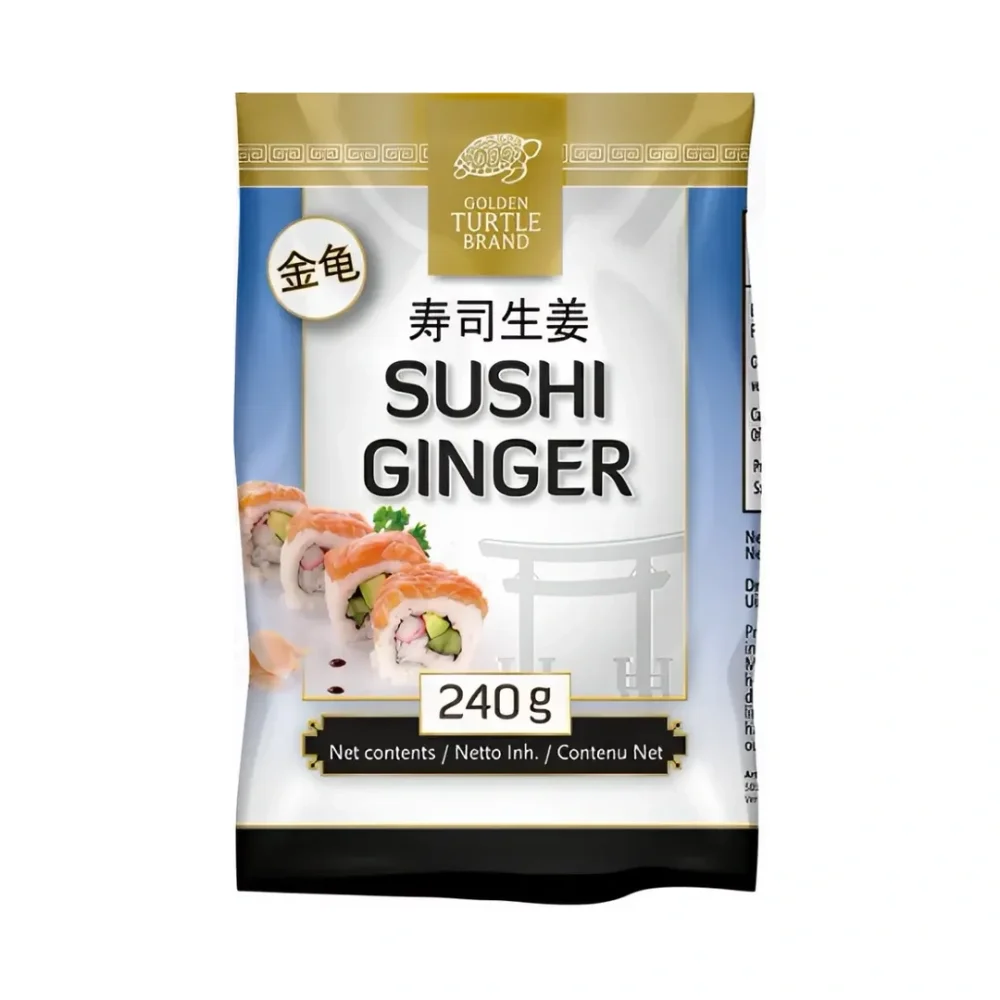
Customarily, for many East Asian styles it is typical that the meal consists of multiple parts and textures: bowl, sides, something pickled, something crunchy. A small but expressive example of such a “palate cleanser” is pickled white ginger; in the Japanese context, it is used to clear the palate between bites (often associated with sushi), but a similar role can be found in other bowls where you want to separate flavor sensations.
Southeast Asia: herbs, acidity, fish sauces, coconut, and strong urban energy
This includes Vietnam, Thailand, Laos, Cambodia, Malaysia, Singapore, Indonesia, the Philippines, and others. Typical traits (again with broad internal variation) include:
- a strong role for rice and rice noodles,
- fresh herbs,
- fish sauces and fermented marine bases,
- coconut,
- tamarind, lime, and other sour components,
- sambals, chili dips, and curry pastes.
Here it is useful to watch your language: the word “curry” can seem like one category in a European context, but in fact it can refer to very different bases (fresh Thai pastes vs. other regional concepts). If you want to avoid disappointment, it is practical to clarify first whether you are looking for a “herb paste,” a “dry spice mix,” or a completely different type of base.
Indian subcontinent: often spicier and richer logic (but not just one template)
Within Asia, the Indian subcontinent is often mentioned as a separate flavor space. The purpose of this distinction is mainly indicative: some cuisines will appear spicier and richer, but it is also true that “curry” is not one thing and that it is more accurate to think in terms of different regional bases and techniques.
🍜 Island world (e.g., Indonesia and the Philippines): different ingredients, different bases
Island areas are mentioned in the broader map as a separate world also because ingredient availability and connection to the sea create a different logic of dishes. Practically, this means mainly that the “Asian flavor” can also shift depending on whether the cuisine is more coastal/island or inland.
Fermentation as a regional divider: soy, fish, doughs
Fermentation is extremely important in Asia, but every region works with it differently. Learning to distinguish “fermentation languages” can save you a lot of mistakes when buying and cooking.
East Asia: soy sauces, miso, jang, kimchi, natto
In East Asia, fermented soy bases (such as soy sauces, miso, and Korean “jang” pastes), fermented vegetables (such as kimchi), and other fermented products play a strong role. The result is a character that people often describe as umami, depth, brothiness and sensitivity to texture.
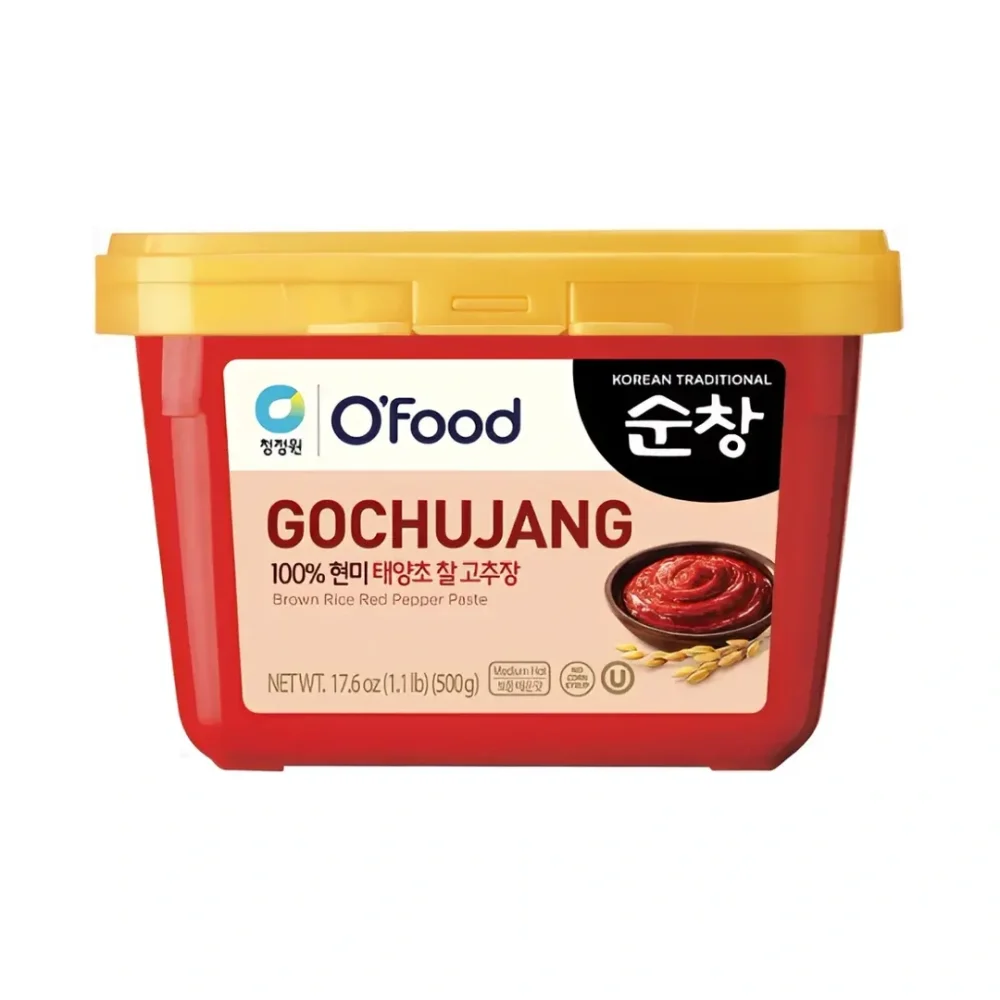
Specifically, the Korean world illustrates fermented chili paste well: gochujang (Korean chili paste) can add spiciness and fermented "depth" in one spoonful. And that is the regional signature: it’s not just about heat but also about how the flavor is built.
Southeast Asia: fish sauces, shrimp pastes, sambals, and pickles
In Southeast Asia, fermentation often relies on marine products: fish sauces, shrimp pastes, some sambals with a fermented component, and various pickles. Together they create a flavor that can be salty, aromatic, and “alive” at the same time, often with pronounced acidity (lime, tamarind) and herbs.
South Asia: fermentation in doughs and pickles
In South Asia, fermentation is strongly manifested, for example, in batters for dishes like dosa and idli, in pickles, and in some regional products. This fermentation world can feel completely different than East Asian “soy umami” – and it’s good to read it that way.
City, street food, and daily customs: why street stall culture is important
In many parts of Asia, regional style is inseparable from the city and its street food. This applies especially to Singapore and Malaysia, Vietnam, Taiwan, Thailand, Indonesia, or India.
Street food and hawker culture are important because:
- they concentrate local specialties into “readable” dishes,
- they preserve regional recipes and customs,
- they make food part of the city’s daily rhythm,
- they create the identity of a city or neighborhood.
This is useful at home too: if you want to learn a regional style, it often helps to pick a typical city dish (noodle bowl, wok noodles, bowl with sauce) and train the basic logic of taste and texture with it.
How to choose regional style at home (practical onboarding)
Culture and context are not just “theory.” They help predict what you will like and which path to choose so that your first attempts at home go well.
1) Choose direction by taste, not by label
- If you want lightness, freshness, and herbs: Vietnam, parts of Thailand, some regions of Malaysia and Indonesia, or lighter Japanese directions often fit.
- If you want depth, fermentation, and umami: Japan, Korea, China, and also fermented bases of Southeast Asia often fit.
- If you want spicier and richer logic: India, Sri Lanka, parts of Indonesia and Malaysia, or stronger Chinese styles often fit.
- If you want street food and urban energy: Singapore, Taiwan, Vietnam, Thailand, Malaysia, Indonesia, and India often fit.
2) Start with one type of dish (and stick to its rules)
The fastest way is to pick one family of dishes and let it “teach you the region":
- Broth bowl: focus on broth as the soul of the dish (phở is a typical example of broth logic).
- Wok/stir-fried noodles: train working with sauce and noodle texture (it matters if noodles are wheat, rice, or starch).
- “Dry” mixed bowl: learn how the sauce should be concentrated and how it binds to noodles or rice.
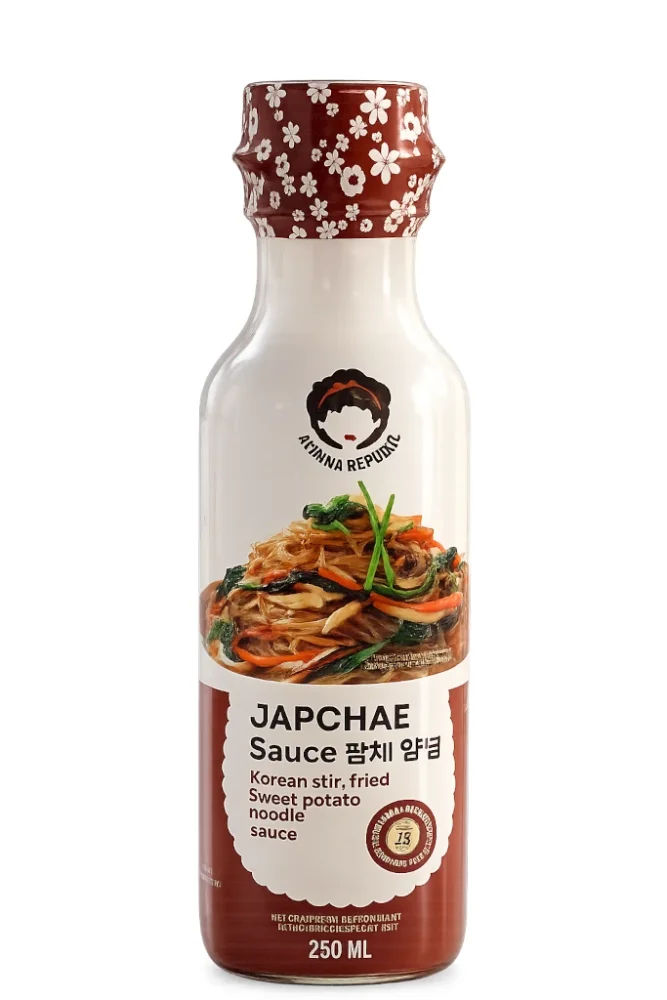
A specific shortcut for the Korean style “noodles + sauce + vegetables” can be a ready sauce holding a typical flavor direction: japchae noodle sauce (Korean style) . It is not a substitute for knowledge of the cuisine, but it can be a stable starting point where you notice how Korean style differs, for example, from Southeast Asian “herbal and acidic” logic.
3) Dosage: how to start so the flavor is not "too much"
For regional bases, a simple rule applies: start with a small dose and add. Specifically:
- Fermented chili pastes (typically gochujang): try starting with about 1 teaspoon per serving of sauce or marinade, mix, and then increase. It's easier to add than remove.
- Pickled sides (e.g., pickled ginger): treat them as an “intermezzo” between bites – a few slices are enough; the goal is not to overpower the main flavor.
- Sauces for specific dish styles: stick to wanting to just coat noodles at first, then pour more. If you use too much sauce, you often lose texture and the dish feels heavy.
Practical tip for noodles: if you want them flexible and not sticky, watch cooking time and work quickly for more sensitive types (overcooking is the most common way to get “mush”). Always clarify in advance whether you are making a broth bowl, wok dish, or dry noodles – each family of dishes has different demands.
💡 Most common mistakes and what to watch out for
- "Asian cuisine is one." There isn’t. It is a broad set of different systems. If you look for one universal "Asian taste," you will run into difficulties.
- "The only difference is that somewhere it’s spicier." No. Differences span climate, crops, broth, fermentation, fat, texture, and dining style.
- "Street food is less important than home cooking." In many cities, street food is one of the main bearers of cultural identity and regional specialties.
- "Traditional cuisines are static." They are not. They evolved precisely because of migration, trade, and contact with other cultures.
- "If I know the recipe, I know the cuisine." Without context, the meaning of ingredients, service, and symbolism can easily get lost – and then recipes appear as random combinations.
What to take away from the article
- Regional differences in Asia have specific causes: climate and crops, sea vs. inland, religion and customs, trade and migration, city vs. countryside.
- Rice and wheat worlds influence more than the side dish: they change the types of dishes, noodles, and dining customs.
- Fermentation is a reliable compass: elsewhere soy and umami dominate, elsewhere fish bases, elsewhere fermentation of dough and pickles.
- Street food often shows the regional style most purely – and at home you can learn one "family of dishes" well from it.
- Practically, it works to choose a style based on taste (freshness vs. depth vs. spicy richness vs. urban energy) and dose regional bases carefully from a small amount.

Read next
If you want to explore this topic further, continue with these related blog guides and articles:
