


 Česky (CZK)
 Slovensky (EUR)
 Deutsch (EUR)
 Austria
 Belgium
 Bulgaria
 Croatia
 Denmark
 Estonia
 Finland
 France
 Germany
 Greece
 Hungary
 Italy
Italy Latvia
 Lithuania
 Luxembourg
 Netherlands
 Poland
 Portugal
 Romania
 Slovenia
 Spain
Spain Sweden










Typical Taiwanese dishes: what to taste and how to recognize them
Taiwanese cuisine is often simplified to bubble tea and night markets, but in reality, it is a distinct and very vibrant culinary world. Typical Taiwanese dishes often rely on rice, noodles, and broths, on small portions and snacking – and especially on texture: delicate vs. crunchy, slippery vs. elastic, starchy vs. broth-based. In this article, you will find an overview of the most famous dishes, how they taste, what makes them typical, and how to practically navigate them.
How to think about Taiwanese "typical dishes"
With Taiwanese cuisine, it pays to discard two shortcuts: that it is just "one Chinese offshoot" and that typical Asian food must necessarily be extremely spicy or heavily seasoned. For Taiwan, what is typical is rather a gentler, but very precise tuning of flavors and work with contrasts.
What is most often repeated in Taiwanese dishes:
- Variety of styles (more culinary traditions blend on one island).
- Strong role of snacks and night markets – "small dishes" are a full-fledged culture, not just an extra.
- Connection of rice, noodles, soups, and street food – these are often bowls that themselves make up the entire meal.
- Seasoning that is light but distinct: saltiness, slight sweetness, broth depth, final seasoning.
- Texture as an equal component of flavor (for example, starchy elasticity, crunchiness, contrast of soft and crunchy).
Because of this, a "typical Taiwanese dish" can be just a bowl of rice with braised meat – and equally a street food classic where texture is the most important.
Why Taiwanese cuisine is so diverse: the main influences meeting on the island
The diversity of Taiwanese cuisine did not arise by chance. Several culinary traditions overlay and mix on the island – and importantly, in Taiwan, they often adapt to local tastes and urban dining styles (bowls, small portions, quick service).
Local Taiwanese base
Local cooking traditions have developed on the island based on available ingredients and regional techniques. In practice, this often means dishes based on rice, pork, fish, and 'bowl' logic: a simple base + a distinctive main component.
Chinese regional influences (but not mechanically adopted)
Influences from multiple Chinese regions (for example Fujian, Guangdong, Sichuan, Hunan, Jiangzhe, Shanghai, Beijing, and others) came to Taiwan. The important thing is that these do not mix like a style catalog but as a living practice: techniques and dishes are adjusted to suit local pace and taste.
Hakka layer
Hakka cuisine brings an emphasis on practicality and distinctiveness as well as on dried and preserved ingredients. In the context of typical dishes, this helps explain why it is so natural in Taiwan that even an "ordinary bowl" can have surprisingly deep flavor.
🕰️ Indigenous peoples' traditions
The cuisine of indigenous peoples brings a different relationship to nature and local ingredients into the Taiwanese culinary space. In common urban overviews, this layer is often simplified or lost, but it is important for understanding the island's diversity.
Japanese heritage and modern urban food culture
A part of Taiwanese identity is also Japanese heritage and the contemporary urban food culture. For readers, it is practical to think mainly about the result: a strong bowl tradition, emphasis on cleanliness and precision, and a preference for dishes that work quickly and reliably.
The three most typical "formats" in which you encounter Taiwanese dishes
Although Taiwan is diverse, three formats repeat in typical dishes. Once you understand them, you will navigate the menu (or the night market) much faster.
1) Broth noodle bowls
Noodles here are not a side dish—they are the core of the meal. The bowl's character usually depends on the combination of noodle type and how the broth works. For broth noodle dishes, the broth must be flavorful and technically mastered: the noodles must not disappear, but at the same time the broth must carry the whole dish.
2) Rice bowls with toppings (urban "bowl" food)
In Asia, rice is often not secondary. In bowls, it is the center of the plate, and everything else is arranged to combine well with the rice. Taiwan is a good example of an urban bowl world: rice bowls can be small and quick, yet full of flavor—typically thanks to a pronounced main component (topping) and a sauce that connects the rice.
🍜 3) Night markets, snacks, and texture as the main "ingredient"
Night market classics often are famous not only for taste but also for how they are eaten: elasticity, starchy "chewiness," crunchiness, contrast between soft and crunchy. If you have ever been surprised that people talk about texture with the same seriousness as flavor, Taiwan is one of the cuisines where this immediately makes sense.
The most famous typical Taiwanese dishes (and exactly what to look for in them)
The following four dishes are among the best-known representatives of Taiwanese cuisine. For each, it makes sense to know what is "carrying" it—so ordering or tasting does not become a mere coincidence.
Beef noodles (Taiwanese beef noodles)
Beef noodles are one of the most famous Taiwanese dishes. It is not just that the bowl contains noodles, broth, and beef—the important thing is that the specifically Taiwanese way of preparing gives the dish character, which is why it holds an exceptionally strong position on the island. In practice, you will notice that people talk about the "quality of the bowl" as something comparable—so much so that festivals and competitions are held around beef noodles.
What to expect in taste and sensation:
- broth depth, which is as important for the dish as the meat,
- noodles as carriers (their texture must withstand the broth),
- a full main meal, not an "appetizer soup."
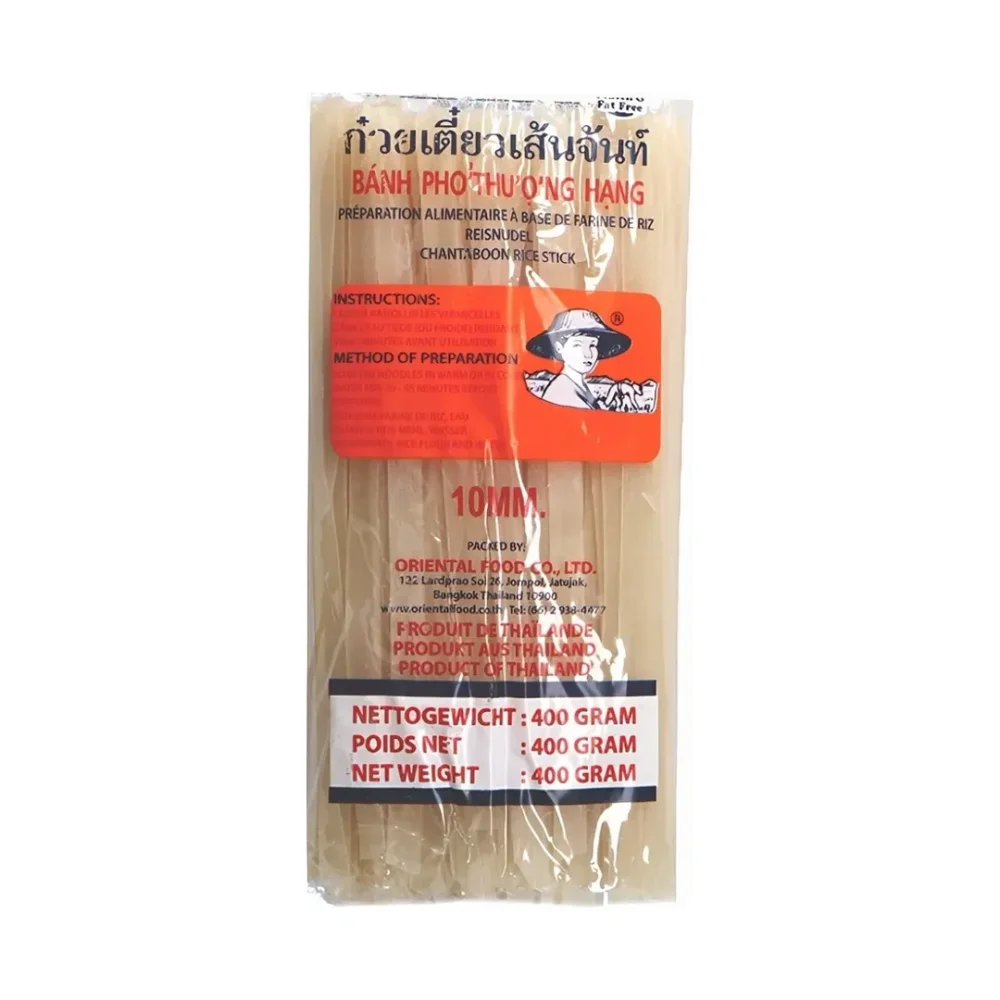
If you want to try the "noodle format" at home without a long search for noodle types, it's helpful to start with one reliable shape and mainly watch the texture after cooking: wide rice noodles (10 mm) are suitable for soups as well as stir-fries—the key is not to overcook them so they don't lose their structure.
Lu rou fan (rice with braised seasoned pork)
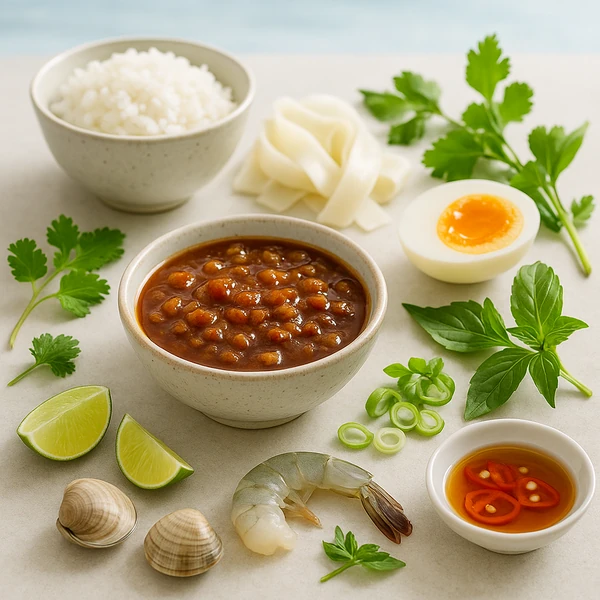
Lu rou fan (braised pork rice) is one of the most typical everyday dishes. At first glance, it seems simple: a bowl of rice with braised seasoned pork on top. But this shows Taiwan’s ability to make a deeply satisfying dish from relatively simple ingredients.
Why it works:
- rice is not a "side dish" - it is the base that holds the entire dish together,
- the topping and sauce flavors the rice and at the same time "softens" it,
- everyday: it is a type of meal that works as a quick lunch as well as comfort food.
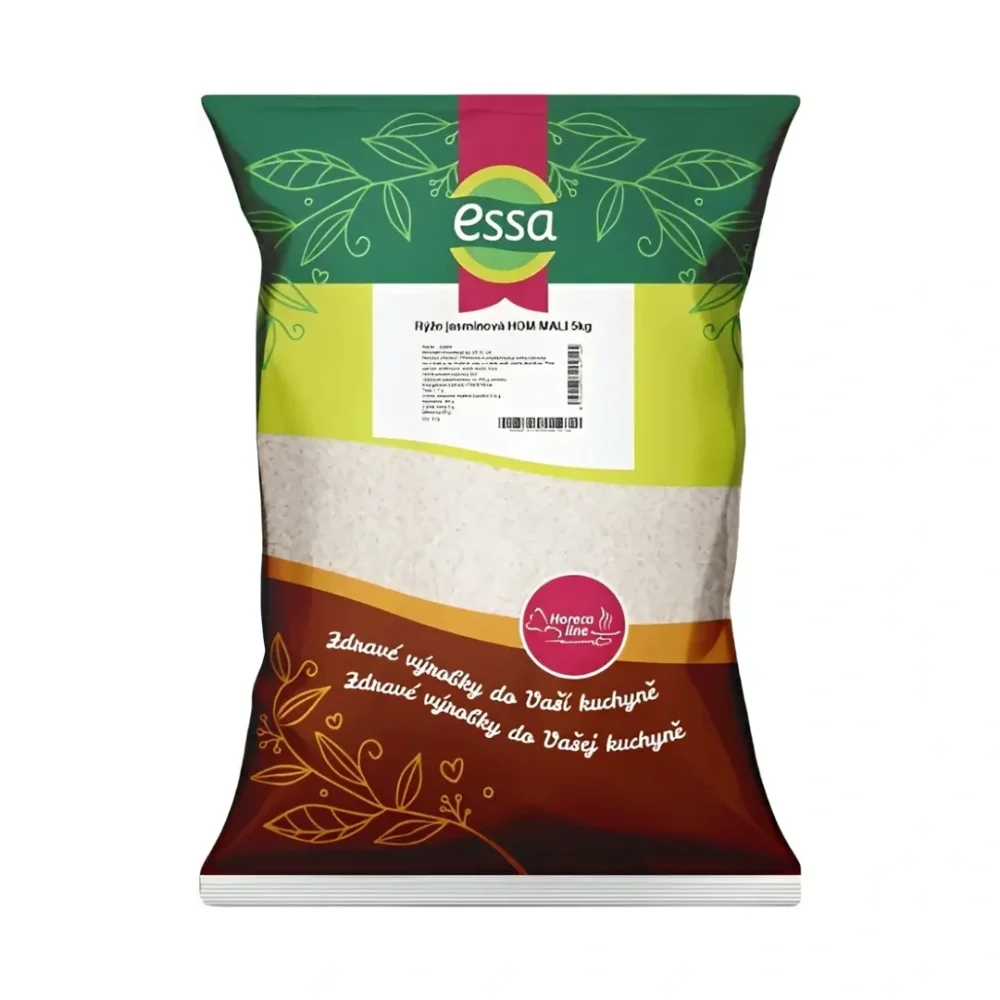
In a rice bowl, the aroma and texture of the rice itself are surprisingly important. If you want to practice "bowl logic" (rice + pronounced component) at home, it is good to have aromatic rice on hand, which is pleasant even in a simple combination: Hom Mali jasmine rice can create a fluffy base on which sauces and braised meat toppings stand out well.
Oyster omelet (night market oyster omelet)
Oyster omelet is one of the most famous night market classics. The essential combination is oysters, eggs, starchy texture and sweet and sour sauce. Here it is clearly visible that texture is as important as taste: starch creates a characteristic "chewiness" and softness, which would be unusual in a European omelet but in the Taiwanese context is exactly the point.
How to recognize it on the first taste:
- don't expect just an "egg dish" — it is more of a texture snack,
- the sweet and sour sauce is not a detail but an essential part of the flavor,
- it works as a typical dish that makes sense especially in the context of night markets and small portions.
Danzai noodles (specialty from Tainan)
Danzai noodles are a specialty from Tainan. In typical Taiwanese dishes, they clearly show the regional face of the cuisine and the relationship to smaller but flavor-packed noodle bowls. It is not necessarily about "the biggest" portion—it is often a dish that stands on giving a clear, concentrated flavor impression in a small bowl.
What to practically take from this: when you encounter a bowl of Taiwanese noodles that seems smaller, it does not have to mean "less food." In Taiwanese logic, it is common to assemble a day from multiple small bowls and snacks—and this makes sense even when tasting typical dishes.
How to choose and understand Taiwanese dishes in practice (without recipes, but concretely)
Typical Taiwanese dishes are well chosen according to what kind of experience you want – broth depth, a "bowl for every day" rice dish, or textured street food.
Start with "one bowl" and "one snack"
- I want broth and a hearty bowl → a logical choice is beef noodles (broth noodle dish where broth decides quality).
- I want everyday comfort food → lu rou fan (rice with braised seasoned pork).
- I want to taste night markets and texture → oyster omelet (starch + egg + oyster + sweet and sour sauce).
Watch two technical things that make an "Asian bowl" a bowl
1) Broth vs. sauce determines character. In broth bowls, the broth is the core of the dish: it must carry umami, aroma, and the overall impression. For sauced and "dry" noodles or stir-fries, it is important that noodles are not drowned in sauce – too much sauce destroys texture, too little sauce makes the dish disconnected.
2) The texture of the main side (rice/noodles) is not a detail. For rice bowls, aroma and rice structure are important; for noodles, it depends on whether they are meant for soup, stir-fry, or "dry" mixing. If you want to test texture at home, choose one specific ingredient and watch how it behaves in different dishes – for example, wide rice noodles will quickly show you the difference between carrying broth only and holding sauce.
Keep seasoning "light but precise"
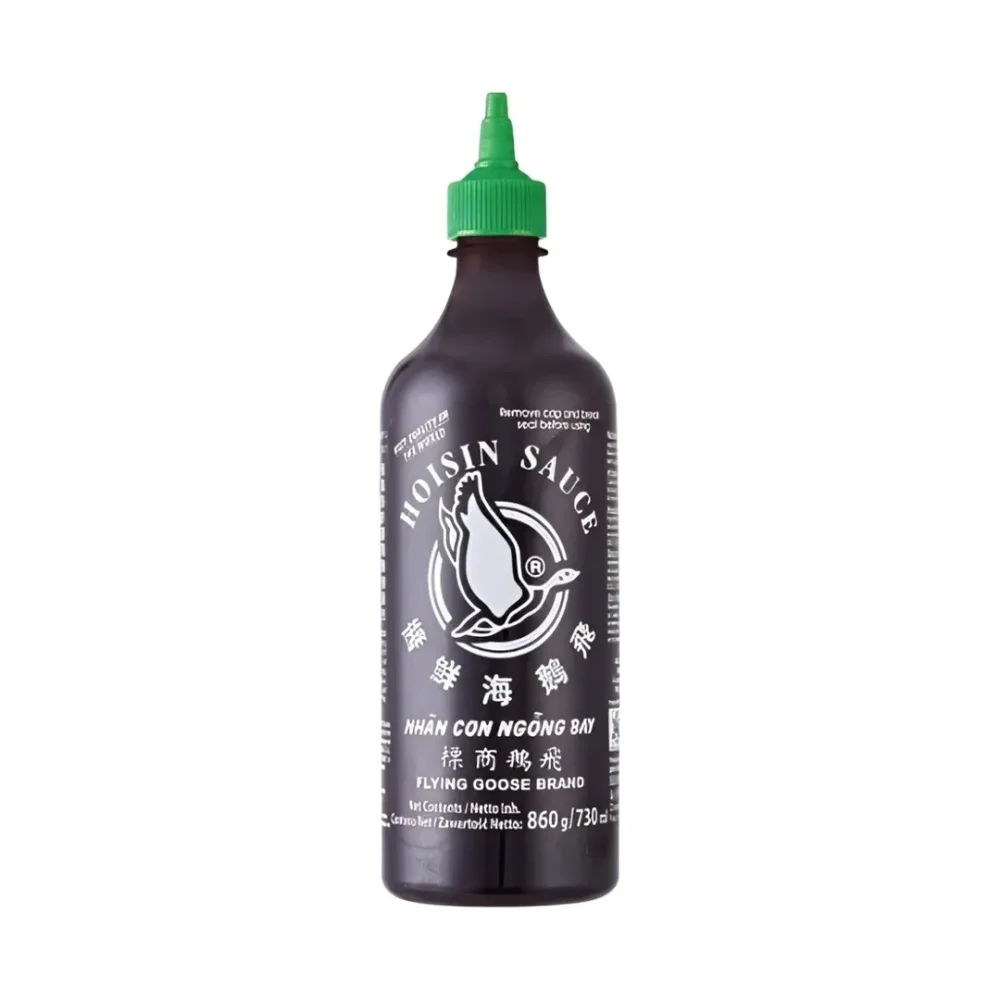
Taiwanese food often does not rely on extreme spiciness but on precise tuning of saltiness, slight sweetness, and broth depth. If you try Asian seasoning at home and look for a quick way to approach the sweet-salty sauce line (common in many Asian dishes), one more universal sauce can serve as a reference point – for example, hoisin sauceBut take it as a tool to understand the style (sweet-salty, distinctive), not as a "shortcut for everything": in specific Taiwanese dishes, the resulting balance and texture are always more important than exactly which sauce you use.
💡 Common misconceptions and what to watch out for
- "Taiwanese = only street food or only bubble tea." Night markets are important, but everyday rice and noodle bowls and the home logic of "small dishes" are equally typical.
- "It's just China." Taiwanese cuisine is an independent system with its own blend of influences (local base, various Chinese regions, Hakka layer, indigenous peoples, Japanese heritage).
- Overlooking texture. In dishes like oyster omelet, the texture of the starchy component is essential – if you think of it as "weird," you miss the point of the whole dish.
- Wrong expectations from broth bowls. Beef noodles are not an "appetizer soup." In Asian cuisines, the broth bowl is often the main meal—and it is the broth that decides the quality.
- Trying to unify everything with one sauce. For noodles, it is key that they are coated with sauce, not drowned; with broth, noodles must not disappear. If you do not maintain this, the typical character of the dish is lost.
What to take away from the article
- Taiwanese cuisine is recognizable by the combination of rice and noodle bowls, night markets, and emphasis on texture.
- Typical dishes are often not about extreme spiciness but about precise tuning of saltiness, slight sweetness, broth depth, and final seasoning.
- For quick orientation, remember three formats: broth noodle bowls, rice bowls with toppings, and textured night market snacks.
- Among the most famous "core" dishes are beef noodles, lu rou fan, oyster omelet, and danzai noodles – each representing a different face of Taiwan.

Read next
If you want to explore this topic further, continue with these related blog guides and articles:
