


 Česky (CZK)
 Slovensky (EUR)
 Deutsch (EUR)
 Austria
 Belgium
 Bulgaria
 Croatia
 Denmark
 Estonia
 Finland
 France
 Germany
 Greece
 Hungary
 Italy
Italy Latvia
 Lithuania
 Luxembourg
 Netherlands
 Poland
 Portugal
 Romania
 Slovenia
 Spain
Spain Sweden










Taiwanese street food: why night markets are the heart of the cuisine and what makes sense to taste there
Taiwanese street food is not just a few 'grab-and-go' dishes and bubble tea. In Taiwan, street food meets bowls of broth, rice, noodles, small portions, and above all an emphasis on texture and precise final seasoning. When you know how to read this world, Taiwanese night markets will make much more sense to you – even if you don't experience them live.
Taiwanese cuisine originated on an island where multiple layers of influences and styles have long mixed. This is why street food in Taiwan is so diverse: it is based on a local foundation, adopting various Chinese regional directions, with a significant role played by the Hakka layer, traces of Japanese heritage, and modern urban food culture. The result is a world that is very lively, everyday, and surprisingly varied.
If you want to get oriented in Taiwanese street food, it helps to look at it not as a 'tourist attraction,' but as a practical way of eating. And also to accept that it is not just about taste: texture is equally important, the contrast of soft and crispy, starchy coatings, or how the food feels on the first bite.
What exactly does 'Taiwanese street food' mean (and what not to confuse it with)
Street food in the Asian context is not just 'food from the street.' It is typical that it is prepared quickly (or quickly finished in front of the customer), the seller is highly specialized in one or a few dishes, and the taste is distinctive and easy to read. Sauces, dips, and final seasoning play an important role – often this is the last 'signature' that turns food into a memorable experience.
One of the most common mistakes is to narrow street food only to what is eaten on the go. The same world also includes noodle and rice bowls, soups and broths, or foods eaten at a table in a market/night market setting. This is key for Taiwan: night markets and small portions are a natural place where snacks, full bowls, and something 'just for the taste' meet.
Why Taiwanese cuisine (and thus street food) is so diverse
Diversity is no accident. Taiwanese cuisine relies on multiple layers that have met and mixed on the island: local traditions based on available ingredients (fish, rice, pork, regional techniques), strong Chinese regional influences (for example, styles from Fujian, Guangdong, Sichuan, Hunan, Jiangzhe, Shanghai, Beijing, and other areas), distinctive Hakka cuisine emphasizing practicality and better storable ingredients, indigenous traditions, Japanese heritage, and modern urban food culture.
In practice, this means that at one place you find delicately tuned broth bowls, hearty rice combinations, 'market' texture classics, and small items that rely mainly on sauce and final seasoning.
Forms of Taiwanese street food: bowls, rice, noodles, and 'texture' classics
For Taiwan, it is typical to connect rice, noodles, soups, street food, and home cooking. Taiwanese food often is not extremely spicy nor over-seasoned. Instead, it relies on precise balancing of saltiness, slight sweetness, broth depth, and how individual elements 'behave in the mouth.'
Beef noodles: broth, meat, and noodles as the main story
Beef noodles are among the most famous Taiwanese dishes. It is not just about 'throwing noodles and meat into a bowl': important is the combination of meat, broth, and noodles, and also a specific Taiwanese preparation method that gives the dish a special character. The status of beef noodles in Taiwan is so strong that festivals and competitions are held around them.
As street food, it shows well that street food does not have to be a simplified version of a restaurant – often, it is the place where the recipe is honed to its most characteristic form.
Lu rou fan (braised pork rice): an everyday rice bowl that satisfies
Lu rou fan (rice with braised seasoned pork) is a typical everyday dish. It nicely shows Taiwan’s ability to make deeply satisfying food from relatively simple ingredients. In the context of night markets and small portions, it also works as a 'reliable base': one bowl, clear taste, no unnecessary garnishes.
Oyster omelet: when texture is as important as taste
Oyster omelet is one of the famous night market classics. Important is the combination of oysters, eggs, starchy texture, and sweet-sour sauce. This best shows the principle typical of Taiwanese food: texture is not a 'side effect,' but an intentional part of the experience – just as important as taste.
Danzai noodles: a smaller but flavor-filled bowl with a regional face
Danzai noodles are a specialty from Tainan. They show the regional face of Taiwanese cuisine and a relationship to smaller noodle bowls that are full of flavor. Within street food logic, it is the type of dish that is quick, clear, and has an 'immediate' effect – exactly what works in a market environment.
How to bring Taiwanese night market home: a practical plan without complexity
The point of Taiwanese street food is that the food should be fast, readable, and detailed in execution. At home, you best achieve it by not trying to make a 'big feast,' but smaller, well-timed portions.
1) Choose one 'main direction' and stick to it
- I want a broth bowl: take inspiration from the logic of beef noodles (broth + noodles + toppings).
- I want hearty rice: take inspiration from lu rou fan (rice + pronounced braised meat + final seasoning).
- I want something that is mainly about texture: take inspiration from oyster omelet (starchy texture + sauce as a signature).
Only after one direction works for you both in taste and texture does it make sense to add more 'stalls' to the plate.
2) Expect small portions – and give space to sauces and final seasoning
Street food should be convincing from the first bite. At home, this often 'doesn’t work' because we cook too cautiously, and the resulting taste is flat. A simple rule helps: do not leave final seasoning to the start of cooking, but to the end (sauce, dip, last flavor adjustment).
Practically: adjust gradually in small doses (for example, half a teaspoon to a teaspoon), taste and seek a combination of saltiness, light sweetness and broth depth. In Taiwanese cuisine, it often is not about being extremely spicy, but being precise.
3) Do not underestimate noodles: texture is half the success
In noodle bowls (whether broth-based or 'dry'), the texture of the noodles is crucial. The most common home problem is overcooking – noodles then lose elasticity, and the dish feels tired. If you want to make a quick noodle bowl in the Taiwanese spirit, it helps to have neutral wheat noodles on hand that can carry broth and sauce. A practical base can be, for example, H&S instant noodles, because with them you can quickly build a bowl where you focus mainly on seasoning and 'toppings.'
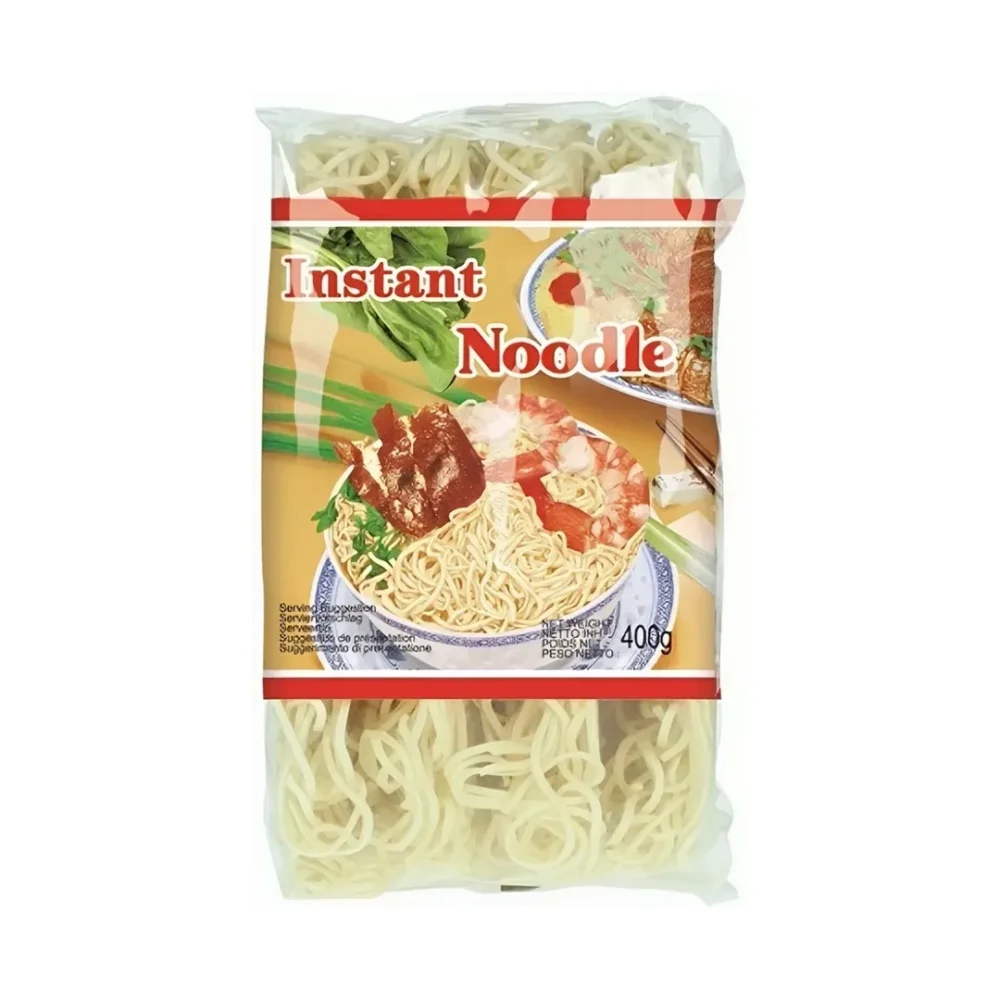
Indicatively, for one portion of a bowl at home, usually works approximately 80–100 g of noodles (depending on type and appetite) and 250–350 ml of hot broth for a soup style. Take it as a starting point: adjust the final volume and proportions according to whether you want the bowl more 'soupy' or thicker.
4) Prepare things in advance – street food is about rhythm
Why street food tastes different than home cooking is also related to operation: it is cooked quickly, often at higher temperatures, and the cook does the same over and over again, refining the detail. At home, you best create this effect by preparing in advance everything added 'in the last minutes' (already cooked rice, sliced ingredients, prepared seasoning). Then you can finish the bowl quickly – and the taste will feel livelier.
Common mistakes that spoil the experience (and how to fix them)
- 'Street food = only grab-and-go food.' In Taiwan, it also includes bowls, soups, and broths. Correct your expectations: you can start with a bowl.
- 'Taiwan is just a branch of Chinese cuisine.' Taiwanese cuisine is an independent living system with many layers of influences (local, Chinese regions, Hakka, indigenous peoples, Japanese heritage, modern city). When you accept this, you stop getting confused by the 'mix of styles.'
- Chasing extreme spiciness. Taiwanese food does not have to be strongly spicy or extremely seasoned. More often it relies on saltiness, light sweetness, broth depth, and precise seasoning.
- Ignoring texture. For dishes like oyster omelet, starchy texture is not a mistake – it is the point. Do not try to make a 'classic omelet' out of it, but rather learn to perceive how texture holds sauce and flavor.
- Too many dishes at once. Street food logic is specialization and detail. At home, better to do two small things well than five average ones.
- Overcooked noodles and bland final taste. By watching noodle cooking time and leaving some seasoning to the end, you make the biggest leap in quality without complicated procedures.
What to take away from the article
- Taiwanese street food is a natural everyday cuisine of night markets and small portions, not just a tourist attraction.
- It is not just about taste: for Taiwan, working with texture and contrast (soft vs. crispy, starchy coatings, 'slippery' structures) is typical.
- Representative classics include beef noodles, rice with braised pork (lu rou fan), oyster omelet, and danzai noodles from Tainan.
- Street food often tastes different from home cooking because it is based on more intense seasoning, speed, and a final 'signature' of sauce or dip.
- At home, you succeed best by choosing one direction (broth bowl / rice bowl / texture specialty) and perfecting it in detail, rather than cooking everything at once.

Read next
If you want to explore this topic further, continue with these related blog guides and articles:
