


 Česky (CZK)
 Slovensky (EUR)
 Deutsch (EUR)
 Austria
 Belgium
 Bulgaria
 Croatia
 Denmark
 Estonia
 Finland
 France
 Germany
 Greece
 Hungary
 Italy
Italy Latvia
 Lithuania
 Luxembourg
 Netherlands
 Poland
 Portugal
 Romania
 Slovenia
 Spain
Spain Sweden










How tempura and its coating work: what makes it crispy (and why both flour and starch matter)
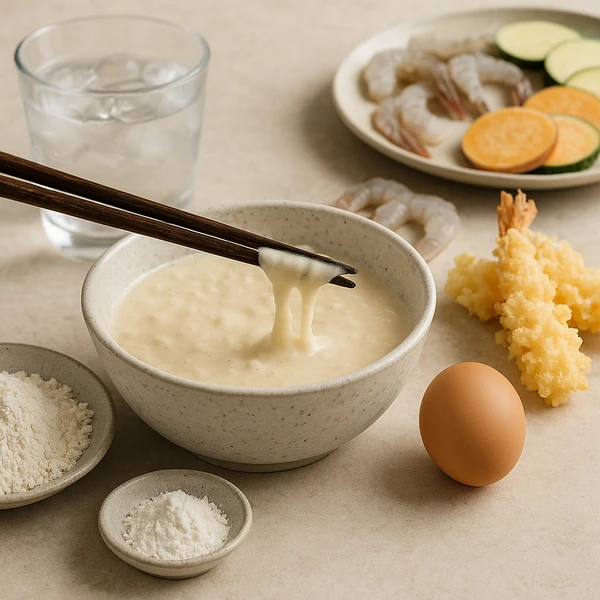
Tempura seems simple: coat and fry. But in reality, it relies on texture – on how the coating behaves after cooking. The difference between "lightly crispy" and "heavy and dense" often arises not just from technique, but also from choosing the right mix, flour, and starch.
Why the coating is more important in tempura than it seems
In Asian cuisine, it’s often not just the taste that matters, but also the texture – crispiness, elasticity, silkiness, or a slightly sticky surface. That's why recipes often include several types of flours and starches side by side, even though they might taste neutral on their own.
Tempura is a practical example: the coating should be light and crispy, but at the same time shouldn’t overpower the ingredient you’re coating. If you choose the wrong type of flour/starch (or a mix designed for a different result), you may end up with a coating that is 'fried' but not pleasantly delicate.
What makes the "crunch": flour vs. starch (and what it does in practice)
For home orientation, it’s useful to stop seeing flours and starches as one category. They behave differently and are often used specifically to create a different texture.
What starch usually does
If the goal is a crispy coating, starch often works well. Typical examples include potato starch, tapioca starch, or their combinations with flour – these variants usually result in a lighter and crispier coating than plain flour.
What flour usually does (and why there isn’t “just one”)
Flour in cooking is often associated with dough and structure. Even among rice flours, there are key differences: common rice flour behaves differently than glutinous rice flour. This is partly due to the ratio of amylose and amylopectin – simply put: a higher amylopectin content often leads to a stickier, more elastic, and stretchier result, while higher amylose usually results in a firmer, drier, and crumbly texture.
For coatings like tempura, this means practically: if you want a "delicate coating and light crispness," it often makes sense to combine starch and flour – rather than rely on just one universal type.
Types of tempura coatings you’ll encounter (and how they differ)
1) Basic tempura mixes: for a light, airy batter
Basic tempura mixes aim for a light and crispy “jacket” for various ingredients. A practical starting point is, for example, Gogi Tempura 150 g, or larger packages for more frequent use, such as Golden Turtle Chef Tempura 1 kg.
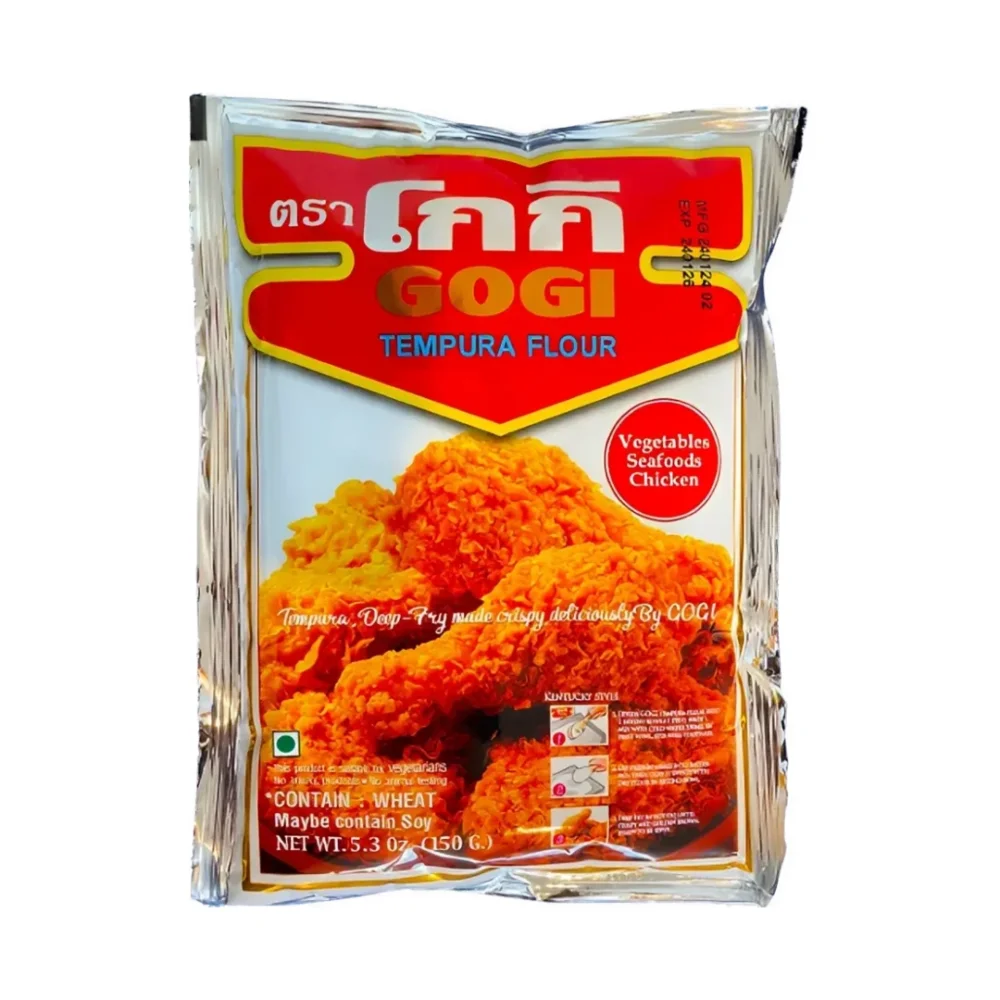
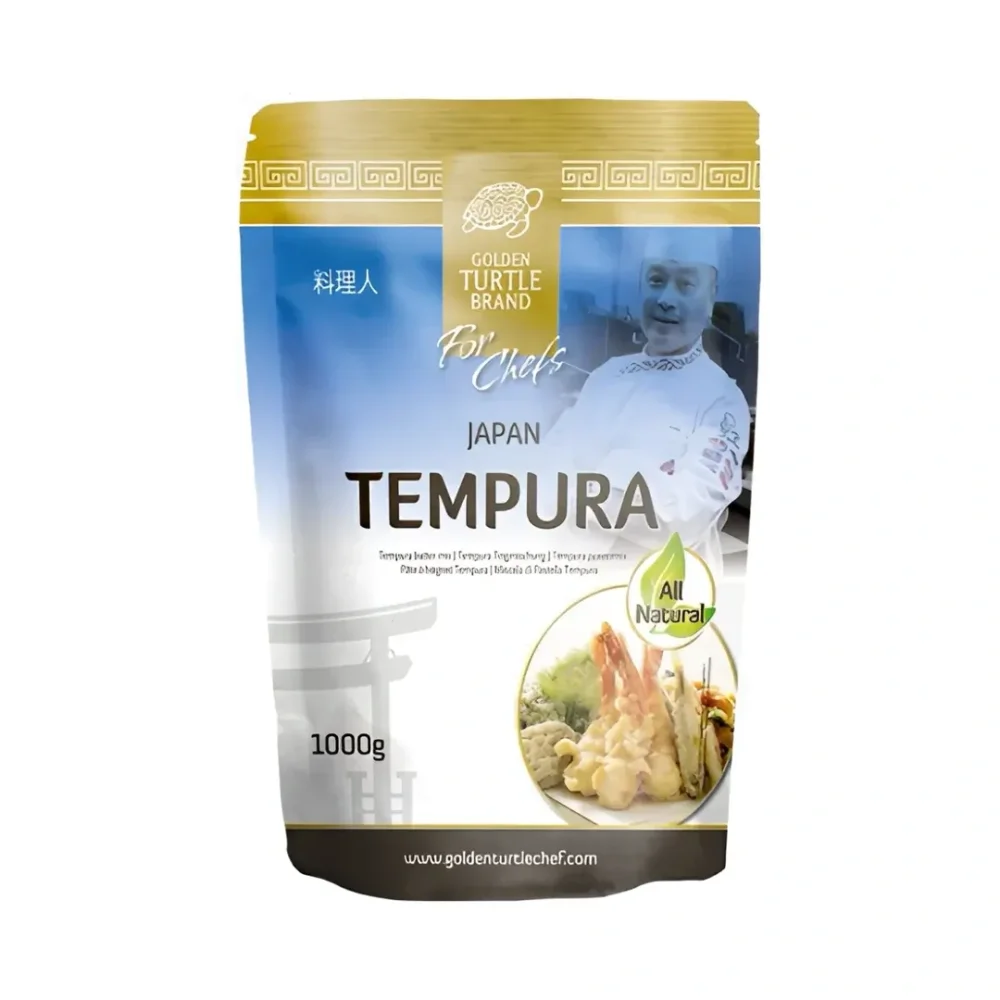
In practice, this is the simplest way if you want to try tempura without fine-tuning ratios between flour and starch.
2) Spiced coating mixes: when you want a stronger flavor in the coating
Besides “neutral” mixes, there are spiced variants where the coating is not just texture but also a pronounced seasoning. An example is Gogi Tempura mix with spices 216 g, described as a spiced “Kentucky” style.
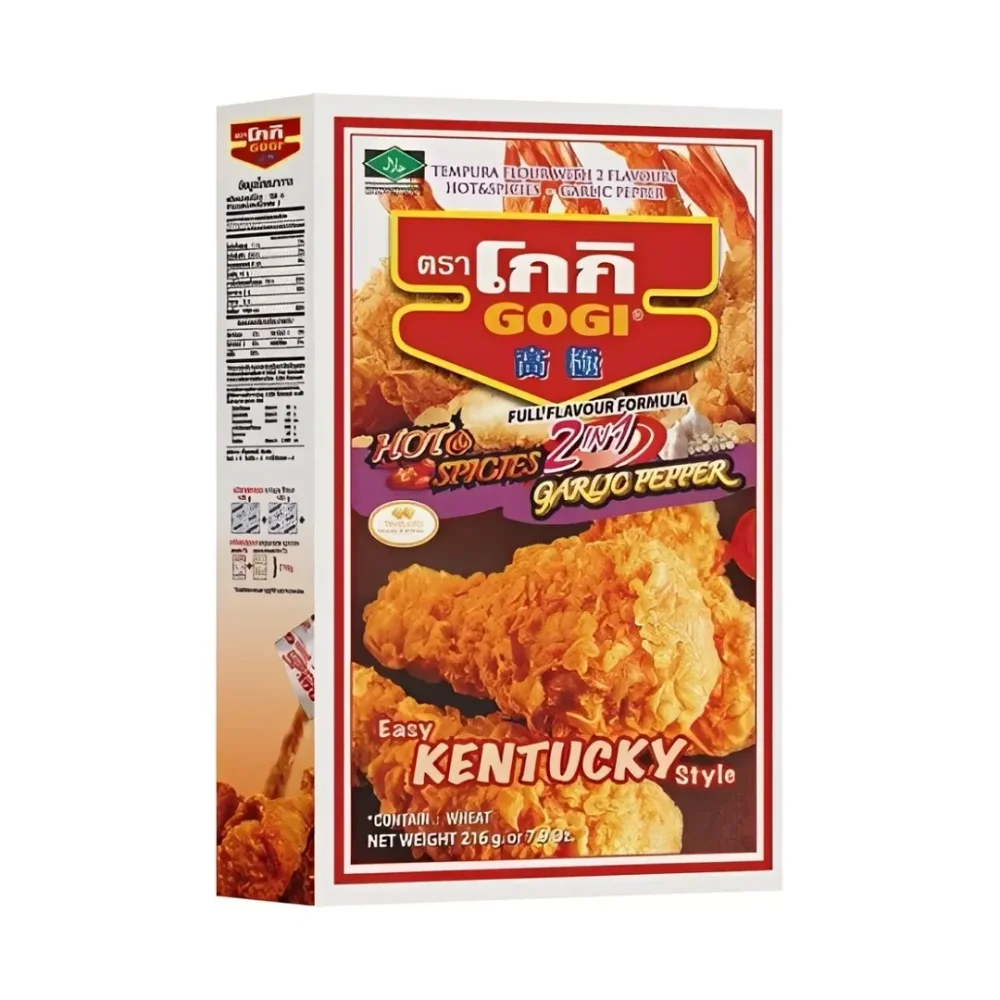
Here it’s good to keep in mind that the role of the coating changes: it’s not just a carrier of crispiness but also a flavor component that can be dominant.
3) Panko and breadcrumb coatings: when you want extra crispiness in a different way
Tempura is a batter coating, but in Japanese cuisine you’ll also find coatings based on breadcrumbs. If the goal is a distinctly crispy coating, a typical helper is panko – for example, Golden Turtle Chef Panko Breadcrumbs 200 g.
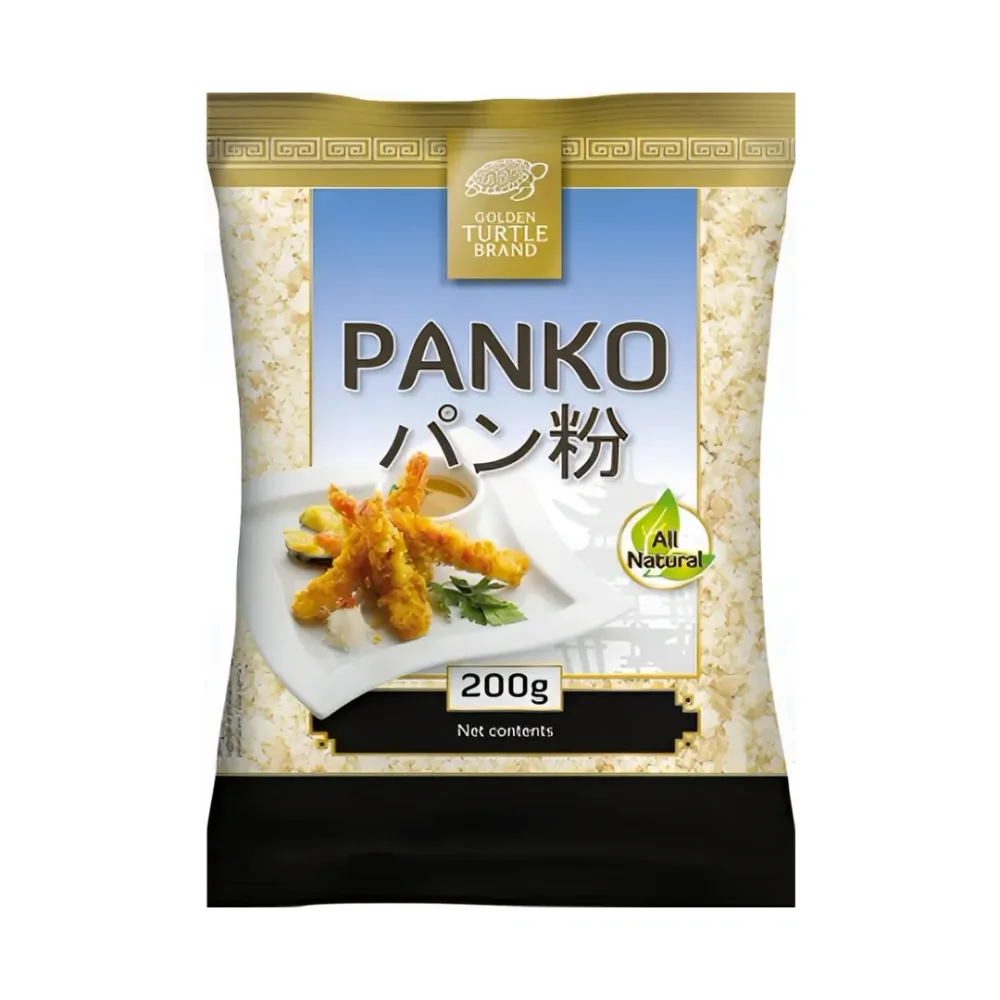
A practical point: “tempura” and “panko” are not the same. If you expect a light batter coat, choose a tempura mix. If you want a crumb-coated crispy surface, panko makes sense.
4) Coatings for fruit: the sweet branch of fried crispy desserts
Coating mixes are not just for savory ingredients. There are mixes designed for sweet fried fruit – for instance, Lobo coating mix for fried bananas Kloay Kaak 85 g, which targets a crispy coating for bananas and fruit for frying in general.
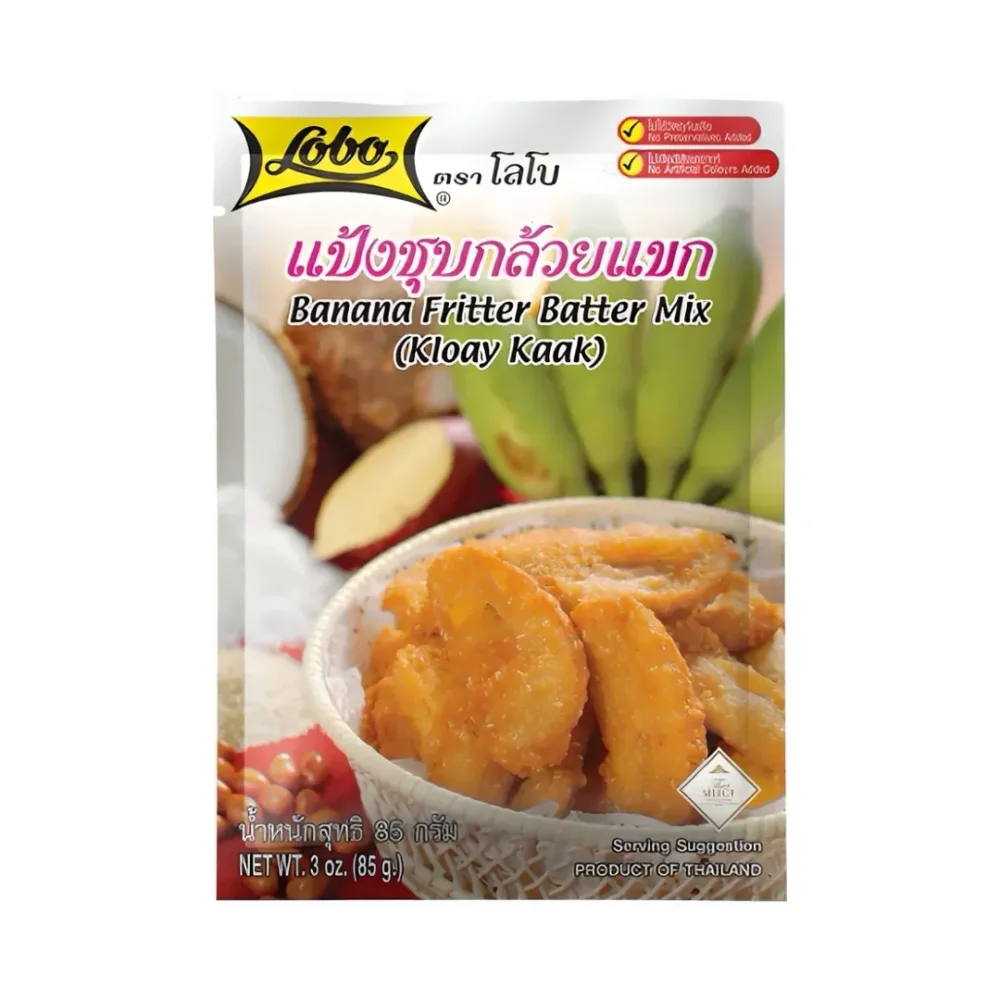
This is a useful reminder that a “coating” can have a different logic depending on whether you’re coating vegetables and seafood or fruit for dessert.
How to choose the right tempura and get oriented at your first purchase
Step 1: ask yourself "what exactly should the coating do?"
The fastest and most reliable way to choose is to be guided by function. A simple mental checklist helps:
- Do I want thickness and shine? Starch often makes sense.
- Do I want elasticity and a stretchier structure? Glutinous rice flour or some starches often help.
- Do I want a fine coating and light crispness? A combination of starch and flour often works.
- Do I want a translucent / glassy result? Tapioca, sweet potato starch, or wheat starch often come into play.
- Do I want a neutral taste and a universal base? Classic rice flour is usually a good starting point.
In tempura, point three is most often what you care about: light crispness. And there it naturally makes sense to consider the role of starch or simply reach for ready-made tempura mixes.
Step 2: read the label – for flours and starches the label is often more important than the name
For flours and starches, the packaging (label) is often more important than the marketing name. From a practical perspective, it pays to watch mainly for:
- whether it is flour, or starch,
- what the product is actually made from,
- whether the product is pure, or a mixture,
- and for rice flours, the difference between regular rice flour and glutinous rice flour.
This is important for tempura also because a “coating mix” can be either basic (mainly for texture) or seasoned (where the flavor of the coating plays a much bigger role).
Step 3: choose your path – ready mix or working with flour yourself
If you want a quick and consistent start, the easiest is to reach for a mix in the category Tempura and Breadcrumbs. For first tries, smaller packages are practical; for more frequent frying, bigger ones make sense.
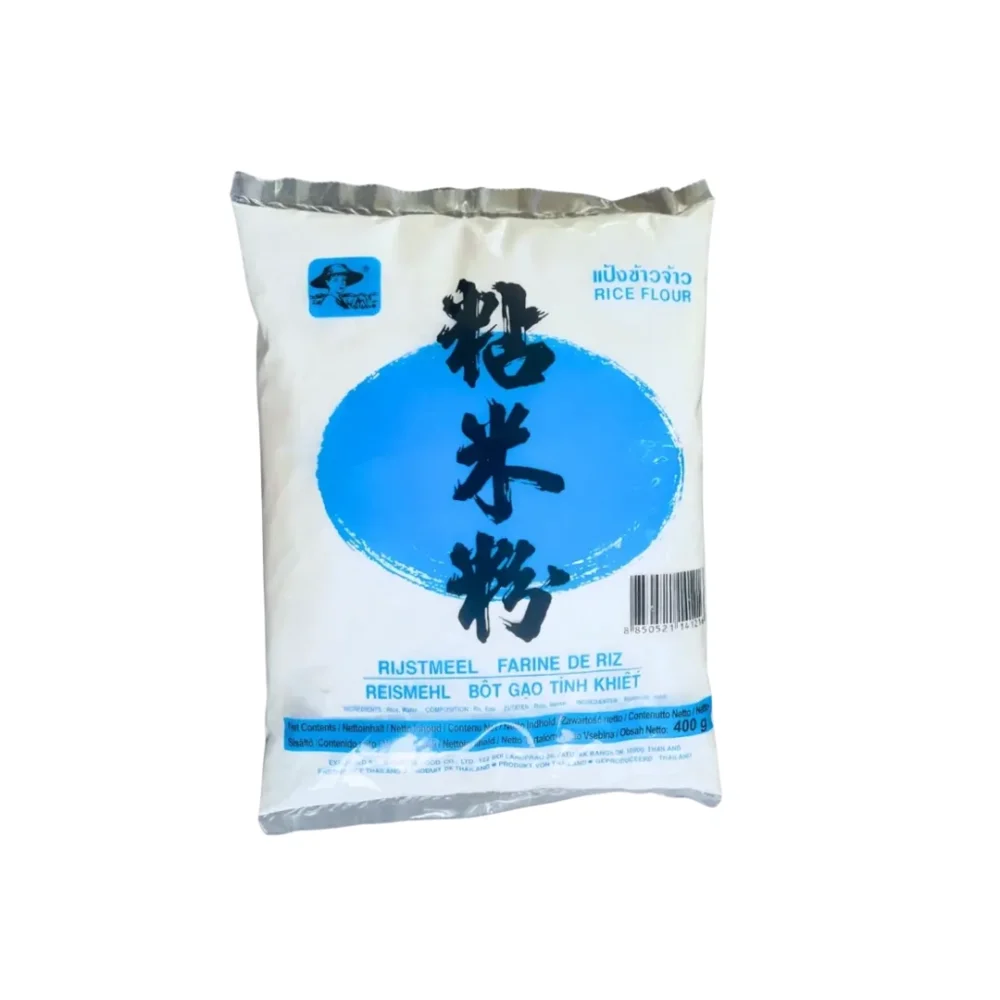
If you want more control over the result, it’s worth thinking of rice flour as a neutral building block. Specifically, Farmer Brand rice flour 400 g is a type of ingredient used in Asian cuisine as a fine base for both savory and sweet recipes. And if your aim is a crispier coating, then (generally) the presence of starch or a mix of flour and starch often helps.
For a broader understanding of what is flour and what is starch, it’s useful to check out the guide Flour and Starch or the more general category Flour and Flour Products.
Step 4: choose the ingredient so the coating makes sense
Tempura coating is often used for vegetables and seafood. If you want to plan your purchase “from the dish,” it helps to think through the ingredient as well: for example, the guide Seafood will give you an overview of what is commonly prepared in the kitchen as a “main” ingredient, where the texture of the coating significantly matters.
💡 Common misunderstandings and what to watch out for
Mistakes from the label: “glutinous” isn’t wheat nor automatically gluten
One typical confusion is linguistic: glutinous rice flour is not wheat flour and does not mean it contains gluten. It’s a different type of rice flour with different texture behavior. For coatings and batters, this is crucial because the expected result (fragile vs. elastic/stretchy) can vary dramatically.
“Rice flour” is not the same as “sweet rice flour”
Another common confusion: rice flour is not the same as sweet rice flour. If you want a predictable result, don’t just rely on the word “rice” but on the specific type.
The idea that one coating will solve everything
It’s tempting to want one universal ingredient. But the difference between starch and flour (and among different types of flours) is precisely in what texture they create after cooking. If you’re not achieving light crispness, it’s often not the “wrong brand” but the wrong type chosen for the function.
Mixing up tempura and panko (batter vs. breadcrumbs)
In everyday language, sometimes all “crispy” things go in one category. Practically, it’s good to distinguish if you want a coating from batter (tempura mix) or a crumb surface (panko). The result is a different kind of crispiness and a different style of dish.
Sesame oil isn’t automatically a universal oil “for everything”
If you’re considering sesame oil for frying, watch out for a common mistake: there are different styles. Toasted sesame oil typically works more as a small amount of aromatic seasoning rather than the main fat. In other words: here too, it’s important to choose according to function, not just the name.
What to take away from the article
- Tempura mainly relies on the texture of the coating – which is often determined by choosing between flour, starch, or their combination.
- If you want a crispier coating, starch (like potato or tapioca) or a flour-and-starch mix often works.
- Don’t rely only on the name: for flours and starches, the label is key (flour vs. starch, pure product vs. mix, type of rice flour).
- Distinguish “basic” tempura mixes and seasoned coating mixes – the role of the coating in the dish changes.
- Panko and tempura are not the same: one is a breadcrumb coating, the other is batter.

Read next
If you want to explore this topic further, continue with these related blog guides and articles:
