


 Česky (CZK)
 Slovensky (EUR)
 Deutsch (EUR)
 Austria
 Belgium
 Bulgaria
 Croatia
 Denmark
 Estonia
 Finland
 France
 Germany
 Greece
 Hungary
 Italy
Italy Latvia
 Lithuania
 Luxembourg
 Netherlands
 Poland
 Portugal
 Romania
 Slovenia
 Spain
Spain Sweden










Doughs for dumplings and bao: how to choose flour and get the right texture
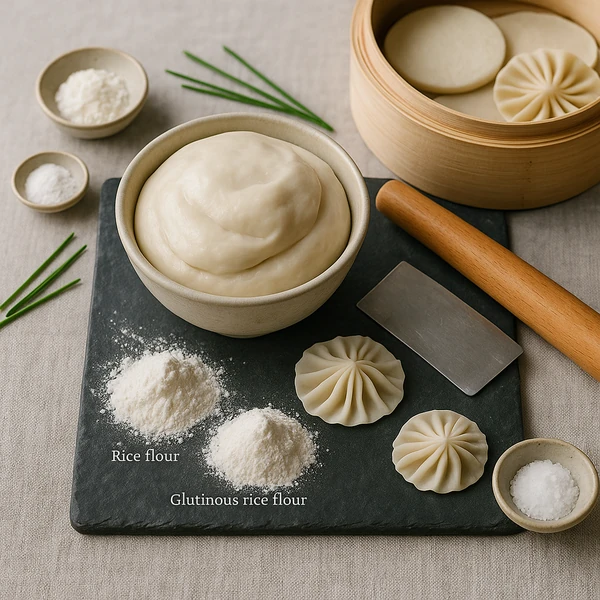
For Asian dumplings, the wrapper is as important to the result as the filling. And for bao, the dough determines whether the bun will be soft and fluffy or dense and "heavy." In practice, it is often not the taste of the flour (which tends to be neutral) but the texture: elasticity, chewiness, crispness, gloss, or translucency. In the article, you can compare the basic types of doughs and wrappers and especially which flour or starch to choose so that the dumplings and bao turn out as you expect.
Dough as the key to texture: why dumplings and bao involve more than just the filling
In Asian cuisine, working with texture is as important as flavor. One bite can be crispy, elastic, silky, and slightly sticky all at once. This is why different flours and starches appear side by side, even though they often taste very neutral on their own.
An important explanation is the ratio of the two starch components: amylose and amylopectin. Simply put, ingredients with a higher amylopectin content tend to be stickier, more elastic, and chewier after cooking, while a higher amylose content more often results in a firmer, drier, and crumblier texture. That is why there is such a big difference in practice between regular rice flour and glutinous rice flour, even though both come from rice.
What is meant by "dumpling" in Asia: pockets, dim sum pieces, and bao
"Dumpling" is not one specific product but a broad family of dishes where dough (or a starch layer) encloses a filling—or sometimes forms a standalone bite. The type of wrapper ingredient, thickness, shape, and cooking method vary across different parts of Asia.
For home reference, it is practical to keep three basic constructions in mind, as each requires a different type of wrapper and different expectations:
- Thin pockets – typically jiaozi, gyoza, mandu, wontons (and sometimes momo). The wrapper is usually wheat-based with filling inside; preparation by boiling, steaming, or pan-frying.
- Dim sum pieces – e.g., siu mai / shumai, har gow, xiao long bao. These often involve finer work on the wrapper and smaller portions served as multiple small courses.
- Leavened buns and dumplings – bao / baozi. The dough is fluffy, soft, and rich; the result is more of a 'steamed bun' than a pocket.
Once you clarify which family you want to aim for, it will be much easier to select the right type of flour/starch and especially the right type of wrapper.
Three types of wrappers by construction: wheat, translucent starch, and leavened
Wheat wrapper for jiaozi, gyoza, mandu, and wontons
Wheat wrappers are the most common for many pockets. It can be thin or thicker, elastic, smooth, or slightly chewy. The important thing is that it usually withstands multiple methods: boiling, steaming, and pan preparation.
Thickness plays a big role. A thicker wrapper is more forgiving, withstands cooking better, and is more filling. A thin wrapper is more elegant but more sensitive. Practical examples: gyoza is usually thinner than the more robust northern Chinese jiaozi; wonton is even finer and typically intended more for soup.
Translucent starch wrapper for har gow and some dim sum pieces
A translucent (or glossy) starch wrapper is typical for har gow, for example. After steaming, it appears more delicate, is sensitive to handling, and often has a characteristic “glassy” appearance.
If you see a translucent result in a recipe or inspiration, it usually doesn't work with just one “regular flour.” Starches like tapioca, sweet potato starch, or wheat starch often come into play (depending on the specific wrapper type and desired texture).
Leavened dough for bao: fluffiness and softness
Leavened dough is used for bao and related filled buns. The goal is clear: a soft, fluffy, and hearty result. Unlike thin pockets, the dough here forms a larger part of the bite, so “bad dough” shows even more—the bun may feel heavy or, conversely, dry.
Which flour or starch to choose for a specific result
When choosing, it is useful to ask a simple question: what should the dough do?
- Do I want thickening and gloss? Starch usually helps.
- Do I want elasticity and a chewy texture? Glutinous rice flour or certain starches often help.
- Do I want a delicate wrapper with light crispness? Combining starch and flour often works.
- Do I want a translucent/glassy result? Tapioca, sweet potato starch, or wheat starch often come into play.
- Do I want a neutral taste and universal base? A classic rice flour is usually a good starting point.
Classic rice flour: universal base but no 'mochi effect'
Classic rice flour is made from regular non-glutinous rice. In practice, it is one of the most versatile Asian flours: it has a delicate, rather neutral taste and can create a light dough, a fine surface, and clean texture. It's also suitable for delicate flatbreads and some steamed doughs—and for dumplings when strong elasticity is not the goal.
A specific example for a home start is Windmill rice flour, which makes sense wherever you want a neutral flour base and don't want to worry about a "special elasticity effect."
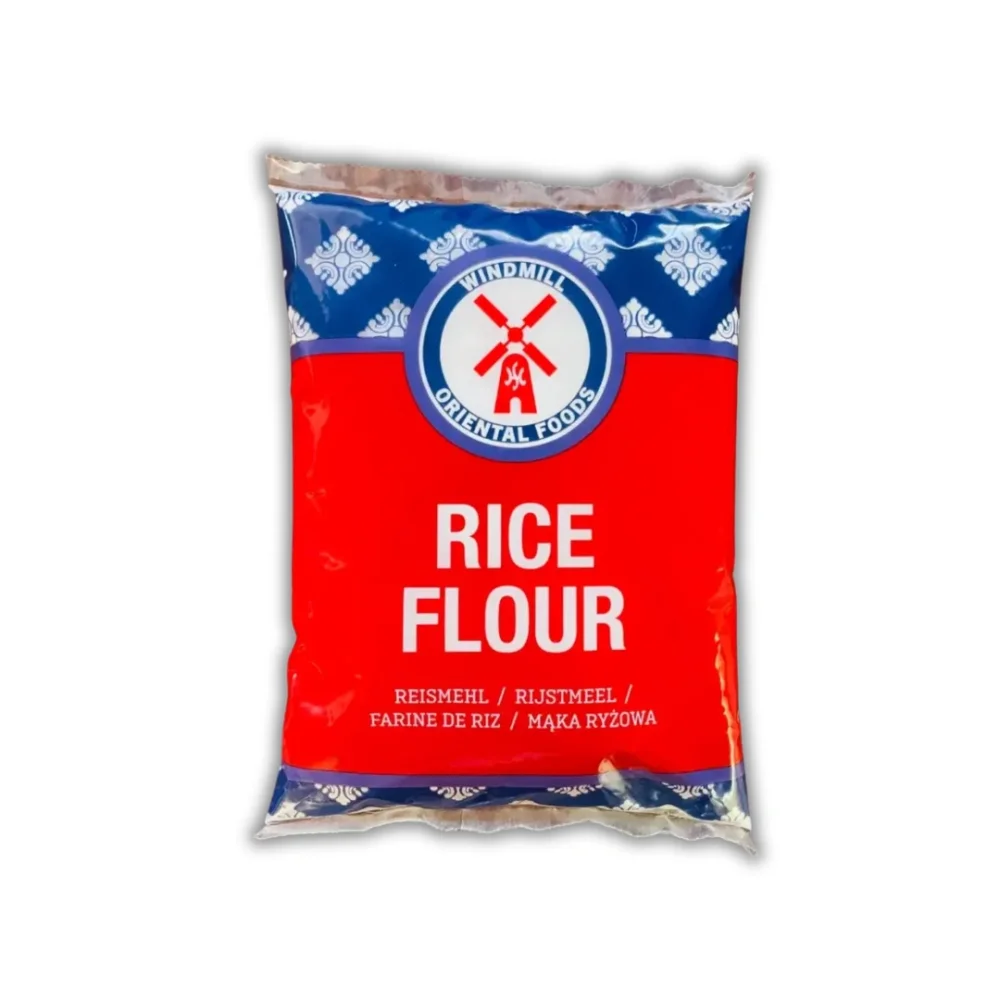
What not to expect from it: it usually does not create the typical chewy mochi texture on its own. If the recipe requires elasticity, softness, and “chew,” glutinous rice flour or a combination with suitable starch is usually needed.
Glutinous rice flour: when you want elasticity, softness, and “chew”
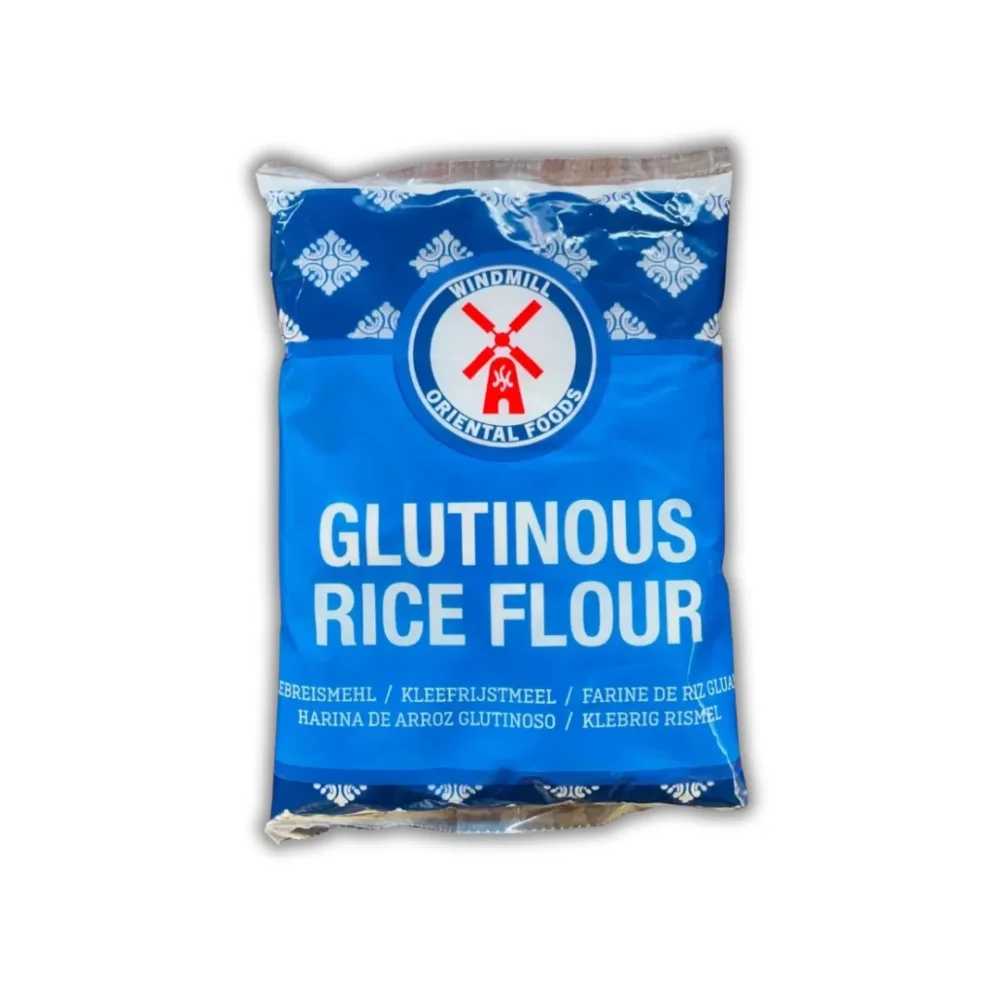
Glutinous rice flour (often labeled as glutinous rice flour) creates a typically elastic and soft texture when heated. Therefore, it is used when a chewy, elastic impression is desirable—typically in mochi and various rice dumplings.
If you're trying a recipe where your wrapper breaks, crumbles, or feels “dry,” it's often a sign that you lack the elasticity-supporting component. A practical example is Windmill glutinous rice flour.
Tapioca starch: smoothness, gloss, and "glassy" directions
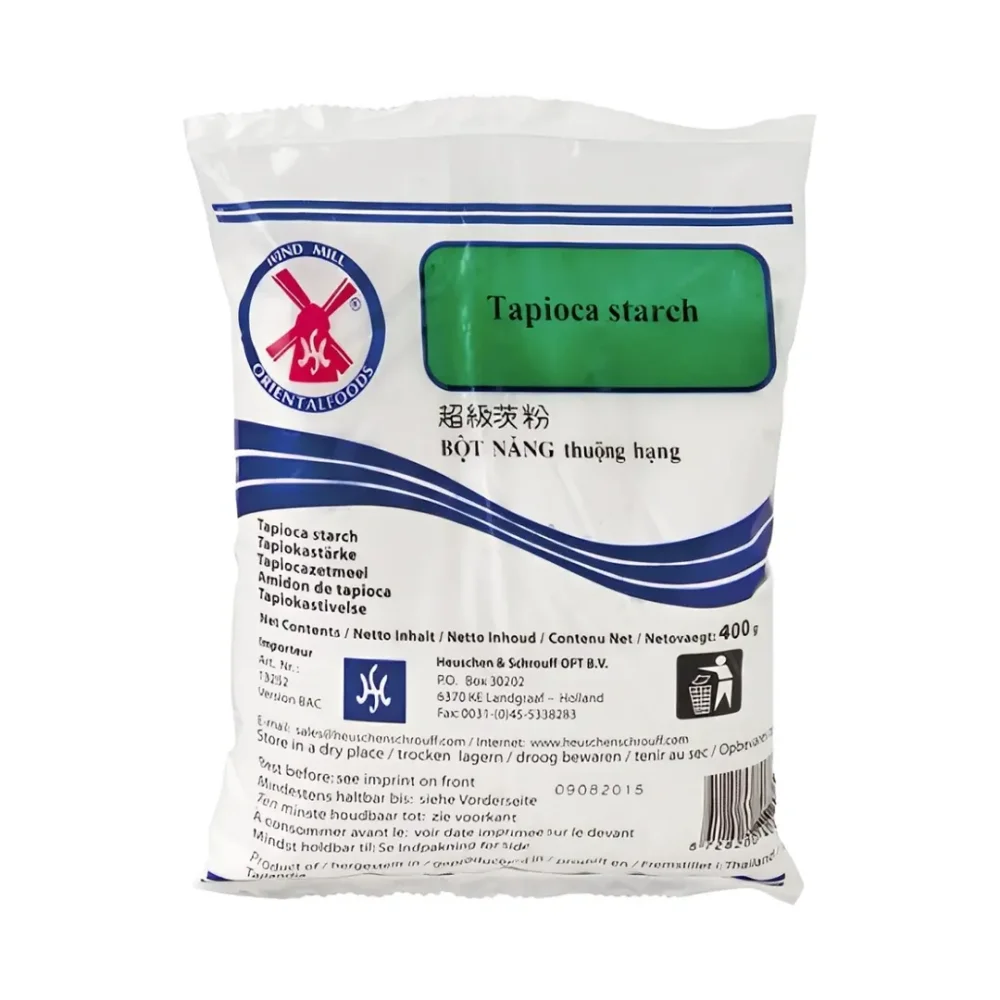
Starch in general is the way to go when you want thickening and gloss. Tapioca often leads to “glossier” results that appear in Asian cuisine in some doughs, wrappers, and starch structures. A practical representative is Windmill tapioca starch, which is flavor-neutral and used where you want a smooth, slightly glossy texture.
Practical start at home: how to decide and what to watch when mixing
Regardless of specific recipes, for doughs for dumplings and bao it pays off to follow two rules: (1) first clarify the target texture and method (steam/boil/pan), (2) adjust dough gradually, not abruptly.
1) First method, then "right flour"
- Pan fry often highlights the difference between a thin and a thicker wrapper: the thin is crispier and faster, the thicker more stable.
- Boil and soup typically require a wrapper that holds shape and does not become “mushy” – that's why soup dumplings often have a finer, yet structurally reliable wrapper (wonton).
- Steam is the domain of bao and many dim sum pieces. For translucent wrappers, delicacy and careful handling are key.
2) When you want delicate dough for flatbreads or steamed dumplings
A good starting point often is classic rice flour—or a mix of rice flour and other starches (depending on whether you want more purity and delicacy, or more elasticity and “chew”).
3) How to dose starch and “elasticity” without exact tables
Because specific recipes vary (and source data here do not provide uniform proportions), it is safer to work with a practical approach:
- Add starch gradually – in small doses. As soon as the mixture starts behaving more glossy and “smooth,” it's usually a sign that starch begins to do its job.
- When you need more elasticity, it usually helps to include glutinous rice flour. Here too: add gradually and watch that the wrapper is not unnecessarily gummy.
- If you want a delicate wrapper with light crispness, a combination of flour and starch often works – flour alone tends to be more “bready,” starch alone can be more brittle or sensitive (depending on the type).
4) When you don’t want to mix from scratch: batter and coating mixes
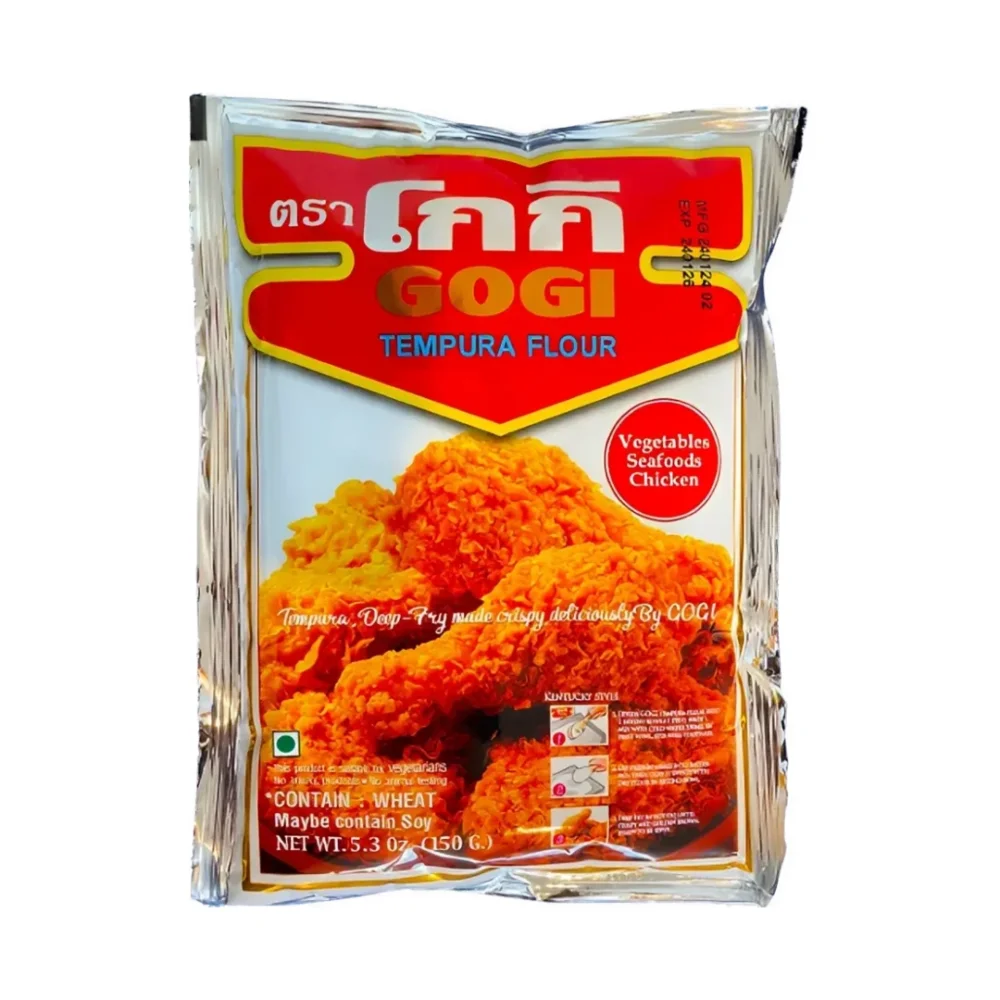
The same texture logic applies to batters and coatings. When the goal is an airy, light, and crispy coating (typically tempura style), mixes built for this effect are used. A practical example is Gogi Tempura 150 g – this makes sense when you want a quick consistent crispy texture and are dealing more with frying technique than “building” a flour mix.
How to read names and labels so the dough turns out as expected
For flours and starches, the label is often more important than the marketing name. It's not just a linguistic detail—the dough's elasticity, crispness, or translucency depends directly on it.
What to verify on flour/starch
- Is it flour or starch? Starch typically behaves differently than flour (thickens, glazes, changes “glassiness”).
- What is the product actually made from? Rice, tapioca, and other starch sources behave differently.
- Is the product pure or a mix? With mixes, it's easier not to achieve exactly the same results as in a recipe that assumes “one ingredient.”
- Regular rice flour vs glutinous rice flour – in practice, these behave fundamentally differently in dough.
How to navigate names of dumplings and wrappers
For dumplings, it helps to orient by names and recommended cooking methods (labels may show e.g., steam, boil, pan fry, soup, microwave). Also by what kind of dumpling you are buying or trying to imitate:
- gyoza = Japanese pockets, often pan-fried
- jiaozi = Chinese pockets, boiled, steamed, or pan-fried
- wonton = delicate soup pocket
- mandu = Korean dumplings
- bao / baozi = filled steamed bun
- siu mai / shumai = open dim sum piece
- har gow = shrimp translucent dim sum dumpling
- xiao long bao = soup dumpling
Not all wrappers give the best result in all methods. Just because a pocket can be boiled and fried doesn't mean it is equally suitable for both.
Most common mistakes and small errors that spoil wrappers
- “Glutinous” does not mean wheat flour or gluten. Glutinous rice flour is not wheat flour, and the name does not mean it contains gluten. In practice, it only indicates that it tends to be stickier and more elastic when heated.
- Rice flour is not the same as “sweet rice flour.” If the recipe targets chewiness, classic rice flour alone often isn't enough.
- Expecting mochi texture from classic rice flour. When you want “chew,” you usually need glutinous rice flour or a suitable combination with starch.
- Underestimating wrapper thickness. A thin wrapper is elegant but more sensitive; a thicker one is more forgiving. When starting out, the more robust variant often saves disappointment.
- Ignoring that translucent wrappers are a different discipline. Dim sum pieces like har gow work with different starches, and the resulting structure is more delicate and prone to tearing if handled poorly.
What to take away from the article
- For dumplings, the wrapper matters as much as the filling—and for bao, the dough is the main part of the bite.
- First, clarify which family you are aiming for: wheat pockets (jiaozi/gyoza/mandu/wonton), dim sum pieces (har gow etc.), or leavened bao.
- Classic rice flour is universal and neutral but usually won't give you the chewy “mochi” texture on its own.
- Glutinous rice flour is the typical choice for elasticity and “chew.”
- Starches are the way to thickening, gloss, and often “glassier” results (with translucent wrappers, tapioca and related starches often appear).
- Read labels on flours and starches: the difference between “rice flour” and “glutinous rice flour” is crucial in practice.

Read next
If you want to explore this topic further, continue with these related blog guides and articles:
