


 Česky (CZK)
 Slovensky (EUR)
 Deutsch (EUR)
 Austria
 Belgium
 Bulgaria
 Croatia
 Denmark
 Estonia
 Finland
 France
 Germany
 Greece
 Hungary
 Italy
Italy Latvia
 Lithuania
 Luxembourg
 Netherlands
 Poland
 Portugal
 Romania
 Slovenia
 Spain
Spain Sweden










Rice flour, tapioca, and starches: how to choose the ingredient for the right texture
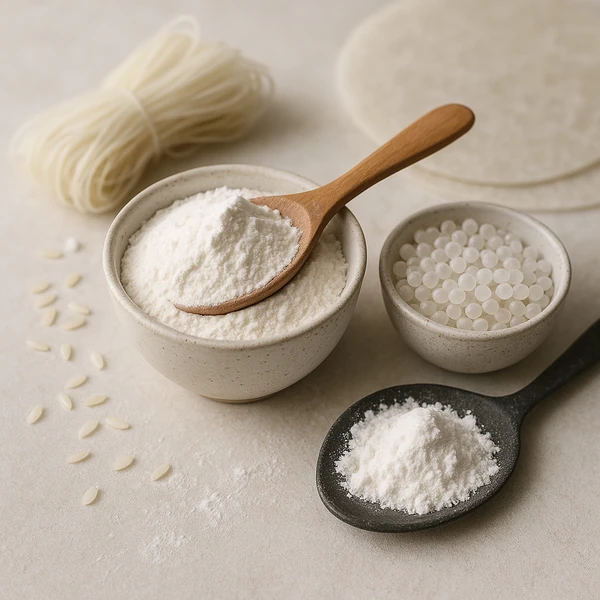
Flour and starch in Asian cuisine often do not play the "main role" in flavor but very often decide on the most important thing: texture. The choice between rice flour, sticky rice flour, and starches determines whether the dough will be elastic, the coating crispy, the sauce shiny, the soup delicate, or the result glassy translucent.
Why flours and starches in Asian cuisine determine the outcome
Flours and starches are less conspicuous in Asian cuisine than sauces, pastes, or spices, but they very often determine the final texture. In many recipes, it’s not just about taste but whether the dough is elastic, the coating crispy, the sauce shiny, the soup delicate, the dessert chewy, or the noodles glassy translucent.
It makes sense also chemically, even though in the kitchen we usually translate it into simple words like sticky, elastic, powdery, or fragile. An important role is played by the ratio of amylose to amylopectin. Simply put, ingredients with a higher proportion of amylopectin tend to be stickier, more elastic, and chewier after cooking, while higher amylose more often leads to a firmer, drier, and more powdery result. That’s why there is such a big difference between regular rice flour and sticky rice flour, even though both come from rice.
Flour or starch? Orientation according to what you want to "do" in the recipe
It’s most useful not to think primarily by the name, but by the goal. A practical orientation might look like this:
- I want thickening and shine? I’d rather choose starch.
- I want elasticity and a chewy texture? Usually helps sticky rice flour or some starches.
- I want a delicate coating and light crunch? Often works a combination of starch and flour (or a ready-made coating mix).
- I want a translucent or glassy result? Often comes into play tapioca, sweet potato starch or wheat starch.
- I want a neutral flavor and a delicate base for both savory and sweet recipes? A good starting point is usually classic rice flour.
This classification will save you the most unnecessary purchases and disappointments like "why didn’t this turn into mochi" or "why is the dough gummy."
Classic rice flour: a universal base (but not for everything)
Classic rice flour is made from regular non-sticky rice. It is important that it is not the same as sticky rice flour. In practice, it is one of the most universal Asian flours.
How it works
It has a mild, rather neutral taste and usually does not give as elastic and chewy a result as sticky rice flour. However, it can create light dough, a delicate surface, cleaner texture, and in some recipes also crispness.
What it’s good for
- batter and light coatings
- flatbreads, pancakes, and some steamed doughs
- delicate thickening
- sweet and savory rice desserts
- some dumplings where pronounced elasticity is not the goal
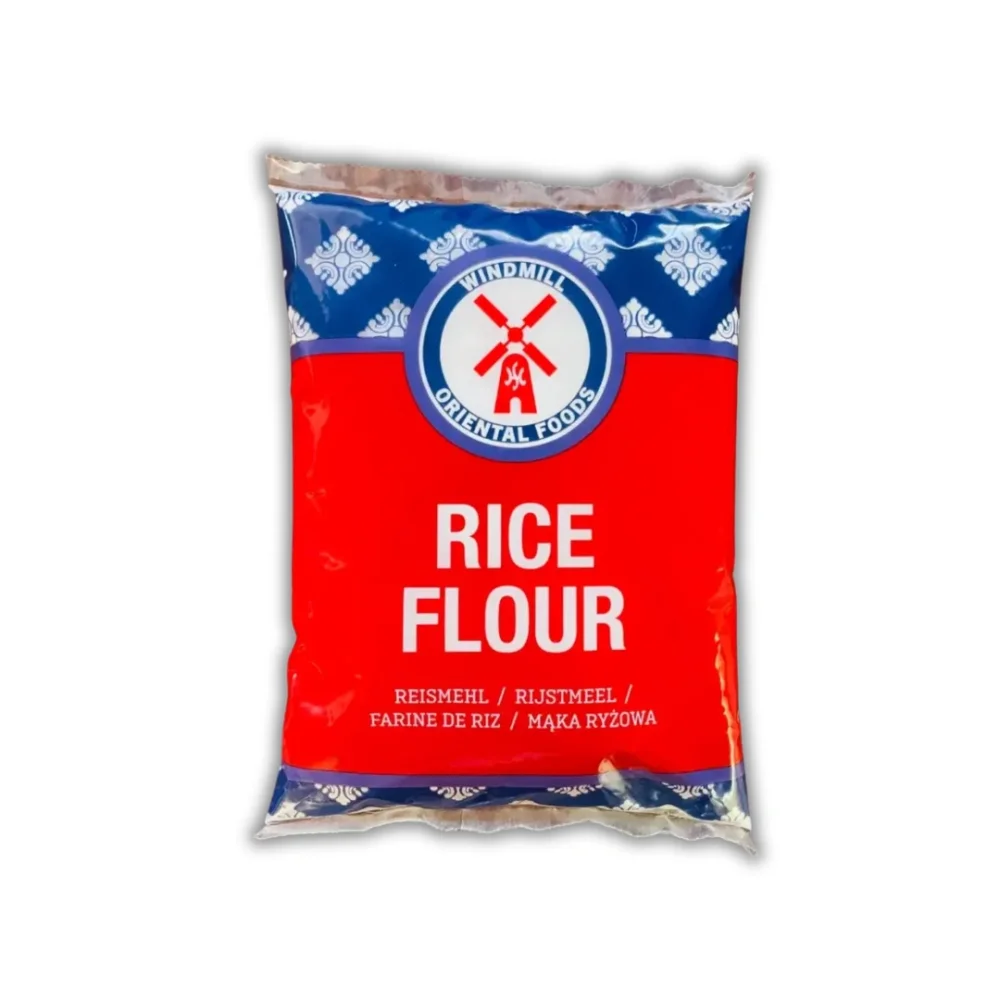
A concrete example of a "basic" rice flour can be Windmill rice flour 400 g – a type of ingredient you can use in multiple ways when you want to start orienting yourself in Asian flours.
What not to expect from it
By itself, it usually does not create the typical chewy "mochi" texture. If the recipe requires elasticity, softness, and chewiness, usually sticky rice flour or its combination with other starches is needed.
Practical note
In a Japanese context, it's good to keep in mind that there are more types of rice flours intended for different results. For home orientation, however, the most important first step is: to distinguish regular rice flour vs. sticky rice flour.
Sticky rice flour: when you want elasticity and "chewiness"
Sticky rice flour (often also called sweet rice flour or glutinous rice flour) is made from waxy rice with very low or practically zero amylose content. The key thing is that the word "glutinous" does not mean gluten – it is gluten-free rice but with high stickiness after cooking.
How it works
Its biggest strength is in the texture. After heating and proper processing, it creates an elastic, soft, chewy, and mildly chewy texture.
What it’s good for
- mochi and mochi desserts
- tangyuan and other rice dumplings
- dango and other Japanese and Chinese sweets
- some steamed doughs
- recipes where elasticity is the goal
- sometimes also as part of a mixture for crispy coatings or doughs
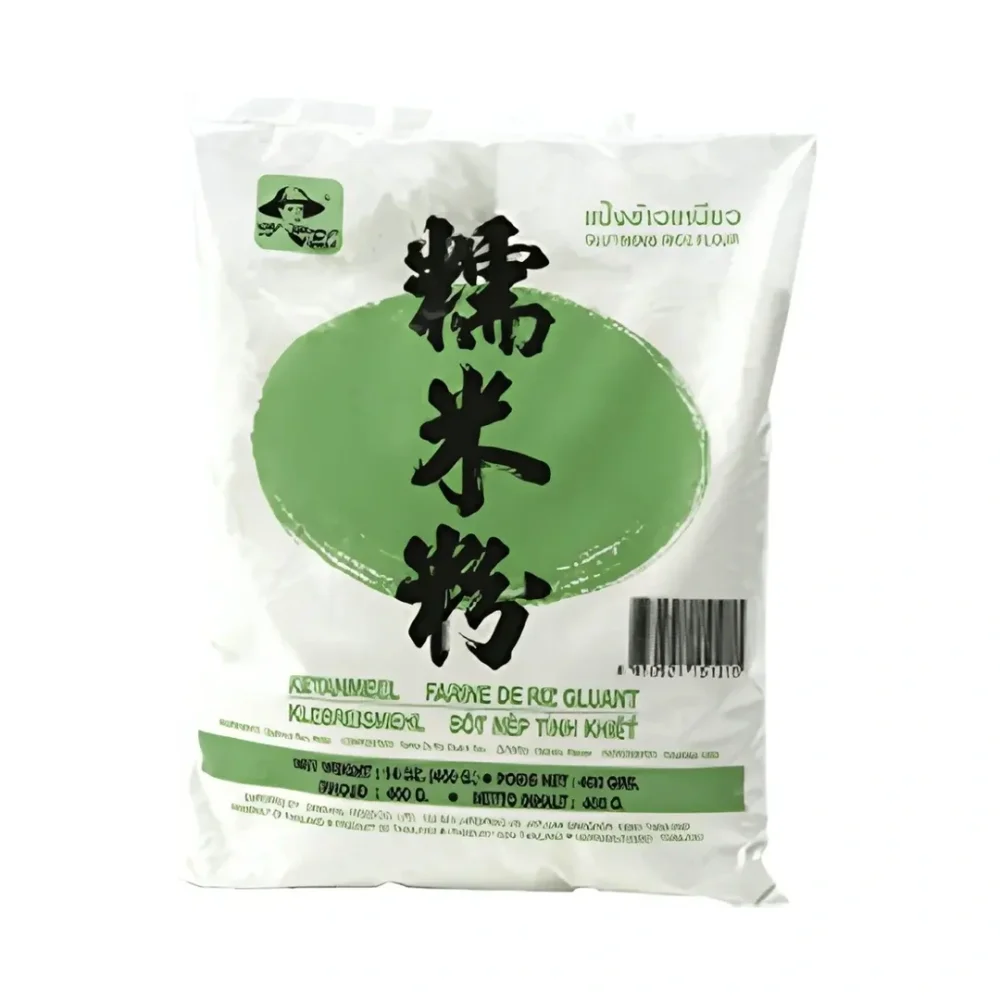
If you want to try this type of texture at home, a typical representative is Farmer Brand sticky rice flour 400 g.
What not to expect from it
It is not suitable everywhere you want powderiness or classic "floury" stability. In some doughs, without a suitable combination, it might act too dense or gummy. In other words: it serves wonderfully where chewiness is desired – but it is not a universal substitute for "any flour."
Tapioca and starches: when you want shine, thickening, and translucency
Starches in Asian cuisine often come into play when you want to change consistency without a pronounced floury taste and at the same time achieve a certain "surface" on the result. From a practical point of view, two situations repeat in recipes:
- Thickening and shine (typically in sauces or lighter soups) – here it makes sense to use starch.
- Translucency or glassy effect – here tapioca, sweet potato starch, or wheat starch are often mentioned.
The same "starch" logic also applies to some types of noodles and coatings. An important practical detail: names can be general, but the ingredient inside can vary – and so does its behavior when cooking.
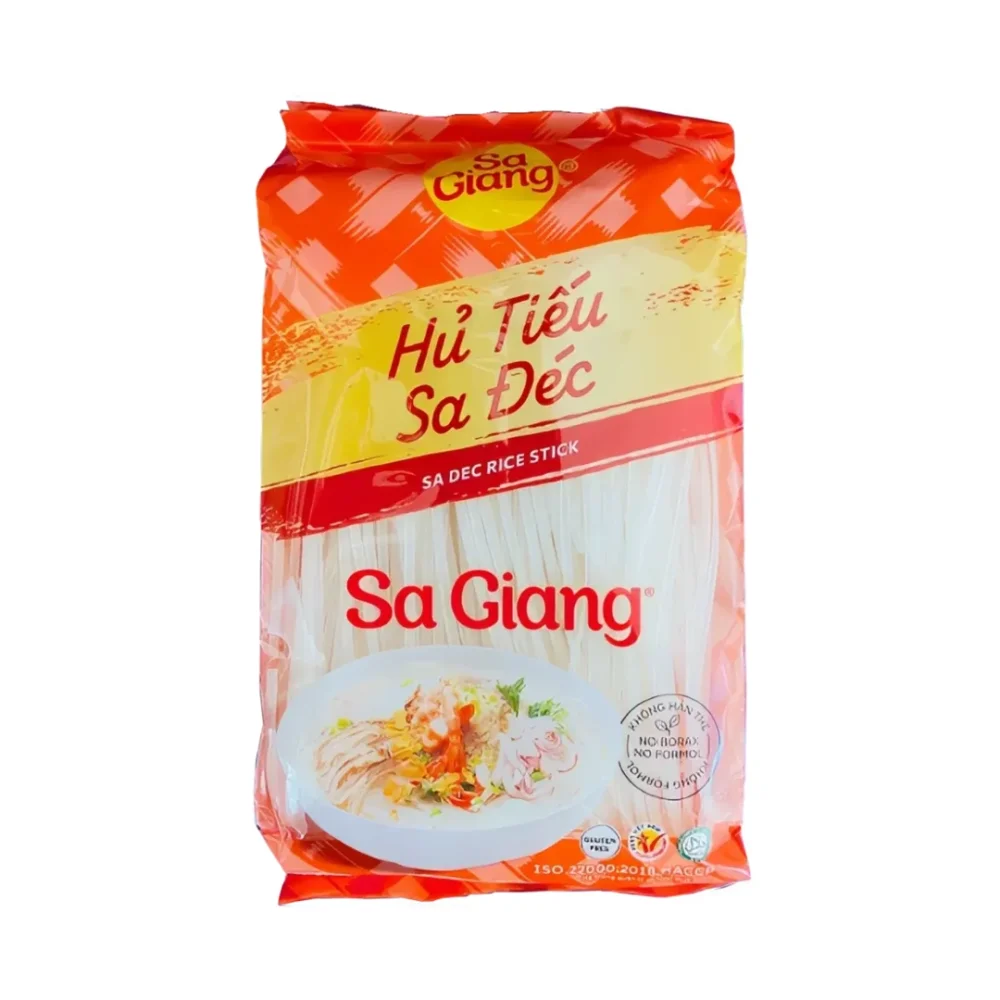
As a concrete example of working with tapioca in pasta, you can take Sagiang tapioca rice noodles 400 g, which combine rice flour and tapioca starch – a type of combination that appears in Asian recipes precisely because of texture and how the noodles "hold" the sauce.
Starch coatings are also not only used with noodles but also some dumplings: alongside wheat coatings, there are also translucent starch coatings typical for some dim sum pieces (after steaming, they appear shiny or translucent). Here it nicely shows that flour/starch is often as important as the filling.
How to read coatings: a detail that saves the most mistakes
For flours and starches, the packaging is often more important than the marketing name on the front. When choosing, it helps to mainly watch out for:
- whether it is flour or starch
- what the product is truly made from
- whether the product is pure or a mixture
- whether it is regular rice flour (ordinary rice flour), or glutinous rice flour (sticky rice flour)
- whether tapioca pearls are purely starch or sweetened and colored
- whether the noodles are made from mung bean starch, tapioca, or sweet potato starch
Typical confusions worth watching out for right from the start:
- glutinous rice flour is not wheat flour and does not mean it contains gluten
- sweet potato noodles are often not made from sweet potato flesh but from starch
- rice flour is not the same as sweet rice flour
- glass noodles are not a single type of noodle but a broader group of products from various starches
🍳 Practical use at home: 4 most common scenarios
If you want to quickly sort out flours and starches without extra theory while cooking, try thinking in these scenarios:
1) I just want gentle thickening (and don’t want a "floury" finish)
In this case, Asian logic usually goes for starch: the goal is thickening and often a certain shine. A practical tip for deciding is simple: if you mainly care about the consistency of sauce/soup and not "dough", it’s a typical starch situation.
2) I want a light coating and crunch
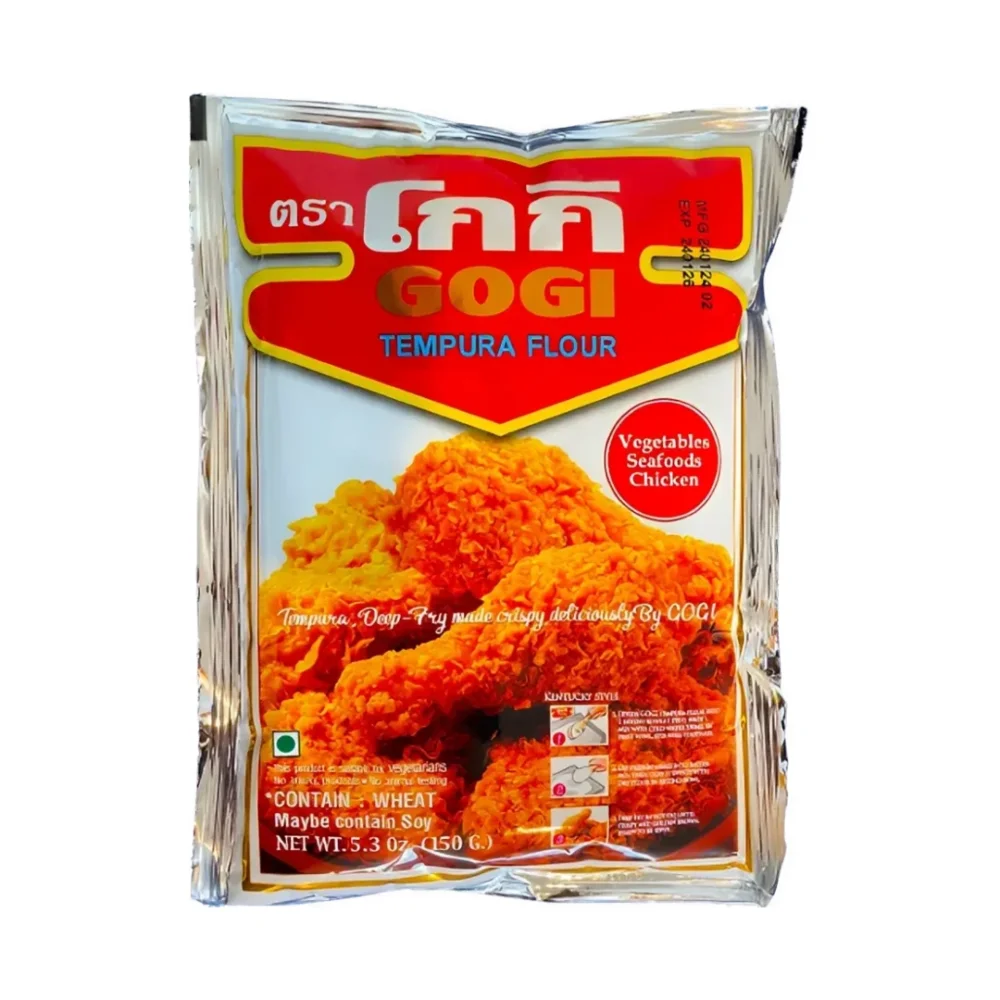
Often a combination of flour and starch works – or a ready-made mix. If you don’t want to immediately adjust your own ratios, use a ready tempura mix as a starting point and focus on frying technique and how you want the coating to feel. One example of such a mix is Gogi Tempura 150 g.
3) I want elastic, chewy, "mochi" (dumplings)
Here the most important thing is not to make the basic mistake: regular rice flour usually won’t give you the typical mochi texture. If the recipe aims for elasticity and chewiness, it typically needs sticky rice flour.
4) I want translucency or a glassy effect (coating, dough, noodles)
In recipes, tapioca, sweet potato starch, or wheat starch often appear in this context. Whether it’s a more translucent coating for some dumplings or a glassier type of noodle, it pays off to check the label and verify what starch the particular product actually contains.
If you want to add context about rice as an ingredient (and why its "starch behavior" changes results so much), a useful crossroad is the category Rice and rice products – this is often where the journey to rice flour, noodles, and other related rice products begins.
Most common mistakes (and why they happen)
- Confusion between rice flour and glutinous rice flour: both are "rice", but they behave completely differently. The result then differs in elasticity, stickiness, and overall texture.
- "Glutinous" = gluten: glutinous rice flour describes stickiness, not wheat gluten. The mistake arises purely linguistically.
- Expecting mochi texture from regular rice flour: if you aim for chewiness, you need an ingredient that can create it (typically glutinous rice flour, or a combination).
- Too gummy result from glutinous rice where you want crumbliness: glutinous rice flour is not a universal "improver" – without the right combination it can feel dense.
- "Glass noodles" as one thing: glass noodles are a broader group; different starches behave differently.
- "Sweet potato noodles" as noodles from flesh: the name often refers to the starch ingredient, not that the noodles are made from sweet potato flesh.
What to take away from the article
- Flours and starches in Asian cuisine often determine more about texture than about taste.
- Classic rice flour is versatile and neutral but usually doesn’t give mochi chewiness.
- Glutinous rice flour is the choice for elasticity and "chewy" texture; "glutinous" does not mean gluten.
- When you want thickening and gloss, it usually makes sense to consider starch.
- For translucency/glossiness tapioca, sweet potato starch, or wheat starch often appear in recipes.
- Most mistakes are solved by learning to read the labels: flour vs starch, regular vs glutinous, pure product vs mix.

Read next
If you want to explore this topic further, continue with these related blog guides and articles:
