


 Česky (CZK)
 Slovensky (EUR)
 Deutsch (EUR)
 Austria
 Belgium
 Bulgaria
 Croatia
 Denmark
 Estonia
 Finland
 France
 Germany
 Greece
 Hungary
 Italy
Italy Latvia
 Lithuania
 Luxembourg
 Netherlands
 Poland
 Portugal
 Romania
 Slovenia
 Spain
Spain Sweden










How to choose the right coating or dough: crispiness, elasticity, and translucency according to the type of flour and starch
In Asian cuisine, it is often not just the taste that matters, but mainly the texture: should the coating be crispy and light, the dough elastic and pliable, the sauce delicate and shiny, or the dumpling almost translucent after steaming? This is exactly where the choice of flour, starch, and type of coating makes the biggest difference. This guide will help you choose the right “coating or dough” depending on exactly what you want to cook – and avoid typical label mix-ups.
Why “coating” and “dough” in Asia are not a detail but the basis of the result
Flours and starches are less conspicuous in Asian cuisine than sauces, pastes, or spices. Yet they very often determine the final texture: whether the dough should be elastic, the coating crispy, the sauce shiny, the soup delicate, the dessert chewy, or the noodles glassily translucent. Therefore, it pays off not to perceive flour and starch as one “single category,” but as a group of ingredients with completely different behaviors.
In practice, the word coating can conceal:
- dry coating (e.g., in starch or flour),
- liquid batter (e.g., tempura),
- ready-made coating sheets (wrappers) for dumplings,
- starch layer that becomes translucent after heating (typical for some dim sum pieces).
And dough can mean:
- classic wheat dough for dumplings (jiaozi, gyoza, mandu, wonton),
- starchy “translucent” dough (e.g., typical for har gow),
- yeast dough for soft steamed buns (bao/baozi).
First, decide what texture you need (and choose accordingly)
The most reliable way to choose is not to start with the product name, but with the goal. A simple mapping according to what you want to achieve helps:
- I want thickening and shine → usually reach for starch.
- I want elasticity and a chewy structure → often helps glutinous rice flour or some starches.
- I want a delicate coating and light crispiness → often works with a combination of starch and flour.
- I want a translucent / glassy result → often involves tapioca, sweet potato starch or wheat starch.
- I want a neutral taste and a universal base → a good starting point is often classic rice flour.
This is important also because two ingredients can look similar (white powders) but behave completely differently. And with coatings/dumplings this is doubly true: a “similar” coating can end up being too fragile for soup or on the contrary too heavy for delicate dim sum.
Coatings and doughs for dumplings: wheat, starchy translucent and leavened
Dumplings are an extremely broad family of dishes – the principle is similar (coating/dough + filling), but the ingredient, thickness, and preparation method vary. In Asian cuisine, it is practical to distinguish at least three large “construction” types:
- Thin wheat dough coating with filling – typical for jiaozi, gyoza, mandu, and wontons.
- Translucent or starchy coating – typical for har gow and some other dim sum pieces; after steaming it is shiny to translucent but more delicate.
- Yeasted/leavened dough – for bao/baozi; the result is soft, fluffy, and hearty.
How to choose the type according to how you want to prepare them
With dumplings, the serving method often matters as much as the taste of the filling. From a usage perspective, it helps to think like this:
- In soup – wontons, some mandu, or more delicate boiled dumplings work best. On the other hand, gyoza intended for pan-frying or fragile dim sum pieces may fall apart if left too long in broth.
- In the pan – typically gyoza, pan-fried jiaozi, or some flat mandu; a stable structure that holds crispiness well is key.
- In steam – bao, siu mai/shumai, har gow, xiao long bao, and many classic thin dough dumplings often work.
- For parties and sharing – gyoza, siu mai, har gow, smaller bao, or momo with dip work very well.
Coating thickness: when thinner is better and when thicker
Thicker coatings usually forgive more: they tolerate cooking better and feel more substantial. Thin coating is more “elegant” but delicate. Typically, gyoza is thinner than the more robust northern Chinese jiaozi, and wonton is even more delicate and often meant for soup.
Crispy coating: when to choose starch and when ready mixtures (tempura)
If your goal is a crispy coating, starch very often works – potato, tapioca, or their combination with flour. The result tends to be lighter and crispier than pure flour.
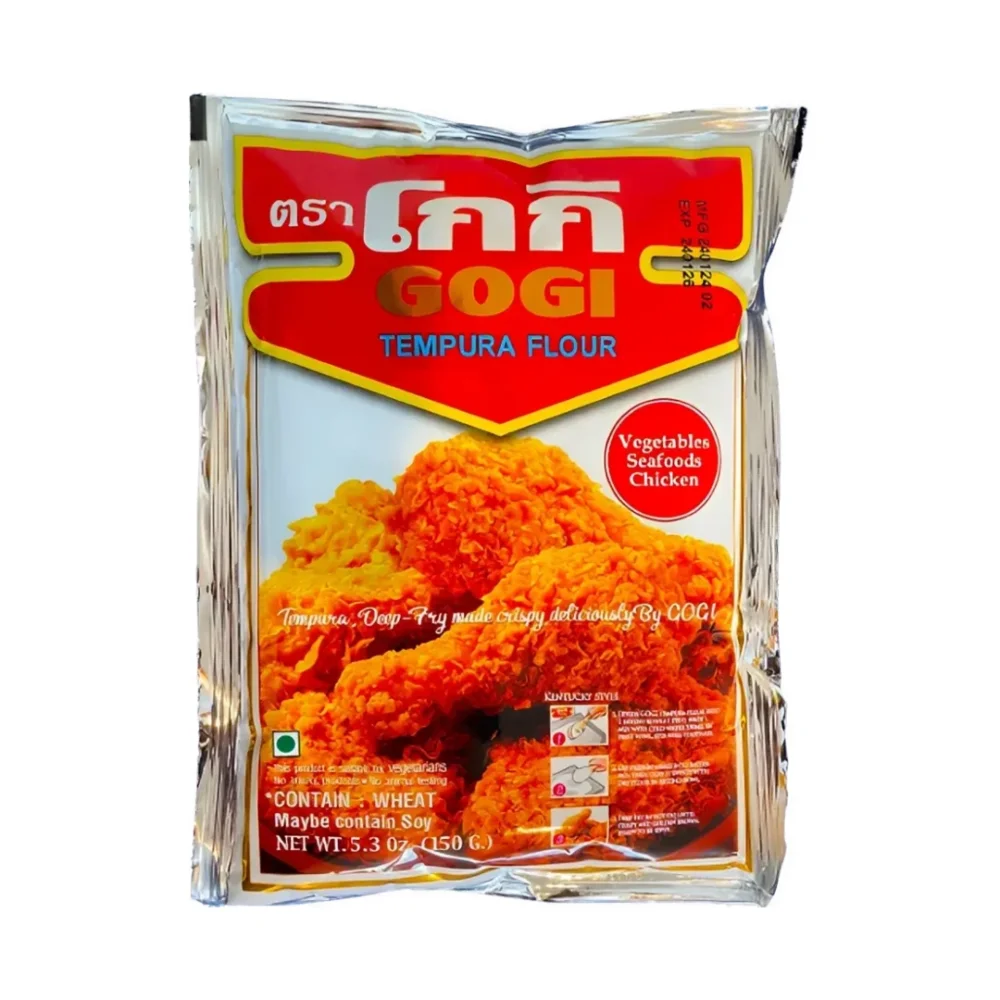
For home use, ready-made tempura mix is also practical, designed exactly for light, airy batter with a crispy crust. A typical example is Gogi Tempura 150 g – suitable when you want to quickly achieve a tempura “coat” without tuning your own mix of starches and flours.
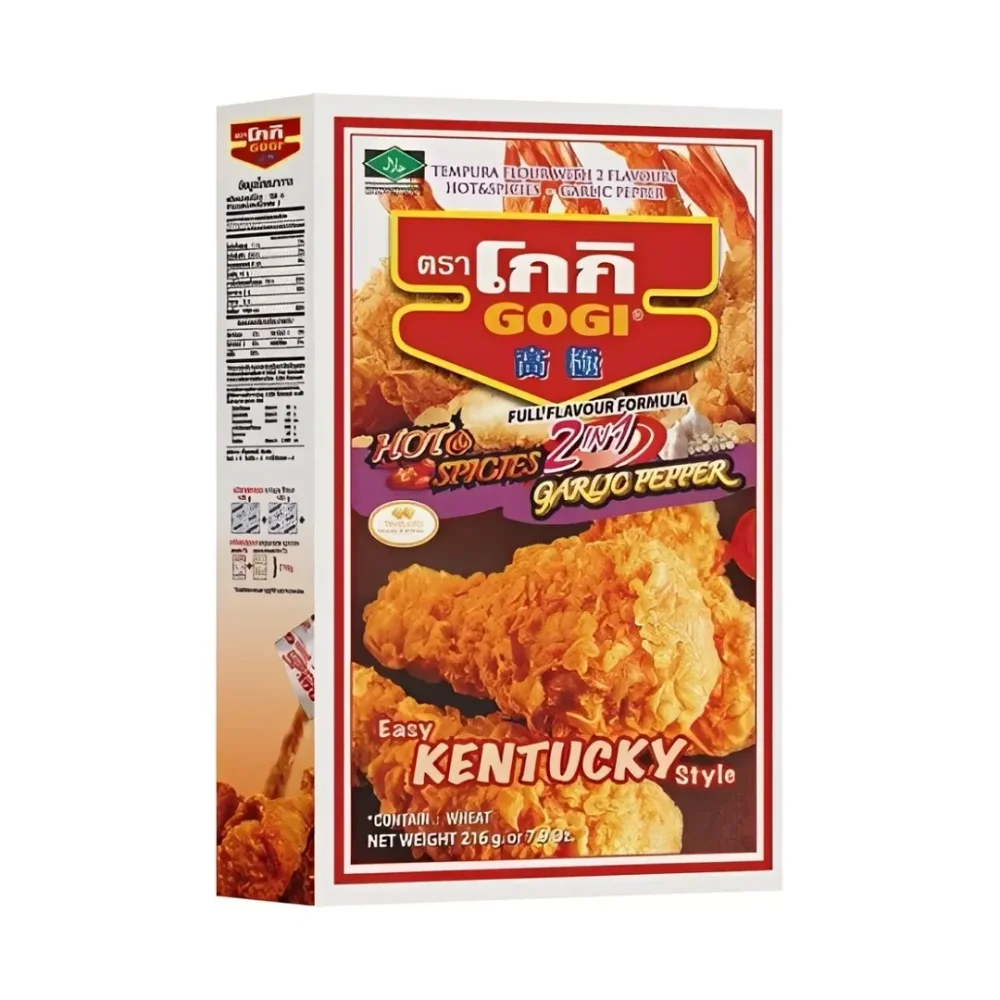
One more thing to keep in mind with ready mixes: whether you buy a baseor an already flavored variant. A flavored product can be a great shortcut but is not universal. An example of a styled mix is Gogi Tempura mix with spices 216 g, which has its own stronger profile – good when you want a specific “ready” taste, but not ideal if you want a purely neutral coating and want to leave the taste to the ingredients and dip.
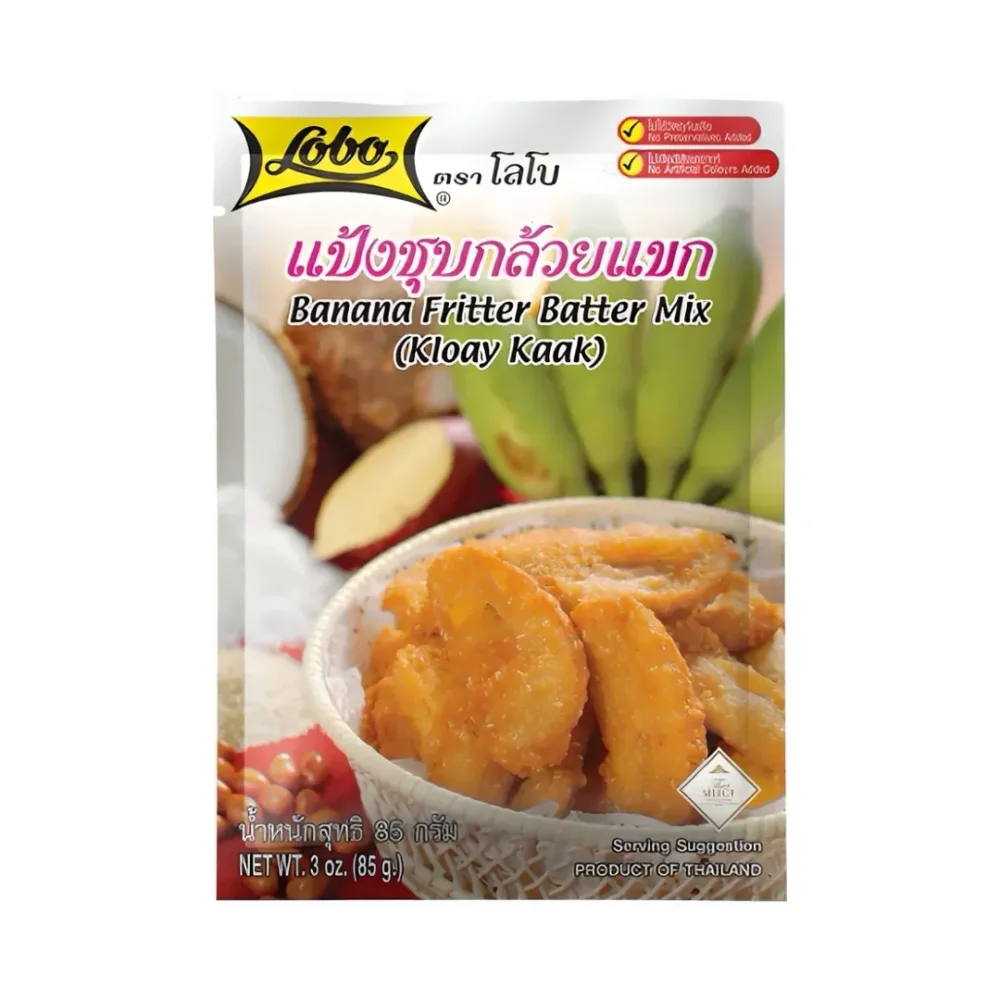
A similar principle applies to sweet fried coatings: for example, the mix for the Thai fried banana dessert is typically designed to give a crispy, golden coating without complicated adjustments. For such use, the Lobo coating mix for fried bananas Kloay Kaak 85 g is suitable – and similarly works for other fruit intended for frying.
Delicate dough for pancakes and steamed dumplings: why rice flour often leads
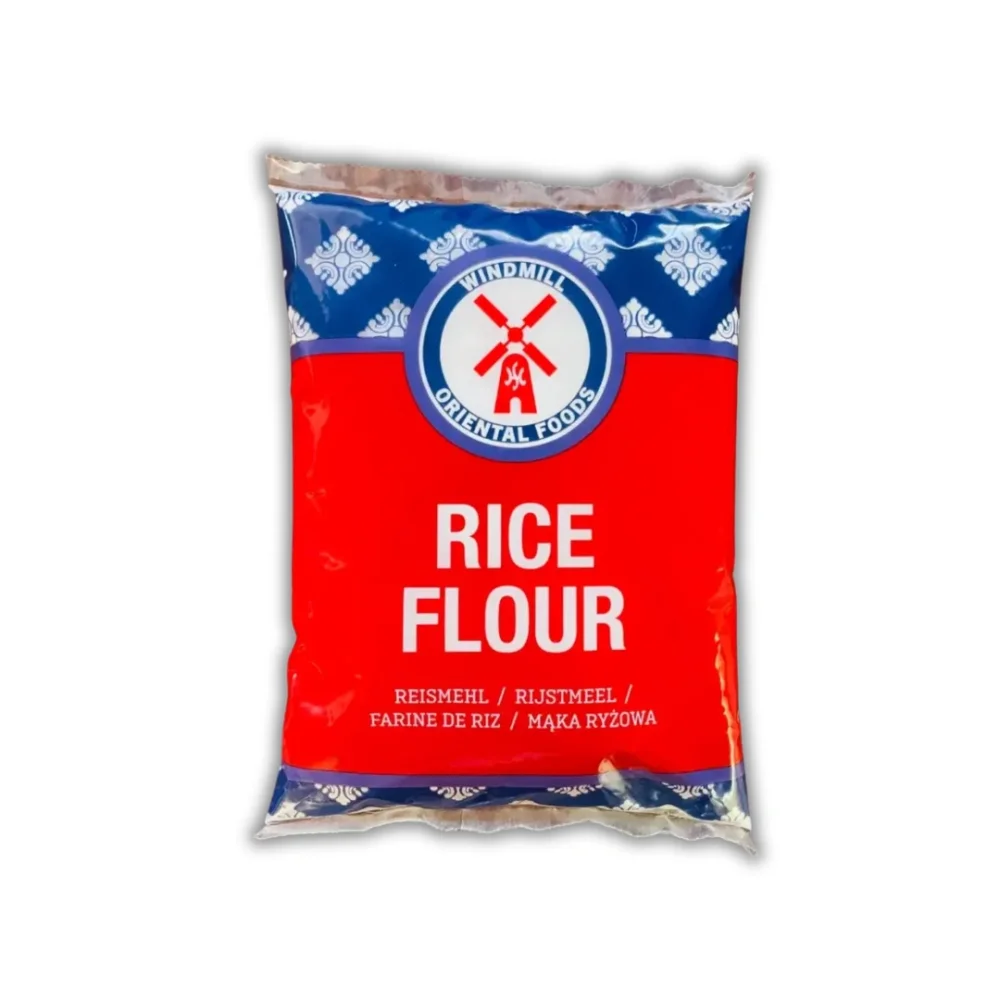
If you want delicate dough for pancakes or steamed dumplingsoften helps classic rice flour – or a mix of rice flour and other starches (depending on how delicate, elastic, or “smooth” a result you need).
As a pure, neutral starting point, for example, Windmill rice flour 400 gis suitable. It is useful when you look for an ingredient that can be used across savory and sweet directions and want to first get a feel for how rice flour behaves in doughs and thickeners.
Chewy desserts and mochi: “glutinous rice” means elasticity, not wheat
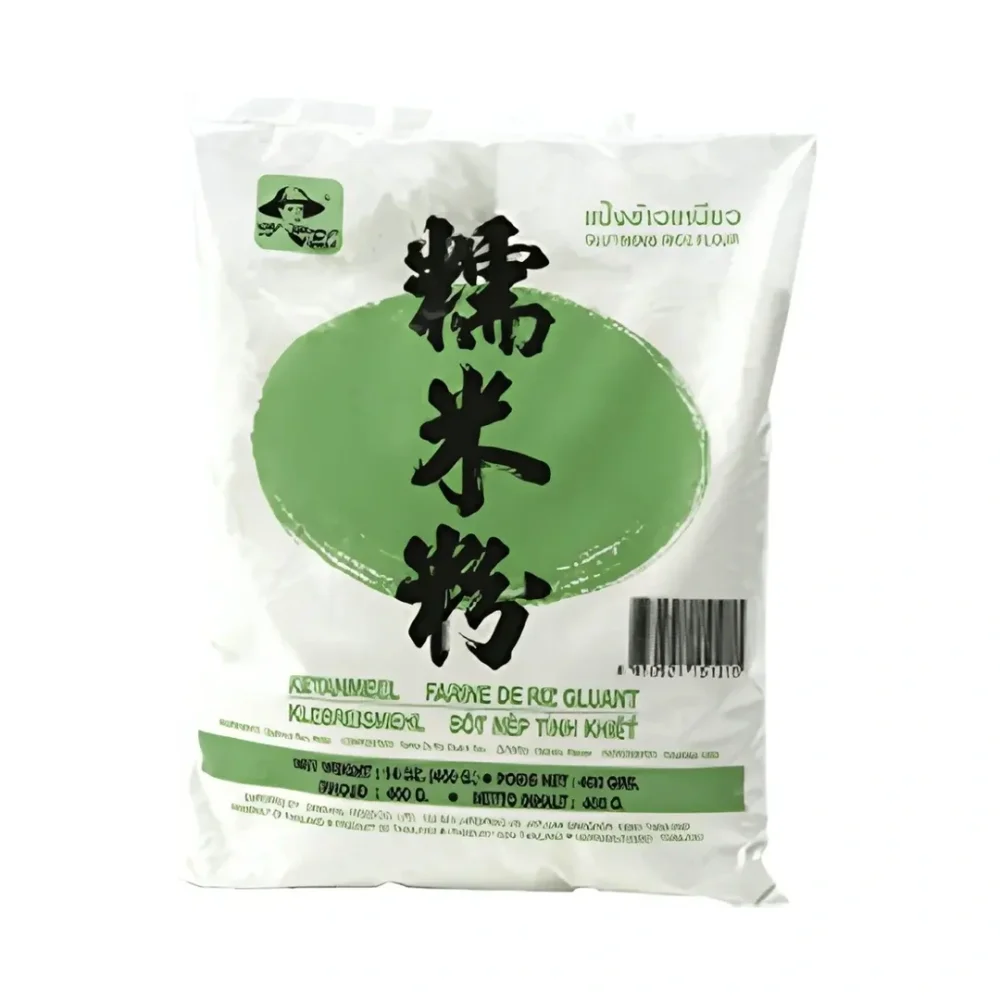
For a chewy dessert or mochi (Japanese dessert made from elastic rice dough) you typically need glutinous rice flour – or its more precise Japanese variants. In practice, it is an ingredient designed to create an elastic and chewy structurethat you usually don’t get from regular rice flour.
A specific example for this type of use is Farmer Brand glutinous rice flour 400 g.
How to read labels: with flours and starches the label is often more important than the front name
With flours and starches, the label is often more important than the marketing name. Practically, it pays to check mainly:
- Is it flour or starch? These two behave differently and often have a different purpose (dough vs. thickening/shine/crispiness).
- What is the product actually made of? (rice, tapioca, potatoes, sweet potatoes, wheat…)
- Is it a pure product or a blend? A blend can be great (e.g., for coating), but it’s good to know what to expect from it.
- Regular rice flour vs. glutinous rice flour – they are not the same and lead to a completely different texture.
- With “tapioca” products it’s good to know whether they are pure starch or sweetened and colored (typically with pearls).
- With starchy noodles it makes sense to distinguish whether they are made from mung bean starch, tapioca or sweet potato starch – “glass noodles” are not just one type but a broader group.
With dumplings, a dictionary of names and recommended preparation methods often helps. Terms like gyoza, jiaozi, wonton, mandu, momo, bao/baozi, siu mai/shumai, har gow, or xiao long bao usually hint at the style of coating to expect. And if the label recommends a method like steam, boil, pan fry, soup (or similar), take it seriously: not all dumplings are best prepared by all methods.
Storage: so coatings don’t dry out and starches don’t absorb moisture
Even a perfectly chosen ingredient can disappoint if stored poorly. For dry ingredients (rice, noodles, starches, flours), it mostly means gradual loss of quality and especially texture rather than dramatic “spoilage.”
- Starches and flours easily absorb moisture and form lumps. Dryness and a well-sealable container/packaging help.
- Dry ingredients can absorb odors and attract pests – tight sealing is more important than it seems.
- Fresh coatings (dumpling wrappers, wonton wrappers) and fresh noodles usually have a short shelf life. After opening, they often suffer in home use because they are hard to reseal well: the surface then dries out or sticks. Discipline pays off here – and following manufacturer instructions.
Common mistakes and misunderstandings (and how to avoid them)
- Confusing rice flour and “sweet/glutinous” rice flour: rice flour is not the same as sweet rice flour. If you want chewiness (mochi, elastic dumplings), you need flour from sticky rice; regular rice flour is more aimed at a fine base and neutrality.
- “Glutinous” ≠ wheat flour and does not mean it contains gluten: the name can be misleading. In practice, it refers to a property of rice (stickiness/elasticity), not wheat.
- I want crispiness, but I use only flour: if the goal is light crispiness, starch or a combination of starch and flour often helps. Flour alone can give a heavier coating than expected.
- I toss “pan” dumplings into the soup: gyoza meant for the pan or delicate dim sum pieces may not withstand longer stays in broth. Gentler wontons or boiled dumplings are typically suitable for soup.
- I buy a seasoned mix but expect a universal base: seasoned breading mixes are great shortcuts but it's good to know they already carry a specific flavor profile. If you want a “clean” coating, choose a more neutral base.
- I leave wrappers/dumplings unprotected after opening: drying out and sticking is one of the most common home problems with fresh wrappers. Quick work and good resealing help.
What to take away from the article
- In Asian cooking, texture decides wrappers and dough: first define the goal (crispiness, elasticity, gloss, translucency) and only then choose flour/starch.
- For a crispy coating, starch or a starch-flour combination often leads; for tempura, a ready-made mix (neutral vs. seasoned) might make sense.
- For mochi and chewy desserts, sticky rice flour is typical; regular rice flour is more of a neutral universal base.
- In dumplings, the wrapper is as important as the filling: wheat wrappers, translucent starch wrappers, and leavened bao dough have entirely different properties and ideal uses.
- Labeling is key: watch if it's flour or starch, regular vs. glutinous rice flour, pure product vs. mix, and for dumplings also the recommended preparation method.

Read next
If you want to explore this topic further, continue with these related blog guides and articles:
