


 Česky (CZK)
 Slovensky (EUR)
 Deutsch (EUR)
 Austria
 Belgium
 Bulgaria
 Croatia
 Denmark
 Estonia
 Finland
 France
 Germany
 Greece
 Hungary
 Italy
Italy Latvia
 Lithuania
 Luxembourg
 Netherlands
 Poland
 Portugal
 Romania
 Slovenia
 Spain
Spain Sweden










Texture of Asian desserts: why it matters and how to “read” it at home
With Asian desserts, it's often less about how sweet they are and more about how they feel in the mouth: springy, chewy, jellied, creamy, icy, or crunchy. This article will help you understand the most common textures, why they occur, which ingredients and techniques create them — and, most importantly, how to use texture to guide your choices and first attempts at home.
Texture as the main experience (not a secondary “detail”)
In many Asian sweet traditions, texture is as important as flavor — and sometimes it is the texture that defines the dessert. It's not only about whether something is “good” or “sweet,” but whether it is springy, sticky, chewy, jellied, smooth, crumbly, crunchy or perhaps icy and refreshing.
Texture often serves multiple functions at once:
- carries the main experience of the food,
- distinguishes different dessert types, even when they have similar flavors,
- helps create contrast between layers (soft vs. crunchy, creamy vs. jellied),
- supports seasonality (e.g., icy desserts vs. denser festive ones),
- and sometimes relates to symbolism or traditional technique.
That’s why a single bowl can intentionally contain ice, beans, jelly, tapioca, coconut milk, fruit, and syrup side by side. It’s not “chaos” — it’s a deliberate layering of mouthfeel.
What “texture” specifically means in Asian desserts
Texture is not just “soft vs. hard.” Asian desserts often work with more subtle distinctions:
- springiness and chewiness (the dough returns, resists, “stretches”),
- jelliness (firm jelly vs. more fragile “agar slice”),
- slipperiness and pearl-like movement (in starch pearls and thickened mixtures),
- smoothness and creaminess (coconut, bean, and sesame bases),
- temperature (cold and icy textures have their own “crunch” and fragility),
- layer contrast (soft body + crunchy element).
Practically: if you're unsure about a dessert, try asking “what should be the main sensation in the mouth?” The answer often tells you more than a flavor description.
Seven textures that recur in Asian desserts
1) Springy, sticky, and chewy texture (rice cakes and dumplings)
This texture often surprises the most — and at the same time is among the most typical. It includes rice desserts made from glutinous rice or glutinous rice flour: mochi (Japanese rice cakes), dango, Chinese tangyuan or sticky rice cake nian gao. Springiness here is not a flaw — it is the goal.
With mochi, elasticity and slight chewiness are even culturally expected. It's good not to expect a “cake-like dough,” but intentionally a different experience.
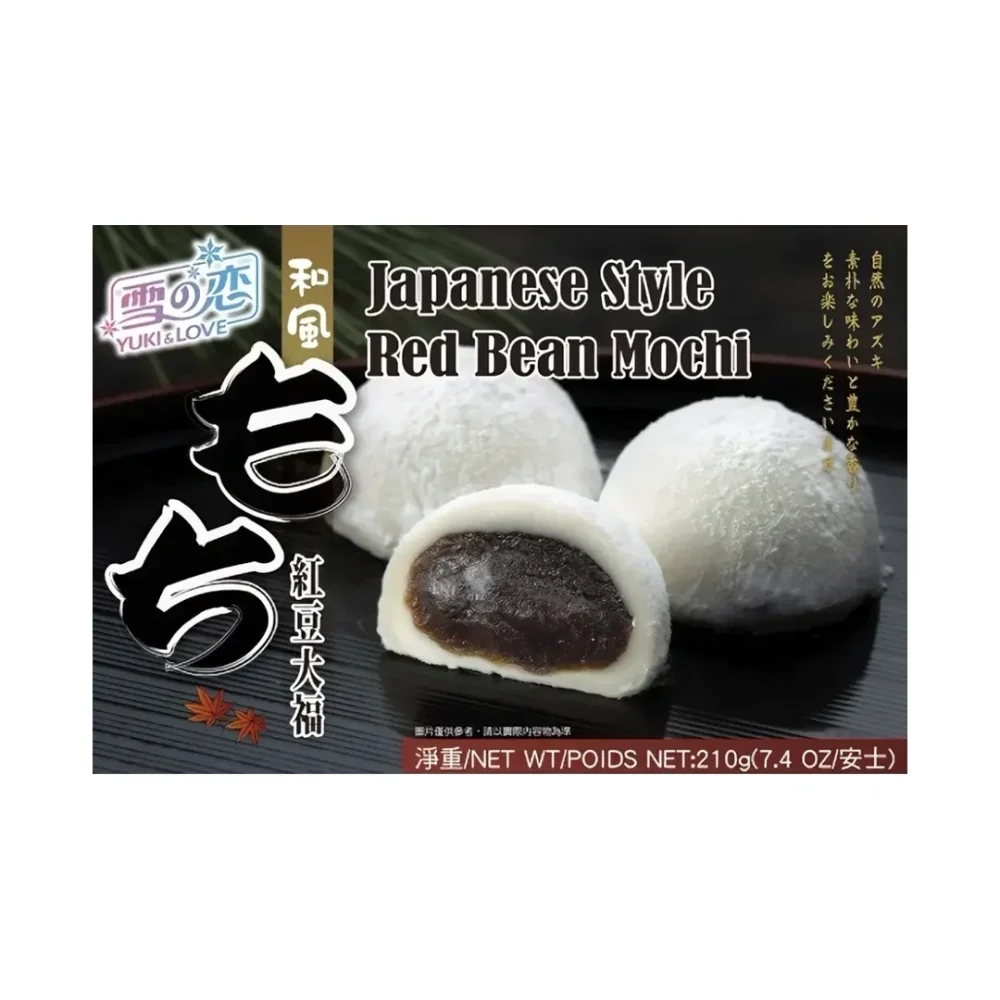
If you want to taste this texture without cooking, a good reference example is ready-made mochi cakes filled with red bean paste — the combination of a springy body and subtly sweet bean filling shows why legumes make sense in desserts also texturally.
2) Jellied and “gel” texture (setting, slicing, cooling effect)
Jelly in Asian desserts is not just a “childish element.” It is often a refined component — sometimes purely for refreshment, other times as an important contrast to rice, beans, or a coconut base. Common are agar-based and other setting desserts that are served chilled and cut into cubes or slices.
Gel elements layer very well: a firmer jelly gives the dessert “structure,” while cream and pearls add movement.
3) Pearly and slippery texture (tapioca and starch pearls)
Tapioca (a starch base, often in pearl form) is typical for creating after cooking a translucent, slippery, and “rolling” texture. It is essential for various drinks and pearl desserts (e.g., bubble tea), for “sago” desserts, coconut puddings, and layered cold bowls.
An important difference: tapioca texture is usually softer and more springy than agar. Agar often breaks “cleanly,” while pearls create a playful, mobile effect.
4) Pudding-like and smooth texture (coconut, dairy creams, delicate sweetness)
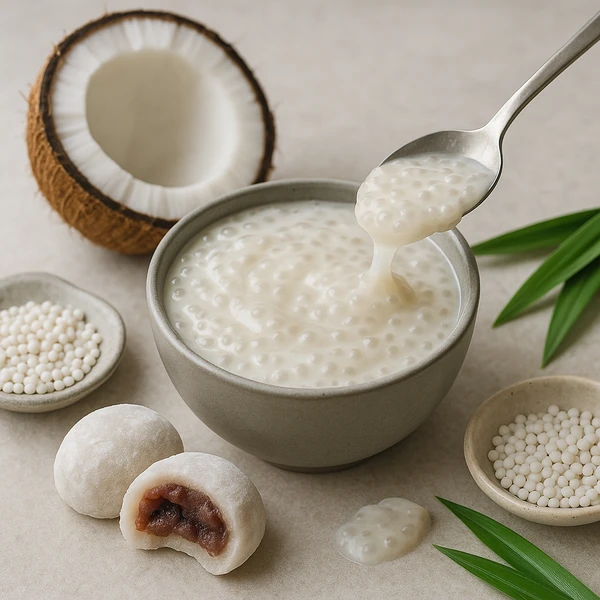
Smooth and pudding-like desserts often rely on coconut and starch bases, sometimes also on bean or sesame pastes. It’s not necessarily a “heavy” cream – the sweetness is often milder and the flavor leans on coconut, tea notes, or the earthiness of legumes.
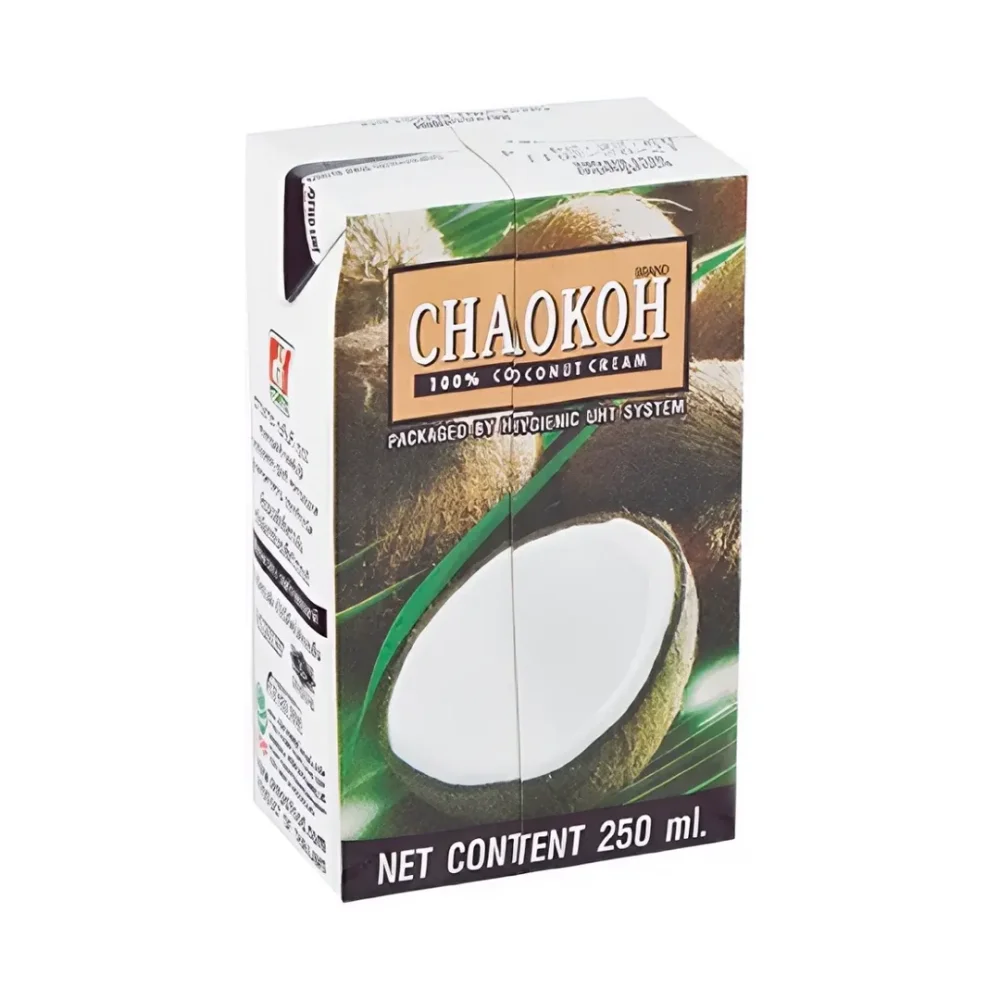
If you want a creamier base at home, a good building block is coconut milk. A practical example is Chaokoh coconut milk 18%: a higher fat content usually helps create a fuller “pudding” impression even without dairy cream logic.
5) Icy and brittle texture (refreshing, layered cold bowls)
Icy and heavily chilled desserts are typical because the texture comes not only from batter or setting, but also from temperature contrast. Ice provides crunch and brittleness, which highlights even subtler flavors (coconut, fruit, syrups) and tolerates combinations of multiple elements in one bowl.
6) Crumbly and pressed texture (shape, pressure, “dry” contrasts)
Beside gel and elasticity there is also a world of pressed, crumbly and shaped sweets – often tied to ceremonial or tea culture (e.g., some types of wagashi). Crumbliness here is not “dryness,” but an intentional contrast to tea or to more delicate layers.
7) Crunchy texture (baking, toasting, frying – often added at the end)
Crunch is often used in Asian desserts as a contrasting layer: something soft or gel-like inside, plus an element that is toasted or fried. It’s important that in sweet preparations it’s not only about the oven – crunch can also come from a short final toasting or frying.
Baking is not the only technique: steaming, starches, setting and frying
A beginner often automatically imagines baking when thinking of “sweet preparation.” In an Asian context it’s equally important:
- steaming (gives a delicate, elastic and moist texture that the oven often doesn't produce),
- cooking starches and working with rice doughs,
- gelling and setting (especially for cold desserts),
- cooling and pressing into molds,
- frying or a brief toasting (sometimes as the final step for contrast).
Baked desserts of course exist (e.g. mooncakes, some baked Japanese sweets, coconut and rice cakes, or Filipino and Malaysian baked desserts). It’s just useful not to confine “Asian sweets” solely to the oven – often steam, starch and cold will take you to the target texture more than baking.
🍜 How to choose ingredients at home by texture (practical onboarding)
The quickest way to understand Asian desserts is to choose ingredients not by whether they “resemble a European cake,” but by the texture you want.
If you want elasticity and chewiness
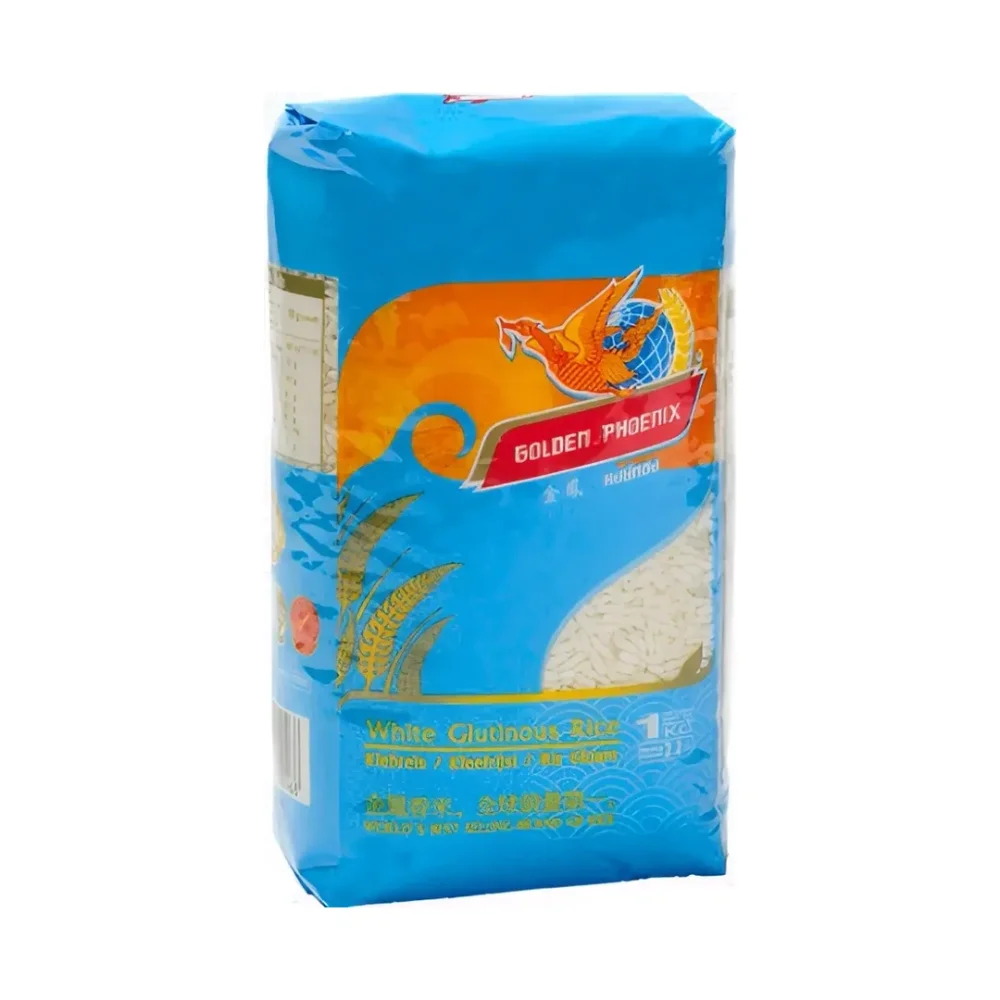
- Sticky rice is the classic base for desserts like sticky rice (e.g., mango sticky rice) and for other rice-based sweets. A practical start is Golden Phoenix sticky rice.
- Keep in mind that “sticky” is not a flavor but a behavior after cooking: the rice holds together and creates the characteristic cohesive structure.
If you want a creamy base (and a texture that binds everything)
- Rely on coconut milk – creaminess often replaces European butter and cream. For creamy bowls and puddings it usually works to start with lighter sweetening and adjust to taste.
- For a guideline dosing in first attempts: for a coconut base it’s practical to start with about 1–2 tablespoons of sweetener per 250 ml, mix into the warm part of the base and only then add more (in some desserts the sweetness should be milder and will shine in combination with fruit or ice).
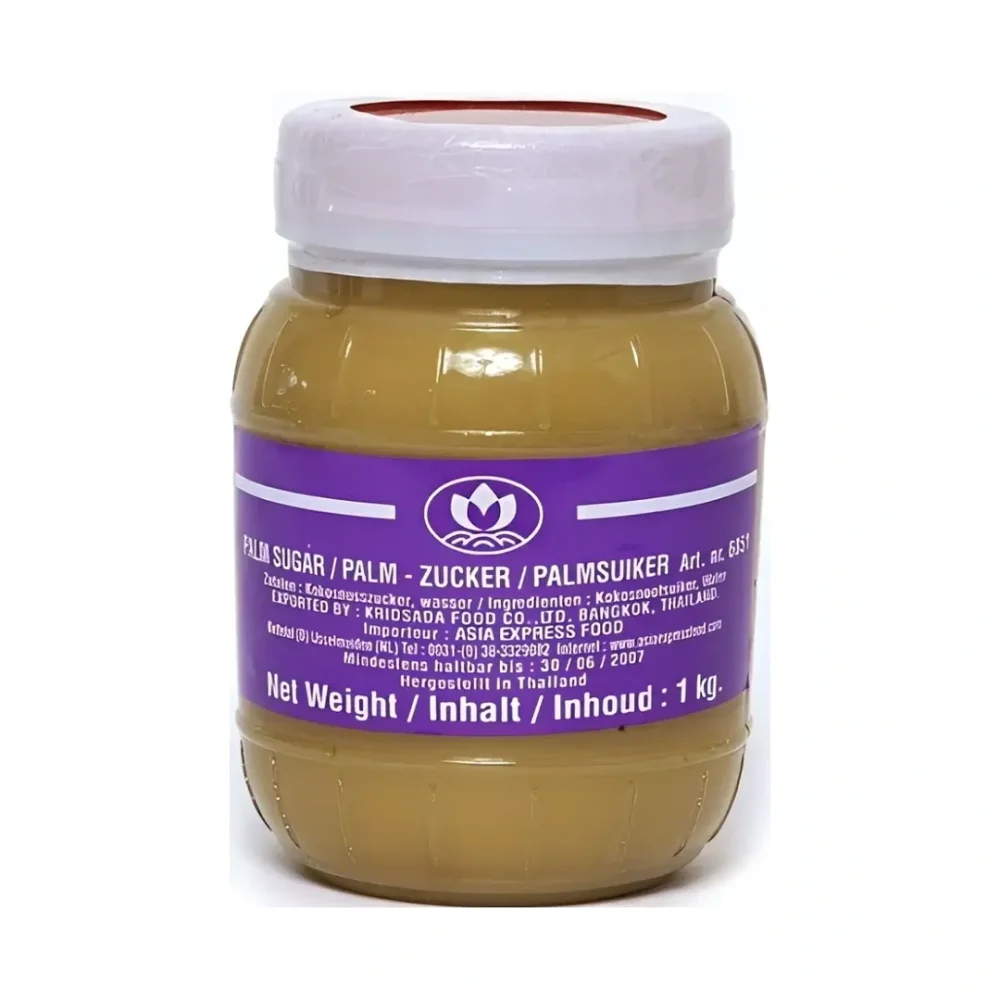
For a more caramel-like, “rounder” sweetness palm sugar is often used – an example is Lotus palm sugar. In practice it’s helpful to dissolve it first in a small amount of warm liquid (part of the coconut milk or water) so the sweetness distributes evenly and doesn’t form lumps.
If you want to work with dough (but don’t want an unintended texture)
A common pitfall with rice flours is: regular rice flour is not the same as glutinous rice flour. Regular rice flour behaves and produces a different structure than glutinous rice dough for mochi or tangyuan.
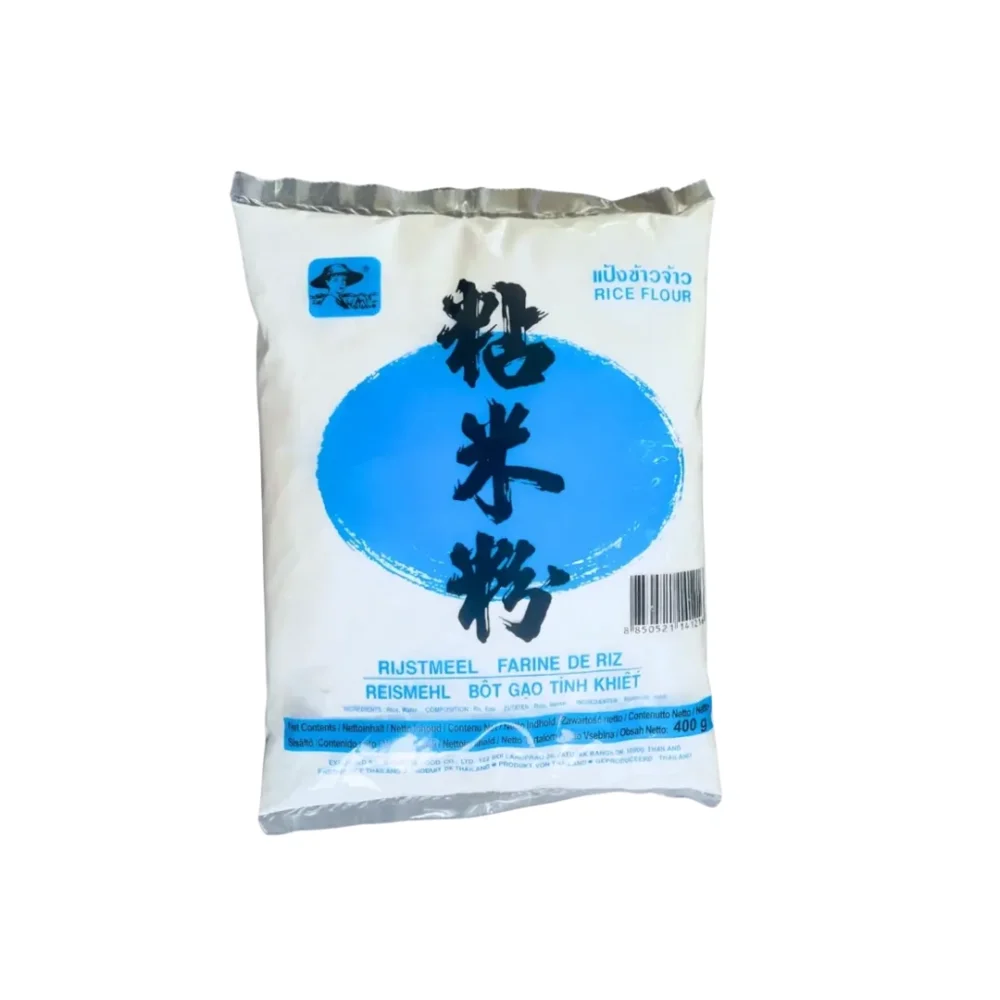
As a base for Asian doughs and for thickening, for example, Farmer Brand rice flour is useful – just be aware in advance that if you expect the typical “mochi chewiness,” regular rice flour alone usually won’t create it.
🍽️ Most rewarding starter combinations (if you want to orient yourself quickly)
For a simple start the combination often proves useful:
- sticky rice or rice flour,
- coconut milk,
- fruit (e.g., mango, canned lychee)
- tapioca,
- flavors like pandan or matcha.
If you want a more “textured” experience, it makes sense to add elements like tapioca pearls, agar jelly, mochi products, or sesame/bean fillings – the combination of layers is very typical in Asian desserts.
How to read labels on sweet Asian products (so texture doesn't surprise you)
Small differences in name and composition often decide the outcome in sweet preparations. When reading labels, it's worth watching mainly for:
- main ingredients and their order (what forms the “body” of the dessert),
- type of flour or starch (rice vs. glutinous rice, tapioca, etc.),
- sugar content and the overall style of sweetness,
- allergens,
- added flavors and colorings (with strong flavors you can easily overdo it even at home),
- whether it is a base for preparation, or a ready-made dessert,
- for coconut products the proportion of coconut,
- for tapioca/pearls also preparation instructions (different types of pearls behave differently).
Most common mistakes and misconceptions (and how to quickly explain them)
“If a dessert is chewy, it's a mistake.”
It isn't. For mochi, tapioca, or desserts made from glutinous rice, chewiness is intentional and a sign that the texture succeeded. If you expect a pudding but get a springy dough, the problem is often not quality but expectation.
“Jelly is just for kids.”
It isn't. Gel components can be culturally and technologically important in Asian desserts. They often serve to refresh, provide contrast, and enable layering.
“Beans don't make sense in dessert.”
In East Asia they do – they form one of the key flavor and texture lines. The bean component is often not “like savory beans,” but mildly sweet, smooth, and earthy; it complements rice dough and jelly well.
“Asian desserts are less elaborate than European baked ones.”
They aren't. They often just rely on different techniques and priorities: steaming, starches, setting, chilling, pressing, and layering create sophistication in a different way than butter and the oven.
Confusion of similar ingredients
Typical mistakes that change texture more than flavor:
- common rice flour vs. glutinous rice flour,
- pandan flavor vs. pandan paste,
- ube vs. taro,
- coconut milk vs. coconut cream,
- agar vs. gelatin.
If a dessert “doesn't sit right” with you, it's often good to first check this part – with Asian sweets texture often depends on which starch and which setting method you used.
Poor handling of tapioca and starches
Tapioca needs the right ratio of liquid and time. Undercooked pearls are usually hard inside; overcooked ones fall apart. Practical guidance without complex numbers: cook until the pearls turn translucent (or almost translucent), and monitor whether they have a “gummy center” – that needs time or heat, not more sugar.
👃 Overdosing flavors
Pandan, matcha, sesame, or rose water can be beautiful, but they can easily overpower everything else. In first attempts it's often better to add less and adjust in the next batch – especially when the texture worked and it would be a shame to “drown” it.
Takeaways from the article
- In Asian desserts texture is often the main point – not an accompaniment to flavor.
- You will most often encounter textures: springy/chewy (mochi, glutinous rice), gel-like (jelly), pearly (tapioca), pudding-like (coconut bases), icy, crumbly/pressed and crispy.
- “Sweet preparation” in the Asian sense is not just the oven: crucial roles are played by steaming, starches, setting, chilling, and layering.
- The most common disappointment comes from expectations (I expect pudding, I get mochi) – it helps to choose based on what mouthfeel you want.
- On labels and ingredients watch mainly for the type of flour/starch and whether you are buying a base or a ready-made dessert.

Read next
If you want to explore this topic further, continue with these related blog guides and articles:
