


 Česky (CZK)
 Slovensky (EUR)
 Deutsch (EUR)
 Austria
 Belgium
 Bulgaria
 Croatia
 Denmark
 Estonia
 Finland
 France
 Germany
 Greece
 Hungary
 Italy
Italy Latvia
 Lithuania
 Luxembourg
 Netherlands
 Poland
 Portugal
 Romania
 Slovenia
 Spain
Spain Sweden










Baking in Asian cuisine: why thinking only about the oven is not enough
Baking in Asian cuisine exists and has its firm place – it just often doesn’t follow the same logic as Central European "I’ll bake a cake" baking. For both sweets and savory dishes, working with texture is equally important, and alongside the oven, steam, setting (gelation), cooling, molding, or brief finishing baking or frying play a significant role. This article will help you understand the differences and choose a technique that makes sense at home.
How to understand "baking" in the Asian context: texture is often the main goal
A beginner usually imagines an oven for sweet preparation. However, in many Asian cuisines, sweet dishes (and often savory ones as well) mainly rely on how they feel in the mouth – whether they are elastic, sticky and chewy, gel-like and clean, smooth like pudding, beaded and slippery, crumbly or layered. Flavor is important, but texture often "carries" the main experience, distinguishes types of desserts, and creates contrast between layers.
That’s why the same family of "sweet preparations" typically includes alongside baking:
- steamed cakes and pastries,
- rice cakes and mochi (a completely different texture world than sponge cake),
- coconut and tapioca desserts,
- desserts with bean or sesame paste,
- as well as baked sweets and cakes.
So baking is not the "only right gateway" to Asian sweets – it is one of the paths to a certain type of result (crust, drier surface, more concentrated aroma), while other techniques aim for elasticity, moisture, or pure gel structure.
🍳 Why Asian sweet preparation is different from European baking
The main difference is not that baking isn't done in Asia. The difference lies in what sweets are traditionally made from and what "type of dessert" the culture expects. Frequently mentioned reasons include different staple crops, a different role of milk and wheat, a stronger connection to rice, starches, and coconut, a different attitude toward sugar and sweetness, and also the great importance of festivals and seasonal sweets.
In practice, this means that besides wheat flour and butter, in many regions you rely more on ingredients like:
- rice and sticky (glutinous) rice,
- rice flour,
- tapioca starch,
- coconut milk (flavor and texture),
- bean pastes (e.g., from adzuki beans) and sesame,
- palm sugar,
- agar-agar and other gelling agents,
- fruit and fruit/flavor bases.
This is also important for expectations: if you automatically expect an "Asian dessert" to be a cake or pastry, you easily miss a large part of the reality. Equally typical can be pastries, jellies, coconut creams, layered textures in one serving, or sweets matched to tea or a specific daily rhythm.
Four techniques that repeat in Asian sweet preparations (and what results to expect from them)
In the Asian sweet world, alongside the oven, steam, setting, and often frying have a firm place – sometimes as the main technique, other times as a short final step. It’s important to choose the method based on the texture you want to achieve.
Baking: when you want a crust and "closed heat"
Baking in Asia is not as universal as in some European traditions, but it remains distinct and important. "Closed heat" gives a different result than wok, steam, or broth – typically suitable where you want:
- a crust,
- a more concentrated surface and more intense surface aroma,
- slower heat penetration,
- stable preparation of a larger piece.
Among sweets, this includes for example mooncakes, some types of wagashi (Japanese sweets), various baked coconut and rice cakes or baked desserts in Filipino and Malaysian traditions. Additionally, more modern styles exist (e.g., tea-inspired desserts or cheesecake directions) where the oven plays a main role.
For savory dishes, baking is linked among other things to tandoor, baked fish and meats, or to modern urban cuisine and colonially influenced traditions (in various parts of Asia).
Steaming: when you want delicacy, moisture, and elasticity
Steaming is extremely important in sweet preparation. It gives desserts a delicate, elastic, and moist texture, which baking typically cannot replace. Typical examples are steamed rice cakes, some types of kuih, Japanese sweets like mušimono and also some Chinese and Southeast Asian sponge/pudding styles.
Steaming also combines well with molding and layering – procedures that often create "multiple textures in one serving" in Asian sweet preparations.
Gelation and setting: pure gel structure and work with cold
Besides baking and steaming, there’s a large world of desserts that are not baked or steamed in the traditional sense – instead, they rely on setting, cooling, and often precise layering. A typical example of a gelling agent is agar-agar.
For home orientation, it’s key to realize that this group of desserts targets a different kind of "rightness": not the fluffiness of sponge cake, but clean cuts, elasticity, or a smooth, gel-like structure.
✨ Frying: when you want contrast (sometimes as a finish)
Frying can be in Asian sweet preparation a standalone technique or a short final step – for example, if you want to add surface contrast to an otherwise soft, starchy, or rice base. In practice, it often combines with other methods: first the structure is formed (steam, molding, setting) and then the surface is briefly baked or fried.
Practical: how to choose a technique at home and not be caught off guard by "another correctness"
The fastest way not to get lost in Asian baking and sweet preparation is to stop starting with the question "what should I bake?" and begin asking "what texture do I want?". Only then does it make sense to choose the technique and basic ingredients.
1) Start with texture: the oven is not the default
- I want a crust and baked surface → baking (common for baked cakes/sweets, some festive sweets like mooncakes).
- I want delicacy, moisture, and elasticity → steaming (rice cakes, parts of kuih traditions, mušimono styles).
- I want a pure gel structure or layered "cut" → setting/gelation (agar-agar, cooling, molding).
- I want contrast between surface and center → combination (e.g., a base made by steam/setting + brief baking/frying at the end).
This decision is more important than the specific dessert name because the same name in different regions can mean different types of results – while texture is a "more stable compass".
2) Expect that rice and starches behave differently than wheat dough
In many Asian sweets, rice, rice flour, and starches (e.g., tapioca) are foundational texture building blocks. Particularly for mochi, the specific ingredient is crucial: mochi is traditionally made from short-grain glutinous rice mochigome, which gives mochi its characteristic elasticity and "gumminess." This elasticity is not a flaw – it is an expected goal and is linked with cultural contexts (for example, Japanese New Year).
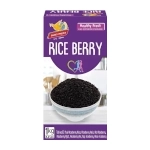
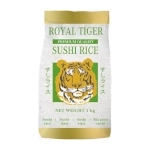
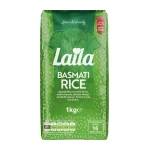
If you want to organize at home how you use different types of rice in cooking generally, a simple classification by rice type might help – for example Other rices, Sushi rice or Basmati rice (even just so you don’t unconsciously expect the same result from every "rice" base).
3) Don’t be afraid of "unexpected" fillings: sweet bean paste is common
For European audiences, it may be surprising that beans are sweetened in parts of Asia. In East Asia, however, sweet bean paste (often from adzuki) is completely common and used in many sweets – for example in mooncakes, some filled dumplings like baozi, then in daifuku, dorayaki, taiyaki or in dessert assortments like anmitsu.
In terms of texture, bean paste gives a smooth to slightly grainy density, creates contrast with elastic dough or gel layers, and allows for filled sweets without dairy creams.
4) For savory baking, consider "final seasoning": a sauce for baking is not the same as a dip
For baked meats, fish, tofu, or vegetables (and generally for dishes prepared by closed heat), two sauce roles often meet in the Asian logic:
- cooking/baking sauce (base, marinade, glaze during cooking),
- table dip (small bowl on the side, added in portions during the meal).
A common beginner's mistake is to confuse these roles: if you use a table dip as the main baking base, the dish can feel overdone and heavy; conversely, if you expect to "finish it off with a dip" but don't prepare anything on the side, the result can seem incomplete.
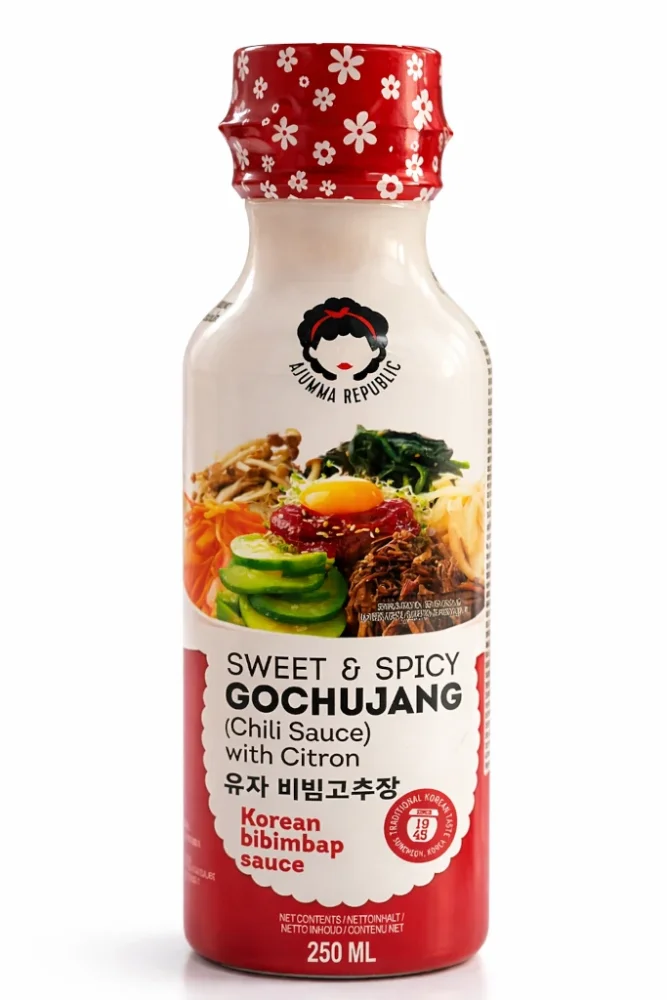
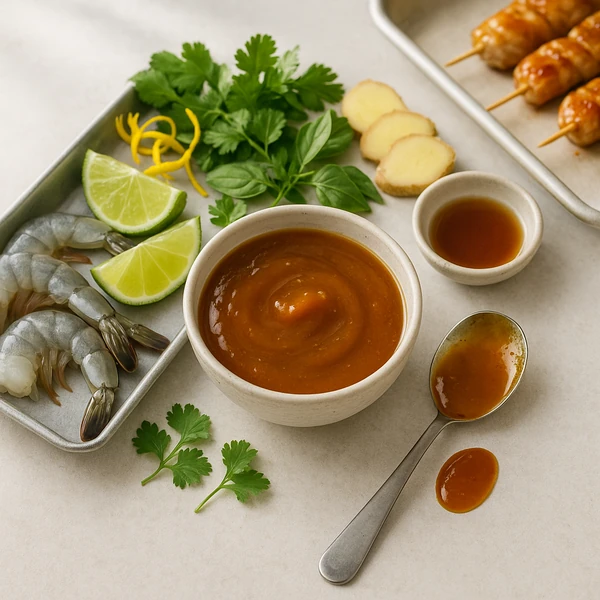
For a quick home start, it can be practical to have one sauce that can function as both a glaze and a dip (and really dose it in small amounts). An example of a style that meets this is Korean sweet-spicy chili sauce with yuzu – the citrus contrast often acts as a "lightening" layer for baked items when used by the teaspoon, not as the main volume of sauce.
👃 5) Aroma and subtle accents: sometimes less is more
In more modern baked and no-bake desserts, fruit and aromatics are often used. If you want to add a pure citrus accent without complicating other flavors, a practical ingredient is cut lemon peel – suitable when you just want to support the profile (and not change the texture of the dessert).
Common mistakes and misunderstandings (and how to quickly recognize them)
- “Asian dessert = cake/pastry” – expectations based on Western dessert logic are the most common reason for disappointment. In several traditions, it is normal for dessert to be flexible, gel-like, layered or based on rice, starches, and coconut, not on wheat flour and butter.
- “Mochi is rubbery, so it's bad” – the flexibility and chewiness of mochi is not a flaw but a goal determined by the specific ingredient (sticky rice mochigome) and traditional technique.
- “Sweet bean paste is weird” – in East Asia, it's a common sweet base used across sweets (from mooncakes to daifuku or dorayaki). It also serves a textural purpose: providing a dense contrast without dairy creams.
- Confusing techniques: steaming vs. boiling – steaming preserves a different texture; direct contact with water breaks down the structure easily, and the result feels "waterlogged".
- Confusing techniques: grilling vs. baking – grilling is a more direct heat with a more pronounced surface; baking is more even and enclosed. If you expect a "grilled surface" but only bake, the flavor and appearance will be different (and vice versa).
- Confusing sauce roles: baking base vs. table dip – a small bowl beside the plate is not an “extra sauce,” but often part of the flavor structure. It is dosed by drops/teaspoons and creates contrast, not volume.
What to take away from the article
- Baking is important in Asian cuisine, but for sweets, it is usually just one of the methods – alongside steaming, setting, cooling, pressing, and sometimes frying.
- Texture is key: elastic/sticky, gel-like, smooth pudding-like, pearl slippery, or crumbly pressed – choose the technique accordingly.
- Rice, starches, coconut, agar, sesame, and bean pastes are typical building blocks of sweet preparation in various parts of Asia.
- Mochi is meant to be elastic – “different correctness” is part of orienting oneself in Asian sweets, not a mistake in the process.
- Don't underestimate the final seasoning in savory baking: baking sauce and table dip have distinct roles and dosing.

Read next
If you want to explore this topic further, continue with these related blog guides and articles:
