


 Česky (CZK)
 Slovensky (EUR)
 Deutsch (EUR)
 Austria
 Belgium
 Bulgaria
 Croatia
 Denmark
 Estonia
 Finland
 France
 Germany
 Greece
 Hungary
 Italy
Italy Latvia
 Lithuania
 Luxembourg
 Netherlands
 Poland
 Portugal
 Romania
 Slovenia
 Spain
Spain Sweden










How to choose rice according to the dish: a simple choice, a big difference on the plate
Rice in Asian cuisines is often not just "something to go with the main dish" – it is the foundation upon which the rest of the dish is built. If you choose the wrong type, the sauce won't soak in, the bowl is hard to eat with chopsticks, or the planned fried rice turns into mush. In this guide, you will quickly get oriented in rice types and especially how to select them according to the specific dish.
Rice is not just a side dish: why choosing matters
In many parts of Asia, rice is the center of the plate: a stable, neutral base around which the question of "what will go with the rice" is tackled. That's why the aroma and texture of rice are so emphasized in rice dishes – rice should be either delicate and inconspicuous, or on the contrary aromatic, elastic, sticky, loose, or creamy. What is often simplified to the word "rice" in our context is actually a wide family of varieties and styles that behave differently when cooked and suit different dishes.
Good news: you don't need to know dozens of names. It's enough to know what result you need on the plate – and this is usually recognizable by the type of dish (sauce, bowl, fried rice, sushi, dessert).
How to quickly get oriented in rice: 4 things that matter
1) Grain length and shape
Long-grain rice tends to be more separate and looser after cooking. Short-grain and medium-grain rice, on the other hand, usually have more cohesion, which is key when you want to shape rice, pick it with chopsticks, or build a "bowl" with toppings.
👃 2) Aroma
Some varieties are cultivated specifically for their fragrance – typically jasmine or basmati. This aroma often determines whether the dish will feel "full," even if it is simple (like just rice and sauce).
3) Starch and texture: amylose vs. amylopectin
Texture of rice is fundamentally influenced by starch. A practical rule:
- rice with a higher amylose content tends to be looser, firmer, and less sticky,
- rice with a lower amylose content tends to be softer and stickier.
So-called sticky rice has very little or almost no amylose – after cooking, it is elastic and cohesive. This is not "accidental," but its main function: in certain dishes, it is meant to hold shape and behave completely differently than regular side rice.
4) Grain processing: white, natural, parboiled
It also matters how the grain is processed. White rice, natural rice, and parboiled rice behave differently. The difference is not only in general "nutritional" debate but also in taste, absorbency, and cooking time. Practically, this means that even if you buy similarly sized grains, the result on the plate can be significantly different.
Most common types of rice in Asian cuisine and what to expect from them
Jasmine rice: fragrant and tender for sauces
Jasmine rice is the typical choice when you want a fragrant and tender side to go with sauce. It works well with dishes where rice is eaten together with sauce or juice and is meant to "carry" flavor. A helpful reference for selection is the category jasmine rice.
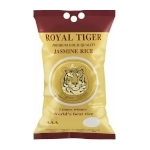
If you cook often and want a larger package for everyday use, it might make sense to consider Royal Tiger jasmine rice (important is mainly that it is aromatic jasmine rice suitable for frequent cooking).
Basmati: longer and looser for Indian dishes
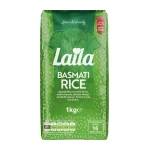
When you want loose, longer, and "elegant" rice, you typically reach for basmati. In practice, it is suitable where you want grains to hold shape and not seem sticky – and also for rice with its own aroma. A helpful reference is the category basmati rice.
Short-grain sushi rice: cohesive for picking up and shaping
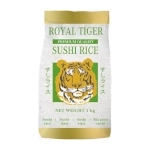
For dishes where rice needs to hold together (picking with chopsticks, shaping, sushi), typical is short-grain sushi rice. Its cohesion is not a "defect" but a property that enables rice bowls and sushi to work. The reference is the category sushi rice.
Sticky rice: elastic and cohesive texture for specific dishes
Sticky rice (in terms of texture) is rice with minimal amylose – after cooking it is elastic and holds together. It suits everywhere a strongly sticky, "shapeable" texture is desired.
Natural rice: a more rustic choice with a different texture
If you want a more rustic and distinct variant, you can consider natural rice – but be aware it behaves differently than white rice (different texture, often longer preparation). This is a choice that makes sense when you like its character and are willing to adapt cooking accordingly.
How to choose rice according to the dish: a practical map
The most common mistake is choosing rice only based on what you have at home or the impression that "rice is just rice." Much more reliable is to start with the question: What dish do I want to cook?
1) Curry, sauces, and juices: when rice is meant to be the partner of the sauce
For dishes where the sauce is the main carrier of flavor (typically Thai and Laotian curries or various stews), you want rice that smells pleasant and at the same time does not seem dry. In such a situation, jasmine rice often makes sense jasmine rice – it "fits" into the sauce and the whole plate feels compact.
A similar scenario works for "grilled meat with sauce": rice is not just decoration next to the meat, but the place where sauce and juice are naturally picked up.
2) Loose side for heavily spiced dishes: when you want separate grains
For dishes where you want loose and more separated rice (typically Indian aromatic dishes), basmati often makes sense basmati. It is a choice for moments when rice should feel "light," grains should be distinct, and the side shouldn't be sticky.
3) One-bowl dishes: donburi, bibimbap, and "rice bowls"
Rice dishes in Asia often work as a whole in one bowl – rice is not secondary, but the base onto which topping, sauce, or side dishes are layered. Even though donburi, bibimbap, nasi lemak, nasi goreng and biryani are completely different dishes, they share among other things that the relationship between rice and what is on it is important.
A practical tip: if you need rice to be shapeable and easy to pick up with chopsticks, a safe choice is short-grain sushi rice. Conversely, if you want a bowl where rice acts more as a fragrant base for the sauce, an aromatic type (like jasmine) may be more suitable.
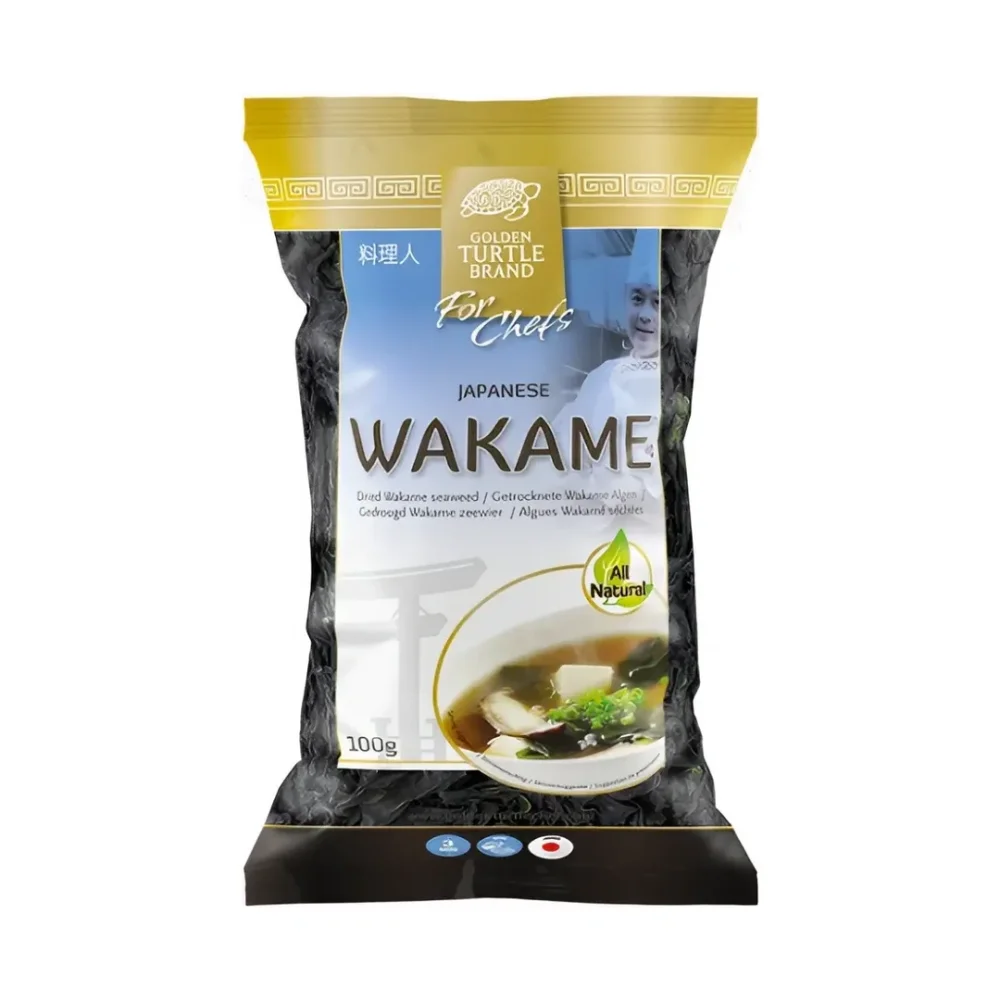
In the "bowl" world, simple seasoning and additions that enhance rice without overpowering it also fit well. An example of a mildly sea-flavored ingredient for rice bowls: dried wakame seaweed (softens when soaked and is usable in bowls and salads).
4) Fried rice and roasted dishes: when you don’t want mush
In styles like nasi goreng or generally "fried rice," it is sensitive how rice behaves after cooking and possible cooling – in practice, you want it to hold structure and not fall apart into a uniform mass in the pan. If your fried rice repeatedly turns out mushy, the problem is often not in the seasoning, but that you chose an unsuitable type of rice for the desired result or cooked it so that it is too soft.
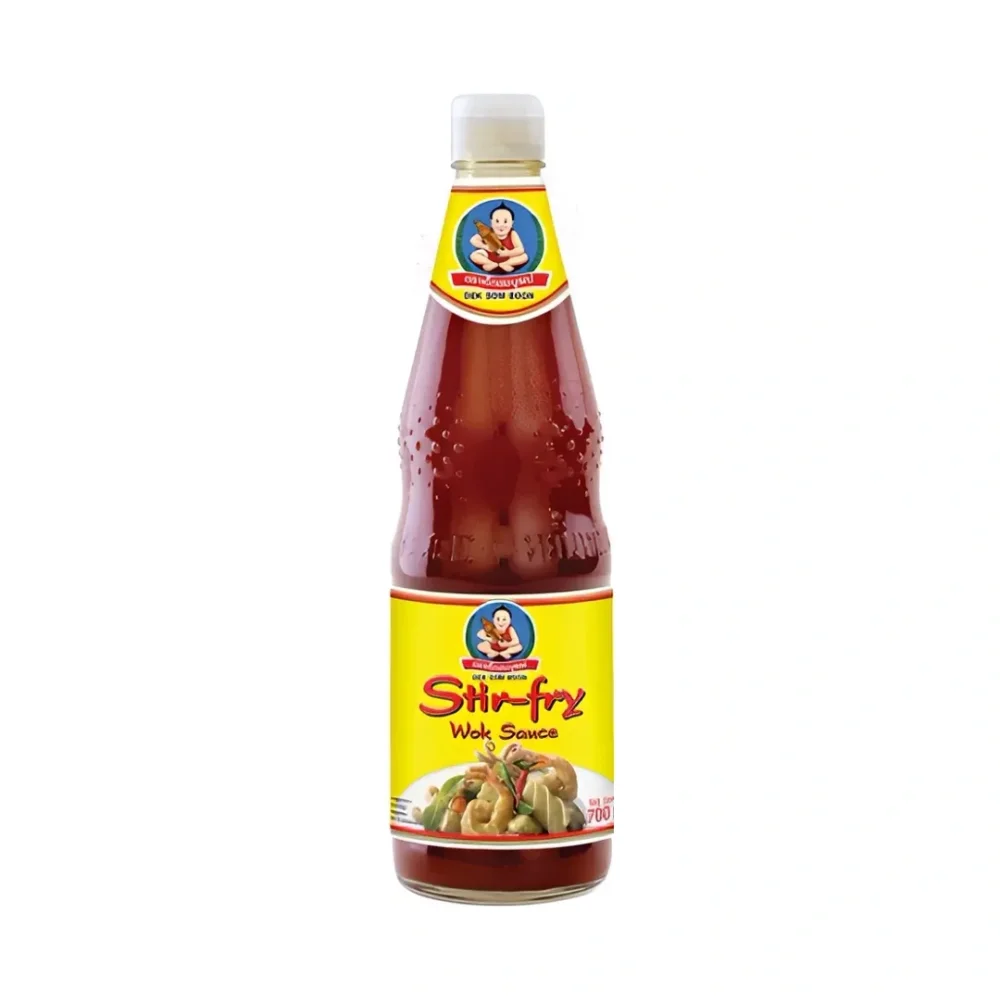
For quick wok and pan dinners, it helps to stick to a simple seasoning logic: briefly fry ingredients, add a sauce that "coats" them, and finally combine with rice. As an example of a sauce used specifically for stir-fry you may encounter stir-fry sauce, which is meant for seasoning wok dishes.
5) What to have at home as a minimum: 3 types that cover most dishes
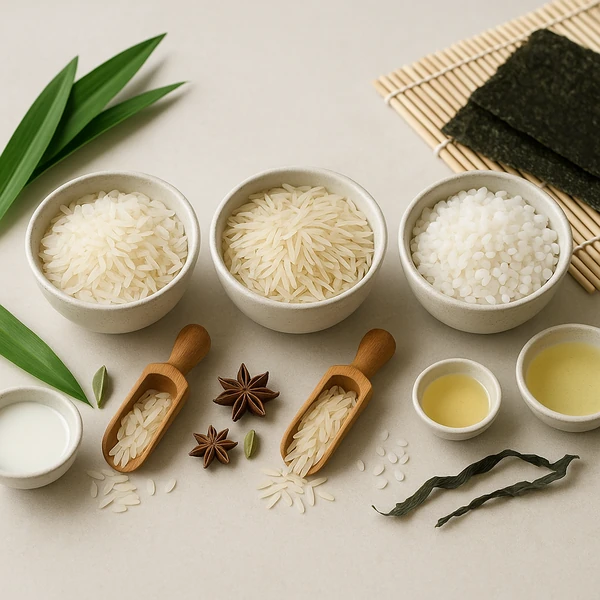
For common home Asian cooking, it makes sense to have at least three basic types of rice at home:
- Jasmine rice for curry, stir-fry, and versatile Southeast Asian use.
- Basmati for Indian dishes and looser sides.
- Sticky or sushi rice – depending on whether you tend more toward desserts and Southeast Asian sticky textures, or Japanese bowls and sushi.
This trio is a practical foundation so you won't try to "save" everything with just one type of rice.
How to recognize good quality rice and what to watch for when choosing
Quality is not determined only by brand. Already during selection (and especially during cooking) it pays to notice some signs:
- Grain cleanliness: there should not be too much dust, broken grains, or impurities in the package.
- Uniformity: similar size and color of grains usually means a more predictable cooking result.
- Aroma: for aromatic rice, the scent is crucial; if you don't smell almost anything when opened, the result might be bland.
- Origin and labeling: for some types, origin is important (typically for basmati or certified Thai Hom Mali jasmine rice).
- Behavior after cooking: good rice retains the typical texture of its kind, doesn't taste musty, and doesn't fall apart without reason.
Most common mistakes when cooking and choosing rice (and how to fix them)
🌶️ "I'll take what's at home": why it sometimes doesn’t work
You can cook "something" with one type of rice, but for some dishes, the main thing disappears: the typical texture and feel of the dish. For example, if your sushi or rice bowl doesn't hold together, the problem is often not in rolling technique but in missing the properly cohesive type of rice (short-grain sushi rice).
Confusing stickiness with "overcooking"
Stickiness in some types of rice is not a flaw – it's a property given by starch. Sticky rice is supposed to work elastically and cohesively. On the other hand, if you want loose rice and it turns out sticky, you often chose a type with different starch behavior than you expected.
When rice is hard, dry, or conversely mushy after cooking
Because different types of rice vary in absorbency and cooking time, there is no universal "correct" method. A practical way to quickly improve without complicated charts:
- Hard rice: usually needs more time and a little extra liquid. Next time, adjust the process so it has more room to finish cooking.
- Too soft/mushy rice: is often a combination of too much liquid and cooking for too long. This is most obvious in dishes where you want texture (e.g., fried rice).
A good measure is always the result on the plate: should the rice complement the sauce (absorb, soften), or should it be separate and "grainy"?
What to take away from the article
- Rice often determines how the whole dish works in Asian cuisines – both in aroma and texture.
- For quick orientation, watch four things: grain length, aroma, starch behavior (amylose vs. amylopectin), and grain processing.
- It's worthwhile to choose rice according to the dish: jasmine for sauces and curries, basmati for fluffy Indian sides, sushi rice for shaping and bowls, sticky rice for flexible cohesion, natural rice when you want a more rustic character.
- As a basic home staple, usually three types are enough: jasmine + basmati + (sushi or sticky, depending on what you cook).
- You can also recognize quality practically: cleanliness and uniformity of grains, distinct aroma in aromatic types, and typical behavior after cooking.

Read next
If you want to explore this topic further, continue with these related blog guides and articles:
