


 Česky (CZK)
 Slovensky (EUR)
 Deutsch (EUR)
 Austria
 Belgium
 Bulgaria
 Croatia
 Denmark
 Estonia
 Finland
 France
 Germany
 Greece
 Hungary
 Italy
Italy Latvia
 Lithuania
 Luxembourg
 Netherlands
 Poland
 Portugal
 Romania
 Slovenia
 Spain
Spain Sweden










Light and balanced Asian dishes: how “lightness” works in the bowl and on the plate
Light and balanced Asian dishes are not “diet versions” of classics or flavorless meals. In many parts of Asia, lightness is a natural result of the way a dish is assembled: what forms the base (rice or noodles), what carries the protein, what adds freshness, acidity, texture, and how a sauce or broth is used so that the ingredients are not overwhelmed.
Light and balanced in the Asian context: not “little”, but “readable”
The most important shift in thinking is that “light” in Asian cuisine often does not mean small or weak in flavor. It’s more about the impression of the dish: it doesn’t feel heavy or lethargic, flavors are clearly distinguishable and the sauce does not drown the ingredients. Vegetables and herbs are not decoration but an active part of the dish – just like acidity, crunch and small contrasts.
Balance typically relies on several recurring “building” elements that are combined differently across cuisines:
- starchy base (rice or noodles),
- protein (meat, tofu, seafood – depending on the style of the dish),
- vegetables (cooked and raw),
- herbs or other fresh elements,
- acidity or pickles (pickled/acidified components),
- small but precise seasoning (umami, saltiness, chili as an accent – not as the “base of everything”).
Where satiety without heaviness comes from: contrast instead of “removing everything”
Asian cuisines often don’t lighten a dish by “taking away” fat, sauce and flavor. They more often work with contrast: a dish can be satisfying yet light when a few things are watched.
- Rice or noodles are not drenched – the starch should carry the dish, but not dominate it.
- A richer or fried component has opponents: fresh vegetables, herbs and acidity.
- Part of the flavor is carried by the broth instead of a heavy sauce – typically in noodle bowls.
- Herbs and citrus/acidity “open” the next bite – the dish doesn’t feel flat.
- Texture makes half the impression: when soft, springy, crunchy and juicy meet in a bowl, it feels lively even without a “ton of sauce”.
That’s why, for example, a Vietnamese noodle bowl or a Japanese set meal can fill you up well but not feel as heavy as some Western dishes of the same size.
What determines the character of rice and noodle dishes: broth, dressing or just a smaller amount of sauce
In light and balanced Asian dishes it is often decisive, what role the liquid component plays:
- Broth – when it is clean in flavor and well built, it carries the dish without “weighing it down”. In noodle soups the broth is as important as the noodles.
- Light dressing – typically in cold or lukewarm bowls: the flavor spreads but nothing drowns.
- A smaller amount of a strong sauce – the sauce is more of a precise tool than a “lake” at the bottom of the bowl.
This is nicely shown with noodles: the same noodles can become the basis of a soup, a wok dish or a cold salad – only what they are meant to carry changes, what they are meant to carry (broth vs. sauce vs. dressing) and how texture is handled.
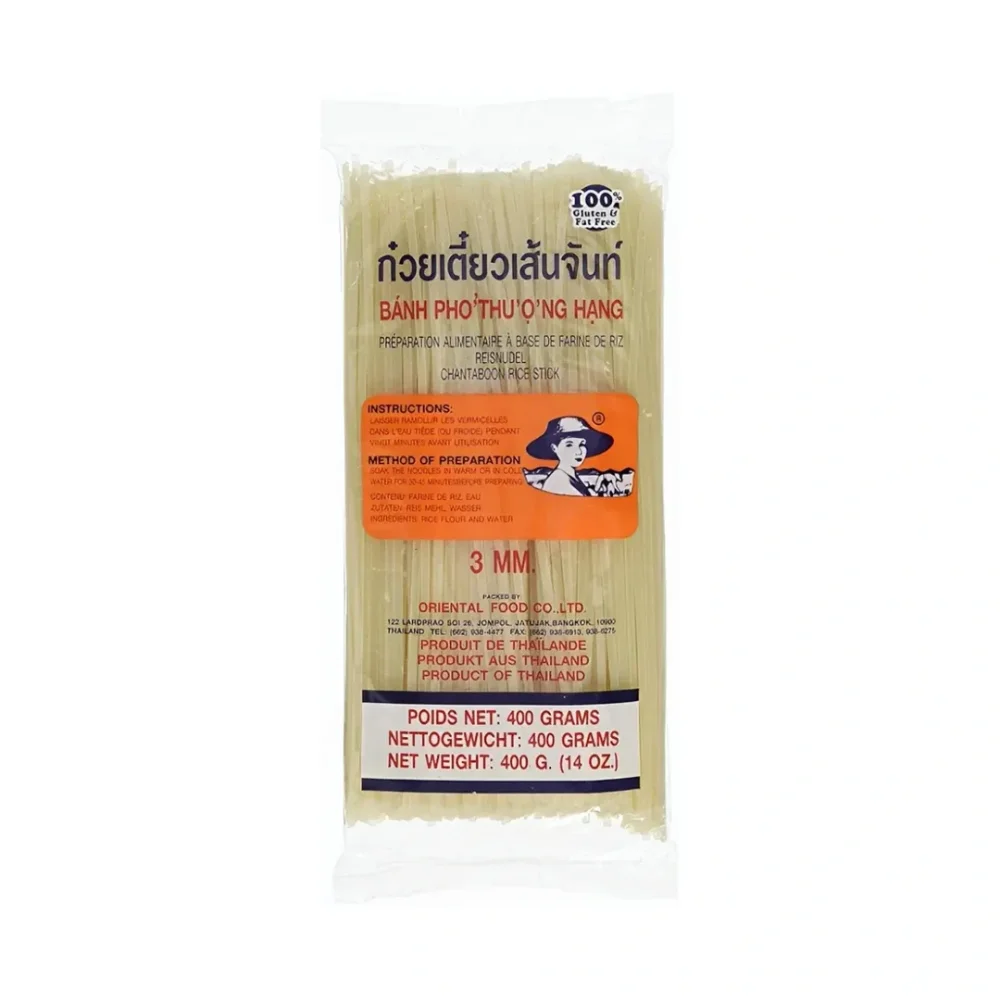
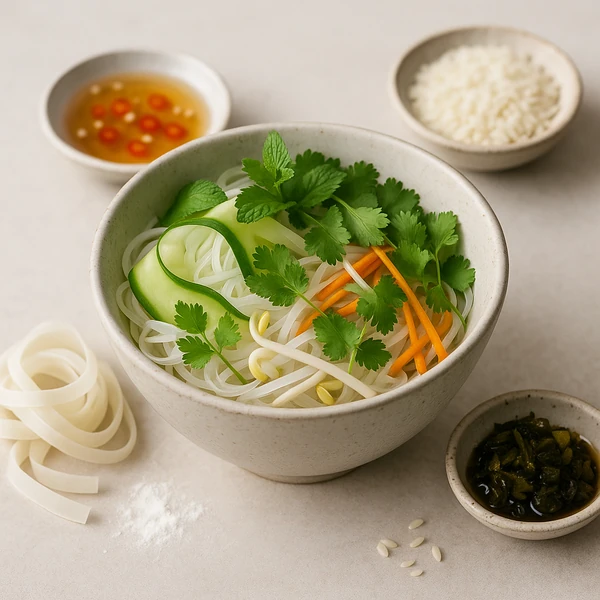
A practical universal for starting at home is, for example, medium-width rice noodles (3 mm), which are suitable for soups, stir-fries and cold bowls – precisely because they work well in different “liquid roles” of a dish.
Three cuisines as inspiration: Japan, Vietnam and Korea
Japan: balance through set composition and smaller, precise flavors
The Japanese approach is often described as balance achieved by the dish not being one mass, but rather a combination of several smaller components in one logic. This helps keep flavors readable: something is delicate, something adds umami, something is fresh, something crunches – and the whole does not feel heavy.
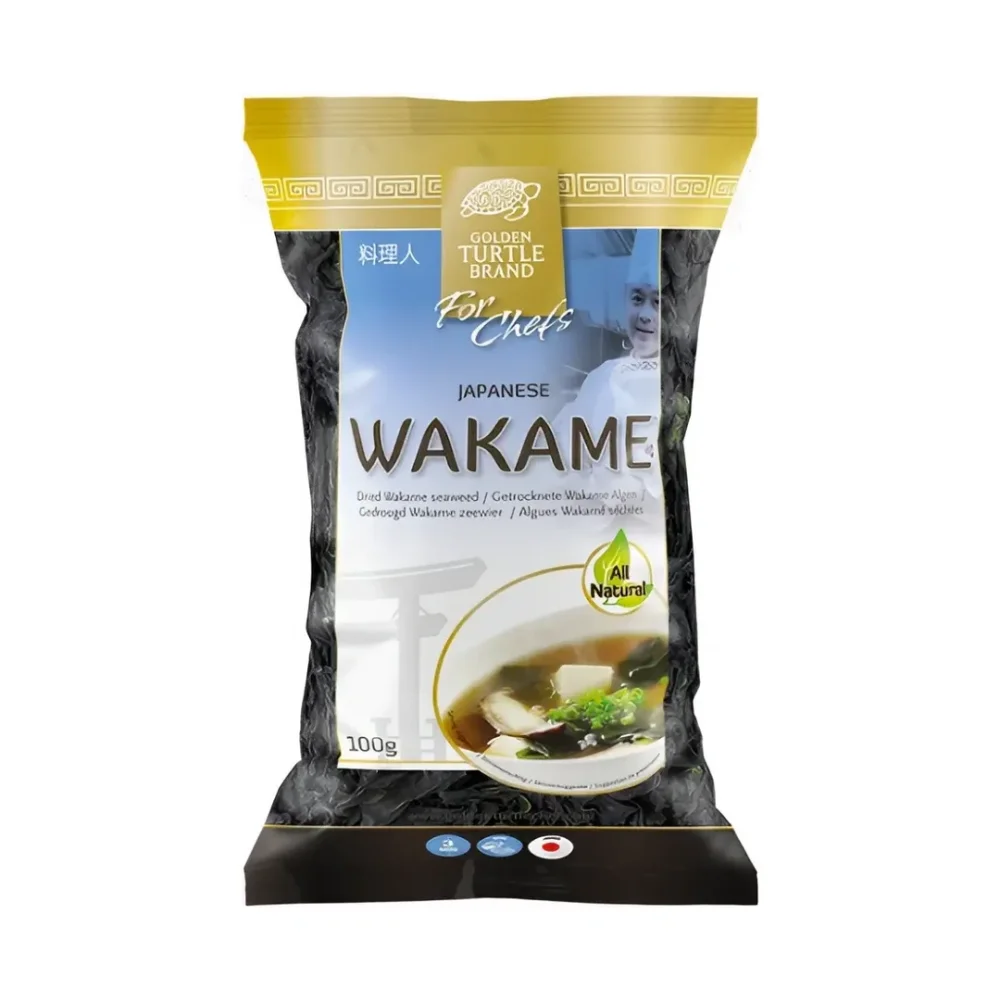
The “light Japanese” direction also fits well with working with marine elements that add flavor without the need for a heavy sauce. A typical ingredient for soups, salads and rice bowls is dried wakame seaweed – after soaking it softens and is easy to dose as a subtle flavor and texture element.
Vietnam: herbs, freshness and light broths (and a cold logic)
Vietnam is one of the best examples that lightness is not about “less food”, but about freshness and contrast.
- Gỏi cuốn (fresh Vietnamese rolls) are built on rice paper, herbs, rice noodles, vegetables and a filling (e.g. shrimp, pork or a vegetarian variant). Their strength is not in cooking, but in freshness, texture and the right dip.
- Cold or lukewarm noodle bowls typically assemble noodles, a grilled element or tofu, herbs, pickled vegetables and a fish sauce dressing – and precisely by this explain how a meal can be both full and light.
Vietnamese logic often does not overpower ingredients with sauce. It rather lets herbs, acidity and clean seasoning work – so even richer components do not feel “heavy”.
Korea: balance through multiple small components and contrasting accompaniments
Korean balance often relies on the fact that a meal is not just “one thing”, but multiple smaller components, which complement each other – and also on contrasting accompaniments, including lightly fermented and intensely flavored elements. These can add umami and acidity in small amounts.
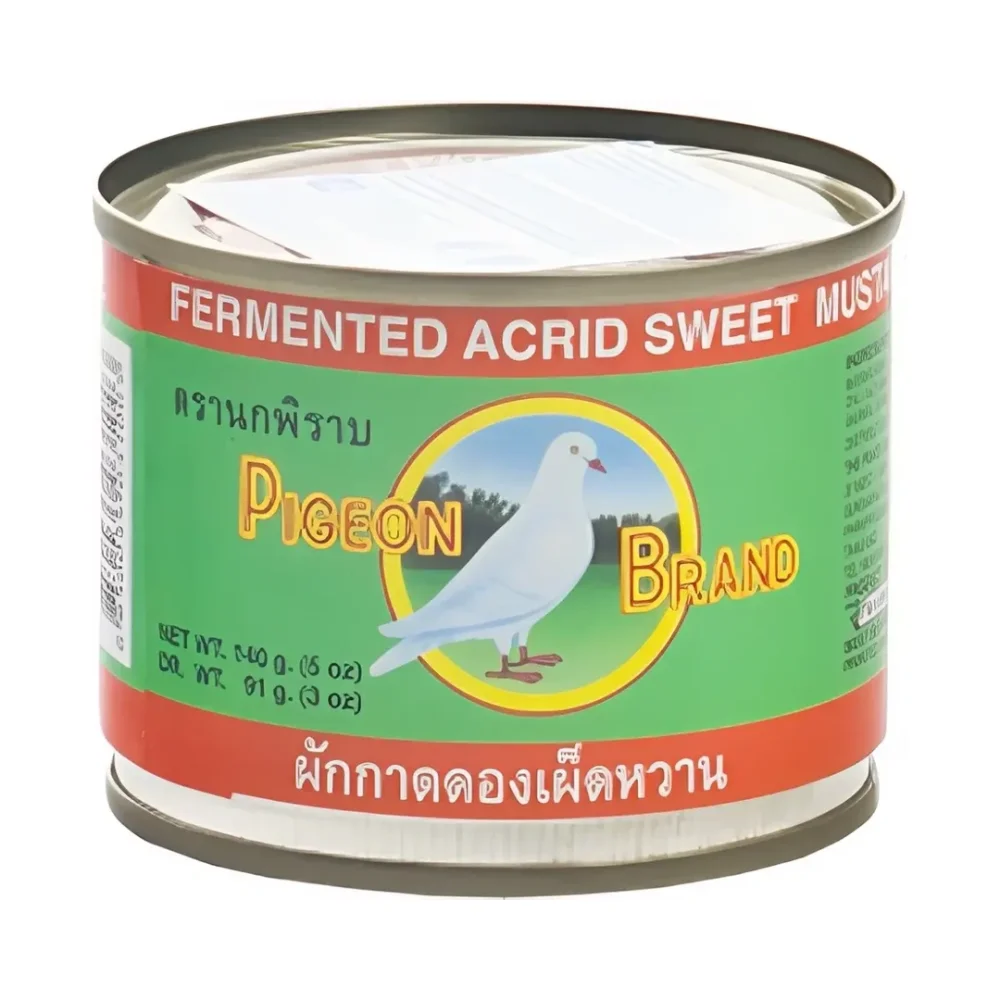
If you want to try this principle at home without complicated preparation, it works well to have something “small but strong” on hand as an accompaniment to rice or noodles – for example fermented mustard greens in soy sauce, which can be added in small amounts as umami and a contrasting element.
Cold Asian dishes: a salad doesn’t have to be leafy and is often a full lunch
Asian salads and cold dishes are not just “vegetables with dressing”. They are often full meals built on freshness, texture, acidity, herbs, dip sauces, cold noodles, rice papers and pickles. And it’s important to realize that “cold” does not automatically mean raw, diet or bland – on the contrary, it is often very vibrant in flavor.
Why are cold and lukewarm dishes so important in Asia?
- Climate: in warm and humid conditions refreshing dishes make a lot of sense.
- Street food and everyday life: rolls, salads and cold noodles are naturally quick and practical.
- Flavor logic: cold cuisine is an ideal space for herbs, acidity, chili as an accent and light fermented components – and for crunchy vegetables.
Depending on the situation the cold world often chooses similarly:
- When you want something light and fresh: gỏi cuốn, Vietnamese noodle salads, light Japanese cold noodles, tofu and vegetable salads with a light dressing.
- When you want something spicy and bold: som tam, larb, bibim naengmyeon and other spicy cold noodle directions.
- When you want something more substantial: gado-gado, cold noodle bowls with tofu, egg or grilled meat, sesame and peanut dressing salads.
How to start at home: a “kit” for a light Asian bowl step by step
If you want a light and balanced meal at home, it helps to think in a simple kit. You don’t have to cook an “authentic recipe” – the goal is to assemble a bowl so it is complete in flavor and texture.
1) Keep the starch (rice/noodles) in check so it doesn’t form the majority
The foundational thesis is clear: the dish is often built on rice or noodles, but in a reasonable proportion. Practically: start by leaving the starch at roughly about a third of the bowl’s volume and build the rest from other elements.
2) Treat the protein as an “anchor”, not as the sole filling
Choose one protein (meat/tofu/seafood) and don’t make it the entire bowl. Lightness often arises when the protein is balanced with vegetables, acidity and fresh elements.
3) Vegetables and herbs are not decoration – give them half the space
In light bowls it makes a big difference when vegetables are not just “something on top”. Combine two layers if you like: one cooked and one raw/crunchy. If you want the bowl to feel lively, add herbs or other fresh elements.
4) Acidity: the quickest lever for “lightening”
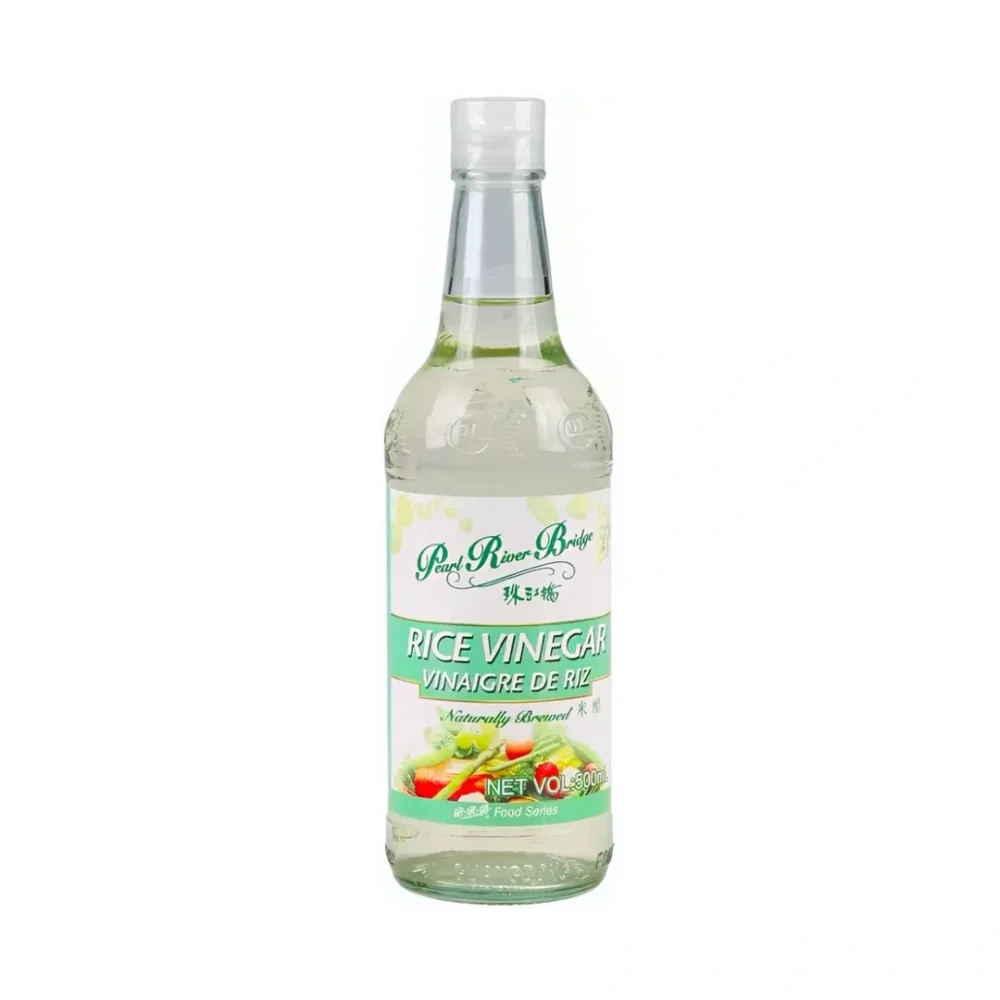
Acidity (or pickles) is one reason a dish does not feel heavy. At home it pays to have a simple acidic base for dressings and marinades – for example rice vinegar. Practical dosing: start the dressing with 1–2 tablespoons per serving (depending on how much vegetable is in the bowl) and adjust drop by drop – the goal is for the acidity to “open” the dish, not to overpower it.
5) Add sauce by the spoonful, not “by eye”
One of the most common losses of lightness is too much sauce. For noodle and rice dishes it pays to do the opposite: start with a smaller amount (for example 1–2 tablespoons of a strong sauce or dressing), mix and only then add more. When the dish is “drowned”, texture and clarity of flavors are lost.
6) Texture and one extra “crunch”: a little is enough
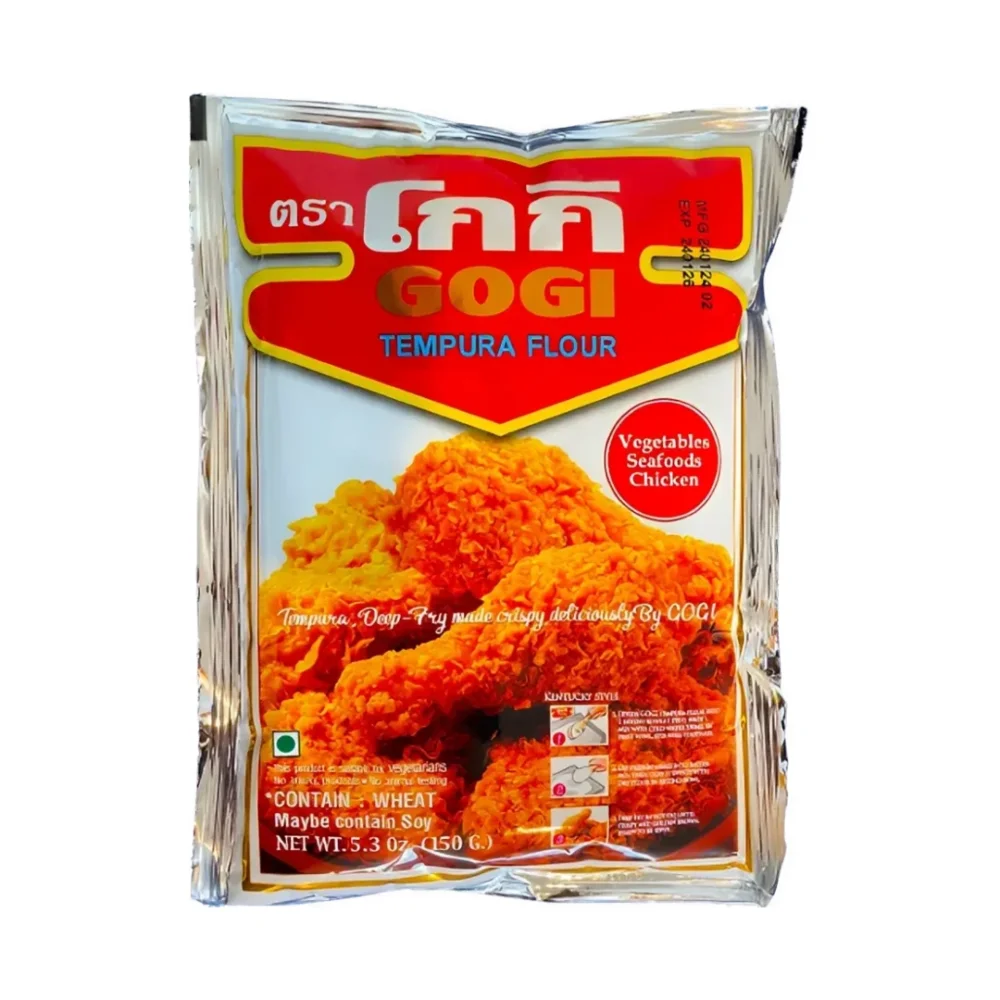
Lightness is not only about flavors, but also about the mouthfeel. When everything is soft, the bowl feels flat. One crunchy or fried accent is enough – but really just one. If you want to make a lighter crunchy layer at home (for example for vegetables or seafood), a tempura mix designed for airier batter helps: Gogi Tempura. The idea is to have contrast, not to turn the whole dinner into fried food.
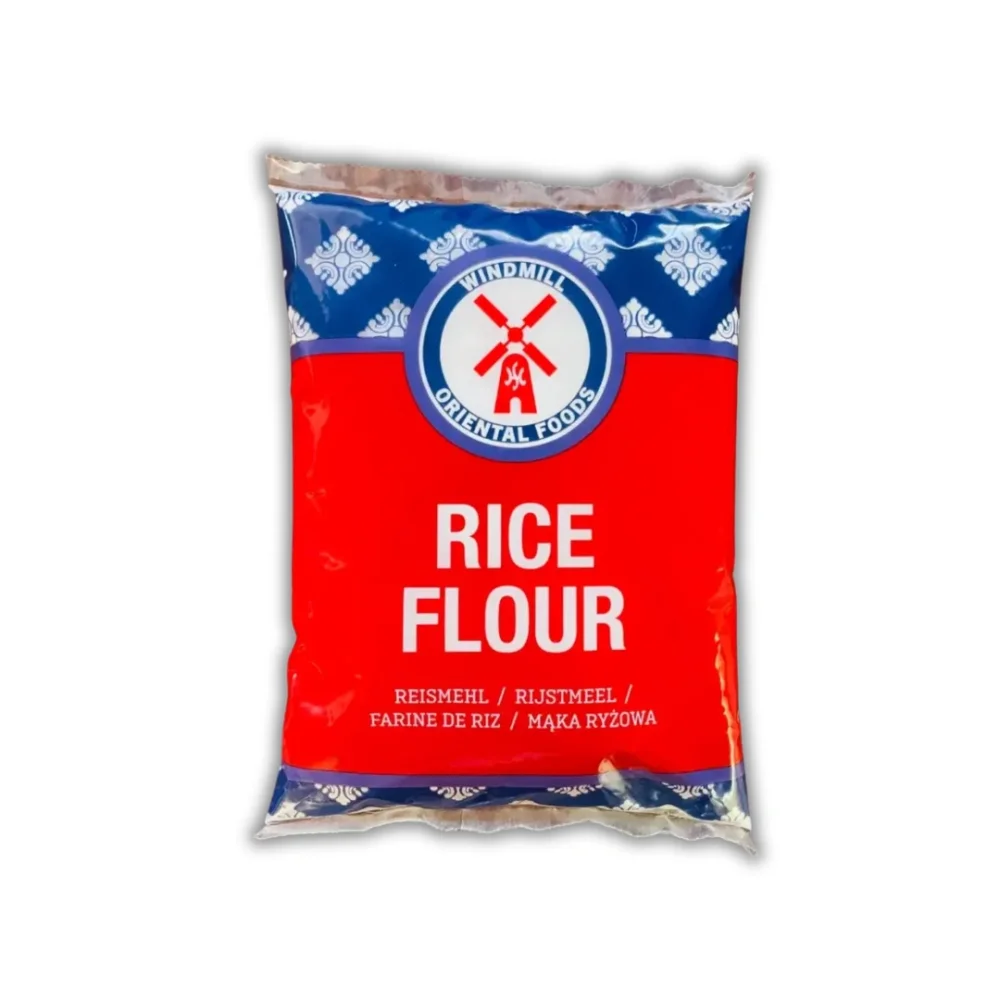
7) If you need to smooth or “bind” a sauce, reach for rice flour
In lighter dishes you often don’t want thickening. Still, sometimes you need to slightly “round” and bind a sauce or soup base. A gentle helper can be rice flour – but add it in small amounts so the dish doesn’t lose its lightness and clean flavors.
What most often ruins light and balanced dishes (and how to fix it)
- Too much sauce: the food drowns and loses its lightness. Fix: add fresh vegetables/herbs, or some of the starchy base without extra sauce and mix; next time portion by tablespoons.
- Lack of freshness: without herbs, acidity or pickles even well-cooked food feels flat and heavy. Fix: add an acidic element (dressing), something crunchy and a fresh component.
- Bad ratio of starch to the rest: a big pile of rice/noodles without vegetables pushes the impression toward “heavy.” Fix: increase the vegetable portion and add contrast (acidity, pickles, texture).
- Too many fried elements at once: one crispy accent is great, but when everything is fried, lightness is lost. Fix: next time keep the crisp as one layer and make the rest fresh/broth-based.
- Lack of texture: when everything is soft, the bowl doesn’t feel lively. Fix: add crunchy vegetables, seeds or pickles; for cold bowls make sure there is always a “crunchy” element alongside the “soft.”
What to take away from the article
- “Light” Asian food isn’t about stripping flavor, but about readability: ingredients don’t disappear in the sauce and the whole doesn’t feel heavy.
- Balance relies on composition: starch + protein + vegetables + freshness + acidity/pickles + precise seasoning + texture.
- Satisfaction without heaviness comes from contrast: broth instead of a heavy sauce, herbs and acidity against richer components, one crispy accent instead of “everything fried.”
- Cold and lukewarm dishes (rolls, salads, cold noodles) are commonly in Asia full-fledged – and often ideal for a light lunch.
- The most common mistake is simple: too much sauce and too little freshness. Both can be fixed in a minute when you know what to add to the bowl.

Read next
If you want to explore this topic further, continue with these related blog guides and articles:
