


 Česky (CZK)
 Slovensky (EUR)
 Deutsch (EUR)
 Austria
 Belgium
 Bulgaria
 Croatia
 Denmark
 Estonia
 Finland
 France
 Germany
 Greece
 Hungary
 Italy
Italy Latvia
 Lithuania
 Luxembourg
 Netherlands
 Poland
 Portugal
 Romania
 Slovenia
 Spain
Spain Sweden










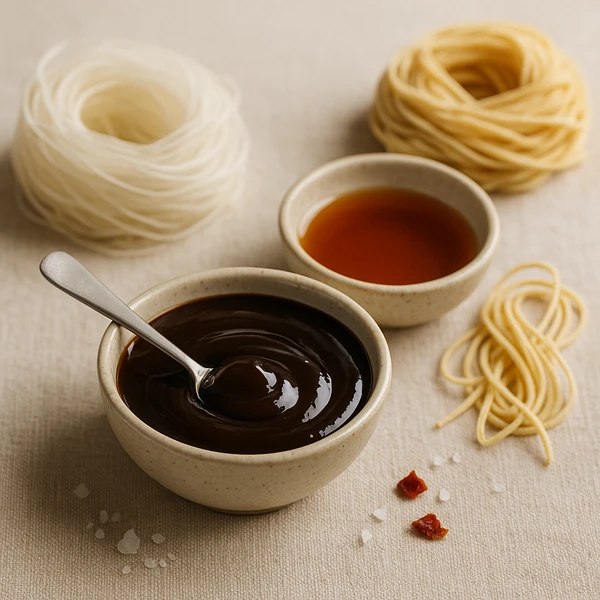
Which sauces and noodles to watch out for in gluten-free Asian cooking
Gluten-free Asian cooking often does not depend on whether you buy the "right" vegetables or meat, but on two tricky places: sauces and noodles. The basic ingredients can be naturally gluten-free, but one common soy sauce or wheat noodles can completely compromise the safety of the entire dish. The article provides specific guidance, the main risk situations, and practical procedures on how to handle this at home without unnecessary stress.
Gluten-free Asian cooking: why sauces and noodles are the most common trap
Gluten-free Asian cooking is not a "different cuisine." It is mainly a way to navigate ingredients, dishes, and labels, so that you can distinguish:
- what is naturally gluten-free,
- what can only be gluten-free sometimes (depending on composition and production),
- and what usually is not suitable without adjustments or ingredient substitutions.
It is essential to keep two simple things in mind:
- Wheat, barley, and rye are not safe for gluten-free diets.
- Labels such as "wheat-free / without wheat" do not automatically mean "gluten-free". Gluten-free claims ("gluten-free", "bez lepku" or equivalent) only make sense when the product truly meets the definition of a gluten-free product according to the relevant legislation.
And the third frequently overlooked part: the problem might not only be in the composition. Cross-contact (during production or cooking) can cause even a dish that "looks safe" to be unsafe.
What is naturally gluten-free in Asian cuisine (and where can it easily go wrong)
The good news is that a large part of Asian cooking can be based on ingredients that are naturally gluten-free – if you don’t add problematic sauces, coatings, or if cross-contact doesn’t occur. Typically this includes:
- pure rice and rice products without additives,
- potatoes, sweet potatoes, manioc,
- legumes,
- meat, fish, eggs,
- vegetables and fruits,
- coconut milk and most pure coconut products,
- tofu (if not flavored with problematic marinades),
- pure spices and herbs,
- rice vinegar and many other vinegars (if not flavored with problematic ingredients),
- some starches like tapioca, potato starch, or corn starch.
Where does it most often "go wrong" in practice?
- The dish is based on rice or vegetables, but flavoring relies on common soy sauce.
- You select "Asian noodles," but they are wheat (ramen, udon, wheat wok noodles).
- The sauce is thicker (typically various "stir-fry" sauces) and sometimes contains added wheat or other problematic ingredients.
Sauces: where gluten is most often hidden
Common soy sauce (and why it is such a frequent problem)
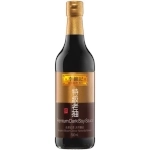
Soy sauce is a basic building block of saltiness and umami in Asian cuisine. Precisely because of this, it is deceptive: it’s easy to add "just a little" to a wok, soup, or dip and overlook that common soy sauce can be a problem for gluten-free diets.
A practical kitchen rule: if you cook gluten-free, only choose variants where you have clear gluten-free certainty (typically a product labeled gluten-free). For basic orientation, a soy sauce guide can help, soy sauces – but always the specific composition and labeling decide.
Sauces with added wheat: typically thick, "dark" and strong
The second common trap is sauces that have body and a stickier texture (often used in quick wok dishes or as a final "glaze"). With these types, there is a risk that they may be thickened or based on an ingredient containing gluten. In home practice, this often includes various regional sauces and pastes – in a gluten-free pantry it is therefore worth watching categories that people consider "innocent" seasoning, for example hoisin sauces.
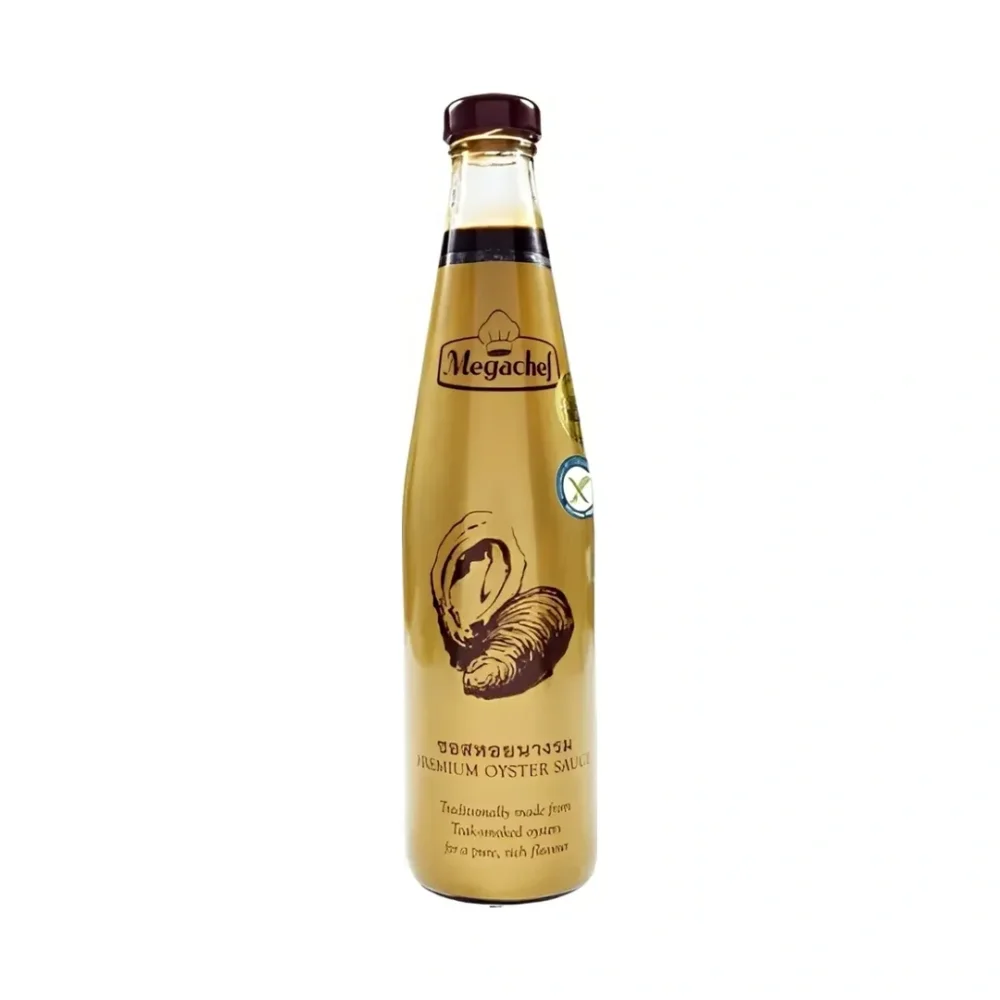
For oyster sauce, the rule is simple: don’t rely on "oyster" automatically meaning gluten-free. It’s safer to choose a variant that is specifically declared gluten-free – a typical example is Megachef Premium Gluten-Free Oyster Sauce 500 ml.
Barley malt and “malt” ingredients
Another risky area that may appear especially in seasonings is malt ingredients – typically from barley. It’s not that you will "always" find them in every sauce, but they can appear where you wouldn’t expect. If you are building gluten-free Asian cooking, it’s useful to get into the habit of reading labels even on products you consider minor seasonings.
Cross-contact: when the sauce is okay but the operation is not
⚠️ The Asian cooking style (wok stations, shared pans, ladles, sauce dispensers, shared frying oils) is a typical place where cross-contactoccurs. The most common risks:
- shared wok / pan,
- shared frying oil,
- same ladle for multiple sauces,
- same cutting board, tongs, stirrer,
- noodles cooked in the same water,
- toppings served with one utensil.
At home, the solution is usually easier than at street food or in a restaurant: you can reserve clean utensils, your own strainer, and your own cooking water for noodles.
Noodles: which types are problematic and how to choose more safely
"Noodles" are not one thing. In the Asian context, it is most practical to distinguish noodles by main ingredient – which determines texture and whether they may be suitable for gluten-free cooking.
Wheat noodles: ramen, udon, and a range of wok noodles
Wheat noodles tend to be elastic, denser, and withstand stirring and longer stays in broth well. This includes, for example, ramen (wheat noodles, typically distinct also due to an alkaline component called kansui) and udon (thick wheat noodles). From a gluten-free perspective, these are usually the first noodles you have to watch out for.
Rice noodles: the most common gluten-free "working" choice
Rice noodles are key for many Southeast Asian dishes – for example, Vietnamese soups and bowls (phở, bún) or Thai pad thai. For gluten-free cooking, they are often one of the easiest routes, if free from wheat additives.
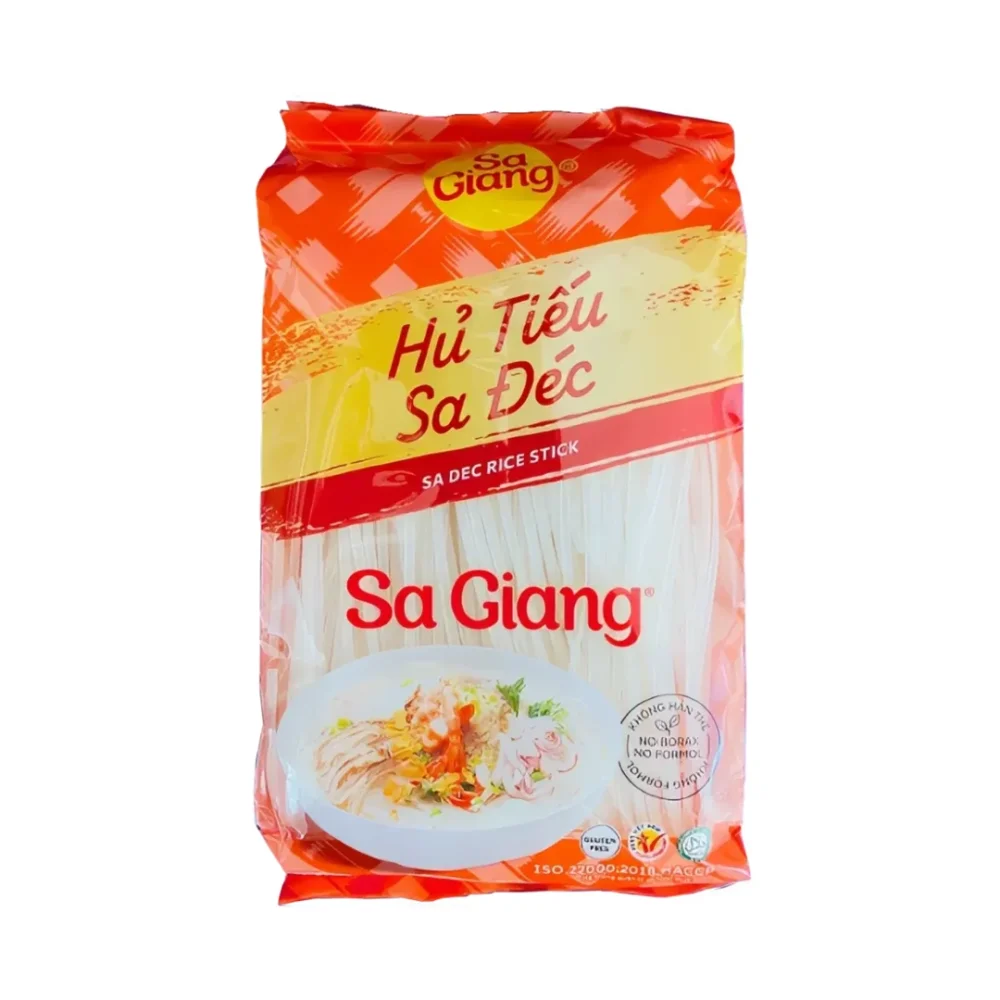
As a universal home starter, noodles combining rice flour and starch for more elastic texture work well, for example, Sagiang Tapioca Rice Noodles 400 g (suitable for wok and soups).
Buckwheat noodles (soba): watch the ratio of buckwheat to wheat
Soba have their own earthy flavor, but for some types, it is essential for gluten-free cooking that the word "soba" itself does not indicate how much buckwheat and how much wheat is in the noodles. If you choose them for buckwheat, you need to read the ingredients – and if you choose them for gluten-free, even more so.
Starch and “glass” noodles
Starch noodles (from various starches) tend to be smooth, elastic to "glassy" after cooking. They behave differently than flour noodles – they are often great where you want a distinct texture and a lighter mouthfeel. Just like with rice noodles, specific composition and production matter.
Konjac and other special varieties
Besides classic "flour" and rice types, there are special varieties (like konjac). They have different properties and typical uses – and in gluten-free cooking, they sometimes get used precisely because they are not based on wheat flour. Again, sticking to specific composition is needed.
How to choose and use sauces and noodles in practice (soup, wok, cold noodles)
The most practical is first to clarify what type of noodle dish you want to cook. In Asian practice, it often divides into four worlds: broth bowls, wok dishes, dry/mixed noodles, and cold noodles. Each world accepts different noodles and different treatment.
1) Noodle soup and broth bowl
- Noodle choice: look for noodles that maintain their shape in hot broth. Rice noodles are typical for phở and bún; some glass noodles may also work in lighter broths.
- Common mistake: overcooking. Noodles continue to "finish" in broth, so it’s better to prepare them a bit firmer than you would eat them alone.
2) Stir-fry / wok noodles
- Noodle choice: for the pan, you need noodles that withstand stirring, fat, and sauce. Broad rice noodles or some glass noodles work (if you want lighter texture). For gluten-free cooking, it’s crucial to avoid classic wheat wok noodles.
- Timing: for the wok, it’s essential that noodles are not overcooked before being put in the pan. If overcooked in water, they easily fall apart in the pan.
Guidance for seasoning one portion of wok noodles (take as a start, not dogma): start with a smaller amount, stir, and adjust by teaspoons.
- 1-2 tablespoons of safe (gluten-free verified) "soy" salty component,
- 1 tablespoon of sauce that adds umami and body (typically oyster sauce; for gluten-free variant, you have certainty with clearly declared product),
- adjust acidity and freshness at the end (so the dish is not flat).
3) Cold and seasonal noodles
- Noodle choice: noodles that hold texture even after cooling are suitable.
- Technique: After cooking or soaking, it is often practical to rinse the noodles and drain them well, so they don't turn into a sticky mass.
How to recognize "better" noodles (regardless of price)
- clearly stated composition without unnecessary confusion,
- a reasonably short list of ingredients,
- good texture after cooking (not instant mush),
- ability to hold shape even after a short stay in sauce or broth.
Common mistakes and warnings (and how to quickly detect them)
"Asian cuisine is automatically gluten-free."
It is not. The basic ingredients can often be naturally gluten-free, but the problem often lies in sauces and preparation technology.
"If it's made from rice, it is always safe."
Not necessarily. Even rice products can have additives, may be flavored with problematic sauces, or contaminated.
"Tamari = always gluten-free."
No. The safe variant is only the one where you have clear gluten-free certainty (typically a product labeled gluten-free).
"Sushi is automatically gluten-free."
It is not. The problem can be in soy sauce, marinades, some ingredient substitutes, or in the operation.
"Just avoid bread and wheat noodles."
That is not enough. Sauces and pastes and cross-contact (shared utensils, water for noodles, frying oil) also create a significant problem.
A quick control question that often saves mistakes: "Is the risk in the ingredient itself, in the sauce, or in contact during preparation?" Once you answer it, you usually know exactly what to watch for.
What to take away from the article
- The biggest gluten traps in Asian cooking are common soy sauce, wheat noodles and some sauces with added wheat or malt ingredients.
- "Wheat-free" is not the same as "gluten-free" – rely on clear gluten-free certainty.
- For noodles, orient yourself according to the main ingredient (wheat vs. rice vs. starch) and whether you want them for broth, wok, or cold dishes.
- For soba noodles, don't just consider the name – the important thing is the ratio of buckwheat to wheat.
- Cross-contact is a real risk: shared wok, oil, ladles, water for noodles. At home, simple discipline and separate utensils help.

Read next
If you want to explore this topic further, continue with these related blog guides and articles:
