


 Česky (CZK)
 Slovensky (EUR)
 Deutsch (EUR)
 Austria
 Belgium
 Bulgaria
 Croatia
 Denmark
 Estonia
 Finland
 France
 Germany
 Greece
 Hungary
 Italy
Italy Latvia
 Lithuania
 Luxembourg
 Netherlands
 Poland
 Portugal
 Romania
 Slovenia
 Spain
Spain Sweden










How gyoza, wonton, bao and mandu differ (and why it matters)
Gyoza, wonton, bao and mandu are often lumped together as “Asian dumplings.” But each of these names actually promises a slightly different experience: a different type of wrapper, a different texture, and often a different role in a meal (pan-fried, steamed, in soup, dim sum…). When you know what to expect, it’s much easier to choose the right style, the right preparation, and the appropriate seasoning.
Dumplings and knedlíčky: what they have in common and why they matter so much
“Dumpling” isn’t one specific thing. It’s a broad family of dishes where dough, a wrapper, or a starchy layer hides a filling (or forms a bite on its own without a filling). In different parts of Asia the ingredients, shape, wrapper thickness, cooking method and even when and how dumplings are eaten – as a quick lunch, street food, part of dim sum service, or as an addition to broth.
That’s exactly why dumplings are one of the best “gateways” into Asian cuisine:
- They’re practical – portions are clear, they travel and freeze well.
- They’re social – often prepared by several people at the table.
- They’re festive – in various regions they’re tied to celebrations and family gatherings.
- They’re extremely versatile – the same “core” can carry meat, vegetables, tofu, mushrooms, shrimp, chives, ginger, kimchi or sweet fillings.
Quick orientation by wrapper: thin pouch vs. leavened bao
The quickest practical distinction is based on what exactly makes up the “wrapper” and what result you expect from it:
- Thin wheat dough wrapper with a filling – typically pouches you can boil, steam, or pan-fry. This includes the family that contains jiaozi, gyoza and mandu.
- Soup and broth pouches – dumplings that belong “at home” in broth. Here you most often encounter the world of wontons.
- Yeasted or leavened buns and filled rolls – soft, fluffy and completely different to bite into. That’s the simplest way to categorize bao in your head.
When recipes or finished products change flours and starches, it’s not just about “ingredients.” These components often determine whether the result will be elastic, more fragile, translucent, glassy or, on the contrary, fluffy.
Gyoza, wonton, bao and mandu: how they differ (and what to expect from them)
Gyoza: the Japanese branch related to Chinese jiaozi
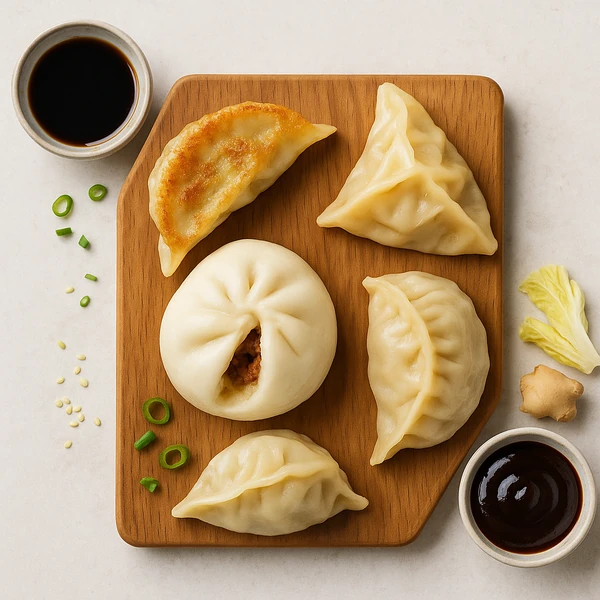
Gyoza are the Japanese variant related to Chinese jiaozi. For cooking practice it’s useful to know above all that gyoza are often associated with the yaki-gyoza, meaning pouches prepared by pan-frying. If you expect a contrast of textures (something like “juicy center + more pronounced surface”), you’ll typically head in this direction.
Mandu: the Korean family of filled pouches
Mandu is the Korean term for dumplings that (similar to jiaozi and gyoza) belong to the world of thin filled pouches. Practically, this means you’ll usually decide by the same logic: do you want them softer (boiled), delicate (steamed), or with a stronger surface contrast (pan-fried)?
Wontons: when a dumpling needs to work in broth
Wonton is best understood mainly as the answer to the situation “I want a dumpling in soup” – that is as a soup/broth pouch. That’s a different context than pan-fried pouches: here it’s not about a crispy bottom, but about how the wrapper and filling behave in liquid and how they fit into the broth.
Bao: soft leavened buns (and why they’re talked about in dim sum too)
Bao in the common understanding is best grasped as leavened (yeasted) buns and filled rolls. The texture is soft, fluffy and it’s a completely different discipline from thin pouches – bao often functions as a more substantial “bite” on its own, not just as a few pieces to dip.
In the dim sum world it’s also good to keep one important thing in mind: dim sum is not a single dumpling, but a style of dining and serving small Cantonese dishes. Still, for many people the entry into dim sum works precisely through items whose name includes “bao” – for example xiao long bao and char siu bao – alongside other classics like har gow or siu mai.
How to choose the right type at home: cooking methods, textures and seasoning
1) Start with the question: do I want a crispy contrast, delicate steamed texture, or a soup?
With thin pouches (the jiaozi/gyoza/mandu family) the practical decision often comes down to what texture you want when you bite into them:
- Boiling in water: the result is usually softer and more “about the filling.”
- Pan-frying: expect a more pronounced surface contrast and a juicy center.
- Steam: you are aiming for a finer, cleaner, more tender impression.
With wontons, on the other hand, think to yourself: is it supposed to be part of the broth? Then it makes sense to look for a style that is natural for a soup context.
And with bao the basic decision is: I want a soft leavened bun. It no longer makes sense to expect a “little pouch like gyoza,” because the wrapper and the role in the dish are different.
2) Dips and seasoning: why soy sauce and vinegar often go together
Thin dumplings like jiaozi (and their relatives) tolerate stronger dips well – in practice you often work with combinations based on soy sauce and vinegar, possibly with chili and garlic. If you want to start simply, use one soy sauce and one acidic component as your “base,” taste and adjust according to whether you miss saltiness, acidity or depth.
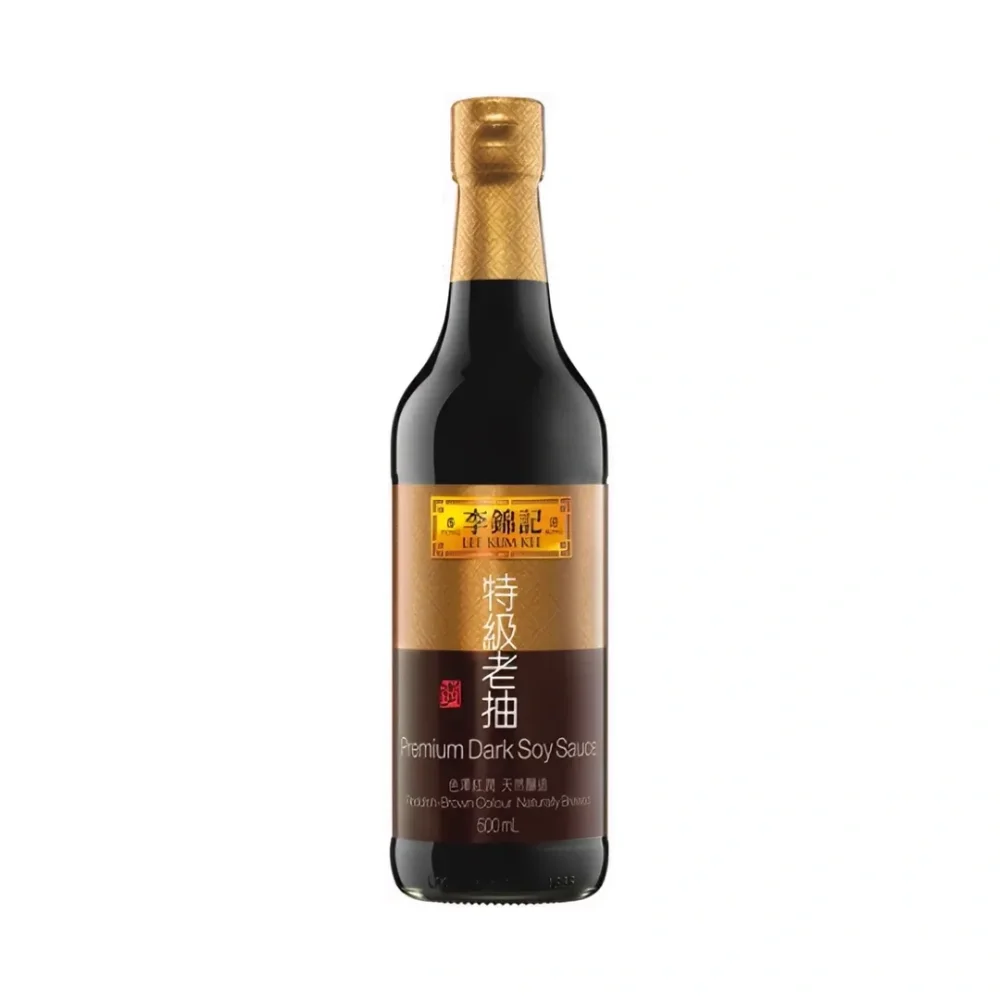
For fuller flavor and richer color, Lee Kum Kee dark soy sauce can be useful in the kitchen (it’s also good in sauces and marinades if you make dumplings as part of a larger meal).
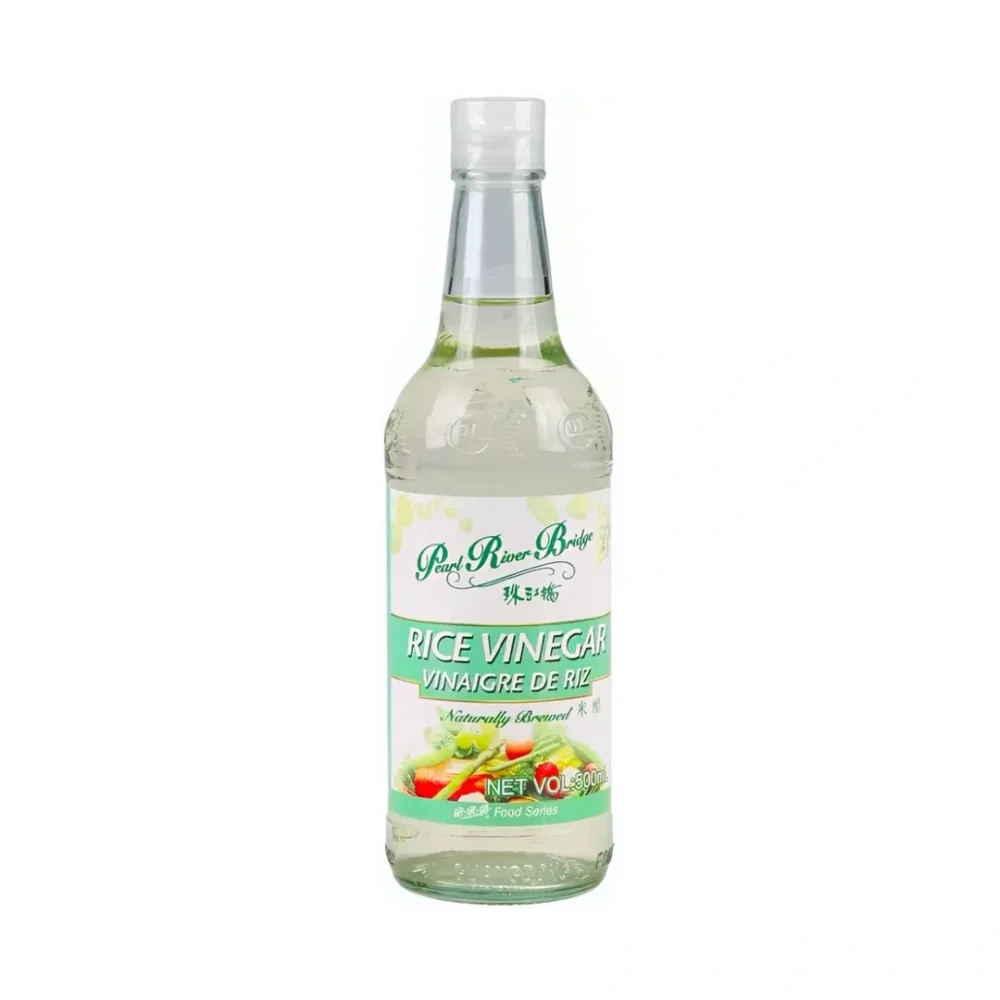
Lee Kum Kee dark soy sauce OPEN PRODUCTA milder acidic line can be handled by P.R.B. rice vinegar, which enhances flavor without unnecessary sharpness.
P.R.B. rice vinegar OPEN PRODUCT
If, instead of an “acidic” dip, you’re looking for a sweet-salty seasoning, there are thicker sauces intended for dipping and glazing – a typical example is hoisin sauce.
3) When you encounter flours and starches: ask what texture you want
When making wrappers at home (or reading a recipe), it helps to think functionally: what exactly should the ingredient do? In Asian cooking you often care not only about flavor but also about structure.
- Do I want thickening and shine? Starch often helps.
- Do I want elasticity and a chewy texture? Glutinous rice flour or certain starches often help.
- Do I want a delicate coating and light crispness? Sometimes a combination of starch and flour works.
- Do I want a translucent/glassy result? Specific starches often come into play.
💡 Common mistakes and confusions: what to watch out for
- “They’re all the same dumplings.” They aren’t. Even just the division into thin wrappers, soup dumplings and leavened bao will fundamentally change your expectations and how to prepare them.
- “Bao = always the same.” In practice you’ll encounter “bao” under various names (including dim sum classics). For orientation, the most important thing is not to be misled by the word and always look at whether it’s a leavened bun or a pouch.
- “Dim sum is a type of dumpling.” Dim sum is a style of dining and serving. Dumplings play a key role in it, but dim sum is not only about them.
- “Glutinous = gluten.” With glutinous rice flour, the word “glutinous” does not mean gluten. It’s rice without gluten that becomes very sticky when cooked – and that’s what creates the distinctive texture.
What to take away from the article
- Gyoza and mandu should be imagined as relatives in the family of thin filled wrappers, where much is decided by the cooking method (water/steam/pan) and the resulting texture.
- Wonton is strong mainly in the context of soup and broth – it’s a different use than “pan dumplings.”
- Bao is best understood for general orientation as soft leavened buns/rolls – a completely different kind of bite than a thin wrapper.
- If you’re not sure, return to the two questions: what kind of dough/packaging I expect (thin vs. leavened) and what preparation I want (pan/steam/water/stock).

Read next
If you want to explore this topic further, continue with these related blog guides and articles:
