


 Česky (CZK)
 Slovensky (EUR)
 Deutsch (EUR)
 Austria
 Belgium
 Bulgaria
 Croatia
 Denmark
 Estonia
 Finland
 France
 Germany
 Greece
 Hungary
 Italy
Italy Latvia
 Lithuania
 Luxembourg
 Netherlands
 Poland
 Portugal
 Romania
 Slovenia
 Spain
Spain Sweden










Vegetarian Asian cuisine: how to build flavor without meat (and without disappointment)
Vegetarian (and often vegan) Asian cuisine is not a 'deprived' version of cooking with meat. In many parts of Asia, it has its own traditions, techniques, and flavor logics – and good food here is not based on substitutes, but on umami, fermentation, texture, spices, herbs, and smart bases. The article provides an orientation in main styles, solid building blocks (tofu, tempeh, legumes), a practical guide on how to start at home, and what to watch out for in 'hidden non-animal' sauces and broths.
🌶️ What is really typical for vegetarian and vegan Asian cooking
The biggest difference compared to common 'European' thinking is not that meat is simply omitted. The way flavor and the feeling of food are built changes. Instead of one dominant base (such as meat broth), the depth often consists of several smaller but distinct elements.
For vegetarian and vegan Asian cooking, these principles are typical:
- Flavor is not built just through meat or bone broth – fermented and aromatic bases take on a big role.
- Fermentation, mushrooms, seaweed, legumes, tofu, tempeh, and spices are not 'add-ons' but the backbone of flavor.
- Texture is as important as flavor – crunchy, tender, elastic, juicy elements are combined intentionally.
- Many dishes are naturally plant-based – based on vegetables, legumes, rice, or noodles, not on 'meat alternatives'.
- Vegan Asian food can be umami and full-bodied even without milk, cream, or cheese.
In practice, it makes more sense not to think 'what will I replace the meat with,' but to compose the dish from roles that repeat across cuisines:
- flavor carrier (typically a fermented/umami component),
- texture carrier (tofu/tempeh, mushrooms, crunchy vegetables),
- proper fat and aroma (an aromatic component that 'carries' spices),
- acidity or freshness (something that opens up the flavor),
- final seasoning (a quick sauce, spiciness, crunchy element).
Once you understand this logic, vegetarian Asian cooking stops being a struggle 'without meat' and starts making sense as an independent style.
Why it is possible to cook excellently without meat in Asia
Vegetarian traditions in Asia are not a modern invention. In many cuisines, they have existed long-term and often rest on respect for ingredients, seasonality, and thoughtful work with broth, seasoning, and food structure.
The practical reason why it works at home is simple: many common Asian dishes are by nature built on a combination of rice or noodles and strong seasoning, so 'depth' does not have to come from meat. Moreover, when you deliberately work with fermented bases, mushrooms, seaweed, legumes, tofu, and spices, you can achieve a full result even in a purely plant-based version.
At the same time, it is good to consider that vegetarian and vegan versions are not always the same: some cuisines are very natural for vegetarians but have 'hidden' barriers in sauces and broths for vegans.
Vegetarian and vegan roots in Asia: where plant-based cooking has the deepest tradition
Japan and shojin ryori (Buddhist cuisine)
The Japanese Buddhist tradition created shojin ryori – a vegetarian cuisine based on seasonal ingredients, tofu, vegetables, mushrooms, and seaweed. It is characterized by careful work with broth, texture, and the use of ingredients 'without waste.' Shojin ryori is a good reminder that food can feel profound, calm, and complete even without meat and fish.
At the same time, an important caution applies: common Japanese cuisine often relies on dashi. Vegetarian versions can be relatively accessible, but for vegan versions, you need to be selective and monitor the bases.
Korea and temple food
In Korea, a significant reference point is temple food – cuisine associated with Buddhist temples. It is vegetarian and often vegan in practice. Typically omits meat and fish, as well as the so-called 'five pungent vegetables.' Yet, it is not flavor-poor: it rests on jang (fermented bases), vegetables, mushrooms, tofu, and precise seasoning.
However, with 'common' Korean cuisine, it pays off to watch the difference between temple food and what is used in street food and home cooking: sauces and fermented bases can be tricky for vegans.
India: a strong vegetarian tradition, but not automatically 'animal-free'
India has one of the strongest vegetarian traditions in the world. At the same time, it’s important not to say 'Indian = automatically vegetarian.' And if you aim for a vegan version, it’s worth carefully watching dairy products and ghee (clarified butter), which are common in many Indian styles.
Southeast Asia and island world: lightness, herbs, but watch out for sauces
Vietnam and Thailand are excellent for light plant-based cooking, but for vegan versions, you need to watch out for fish sauce and also curry pastes, which may contain animal ingredients.
Indonesia is interesting due to the strong role of tempeh, tofu, rice, and vegetable dishes. Even here, there are 'hidden' traps – typically in sambals and fermented fish bases. Malaysia and Singapore are great for tofu, noodles, rice, and street food inspiration, but the vegan version often requires more thorough checking of sauces.
Tofu, tempeh and other solid bases: why they work (and how to understand them)
In plant-based Asian cuisine, the family of soy productsplays a big role. It’s useful not to treat soy as one interchangeable category because products with completely different kitchen functions come from the same raw material – from mild to intensely fermented.
A practical classification that helps with selection and cooking:
- fresh and minimally processed – for example edamame, soy milk,
- coagulated and pressed – tofu and its variants,
- fermented firm products – tempeh, natto, fermented tofu,
- fermented pastes and seasonings – miso and related pastes.
Tofu is not a 'meat substitute.' It is a carrier of flavor and texture work
Tofu is made from soy milk that is coagulated similarly to milk in cheese production. Then it is pressed into blocks – and depending on water content and processing methods, different textures arise. Its strength is not that it tastes extremely strong on its own but that it excellently absorbs the flavor of surrounding ingredients: marinades, sauces, broth, or spices.
One simple rule will save you a lot of disappointment: the firmer the tofu, the better it suits pan-frying, grilling, and baking. And vice versa: the softer the tofu, the better it works in soups, delicate stews, cold cuisine, dips, dressings, or desserts. Therefore, it makes sense to watch whether the tofu type is silken / soft / firm / extra firm – this primarily determines the outcome.
Tempeh: fermented, firmer, and more flavorful
Tempeh is another key 'building block' – compared to tofu, it is usually firmer, fermented, and more flavor-intense. In the kitchen, it is often used where you want protein with a more specific character and stronger texture.
How to recognize quality soy products (quick check)
Since soy products come in different forms, it makes sense to watch slightly different signals for each. Generally, it helps:
- For tofu: clearly identified type and texture, clean scent without sour notes, undamaged packaging, and clear liquid.
- For tempeh: compact block with well-connected beans, pleasant nutty to fermented scent (not musty), no sliminess and no suspicious coloring other than common white mycelium.
- For miso: color and type matching intended use, composition without unnecessary substitutes, pleasant fermented scent (not sharp 'chemical' saltiness).
- For soy milk: distinguishing sweetened from unsweetened variants; typically unflavored is best for cooking.
How to start at home: choose an entry cuisine and build flavor functionally
One sentence you only need to say once: "Asia" is not one cuisine. If you want to cook well and tasty vegetarian Asian-style, it is much more practical to choose your entry door based on what you like and how you want to cook.
1) Start with a style, not a list of random sauces
When choosing the first cuisine, it helps to clarify: what flavors you already like, how much time you want to spend cooking, and how complex a pantry you want to build. Practically, this approach often works:
- Cleaner and clearer flavors – Japanese-oriented cooking (often very good vegetarian; vegan requires watching dashi).
- Quick pan / wok meals – Chinese-oriented entry (teaches you a lot about ingredient order, cutting, and temperature management).
- Distinct, sweet-savory and spicier flavors – Korea (possible vegan but watch fermented bases and sauces; temple food is a great reference).
- Freshness, herbs, and balancing acidity – Vietnam or Thailand (for vegan versions, key to watch fish sauce and curry pastes).
- Spices, stewing, and richer dishes – India (very strong vegetarian; for vegan watch dairy and ghee).
2) Learn to recognize 'hidden' non-animal obstacles
One of the most common mistakes is thinking 'if it’s vegetable, it’s vegan.' The problem in practice is what’s in the sauce or broth– typical 'checkpoints' repeat in various cuisines:
- Japan– dashi as a common base for everyday dishes.
- Vietnam/Thailand– fish sauce and some curry pastes.
- Indonesia– some sambals and fermented fish bases.
- India– dairy products and ghee.
- Korea– the difference between temple food and regular cuisine; watch fermented bases (jang) and generally sauces.
Practical tip: instead of 'using fewer sauces,' it’s often better to choose sauces precisely based on what you want to cook (and what diet you follow).
3) Build your home Asian pantry functionally: umami, acidity, fat, texture
An Asian pantry is not a race for the biggest shelf. The purpose is to have functional basics, thanks to which you can repeatedly compose dishes with a clear character. For vegetarian cooking, it is usually most important to be able to work with the pair saltiness/umami and texture – because these roles are often fulfilled by meat and broth in other cuisines.
Specific examples of texture that make a difference at home even without “big cooking”:
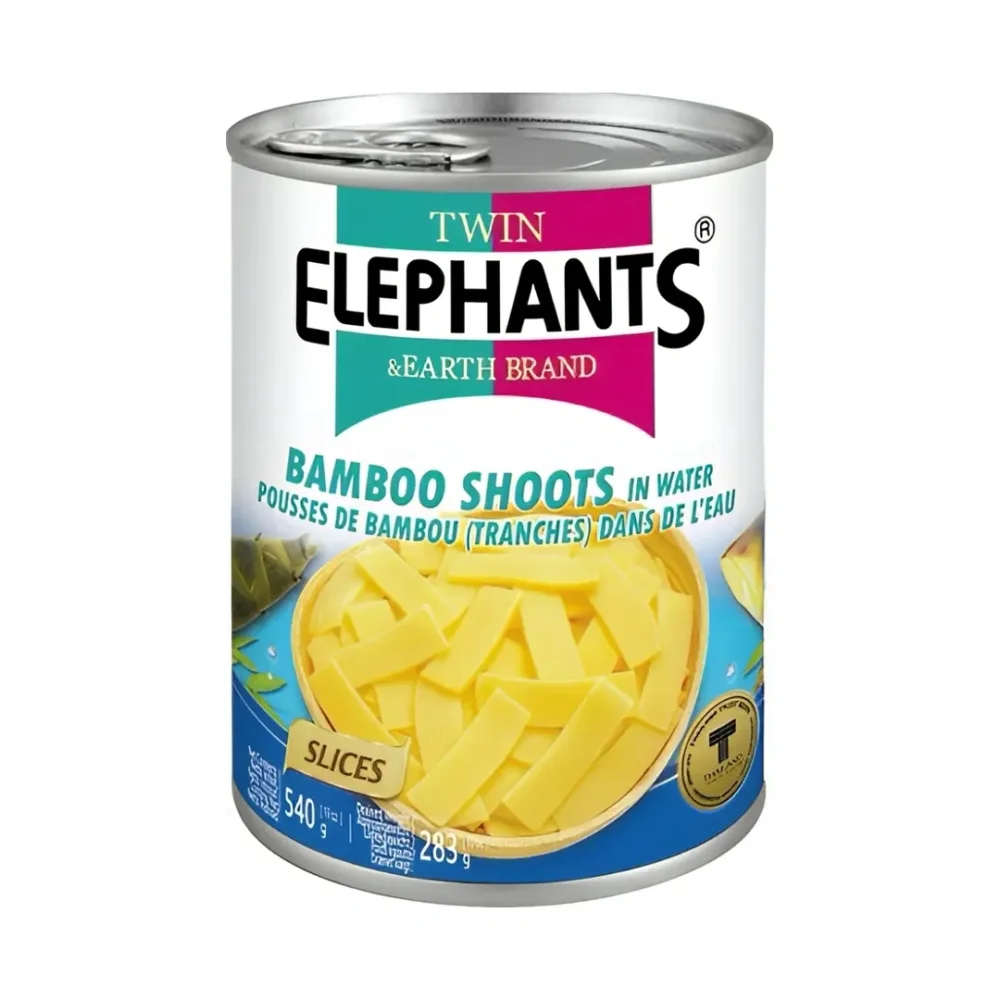
- crispy vegetables (for example, bamboo shoots in stir-fry dishes) – a practical example is Twin Elephants sliced bamboo shoots, which only need to be briefly heated and added to woks, soups, or fried rice,
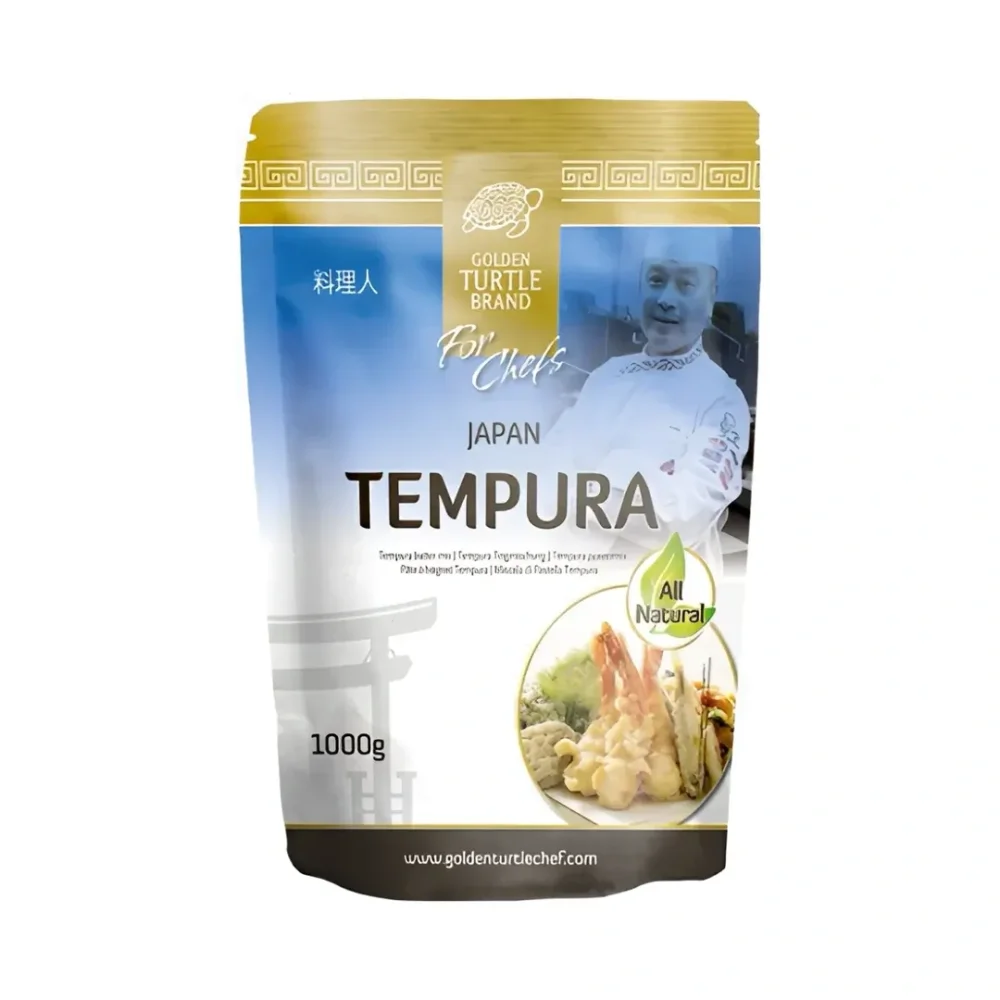
- crispy coating on vegetables – tempura is a technique that can turn ordinary vegetables into a “main course” thanks to its structure; for a home start, a ready-made mix like Golden Turtle Chef Tempura,
- smooth, slightly glossy sauce, which coats vegetables and tofu – a neutral-tasting starch is often used for this; a practical example is Windmill tapioca starch,
- thickening and doughs (dumplings, batters, desserts) – a basic universal ingredient is rice flour, for example Windmill rice flour; and if you want to work with a specific elastic texture and color in desserts or dumplings, there are variants like Thai Dancer black sticky rice flour.
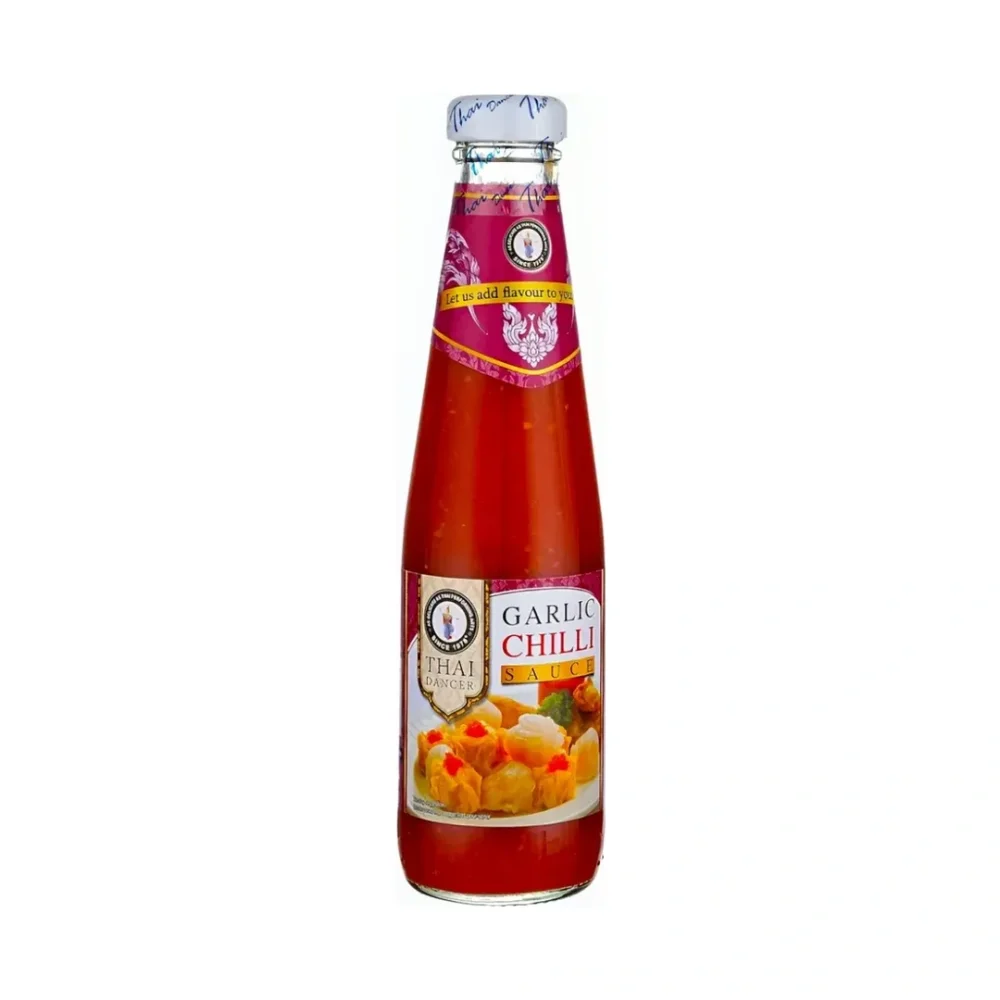
To prevent a vegetarian dish from feeling “flat,” one last step often helps: final table seasoning (spiciness, garlic, sweet-spicy contrast). If you want a quick seasoning without further cooking, something like Thai Dancer garlic chili sauce can be used as a dip or the finishing touch on rice or noodles.
The most common misconceptions about vegetarian and vegan Asia (and how to avoid them)
- “If it’s vegetable, it’s vegan.” No. Often the deciding factor is the sauce or broth. For a vegan version, it’s good to keep typical “checkpoints” in mind for the given cuisine (dashi, fish sauce, curry pastes, fermented fish bases, ghee, dairy products).
- “Tofu is just a boring meat substitute.” No. Tofu is an independent ingredient with different textures and significant cultural meaning. When you choose the right type (silken vs. firm) and use it in the right role, it is one of the most versatile carriers of flavor.
- “Vegan Asian cuisine will be tasteless.” On the contrary. If well constructed, it is very aromatic and umami – precisely thanks to fermented bases, spices, herbs, mushrooms, and attention to texture.
- “Just use less sauce.” Often the opposite applies: it is necessary to choose sauces more precisely, not use fewer. If you remove the “backbone” of flavor, the dish flattens out.
- “All Asian cuisines are equally easy for vegans.” They are not. Each has different hidden pitfalls – that’s why it helps to first choose one cuisine and learn to read it in depth.
What to take away from the article
- Vegetarian (and vegan) Asian cuisine is not based on a single meat substitute, but on a combination of umami, fermentation, texture, spices, and smart bases.
- The most accessible way is to choose an entry cuisine based on style (clean flavors, wok, spicy, fresh, spicy stewing) and gradually build functional basics.
- In the vegan version, watch out for “invisible” ingredients: the problem is often not the vegetables, but the sauces and broths (dashi, fish sauce, curry pastes, fermented fish bases, ghee, dairy products).
- Tofu and tempeh are solid pillars – but they mainly work when you choose the right texture for the type of cooking and give them the role of a flavor carrier.
- Texture (crispiness, elasticity, smooth sauce) is often as important in plant-based Asian food as seasoning.

Read next
If you want to explore this topic further, continue with these related blog guides and articles:
