Česky (CZK)
 Slovensky (EUR)
 Deutsch (EUR)
 Austria
 Belgium
 Bulgaria
 Croatia
 Denmark
 Estonia
 Finland
 France
 Germany
 Greece
 Hungary
 Italy
Italy Latvia
 Lithuania
 Luxembourg
 Netherlands
 Poland
 Portugal
 Romania
 Slovenia
 Spain
Spain Sweden










🍡 Mochi: the chewy Japanese treat that does sweet and savory
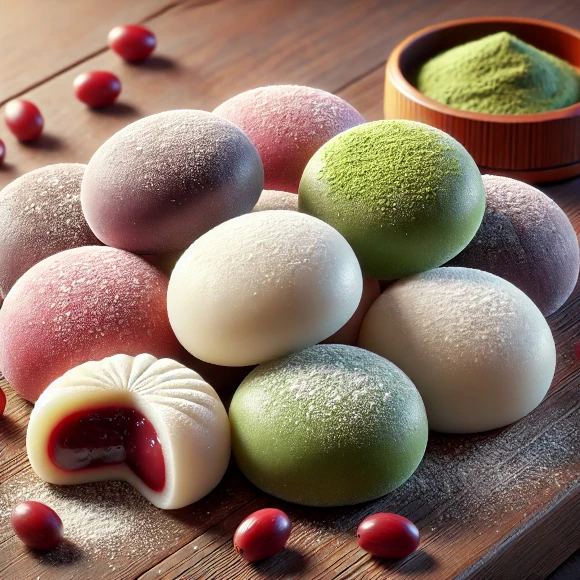
Mochi feels a little surprising on the first bite and that’s exactly why people love it: soft, elastic, gently sticky and yet mild in flavor. In Japan it’s tied to celebrations and home cooking, but it’s also a practical pantry item. When you want a quick dessert, an original snack, or a playful side, mochi gets you there with very little effort.
Asian ingredients and mochi treats for cooking can be found at Asian Food Shop
💡 Tip: Mochi is subtle, so the filling and toppings matter most. For a bigger impact, go for sesame, tea flavors, or a sweet-salty glaze
🕰️ History and origins
Mochi is rooted in Japanese tradition. It’s made from glutinous rice and was historically prepared by pounding steamed rice into a smooth, stretchy mass. It’s especially associated with New Year celebrations, but in everyday life it shows up all year long in different forms, from soups to sweets.
That mix of a simple ingredient and a festive context is what turned mochi into food with a story. It’s not just a candy, it’s a texture, a ritual, and a way of serving.
🧪 How it’s made, types, and ingredients
The base is always similar: glutinous rice or sticky rice flour, water, and often a little sugar. The biggest differences come from the method and what’s inside.
The most common mochi styles you’ll run into
- Traditional pounded mochi is the classic, very chewy version, often shaped into small cakes or blocks
- Gyuhi mochi from flour is the easy homemade route without pounding, perfect for filled mochi like daifuku
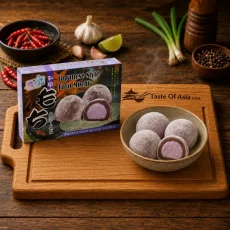
- Filled mochi cakes are ready-to-eat pieces with sweet filling, made for instant dessert moments
- Pan-toasted mochi is the savory route, lightly crisp on the outside and soft in the middle
If you’re choosing ready-made options, it’s convenient to browse the Mochi category so you can compare flavors, sizes, and formats in one place.
👃 Flavor profile
- 🍚 mild, lightly rice-like and neutral, the flavor comes from filling and toppings
- 🫧 elastic, springy, chewy, sometimes gently sticky
- 🍬 in sweet versions, it feels round and creamy depending on the filling
- 🧂 in savory versions, it takes soy sauce, sesame, and sweet-salty glazes beautifully
✅ Tip: If mochi tastes too gentle, add contrast. Crunchy sesame or a pinch of salt makes a big difference
🍳 How to use mochi in the kitchen
🍵 A no-effort snack and dessert
Ready-made mochi cakes are perfect as a quick sweet finish. They pair naturally with tea. For a Japanese-style moment, serve mochi with something from Teas and let it sit at room temperature for a few minutes so the texture softens.
🧁 Desserts that look fancy but stay simple
Mochi works great with fruit, sesame, tea-forward flavors, and light creams. For an easy plated dessert, add something crunchy and something creamy and let mochi be the chewy middle that ties everything together.
🔥 Savory, warm mochi
Mochi can go savory too: toast it in a dry pan until lightly browned, then brush with a sweet-salty glaze and sprinkle sesame. In savory dishes, keeping Soy sauces nearby helps because mochi itself is mild and needs a flavor frame.
🫶 Health notes
Think of mochi primarily as an energy food. It’s mostly rice-based carbohydrates, so it’s great for quick fuel. For sweet filled mochi, portion size matters and it’s best treated as dessert rather than mindless snacking.
In cooking, mochi can also help indirectly: the chewy texture often feels satisfying in smaller portions, and you can build flavor with toppings instead of simply adding more sugar.
✅ How to choose the right mochi
- Ready-made vs homemade ready-made is fastest, homemade gives you control over sweetness and filling
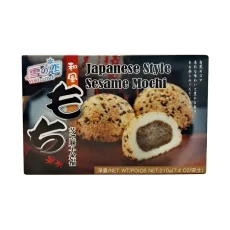
- Filling is key red bean is classic, green tea leans clean and tea-forward, sesame is nutty and deeper
- Portion size smaller pieces suit tea time, larger packs are great for sharing
- Texture mochi should be soft and springy, if it feels firm from the cold, let it warm up
🛒 Our picks
- Windmill Flour of sticky rice 400 g is a great base for homemade gyuhi mochi when you want full control over sweetness and filling
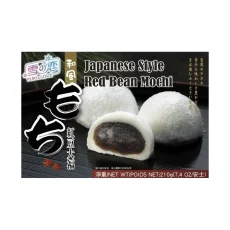
- Yuki & Love Mochi cakes Red beans 210 g delivers the classic red bean vibe and works as a quick tea-time treat
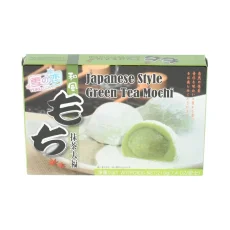
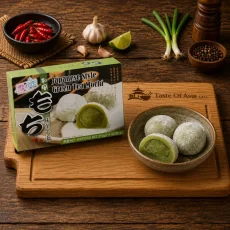
- Yuki&Love Mochi cookies Green tea 210 g is a great choice if you want a tea-forward profile with a less obvious sweetness
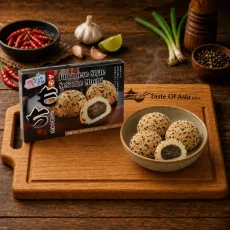
🍡 Recipe: Japanese gyuhi mochi with sesame filling
Soft mochi you can make from sticky rice flour without any pounding. The sesame filling is pleasantly nutty and a pinch of salt makes it taste more grown-up and balanced.
Ingredients
- sticky rice flour 200 g
- sugar 60 g
- water 180 to 200 ml depending on the flour
- starch 2 to 3 tbsp for dusting
- tahini 2 heaped tbsp
- black sesame 1 tbsp
- sugar 1 to 2 tbsp to taste
- salt a small pinch
- soy sauce a few drops optional for a sweet-salty twist
Method
- Mix tahini, black sesame, sugar and a pinch of salt. Chill for 10 minutes so it firms up.
- In another bowl, mix sticky rice flour with sugar. Add water and stir until smooth and lump-free.
- Cover and microwave in short 30 to 45 second bursts. Stir after each burst. After about 2 to 3 minutes total, the dough should be glossy, thick and elastic.
- Dust the surface with starch. Transfer the hot dough onto the starch and lightly dust the top to prevent sticking.
- Divide into 8 to 10 pieces. Flatten each piece, add a teaspoon of filling, then pinch and seal into a ball.
- Rest for 5 minutes and serve. If you want a sweet-salty twist, add a few drops of soy sauce into the filling.
✅ Tip: For the smoothest mochi, work while the dough is still warm. Once it cools down, it gets firmer and harder to shape