

 Česky (CZK)
 Slovensky (EUR)
 Deutsch (EUR)
 Austria
 Belgium
 Bulgaria
 Croatia
 Denmark
 Estonia
 Finland
 France
 Germany
 Greece
 Hungary
 Italy
Italy Latvia
 Lithuania
 Luxembourg
 Netherlands
 Poland
 Portugal
 Romania
 Slovenia
 Spain
Spain Sweden










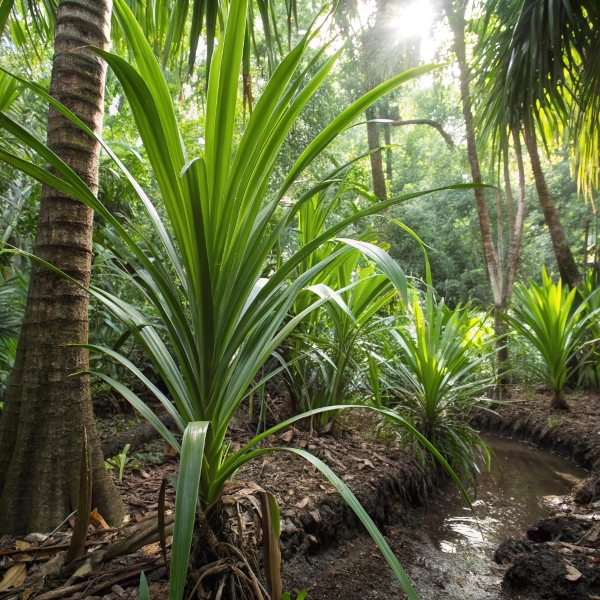
Pandan plant
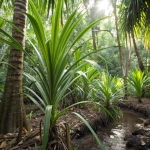
Pandan: The Asian Vanilla That Will Captivate Your Senses
If you have ever visited Southeast Asia, you must have noticed the heady, sweet, and slightly nutty aroma wafting from local bakeries and dessert stalls. This specific fragrance comes from Pandan (Pandanus amaryllifolius). This unassuming green plant is absolutely essential in Asian cuisine and is rightfully nicknamed "Asian Vanilla". But it’s not just about the smell – Pandan also gives dishes an iconic bright green color and numerous health benefits.
Pandan leaves have a long, blade-like shape and grow in clusters. They are not meant for direct consumption themselves, as they are tough and fibrous. Their magic is released only during cooking, steeping, or pressing, when they release their unique essential oils into the food.
📜 Origin and History
Pandan originates from the tropical regions of Southeast Asia, primarily Indonesia, Malaysia, Thailand, and Vietnam. Historically, it was used not only in cooking but also in households as a natural air freshener or insect repellent (especially for cockroaches). In Thai and Malay culture, Pandan leaves were symbols of hospitality and purity. Today, Pandan is popular worldwide, not only in desserts but also in modern mixology and haute cuisine.
🌿 Production and Processing
In the kitchen, Pandan is used in several forms:
- Fresh or frozen leaves: They are tied into knots and added to rice or soups for fragrance.
- Extract and essence: Obtained by pressing leaves with a little water. The result is a deep green liquid with concentrated flavor.
- Powder: Dried and ground leaves that serve as a natural colorant and flavoring.
👅 Taste and Culinary Use
Pandan's flavor is complex – a combination of vanilla, fresh-cut grass, nuts (coconut), and a subtle hint of flowers.
In Asian cuisine, it is primarily used:
- In desserts: It is the base for various puddings, cakes (e.g., the famous Pandan Chiffon Cake), and sweet rice dumplings.
- With rice and meat: It is often added to jasmine rice along with coconut milk. Also very popular is "Pandan Chicken" – chicken wrapped in Pandan leaves and fried.
- In drinks: Pandan tea is refreshing and naturally sweet.
✨ Health Benefits
- Calming effects: Helps with stress and anxiety.
- Digestion support: Relieves stomach cramps and bloating.
- Blood sugar regulation: Some studies suggest that Pandan extract may help lower glucose levels.
- Detoxification properties: Acts as a diuretic and helps the body get rid of toxins.
🛒 How to Choose the Right Product
If you don't have access to fresh leaves, the best choice is high-quality extracts or ready-made mixes that preserve the authentic aroma. We recommend trying these products from our shop:
Nang Fah Pandan Leaf Extract 400 ml
This liquid extract is ideal for home baking and dessert preparation. It has an intense green color and strong aroma that instantly transports your kitchen to exotic lands.
View in ShopLobo Thai Custard with Pandan flavour 120 g
A great choice for those who want to quickly prepare traditional Thai Pandan custard. Just mix with water or milk.
View in Shop👨🍳 Recipe: Thai Pandan Custard (Sangkhaya)
This sweet, silky custard is extremely popular in Thailand as a dip for fluffy white bread or as a filling for desserts.
Ingredients:
- 400 ml coconut milk
- 2 tbsp Nang Fah Pandan Leaf Extract
- 3 egg yolks
- 100 g sugar (preferably palm sugar)
- 1 tbsp corn starch
- Pinch of salt
Instructions:
- In a bowl, whisk egg yolks with sugar until combined.
- Add coconut milk and Pandan extract. Mix thoroughly until the mixture turns a beautiful green color.
- Pour the mixture into a saucepan and heat over low heat. Stir constantly so the yolks don't curdle.
- Dissolve corn starch in a little water and add to the saucepan.
- Cook until thickened (should have pudding consistency).
- Serve warm or cold with pieces of steamed bun or fresh fruit.

Recommended products2
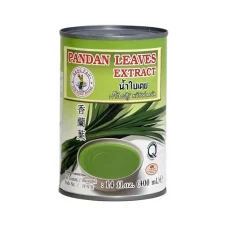
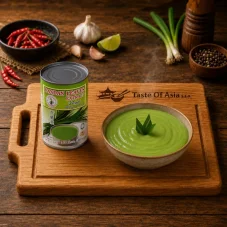
Nang Fah Pandan Leaf Extract 400 ml
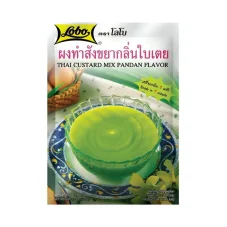
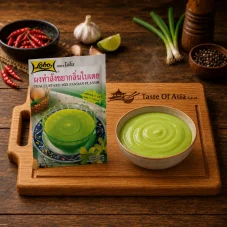


Lobo Thai Custard with Pandan flavour 120 g
Read next
If you want to continue with the same topic, here are more related articles to explore: