


 Česky (CZK)
 Slovensky (EUR)
 Deutsch (EUR)
 Austria
 Belgium
 Bulgaria
 Croatia
 Denmark
 Estonia
 Finland
 France
 Germany
 Greece
 Hungary
 Italy
Italy Latvia
 Lithuania
 Luxembourg
 Netherlands
 Poland
 Portugal
 Romania
 Slovenia
 Spain
Spain Sweden










How to choose noodles for soup, stir-fry, and salad (so they work even after cooking)
With Asian noodles, the most common disappointment doesn’t come from a “low-quality product” but from choosing the wrong type for the particular dish. In this guide, you’ll clarify based on the material (wheat, rice, buckwheat, starch, konjac), thickness, and behavior in broth, in a pan, and after cooling – and you’ll learn to choose noodles as practically as in Asian kitchens.
Why the same “noodles” sometimes hold together and other times fall apart
The word “noodle” in a European context is often a broad term. In Asian cooking, a noodle is more of a product family, where the result is mainly decided by the basic ingredient (flour vs. rice vs. starch), thickness and intended use. What is great for a light cold dish can soften too much in broth; noodles that hold up excellently in rich soup may be unnecessarily heavy for a salad.
A practical rule is simple: a reasonable choice doesn’t start with the question “which are the best” but “what do I expect from them” – elasticity in broth, ability to withstand stirring in a wok, or a texture that remains pleasant after cooling.
What Asian noodles can be made of (and what that does to the texture)
Basic classification by ingredient is the most reliable for home cooking because it directly predicts noodle behavior during soaking and cooking.
Wheat noodles: elasticity, “bite,” and heat resistance
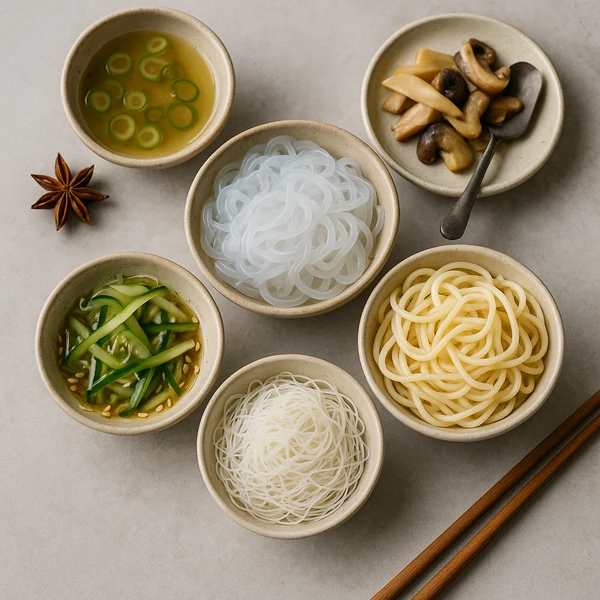
Wheat noodles tend to be elastic and heartier. They usually tolerate stirring and longer time in broth well, which is why they often appear in dishes where noodles are finished directly in the bowl or pan. Typical examples are ramen, udon and many Chinese noodles.
If you want to explore wheat types by style and thickness, a guide wheat noodleshelps.
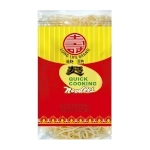
🍳 Rice noodles: smoother glide, quick preparation, sensitivity to overcooking
Rice noodles are often associated with Southeast Asia (but not only there). They can be thin, flat, or wide and typically give the dish a finer, “slick” texture. At the same time, they tend to be sensitive to overcooking – the difference between “just cooked” and “mushy” can be short, which is especially important for stir-fry dishes.
Buckwheat noodles (soba): flavor depends on buckwheat content
Buckwheat noodles have their own earthier flavor. For soba type, it’s important to keep in mind that “soba” doesn’t automatically mean a high buckwheat percentage – to get buckwheat flavor and aroma, it makes sense to check the ingredientsand not rely only on the name.
Starch and glass noodles: translucency, slipperiness, elasticity
Glass noodles work differently than flour ones: after cooking, they usually have a smooth, elastic to glassy texture. They are often made from starch bases (e.g. potato, sweet potato, mung bean starch) and are suitable anywhere you want a lighter, “slipperier” bite – in soups, some stir-fry dishes, and cold bowls.
For orientation by brands and sizes, a practical guide is glass noodles.
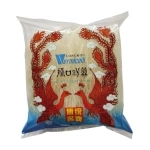
Konjac and other special variants: when you want a neutral base
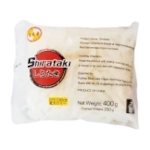
Special variants also include konjac (often labeled as shirataki). They have a specific role: typically they are neutral and work well as a sauce carrier in situations where you want to change noodle type without altering the flavor logic of the dish.
If you are interested in this direction, a guide can be found for konjac noodles.
How to choose noodles according to the dish: soup, wok (stir-fry), salad
This is the most important part: good noodles are not “universally best,” but correctly chosen for the particular bowl.
Noodles for soup: must withstand hot broth
For soup, ideal noodles are those that hold their shape and don’t immediately tear or fall apart when in contact with hot broth. Typically proven are:
- ramen
- udon
- soba for lighter Japanese broths
- rice noodles for phở-type soups and other Southeast Asian varieties
- some glass noodles for lighter and clear soups
In general, for strong broths noodles with higher elasticity are better, while for lighter and herbal broths, rice variants often fit well.
Noodles for stir-fry: must withstand stirring and brief intense heat
In a wok or pan, you need noodles that can withstand stirring, contact with fat and sauce, and short, more intense heat. Often working are:
- wheat wok noodles
- wider rice noodles
- some ramen noodles for “drier” preparations
- glass noodlesif you want a lighter and more elastic texture
Key rule for wok: noodles must not be fully cooked before going into the pan. Otherwise, they break, become mushy, or soak sauce in a way that turns the dish into a heavy mass instead of elastic noodles.
Noodles for salad and cold dishes: must hold texture even after cooling
For cold dishes, the most important thing is that the noodles remain pleasant to bite even after cooling and don’t feel “tired.” Typical choices include:
- soba
- somen (thin noodles used in cold preparations)
- rice vermicelli
- glass noodles
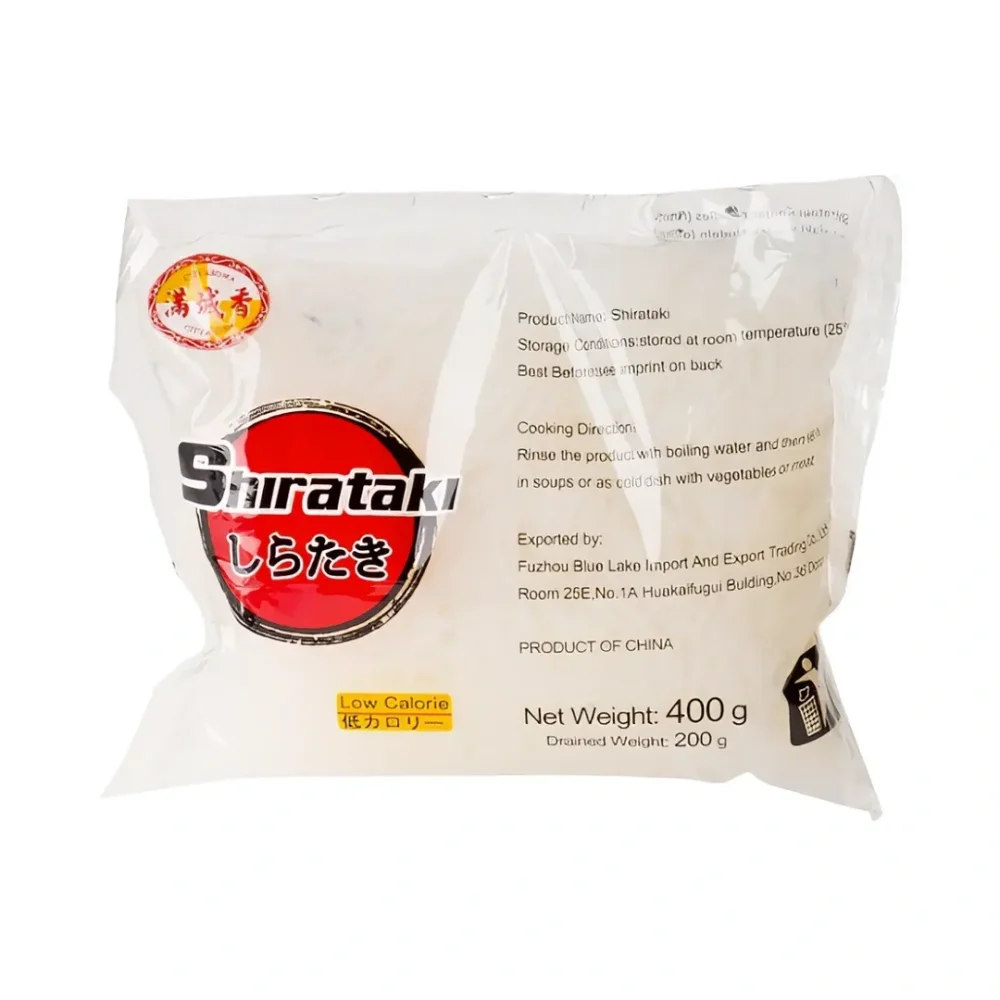
Konjac noodles also often suit cold bowls and salads – for example, City Aroma Shirataki hair noodles, if you want a very neutral base that mainly relies on dressing and toppings.
Practical onboarding: what to watch for when buying and how not to “break” noodles at home
1) Don't buy just by the name: noodles with the same name can behave completely differently
With noodles, the material and intended use are more important than the name on the package. Noodles with the same name can differ in thickness, elasticity, and recommended preparation method. When choosing, pay special attention to:
- what the noodles are made of,
- their thickness and structure,
- whether they are meant for soup, stir-fry, salad, or frying,
- how they react to soaking and cooking,
- whether they easily overcook or break.
This is where a common mistake arises: buying noodles based on a photo of a finished dish without verifying they are suited for the same technique.
2) “I want noodles for…”: quick decisions by situation
- Strong broth: most often ramen, udon, and some suitable types of rice noodles for certain soups.
- Quick wok: wheat stir-fry noodles, wider rice noodles, sometimes glass noodles depending on the style of the dish.
- Light and cold: soba, somen, rice vermicelli, glass noodles.
- Rich thick sauce: udon, wider rice noodles, egg wheat noodles.
🍳 3) Preparation for soup vs. wok vs. salad (specifically)
- For wok: prepare noodles so they are “just before done” – final cooking is on the pan. This reduces the risk of falling apart and becoming mushy.
- For soup: consider how long the noodles will stay in the broth. If the bowl is eaten slowly or served in a large hot broth, it's worth choosing a more resistant type (often wheat) or adjusting timing.
- For salad/cold bowl: choose noodles meant to be rinsed and cooled, and bear in mind that texture after cooling is a completely different test than texture “right after cooking.”
4) What is worth having at home as a universal base
For a home pantry, it makes sense to have various types serving different roles rather than one “magic” noodle:
- one medium rice noodles,
- one wheat noodles for wok or soup,
- one thicker (udon or similarly thick),
- one fine for salads and quick meals.
As a quick guide for the first selection, the category Noodles can serve – and then decide mainly according to the use.
How to recognize higher quality noodles (without the myth "more expensive = better")
Quality is not just a matter of price. With noodles, it pays to watch for signals you only notice in the kitchen.
For dry noodles in general
- clearly stated composition without unnecessary confusion,
- a reasonably short list of ingredients,
- typical raw material aroma after opening,
- good texture after cooking, not "quick mush",
- ability to hold shape even after short time in sauce or broth.
For soba
Higher quality soba is usually more aromatic and flavorful. If you want soba mainly for the buckwheat taste, again: watch the ratio of buckwheat to wheat in the ingredients.
For ramen
For better ramen noodles, important is elasticity, resistance to overcooking, and a clean "bite." Also important is the right thickness and style according to the type of broth.
For rice noodles
After proper preparation, they should not fall apart into a mushy mass, but remain elastic and separate – even when briefly mixed with sauce or left to stand.
Common mistakes (and how to quickly fix them)
- I overcook the noodles "fully" and then fry them: for stir-fry, always count on final cooking in the pan.
- I buy the "right category" but the wrong type: a typical trap is "I want noodles" instead of "I want noodles for broth / for pan / cold." For Asian ingredients in general, you need to select based on function, not impression.
- Soba without buckwheat taste: if the goal is buckwheat character, the name alone is not enough – it’s about the composition.
- I take glass noodles as a substitute for wheat noodles: texturally they are a completely different world. In some dishes they are great precisely because they are "glassy" – but do not expect the same mouthfeel as with ramen/udon.
- I want one sauce to solve my entire “Asian cooking”: In street food logic and home cooking, it is more important to understand what is the base and what is seasoning. Noodles make the texture, sauce makes the taste – and both are chosen according to the specific dish.
Small “flavor shortcuts” for noodles (when you need to quickly season a bowl)
This section is not a recipe; it is a practical guide on how to simplify common situations at home without losing control over flavor.
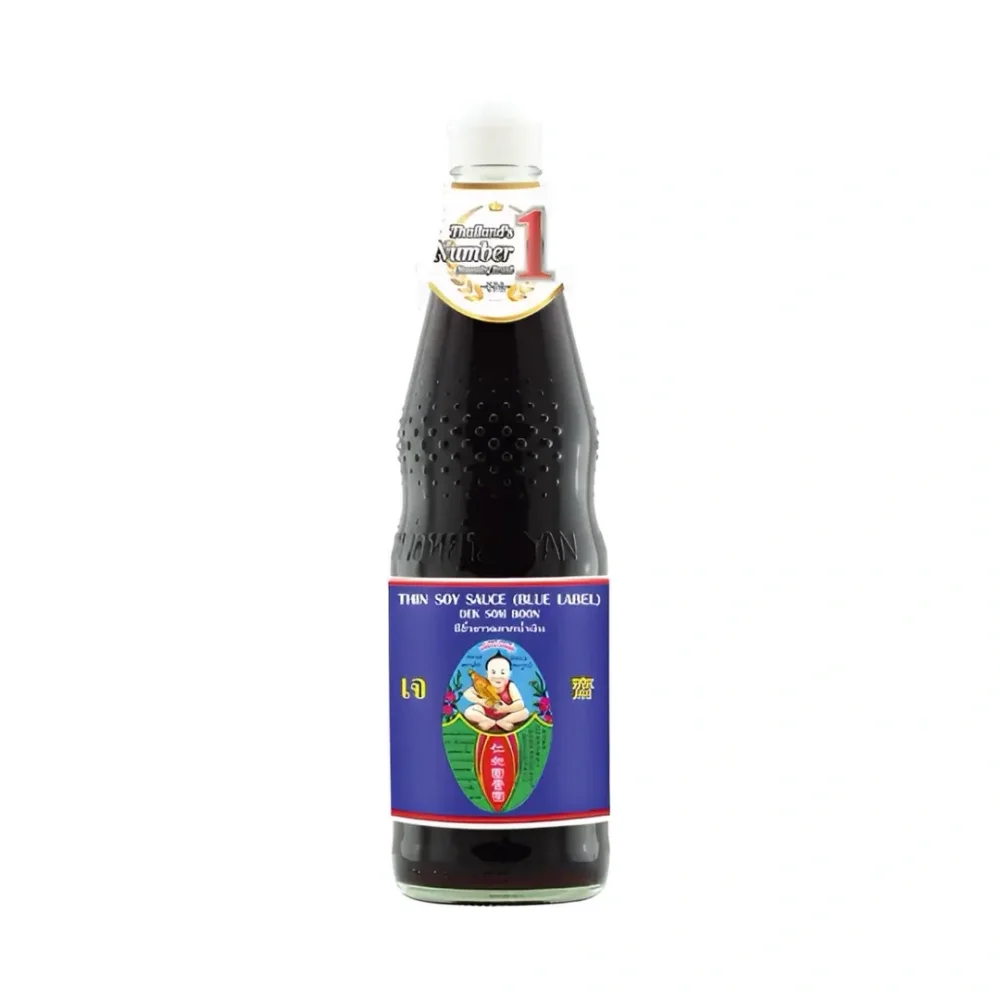
- Pure salty-umami seasoning line: for woks, noodles, and dips, light soy sauce is suitable, for example Dek Som Boon light soy sauce (recipe C) – add it gradually.
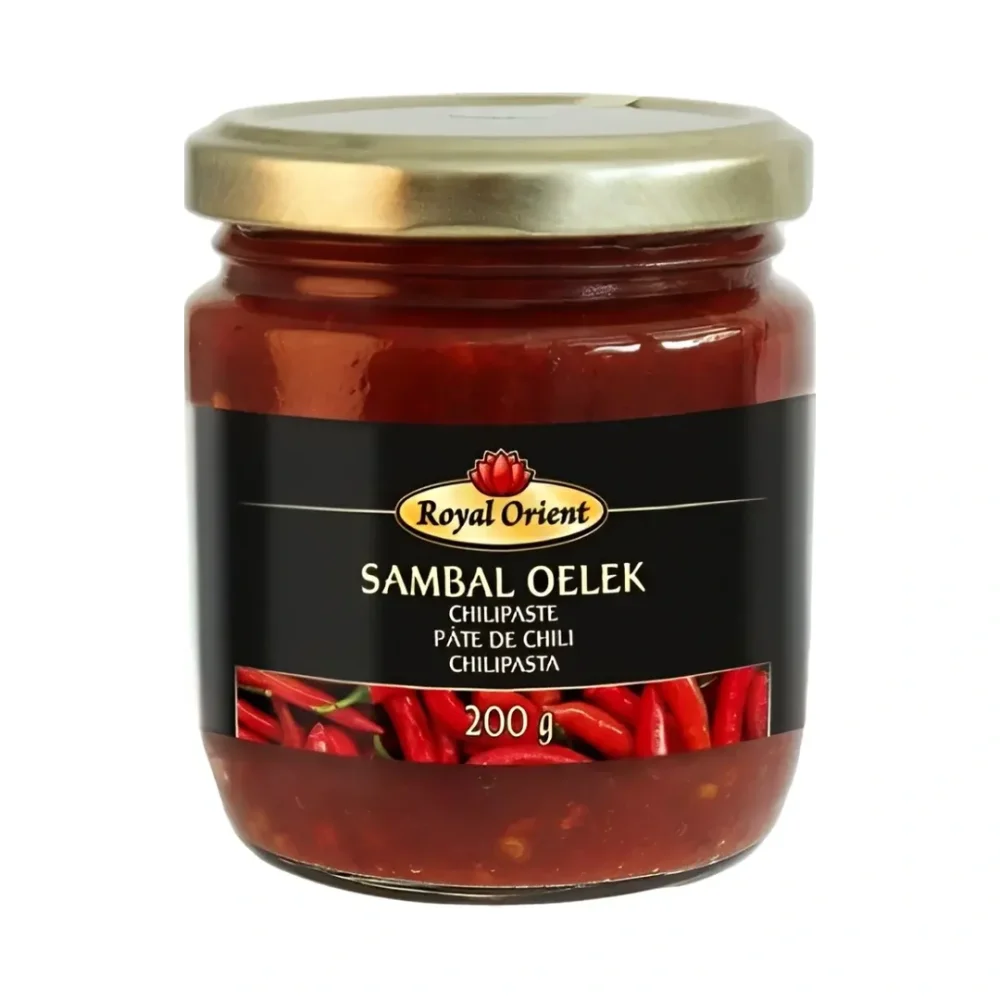
- Quick spiciness without extra “sauce” flavor: if you want just chili and salt, help comes from Sambal Oelek (crushed chili). Start carefully and adjust according to the bowl.
- Aromatic base without chopping: for stir-fry and soups, you can use garlic paste with ginger, when you need to quickly build the dish's aroma.
- Sea umami for Thai style: with intense seasonings like shrimp paste a small amount is enough – it adds a strong salty-umami depth to soups, sauces, and stir-fry.
- Texture additions for noodle bowls: for broth and wok, add-ons that only need to be briefly heated are suitable – for example bamboo shoots (sliced) or straw mushrooms.
What to take away from the article
- Noodles are chosen not by “best brand”, but by function: broth, wok, cold dish = different demands on elasticity and behavior after cooking.
- The most reliable guide is by raw material: wheat (durability/elasticity), rice (delicacy/sensitivity), buckwheat (flavor), starch (glassy texture), konjac (neutral carrier).
- Never put overcooked noodles into the wok: final heat belongs on the pan, not in the pot.
- Check the composition for soba: if you want a buckwheat character, the ratio of buckwheat and wheat decides.
- You recognize quality in the bowl: good noodles hold shape and texture even after short contact with sauce or broth.

Read next
If you want to explore this topic further, continue with these related blog guides and articles:
