


 Česky (CZK)
 Slovensky (EUR)
 Deutsch (EUR)
 Austria
 Belgium
 Bulgaria
 Croatia
 Denmark
 Estonia
 Finland
 France
 Germany
 Greece
 Hungary
 Italy
Italy Latvia
 Lithuania
 Luxembourg
 Netherlands
 Poland
 Portugal
 Romania
 Slovenia
 Spain
Spain Sweden










Fillings, doughs, and cooking methods of dumplings: how to understand Asian dumplings
Dumplings (Asian dumplings and pockets) are not "one dish," but a whole family of bites determined by a trio: filling, wrapper/dough and cooking method. Once you put these three things together, the differences between jiaozi, gyoza, mandu, wontons or shumai start to make sense – and especially why some dumplings are for soup, others for the pan, and others for steaming.
Why always consider filling, wrapper, and cooking method as a whole
There is no "correct universal" version of dumplings. The same filling behaves differently in a thin wheat wrapper intended for the pan, differently in a delicate wonton wrapper for broth, and completely differently in a leavened dough like bao. Likewise: the same dough gives a different result when you boil it, steam it or pan-fry it.
Practically, this means a simple rule for selecting and cooking: first clarify whether you want dumplings crispy, delicate or "soupy". Only then deal with the specific type and filling.
What exactly does "dumpling" mean (and why it's not just one specific dumpling)
The word dumpling in the Asian context refers to a broad group of dishes united by the principle: dough, wrapper, or starchy layer hides a filling, or sometimes forms a small bite even without filling. In different parts of Asia, the wrapper ingredient, shape, thickness, cooking method, and whether it's a festive dish, quick lunch, street food, part of dim sum, or soup ingredient vary.
It is useful therefore not to think of dumplings as "Asian ravioli", but as a family of shapes and techniques: thin wheat wrapper, translucent starch wrapper, leavened dough, open dim sum pieces, or broth pockets.
Main families of Asian dumplings: how they differ and what to expect from them
1) Chinese jiaozi: the versatile pocket
Jiaozi are among the best-known Chinese stuffed pockets. Typically they have a crescent shape, wheat wrapper and filling of meat and vegetables (often pork, Chinese cabbage, chives, ginger, sometimes shrimp). They are prepared in three common ways: boiling in water, steaming or pan-frying.
The practical important difference is in the result: boiled jiaozi are softer and more "about the filling," while pan-fried jiaozi rely on the contrast of crispy bottom and juicy center. Jiaozi often tolerate stronger dips – typically based on soy sauce, black vinegar, chili oil, and garlic.
2) Gyoza: thinner wrapper and pan style
Gyoza is a Japanese branch related to jiaozi. In practice, you often see the pan style, where dumplings first get a fried bottom and then are briefly "steamed" to remain juicy. Compared to the sturdier northern Chinese jiaozi, gyoza usually has a thinner wrapper, leading to a more elegant bite but also higher sensitivity to overfilling and rough handling.
3) Korean mandu: room for bolder flavors
Mandu are Korean dumplings which (depending on style and filling) often tolerate bolder, spicier or fermented flavors. Here you more often encounter fillings with greater "character" and not just mild meat-vegetable mixtures.
4) Wontons: delicate wrapper and soup logic
Wontons are typically delicate pockets with very thin wheat wrappers. In practice, they are often used as soup and broth pockets – designed so the wrapper doesn’t overpower the filling and the whole works well in broth. Correspondingly, the flavor logic: finer, juicier fillings are more common for wontons than "aggressively" spiced mixes.
5) Shumai / siu mai: open dim sum bite
Shumai (siu mai) are typical open dumplings in the dim sum tradition. Compared to closed pockets, here clean flavor and textureare very important, because the filling is more "in sight" and the dumpling feels like a precise small bite, not like a pouch held together by thicker dough.
🍳 Fillings: what’s inside and how it affects usage
Fillings are extremely variable, but some patterns repeat – and mainly one rule repeats: finer wrapper = finer and juicier filling; sturdier wrapper or form = more room for bold flavor.
Typical meat fillings
- pork with Chinese cabbage and ginger,
- pork with chives,
- chicken variants,
- beef or mixtures,
- shrimps or pork and shrimp combinations.
Common vegetarian fillings
- tofu,
- cabbage, carrot, spring onion,
- mushrooms (especially shiitake),
- glass noodles,
- kimchi,
- spinach, zucchini, and other vegetables depending on the region.
Flavor profile: why some fillings belong to different types of dumplings
Finer, juicier and "less aggressive" fillings typically suit gyoza and wontons, where you want the contrast of the wrapper and juice to stand out and nothing to overpower the whole. On the other hand, bolder, spicier, or fermented fillings appear more often in mandu (and also some other regional styles). For dim sum pieces, texture and clean flavor are important; for bao (leavened stuffed buns), fillings are often bolder and sometimes slightly sweeter or saucier.
Doughs and wrappers: wheat, translucent starch, and leavened – and why it matters
With dumplings, the wrapper is as important as the filling. It’s not just "wrapping" – the wrapper carries texture, determines how the dumpling reacts to heat, and often decides whether the result will be tender, chewy, or crispy.
Wheat wrapper: the most versatile choice
Wheat wrapper is the most common for jiaozi, gyoza, mandu, and wontons. It can be thicker or thinner, elastic, smooth, or slightly chewy, and is suitable for boiling, steaming, and pan-frying. In practice, the wheat wrapper is usually the best "starter" choice because it’s versatile and more forgiving than very delicate starch wrappers.
Starch (translucent) wrapper: more delicate but elegant
The translucent starch wrapper is typical for har gow and some other dim sum pieces. After steaming, it can appear glossy or translucent. It is finer and more delicate – so it’s useful to expect it requires more precise work and usually works best with finer fillings and gentle cooking (typically steaming).
If you’re curious why some starches give a “glassy” effect and others thicken more, it’s good to understand the general logic: when you want thickening and gloss, starch often helps; when you want pronounced elasticity and chewy texture, the choice of flour and starch plays a role.
Leavened dough: bao and soft, fluffy bites
Leavened dough is used for bao and similar stuffed buns. The result is soft, fluffy, and heartier than pockets with thin wrappers. Leavened dumplings often serve as a standalone dish (not just "a few extra pieces"), because the dough plays a big volumetric role.
Wrapper thickness: a simple trick to avoid disappointment
Thicker wrapper is more forgiving, better withstands cooking, and is more filling. Thin wrapper is more elegant, but delicate. Gyoza is usually thinner than sturdier northern Chinese jiaozi; wonton is even more delicate and typically meant more for soup.
A short digression on rice flours: they are not all the same
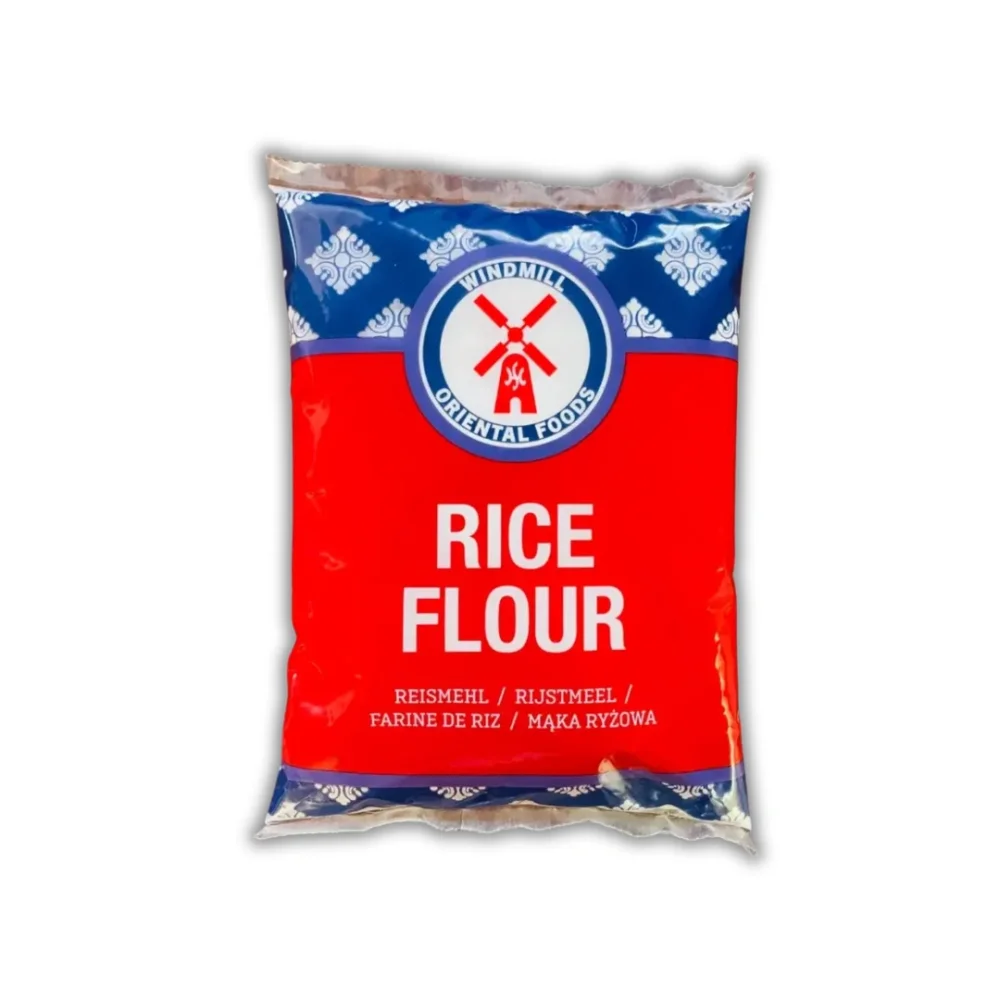
In Asian cuisine, it’s useful to distinguish rice flours because each produces a different texture. Classic rice flour (from regular non-sticky rice) has a neutral flavor and can give a finer, cleaner texture – often suitable for light doughs and sometimes delicate steamed dumplings. A practical example of this type of ingredient is Windmill rice flour.
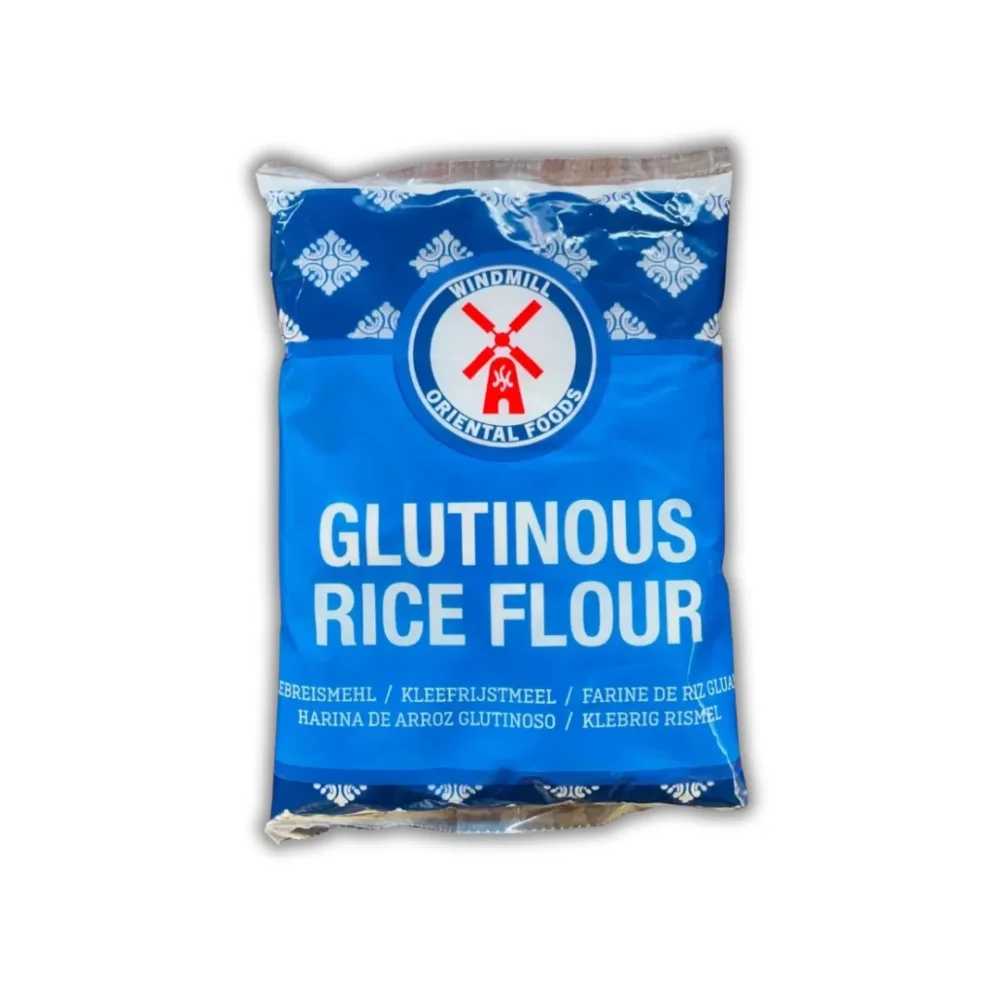
Glutinous rice flour (sweet rice flour / glutinous rice flour) is a different world: the word "glutinous" here does not mean gluten. It is gluten-free rice that after heating creates a stretchy, soft, and slightly chewy texture – typically for mochi, tangyuan, and other rice dumplings. A concrete example of this ingredient is Windmill glutinous rice flour.
Dumpling cooking methods: boiling, steaming, pan-frying (and how to choose)
Technique often determines the very identity of the dish. For orientation, a simple map is useful, which also appears in Japanese culinary thinking: boiling/simmering, steaming a frying/toasting (besides other methods). These three most commonly meet in dumplings.
Cooking in water: soft dumplings and emphasis on the filling
The boiled version (typically with jiaozi) yields a softer result, where the filling stands out more. It's a good choice when you want dumplings as a full bite without the "crispy attraction" and when working with a sturdier wheat wrapper.
Steaming: delicacy, purity, and juiciness
Steaming is extremely important and sometimes unnecessarily underestimated in Asia. It creates clean, juicy, and precise dishes, often without the need for much fat. It suits dim sum, bao, and dumplings where you want the wrapper to stay delicate and the filling juicy.
Pan-frying: crispy bottom and contrast of textures
Pan-frying (typically gyoza or fried jiaozi) is ideal when you want contrast: a crispy bottom and a juicy center. At that point, it's good to remember that thinner wrappers (more common with gyoza) are more sensitive – and that stronger dips can be an advantage because the crispy component pairs well with them.
🍳 How to start at home: a simple decision-making process
- Choose a goal: soup (wonton), pan-fried (gyoza/fried jiaozi), or delicate (steamed, dim sum, bao).
- Adapt the filling: milder and juicier for wontons/gyoza; bolder and spicier more for mandu or heartier pockets.
- Consider the wrapper: thicker ones forgive more; thinner is elegant but can’t handle overfilling or rough handling.
- Work with portioning: as a rule of thumb, it’s more practical to start with less filling per piece and add more after the first batch. The goal is to close the wrapper securely so the dumpling holds its shape.
- Keep in mind that dumplings are “portionable”: that’s why they are good for prepping in advance and also freeze well.
Common mistakes and misunderstandings (and how to avoid them)
- “A dumpling is one specific type of dumpling.” It is not. Dumplings are a family of dishes – and the difference between a wonton in broth and a gyoza on a pan is as fundamental as the difference between soup and fried food.
- Confusing rice flours. Classic rice flour is not the same as glutinous rice flour. And “glutinous” does not mean gluten – it refers to stickiness after cooking, not wheat.
- Filling too aggressive for a delicate wrapper. Delicate wrappers (typically wontons or some dim sum pieces) often work better with a clean, juicy flavor. If you put an extremely strong/fermented mixture in them, it can easily overpower the entire dumpling.
- Underestimating the thickness of the wrapper. When starting out, a thicker wrapper is usually “safer”: it forgives more and handles cooking better. Thin wrappers (more common with gyoza) are great but more sensitive.
- Wrong expectation that one technique fits all. Some dumplings are designed for steaming, others for pan-frying, others for broth. If you prepare them differently, it often won’t be “wrong,” but it will be a different dish – and sometimes it leads to worse texture.
What to take away from the article
- Dumplings are a family of dishes, not one type of dumpling – differences are made by wrapper, filling, and technique.
- Jiaozi are versatile pockets that work boiled, steamed, and pan-fried; pan-fried deliver a contrast of crispy bottom and juicy center.
- Gyoza often stand on a thinner wrapper and a pan-frying style, wontons on delicacy and the logic of broth, shumai on open dim sum bites and texture.
- Choose filling according to the goal: milder for gyoza and wontons, bolder more often for mandu and heartier styles.
- The wrapper is not a detail: thicker forgives, thinner is elegant; wheat wrappers are most universal, starch-based translucent ones are more sensitive, and leavened dough gives bao.

Read next
If you want to explore this topic further, continue with these related blog guides and articles:
