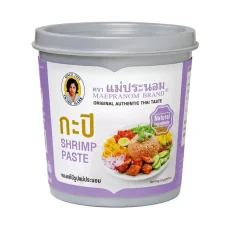
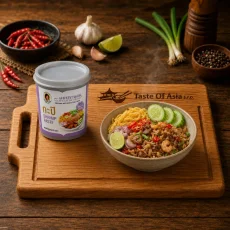
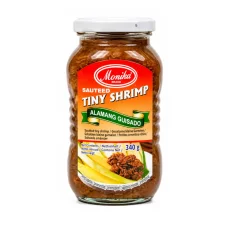
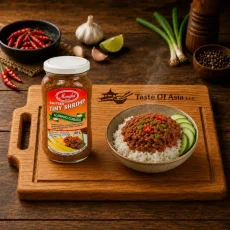
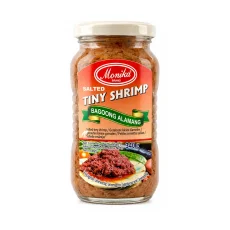
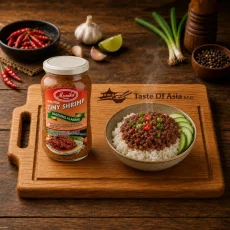
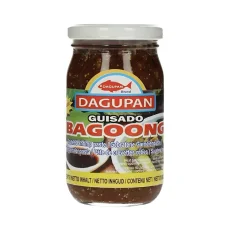
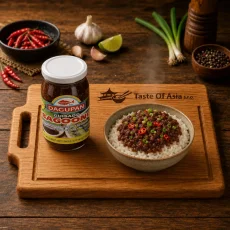
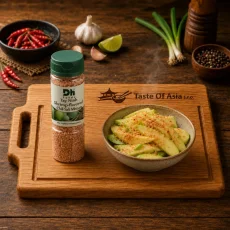
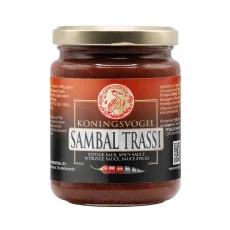
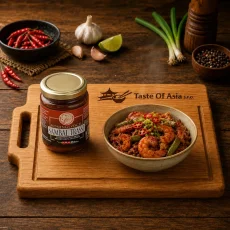
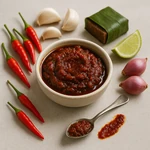
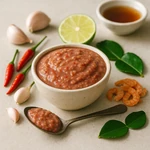
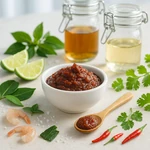
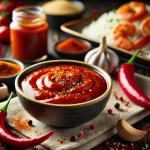
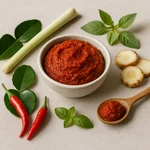
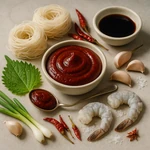
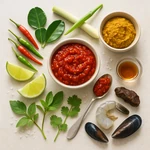
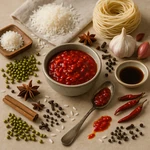
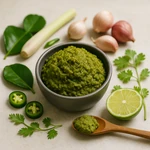
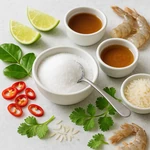
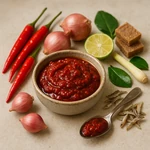
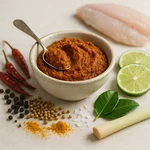
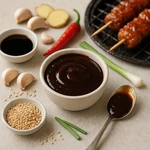
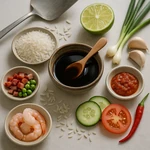
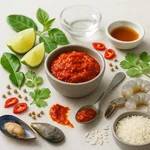
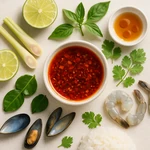
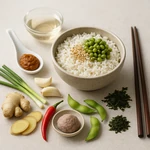
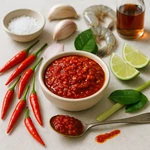
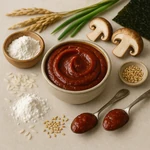
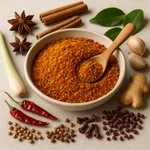
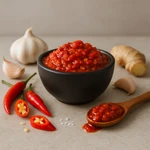
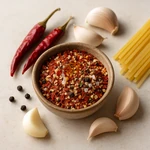
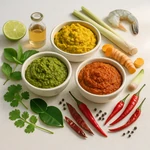
Sambal trassi is one of those Southeast Asian condiments that can transform a plain bowl of rice into something deeply savory and exciting. It combines hot chili with the unmistakable, funky depth of trassi (also spelled terasi)—a fermented shrimp paste that brings saltiness and intense umami.
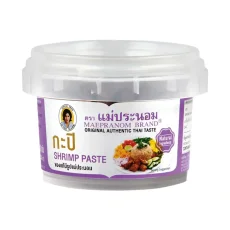
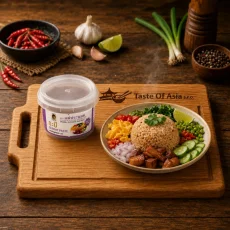
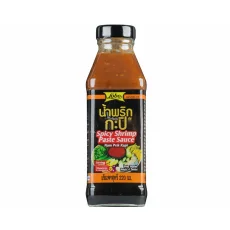
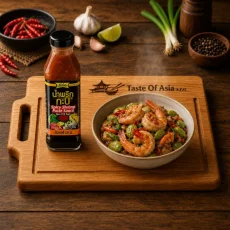
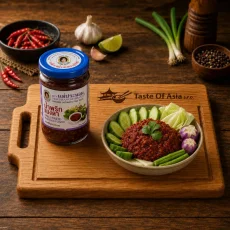
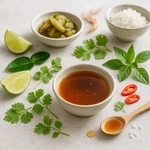
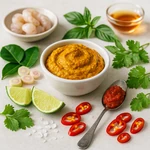
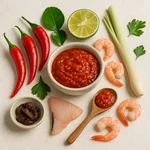
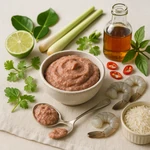
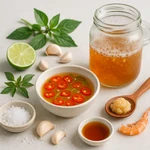
Nam Prik Kapi is a punchy Thai chili dip built around fermented shrimp paste, lime, and fresh chilies. A small spoonful adds salty depth, citrus brightness, and serious heat—perfect for turning plain rice, crisp vegetables, and simple fish or eggs into a complete, satisfying meal.
Fermented sauces and pastes are among the most important "flavor bases" in Asian cuisines: in small amounts, they can provide umami, depth, aroma, and the finished character of a dish. To work as they should, they need, besides proper use, reasonable home storage – especially after opening, when you work with them by teaspoons and drops.
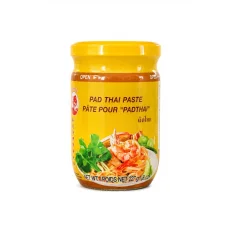
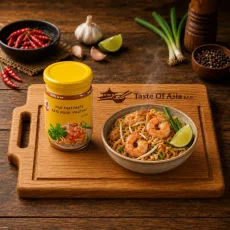
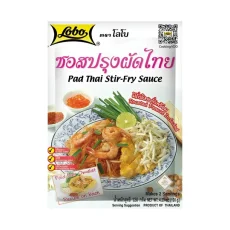
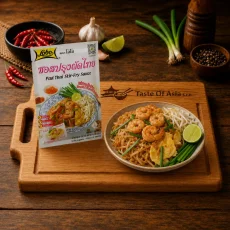
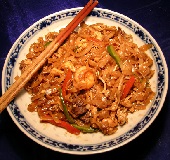
Pad thai, phat thai nebo phad thai jsou smažené rýžové nudle, v Thajsku běžně prodávané na ulici, které si určitě zamilujete pro svou jednoduchou přípravu a skvělou chuť.
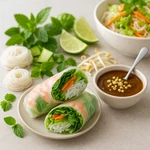
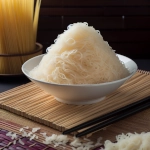
Thin slices are a great ingredient for anyone looking for simplicity, versatility, and flavor variety. Use them to make fresh spring rolls, delicious appetizers, or even sweet desserts. Find out how easily they can become the basis for your favorite dishes!
Add a spicy touch to grilled meat, fish, or vegetables with Cajun sauce. In this article, you will find its history, tips for use, and simple recipes for perfectly seasoning your dishes.
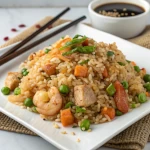
This Canton-style fried rice is the kind of flexible, weeknight-friendly dish you can build from what’s already in your fridge: cold rice, eggs, a little meat (or seafood), and crisp vegetables. The key is simple technique—high heat, quick cooking, and rice that’s properly cooled—so every grain stays separate and flavorful.
Fermentation is one of the key methods in Asian kitchens to create depth of flavor, umami, aroma, and a "finished taste" – often even in dishes that rely on only a few ingredients. This guide will help you navigate the main groups of fermented bases (from soy sauces through pastes to fish and marine ferments), understand their role, and avoid common mistakes in selection and use.
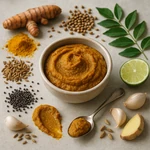
Curry paste can be a great shortcut to a "ready-made" flavor – but only if you understand it as a base, not as a universal seasoning for everything. In the article, we clarify what to expect from curry paste, how it differs from other pastes and sauces (soy, fish, chili), and how to use it in practice so that the final dish is not just spicy or salty, but truly flavorfully built.
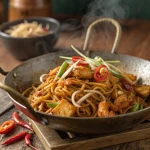
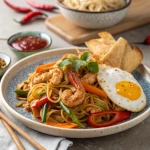
Mee goreng is the kind of dish you make once and then crave regularly: springy noodles tossed in a sweet-savoury, lightly spicy sauce, finished fast over high heat. This version is flexible (chicken, shrimp, tofu, or veg), works in a wok or large pan, and comes together quickly when you prep everything first.
Thai food can taste “very bold”, but its strength is rarely one dominant flavour. What’s typical is layering: first you build an aromatic base (often with pastes), then you season gradually (for example with soy sauce), and only at the end you fine-tune heat and top aromas. When these steps get swapped or pushed too hard, the result is often just spicy, over-salty, or oddly flat. This guide gives you a practical framework for building Thai flavour at home step by step—and for fixing the most common problems.
Fermented foods are not just a "healthy trend" – in Asian cuisines, they are mainly practical flavor bases that can speed up cooking and add depth to the meal. The key is not to start ambitious fermentation projects, but with one well-chosen ferment and small amounts: a teaspoon of paste, a few drops of sauce, a little side dish. The article clarifies the difference between fermented and probiotic, goes through the main types of ferments, and shows specific ways to use them in everyday meals.
In Asian cooking, you often don’t find a "secret ingredient" but a logic of the place: what can be grown, what can be preserved for a long time, what ingredients the sea or river brings, what flavors develop through fermentation, and how cultural rules and urban rhythms influence dishes. This article shows how to read these contexts – and how to practically apply them at home so you choose the right ingredients and cook with greater confidence.
"Curry paste" is not one universal ingredient. Different types of bases can be hidden under the same name – from Thai aromatic pastes (which are briefly sautéed in fat) to Indian curry bases or Japanese curry roux. In this guide, you will orient yourself mainly by the type of dish you want to cook and avoid the most common mistakes that lead to bland or "strangely" tasting curry.
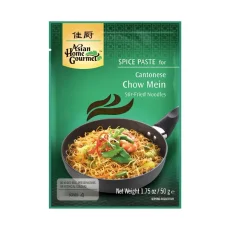
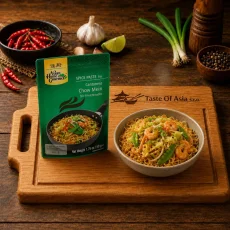
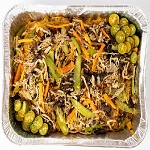
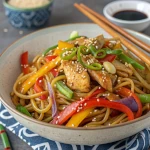
Chow mein is all about speed and heat: springy noodles, crisp-tender vegetables, and a savoury sauce that clings to every strand. This flexible recipe shows you the core technique, then lets you swap chicken for beef, tofu, shrimp—or go veggie-heavy.
Fermentation is one of the oldest methods by which people preserved, transformed, and deepened the flavor of food. However, in Asian cuisines, it's not just about "durability": fermentation is one of the keys to umami, depth, aroma, acidity, and texture – and it explains why a wide range of sauces, pastes, side dishes, and soups are created from just a few basic ingredients. At the same time, it is important to be clear about one fundamental thing: fermented foods and probiotics are not the same.
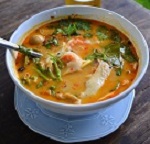
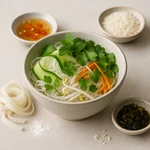
Soups in Asia are often not just appetizers but full meals – sometimes a typical breakfast or a quick street lunch. To make sense at home, it's useful to think of them as “worlds” built around a broth (or other liquid base), noodles or rice, and final seasoning. This overview will help you navigate the main types of Asian soups, understand why the broth is so essential, and take the first good steps without unnecessary mistakes.
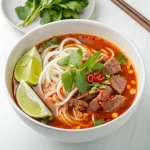
Bún bò Huế is Vietnam’s bold, lemongrass-forward noodle soup from the former imperial city of Huế. This recipe walks you through a fragrant beef-and-pork broth, a quick chili oil for that signature red hue, and the fresh herb toppings that make each bowl taste bright, spicy, and deeply savoury.
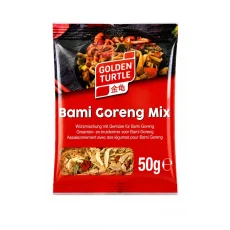
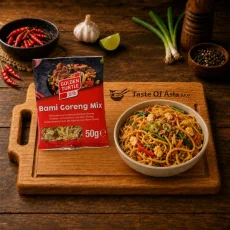
Bami Goreng is Indonesia’s beloved fried noodle dish: springy noodles tossed in a savory-sweet soy seasoning, quickly stir-fried with vegetables and your choice of chicken, shrimp, or tofu, then finished with egg and a squeeze of lime. This version is fast, flexible, and designed to work well on a home stovetop.
How do fast street foods, festive menus, noodle bowls, or dishes based on seaweed and mushrooms differ in Asian cuisine? This guide explains the main types of meals according to the occasion, presents representative examples, and offers practical advice: what to buy at the start, how to combine ingredients, and how to avoid the most common mistakes.
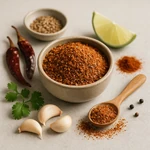
Mexiko-style grill seasoning is a shortcut to bold, smoky-spicy flavour—great on meat, vegetables, seafood, and plant-based proteins. Used the right way, it works as a quick dry rub, a juicy marinade base, and even a “fusion” seasoning that plays surprisingly well with Asian pantry staples like soy sauce, sesame, and lime.
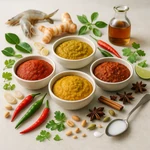
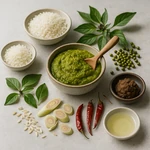
A practical guide to the five most common Thai curry pastes — red, green, yellow, panang, and massaman. I will explain the basic flavor profiles, when to choose each paste, how to use it at home, and what to watch out for when selecting and storing.
Chilli in Asian cuisine is not just a “test of courage.” In a balanced dish, spiciness is one layer of flavor – it can add energy, contrast, and depth, but only when you know what type of heat you are adding and what role a specific product plays. For a beginner, the key difference is between plain chilli, sambal, and curry paste.
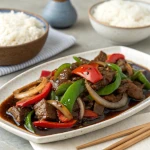
This black pepper stir-fry is all about bold aroma, a glossy savory sauce, and crisp-tender vegetables—ready in about 25 minutes. Use chicken, beef, or tofu, and don’t be shy with freshly ground black pepper.
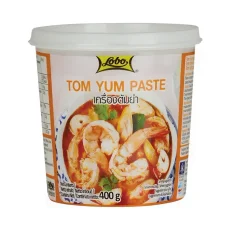
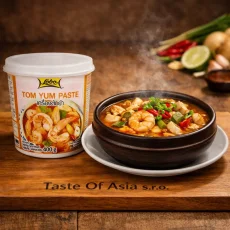
“Thai-style curry” is often a convenient label for a ready-to-use curry base inspired by Thai cooking—fragrant herbs, warm spices, and a gentle to medium heat that turns into a creamy sauce with coconut milk. Here’s what that wording typically means, how the taste differs from other curry pastes, and how to get consistently good results in everyday home cooking.
Malaysian cuisine is not a single uniform "national taste," but a practical mix of several traditions that meet and often blend in one territory and often even in one dish. This makes it all the more important to recognize the ingredients that keep reappearing in Malaysian cooking: rice and noodles, coconut, chili and sambal, aromatic herbs, tamarind and lime, and pronounced fermented marine components. In this article, we will arrange them according to their function, explain the differences, and add specific tips on how to start with them without unnecessary mistakes.
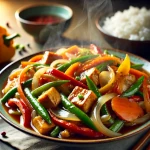
Chop suey is the ultimate “mix-and-match” stir-fry: tender protein, crisp vegetables, and a light savory sauce that clings to every bite. It’s fast, flexible, and perfect for using up leftover veg—served over rice or noodles for an easy weeknight meal.
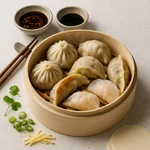
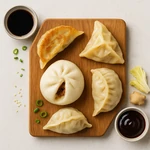
Dumplings (dumplings, pockets, filled buns) are not a single specific dish but a huge family of foods across Asia. They share a simple principle: a dough or starch wrapper holds the filling – or forms a bite on its own without filling. In practice, however, they differ fundamentally: by the type of wrapper, shape, cooking method, and whether they are a quick pan dinner, part of a soup, or dim sum dining. This guide gives you a map to decide by situation, not just by foreign names.
Family Asian cooking doesn't have to mean a pile of exotic ingredients or "diet" versions of favorite dishes. In practice it's often enough to understand a simple logic: build the plate on rice or noodles in a reasonable proportion, add a clear protein, give vegetables real space, use the sauce more as a binder than a flood – and finish the whole meal with freshness, acidity, texture and umami.
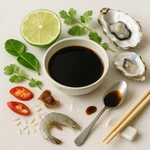
Oyster and fish sauces can be easily confused at first glance: both are among the “basic” Asian seasonings and both can add distinct umami. However, they have different roles in the kitchen. Once you understand the difference between their roles (salting vs. rounding and connecting flavors), you will cook more confidently – and you will stop unintentionally shifting dishes into a completely different flavor logic.
The flavors of Asian cuisines didn't emerge just "at home" from what grew outside the village. Alongside climate and local ingredients, they were shaped by trade routes and migration: the movement of crops, spices, preservation techniques, but also ideas of what a "properly balanced" meal is. When you understand this, you can more easily choose a style you'll enjoy – and above all, stop expecting there to be a single universal "Asian flavor."
Singaporean cuisine originated in a port city where different communities and their techniques have long met. Therefore, you won't find a single "national" pantry here, but a functional mix: rice and noodles, coconut, chili and sambal, soy and fish umami seasonings, aromatics like garlic and ginger – alongside ready-made pastes that have a clear role in specific dishes. In the article, you'll sort out what is typical for Singapore, what the main variants are, and how to start with these ingredients at home without unnecessary mistakes.
Asian cuisines were shaped by more than just climate and local agriculture – trade also played a crucial role. Spices, sugar, tea, citrus fruits, as well as techniques for working with grains and fermentation spread both by sea and land. In this article, we will show exactly what "trade influences" mean on the plate and how this perspective can help you better understand the differences between regions and cook smarter at home.
Fermentation is one of the oldest ways to preserve, transform and, above all, deepen the flavor of food. In Asian cuisines it is not just "preservation" — it is a technology that can turn a few simple ingredients into an enormously complex base: acidity, pronounced umami, new aromas and different texture. That is why fermented sauces, pastes and condiments are one of the most reliable ways to bring homemade Asian food from "good" to "has depth."
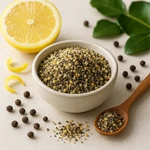
Lemon pepper is a simple seasoning with a surprisingly big impact: the warmth of black pepper meets a clean citrus aroma, making dishes taste lighter and more “awake.” Used well, a small pinch can sharpen stir-fries, refresh fried rice, and bring out the best in fish, chicken, tofu, and vegetables.
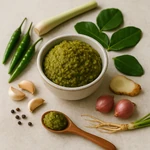
Thai green curry is one of those flavors that instantly fills the kitchen: fragrant herbs, lively chili heat, and a silky coconut base. Learn what “green curry” really means, how to handle curry paste for maximum aroma, and how to use it beyond a classic bowl of curry and rice.
Spiciness in Asian cuisine is not a contest of "the biggest fire," but one of the layers of flavor that is meant to enliven, highlight, and balance the dish. However, if you overdo the amount or choose the wrong type of chili base, you can easily end up with a dish that is sharp but flavorless—or downright inedible. In this article, you will find practical methods on how to safely increase spiciness, how to tone it down, and how to avoid common beginner mistakes.
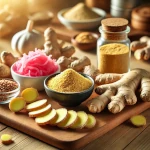
Ginger is a wonderful natural remedy that will enrich your health and taste buds. Read about its benefits, how to use it in the kitchen, and what forms it comes in.
Asian salads and cold dishes are not just a light side dish or "vegetables with dressing." In many cuisines, they serve as a full meal – based on freshness, herbs, acidity, umami base, chili, and especially texture. In this guide, you will clarify what is typical for cold Asian cuisine, what the main forms are (from rolls to cold noodles), and how to assemble a bowl at home so that it tastes complete, not just "mixed."
Asian sauces and pastes often have bold packaging, but the small print is what matters. If you want clarity in your purchase, it's worth stopping to worry about one “scary” abbreviation and instead adopting a few simple checks: the order of ingredients, the difference between a base and a seasoned product, and careful reading of allergens. This article shows what to watch for so the ingredient works in your cooking – and so it doesn't surprise you at home with its flavor, saltiness, or composition.
Malaysian cuisine cannot be reduced to one “typical” flavor. It is a living mix of Malay, Chinese, Indian, Peranakan and local Bornean influences – and you will often find them all on one plate. In this guide we will show you how to reliably recognize Malaysian taste, how it differs across dishes and regions, and how to practically construct its most important flavor pillars at home.
Fish cooks fast and tastes best when its natural sweetness and tenderness stay front and center. The trick is choosing seasonings that support the fish—whether you’re pan-frying a delicate white fillet, grilling salmon, or simmering seafood in a fragrant Asian-style sauce.
“Barbecue” isn’t only a sticky sauce—it’s a flavor profile. A good BBQ grill seasoning brings smoky aroma, gentle sweetness, and a peppery kick that works just as well on chicken and ribs as it does on corn, mushrooms, tofu, or eggplant. Here’s how to use it as a dry rub, in a quick marinade, or as a finishing glaze—with a few Asian-inspired twists for extra umami.
Colombo curry (often simply “colombo”) is a Caribbean-style spice blend that behaves a lot like curry powder—but with its own identity. Bloom it briefly in oil, simmer it with chicken, fish, or vegetables, and finish the dish with something creamy (often coconut milk) plus a bright squeeze of lime.
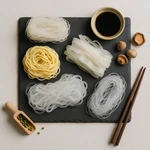
With Asian noodles, the name on the front of the package is often only indicative. Whether the noodles are suitable for broth, wok, or a cold bowl is usually decided by their ingredients, thickness, and pre-treatment. In this guide, we will show you how to read labels, what the main noodle families are (wheat, rice, buckwheat, starch-based, and konjac), and how to choose a type that won’t overcook, fall apart, and gives the dish exactly the texture you expect.
“Asian cuisine” sounds like one category, but in practice it encompasses a large cultural space where food evolved according to climate, available crops, religion, social rules, trade, migration, and daily rhythms of life. When you understand these contexts, it becomes easier to choose a style you will enjoy, and you’ll stop making typical mistakes (like reducing everything simply to spiciness).
"Asian cuisine" is not one universal flavor but a map of regional styles that arose under different climatic, agricultural, religious, and commercial conditions. In practice, this means that to understand (and cook well at home), knowing the base a region uses helps more than just the country names: rice vs. wheat, fermentation vs. coconut, spices vs. broths, herbs vs. umami. This guide will give you an orientation "compass" and concrete methods to choose the right direction even at home.
Aglio, olio & pepperoncino is the classic Italian “pantry pasta”: spaghetti tossed with fragrant garlic, olive oil, and chili. The whole dish comes together in the time it takes to boil pasta—provided you treat the garlic gently and use a splash of starchy pasta water to make everything glossy and cohesive.
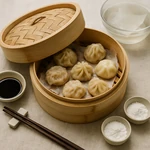
Steaming is one of the techniques in Asian dumplings that most determines the outcome: whether the wrapper will be soft and elastic or, on the contrary, soggy, heavy, or "rubbery." In this guide, you'll clarify exactly what steaming means, which types of dumplings and bao are most commonly steamed, how to choose (especially with frozen pieces), and how to avoid mistakes that ruin texture and flavor.
For Asian sauces, pastes, and noodles, it's often not about whether they are "still edible." Much earlier, their aroma, flavor purity, or texture can change – and thus affect the overall outcome of the dish. The article provides a practical system for storing opened sauces and pastes at home, what to watch for with dried noodles, and how to avoid the most common mistakes.
Fermentation in Asian cuisine is not a "health trend," but one of the main ways to achieve flavor: umami, depth, subtle acidity, and interesting texture. Kimchi and miso are the two most accessible fermented worlds that clearly show why some ferments are eaten alone as side dishes, while others act more like an engine under sauces and soups. In the article, we'll also clarify the common misconception "fermented = probiotic" and add practical tips on how to incorporate fermented bases into everyday cooking without complicated recipes.
On menus and in home cooking, three names for “pan” rice often meet: nasi goreng, fried rice and Cantonese rice. They sound similar but do not mean the same thing. In this guide we'll clarify what is a technique (fried rice), what is a specific national style (nasi goreng) and why it makes sense to ask for clarification with “Cantonese rice.” And most importantly: how to choose the right rice and how to achieve good flavor at home without cooking “by one universal recipe.”
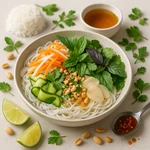
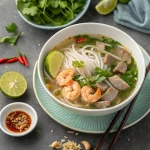
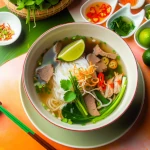
Hu Tieu Nam Vang is a light yet deeply savoury noodle soup built on a clear aromatic broth, tender pork, sweet prawns, and a generous pile of fresh herbs. This version keeps the process home‑friendly, with an optional shortcut for busy days.
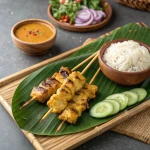
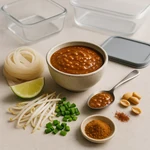
Satay is Southeast Asia’s iconic grilled skewer: small pieces of meat soaked in a fragrant marinade, cooked fast over high heat, and served with a creamy peanut sauce. This version is easy to make at home on a grill, grill pan, or in the oven—ideal for weeknights and great for sharing.
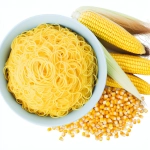
Discover corn noodles – a healthy and gluten-free alternative to regular noodles! They are ideal for quick and tasty meals, full of fiber and easy to prepare. Read our article and learn more about their history, production, and uses in the kitchen!
You might be surprised that the “same” ingredient behaves completely differently in various Asian countries: in some places it is the main dish, elsewhere just a flavoring; sometimes fermentation is emphasized, other times herbs or spices. It's neither a coincidence nor a matter of “right vs. wrong,” but a logic of the environment, available crops, trade influences, and the daily rhythm of life. In the article, we will show how to read these relationships and how to practically use them in home cooking.
In Asian cuisine, stock is often not "just the liquid for soup," but the flavor foundation that carries umami, defines the character of the dish, and connects all other components. That's why it's worth controlling two things that most commonly spoil homemade stocks: cloudiness (when you want a clear style) and oversalting (when you forget the stock is only the beginning and will be built on and sometimes reduced further).
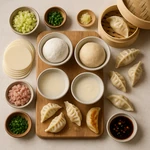
Dumplings (Asian dumplings and pockets) are not "one dish," but a whole family of bites determined by a trio: filling, wrapper/dough, and cooking method. Once you put these three things together, the differences between jiaozi, gyoza, mandu, wontons, or shumai start to make sense – and especially why some dumplings are for soup, others for the pan, and others for steaming.
Asian cold dishes are not "lighter versions" of hot cuisine nor just vegetables with dressing. Their strength lies in freshness, herbs, acidity, a strong umami base (often from soy or fish sauces), clever textures, and a dip or dressing that holds the whole meal together. In summer, this gives you a quick lunch, dinner, or practical meal to-go – and often a full main dish, not just a side.
For Asian ingredients, the simple rules of "this goes in the fridge" and "this is shelf-stable" often don’t apply. Some things may still be safe to eat but taste worse, while others don’t lose flavor but moisture ruins their texture. This article provides a practical way to sort ingredients at home into pantry, fridge, and freezer so they last longer and cooking consistently turns out better.
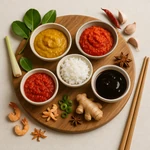
The first purchase "for Asian cuisine" does not have to be a bunch of random sauces. When you divide your budget (for example around a thousand crowns) according to functions – saltiness and umami, acidity, sweetness, spiciness, fat and aroma, plus rice or noodles – you get a base from which you can cook repeatedly without unnecessary improvisation. The article provides a practical plan: how to choose the entry style of dishes, what makes sense to buy immediately, what to wait for, how to read labels and how to avoid typical beginner mistakes.
Starting with Asian cooking is surprisingly easy – if you don't choose five cuisines at once and instead of "exotic" select one dish that has few steps, forgives minor mistakes, and teaches you one important principle. This guide will help you choose the first cuisine according to taste and time and show several proven starter types of dishes (mainly rice bowls) on which you can quickly build a home routine.
When people talk about a “healthier” Asian-style diet, it often becomes a vague mix of ideas about rice, soups and “light” cuisine. In practice, however, it's much more useful to look at specific eating habits: what a typical breakfast looks like, why warm and savory foods are eaten so much, how spices and herbs function as the backbone of flavor, and why a small bowl of dip often decides whether a dish feels fresh or heavy. This article is not nutritional advice – it is a practical guide for orienting yourself in these principles and using them safely at home.
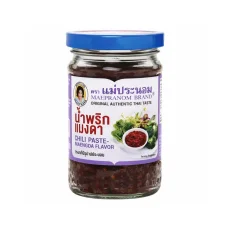
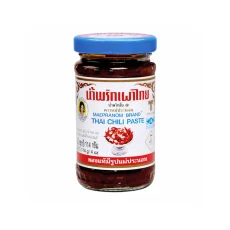
Chili paste can not only make food "spicy," but also give it a complete flavor, depth, and often umami. The key difference is whether the paste is fermented (and behaves like a concentrated base), or if it is more of a chili blend or chili paste in oil meant for quick seasoning. In this article, we compare the main types of fermented chili pastes in Asia, how to recognize them by their role in the kitchen, how to start using them at home, and how to avoid the most common mistakes.
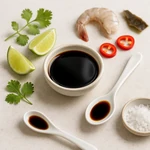
Soy sauce is often the first "Asian" bottle at home – and also one of the most common reasons why a dish ends up just vaguely salty. Under one name, there is an entire family of styles: from light working sauces for the wok to dark varieties for color, rounding, and sometimes a sweeter tone. In this guide, you will clarify the types, what to watch for on the label, and how to dose soy sauce so that it adds depth – not just salt.
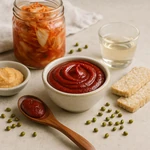
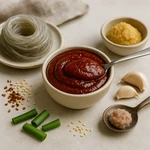
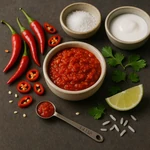
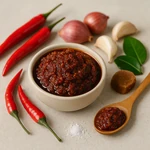
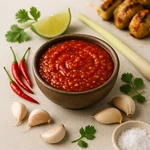
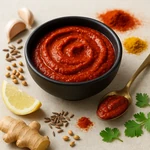
Sambal Badjak is a cooked Indonesian-style chili paste that brings more than heat: it adds savory onion and garlic notes and a gentle sweetness that rounds out quick weeknight meals. Here’s what makes it different from simpler sambals and how to get the best flavor from just a spoonful.
Bún Riêu is a bright, savory Vietnamese noodle soup built on tomatoes, seafood umami, and a generous pile of fresh herbs. This home-friendly version keeps the signature sweet-sour balance and “riêu” crab clusters—without requiring hard-to-find ingredients.
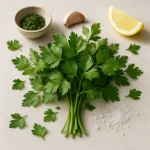
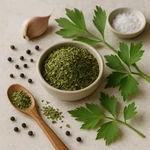
Parsley leaf is easy to overlook because it rarely steals the spotlight—but that’s exactly why it’s so useful. A small pinch can brighten a broth, clean up a rich sauce, and add a fresh green finish to fish or grilled meats. Fresh and dried versions behave differently, so knowing when to use which makes everyday cooking noticeably more balanced.
Vegan food in the Asian style does not have to be a compromise or a “substitute” for regular cuisine. In many parts of Asia, vegetarian and vegan cooking has its own traditions – and above all its own way of building flavor fullness: through umami, fermentation, working with texture, the right fat, acidity, and herbs. This article will show how to practically use these principles at home so that the food remains distinctive even without meat, fish, and dairy products.
Fermentation is not just a 'preservation trick'. In Asian cuisines, it is one of the main ways to create umami, smooth out sharp taste edges, change the texture of ingredients, and build a huge palette of sauces, pastes, side dishes, and soups from a few basics. This article will give you solid foundations: what fermentation means in the kitchen, why it is not the same as probiotics, what types of ferments exist, and how to start with them at home practically (even if you haven't fermented anything yourself yet).
Asian cuisine is not just about spiciness or "exotic" ingredients. It is often defined by the work with aroma: freshness, warmth, earthiness, citrus notes, bitterness and long aftertaste. Spices and herbs are not just a supplement – in many dishes they form the very backbone of flavor. And just as important as what you use is also when and how you use it.
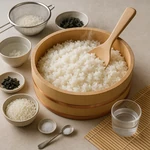
"Rice is just rice" does not work in Asian cooking. The same pot and the same method will sometimes give you a fragrant, tender side dish for curry, other times a mushy mess, or on the contrary dry separate grains that don't suit the dish. In this guide, you will clarify how to choose rice and cook it at home so that it has the right aroma, cohesion, and texture – for jasmine, basmati, sushi, and sticky rice.
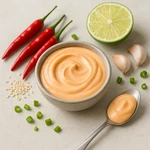
Sriracha Mayo blends the garlicky chilli kick of Sriracha with the rich, smooth texture of mayonnaise. The result is an easy, all-purpose dip and drizzle that works just as well with sushi and poke as it does with fries, sandwiches, or noodle bowls.
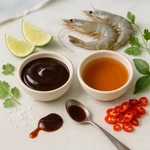
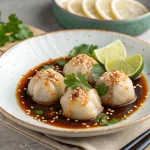
Soft steamed rice dumplings filled with savory chicken and served with a bright sweet-sour tamarind sauce—this Thai-style snack is surprisingly simple to make at home and perfect for sharing.
“The history of Asian cuisines” is not a single timeline and a few famous dishes. It is the story of how climate, available crops, seas and rivers, religion, trade, migration and urban life gradually created very different cooking styles. The article will help you navigate the main differences (rice vs. wheat, coast vs. inland, fermentation vs. coconut vs. spices) and give you practical tips on how to choose a direction at home according to taste and how to get started.
When you want grilled food to taste instantly more “special,” a warm, aromatic spice blend can do more than an extra sauce ever will. Orient-style grill seasoning is made for high heat: it clings well, perfumes the grill, and works on meat, fish, tofu, and vegetables—either as a dry rub or a quick marinade.
Surinamese sambal is the kind of chilli paste you keep within arm’s reach: intensely aromatic, fast to use, and powerful in tiny amounts. Stir it into soups, fried rice, noodles, sauces, or marinades when you want real chilli flavour—not just heat.
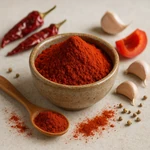
Sweet paprika is often treated as a “background” spice, but it can do three very practical things at once: deepen colour, add gentle sweetness, and round out sharp flavours—without extra heat. That’s exactly why it fits not only European staples, but also many everyday Asian stir-fries, noodle dishes, rice bowls, and soups.
This article will guide you through the secret that gives this Japanese dish its unmistakable character. You will discover why the sauce is key to the perfect balance of flavors and how its sweet and salty profile creates the harmony that makes this dish so exceptional. Read on to learn how it enhances the whole experience and why, without it, the dish would lose its power.
Lovage is a powerful herb with a deep, savory aroma that many people associate with comforting broth. Used with a light hand, it can add “stock-like” richness to everyday meals—and it also fits surprisingly well in Asian-inspired dishes like noodle bowls, rice, and quick stir-fries.
Discover the fascinating world of rice noodles! Whether it's delicate vermicelli noodles, wide slices, or tapioca varieties, these noodles are the basis of many Asian dishes. In our article, you will learn about their history, how they are made, and how you can incorporate them into your own culinary creations. Immerse yourself in traditional flavors and textures that will introduce you to the secrets of Asian cuisine!
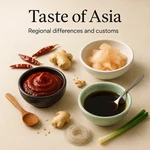
Regional style in Asia is not a minor detail – it is the key to why the same "Asian" dish can be based on broth and fermentation in one place, and elsewhere on coconut, herbs, or spices. In this article, we will create a practical map: what creates regional differences, how they appear in everyday food, and how to choose a direction that will work for you at home according to your taste.
Cooking for more people on a workweek is less about “perfect recipes” and more about how to smartly build a meal: so it’s satisfying without feeling heavy, and can be easily adjusted to the tastes at the table. In many Asian cuisines this practicality is natural – based on a bowl or plate where there is a place for a base, a protein, vegetables, freshness, acidity, texture and precise seasoning.
Ground meat is a weeknight workhorse—fast, versatile, and easy to portion. But it can taste surprisingly flat unless you build aroma and balance. This guide explains how to season ground meat on purpose: what flavors work, when to add spices, how to control heat and salt, and how to lean into Asian-inspired profiles with minimal effort.
Tandoori masala is a bold Indian spice mix made for high heat: aromatic, warmly spiced, and often gently hot. Combine it with yogurt and citrus for a quick marinade that works just as well in a home oven or on the grill as it does in a traditional tandoor.
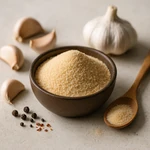
Ground garlic is one of those pantry staples that earns its place: it’s quick, consistent, and easy to dose—ideal for weeknight stir-fries, marinades, soups, and dry seasoning blends. Here’s how it differs from fresh garlic, when to add it to avoid bitterness, and how to pair it for the most fragrant results.
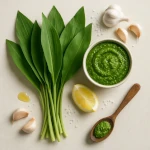
Wild garlic—also known as ramsons—is one of those short-season spring ingredients that can instantly make food taste brighter. It brings a fresh, leafy garlic character without the harsh bite of raw cloves, which makes it surprisingly easy to weave into quick Asian-style stir-fries, noodle dishes, coconut curries, and rice paper rolls.
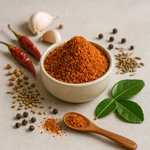
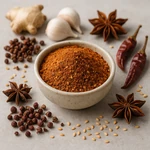
“Chinese seasoning” is a popular shortcut for fast stir-fries: it brings a warm, savory aroma and that familiar wok-style character even when you’re cooking with everyday ingredients. The trick is knowing when to add it, how much to use, and how to balance it so your dish doesn’t end up flat—or overly salty.
Aglio, olio, peperoncino: garlic, oil and chilli. It’s a minimalist Italian flavour trio that tastes bold, warm and clean when done right. In a ready-made seasoning blend, you get the same idea in a quicker, more consistent form—useful not only for spaghetti, but also for stir-fried noodles, rice bowls and quick wok dinners.
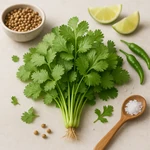
Coriander is one of those ingredients that can change the whole impression of a dish with almost no effort. The key is knowing which form you’re using—fresh leaves and stems (often called cilantro) or dried coriander seeds—because they behave differently, taste different, and belong at different moments in cooking.
Chinese cuisine represents many different worlds of flavors. In this article, you will find an overview of the main groups of typical dishes, representative dishes (what they are and how they taste), practical tips for starting at home, and the most common mistakes to avoid.
Steaming is one of the techniques in Asian cuisine that can be incredibly delicate and precise – and that's why mistakes are easily made. They most often appear with dumplings and dim sum: dumplings fall apart, the wrapper loses its texture, or the wrong method is chosen for the wrong type. This article provides practical guidance: what steaming actually means in an Asian context, which types of dishes are typically steamed, and how to recognize when the process (or chosen technique) is not appropriate.
Gyoza, wonton, bao and mandu are often lumped together as “Asian dumplings.” But each of these names actually promises a slightly different experience: a different type of wrapper, a different texture, and often a different role in a meal (pan-fried, steamed, in soup, dim sum…). When you know what to expect, it’s much easier to choose the right style, the right preparation, and the appropriate seasoning.
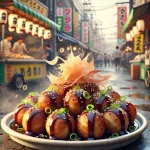
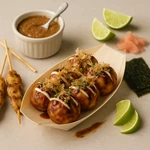
Asian street food is often simplified to “something to eat with your hands.” But its strength lies elsewhere: in speed, in a single stall’s specialization in a few dishes, in a clear local identity and in a flavor you “read” from the first bite. In this guide we’ll show where takoyaki, satay and other street classics belong — and how to choose a style that will taste good at home too.
Light and balanced Asian dishes are not “diet versions” of classics or flavorless meals. In many parts of Asia, lightness is a natural result of how a dish is composed: what forms the base (rice or noodles), what carries the protein, what adds freshness, acidity, texture, and how a sauce or broth is used so that the ingredients are not overwhelmed.
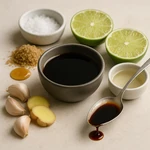
A good marinade is not a "universal sauce for everything," but a targeted tool: it prepares the surface of the raw material for a specific heat treatment and sets the flavor direction even before you start cooking. In this article, you will practically clarify what the salty (and umami), sweet, and sour components do in a marinade, when a dry vs. wet marinade is suitable, and what mistakes to watch out for.
Green, red, yellow, panang, massaman... In Europe, Thai curries are often described mainly by color, as if it were one sauce in several variations. In reality, these are different flavor systems based on different pastes, different aromatics, different "coconutiness" and suitability for both quick cooking and slow simmering. This guide will help you understand the differences and especially choose a curry that makes sense for your dish and taste.
Cookies
This site uses cookies to provide services, customize ads, and analyze traffic. Your consent to the use of cookies will significantly help us to improve our services. More information



 Česky (CZK)
 Slovensky (EUR)
 Deutsch (EUR)
 Austria
 Belgium
 Bulgaria
 Croatia
 Denmark
 Estonia
 Finland
 France
 Germany
 Greece
 Hungary
 Italy
Italy Latvia
 Lithuania
 Luxembourg
 Netherlands
 Poland
 Portugal
 Romania
 Slovenia
 Spain
Spain Sweden