


 Česky (CZK)
 Slovensky (EUR)
 Deutsch (EUR)
 Austria
 Belgium
 Bulgaria
 Croatia
 Denmark
 Estonia
 Finland
 France
 Germany
 Greece
 Hungary
 Italy
Italy Latvia
 Lithuania
 Luxembourg
 Netherlands
 Poland
 Portugal
 Romania
 Slovenia
 Spain
Spain Sweden










Fermented foods and probiotics in Asian cuisine: what they do to the taste and how to start with them at home
Fermentation is one of the oldest methods by which people preserved, transformed, and deepened the flavor of food. However, in Asian cuisines, it's not just about "durability": fermentation is one of the keys to umami, depth, aroma, acidity, and texture – and it explains why a wide range of sauces, pastes, side dishes, and soups are created from just a few basic ingredients. At the same time, it is important to be clear about one fundamental thing: fermented foods and probiotics are not the same.
🌶️ What fermentation means in culinary terms (and how to recognize it from the first bite)
Fermentation is a controlled transformation of food using microorganisms and their enzymatic activity. In cooking, the chemical definition is not the most important thing, but the result: fermentation can change the taste and texture of an ingredient in a way that cannot be simply "caught up" with salt, sugar, or longer cooking.
From a culinary perspective, it is important that fermentation can:
- deepen flavor and increase umami (the sensation of “complete” salty-rich taste),
- create acidity, alcohol, or aromatic compounds and enhance aroma and aftertaste,
- change texture (crispness vs. softening, smooth paste vs. firm product),
- improve storability and carry flavor beyond the harvest season,
- open new flavor worlds, which were not present in the original ingredient.
This is precisely why fermentation has such a strong role in Asian cuisines: it often powers everyday cooking, not just a "special healthy supplement."
Fermented foods are not the same as probiotics
This distinction is fundamental if you do not want to have unrealistic expectations from fermented foods. Fermented foods and probiotics do overlap, but they are not synonyms.
Probiotics are living microorganisms that, when administered in sufficient amounts, demonstrably provide health benefits to the host. This is a rather strict definition – and not every fermented food meets it.
In practice, it is good to use precise and sober language:
- fermented foods may contain live microorganisms,
- some can be a source of live cultures,
- but not every fermented food is automatically probiotic (for example due to heat treatment, storage, or because cultures are not described and verified at the level of specific strains).
For home cooking, the practical conclusion is: it makes sense to buy fermented ingredients mainly for taste, umami, and technological function in food. If you are concerned with probiotics, it is better not to be misled by marketing impressions that "everything fermented = probiotic."
Why fermented foods have such a strong position in Asia
Historically, fermentation solved several problems at once: food preservation outside of harvest time, better utilization of grains, legumes, fish, and vegetables and mainly the creation of stable flavorings, which made it possible to cook delicious food even with limited ingredients.
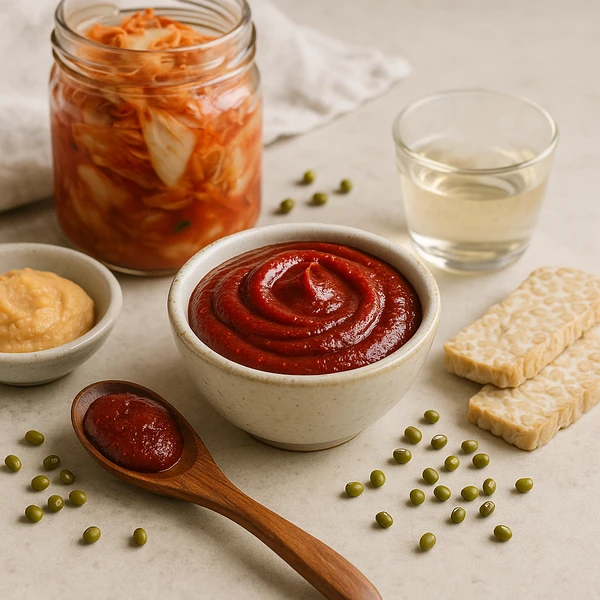
This is precisely why a whole range of "basic" ferments emerged in Asia, which today form the flavor backbone of many cuisines – for example soy sauces, miso, Korean jang (fermented sauces and pastes like ganjang, doenjang, and gochujang), fish sauces, shrimp pastes, tempeh, natto, and various regional fermented vegetables.
It is also important that in many regions these are not niche products: they are common, everyday ingredients. In Korea, this is clearly seen in the pair kimchi and jang: kimchi functions as a culturally rooted part of table customs and home economy, and jang forms the basic "flavor backbone" of many dishes.
Cultural curiosity: kimjang and jang making
Fermentation in Korea has an exceptionally strong cultural grounding. Within the topic, two UNESCO recognitions are often mentioned: the recognition of kimjang (traditional communal preparation of kimchi) and jang making (the tradition of making fermented sauces and pastes). For chefs, an interesting point is that "ferment" here is not just a recipe but also a tradition and a family flavor profile passed down through generations.
Main groups of fermented foods in Asian cuisine (and how they differ)
Fermented foods are not a single type of product with one flavor. In Asian cuisine, it pays to think of several different "worlds": liquid sauces, pastes, vegetables, solid products, and fermented doughs/batters. Each world behaves differently when cooking and gives food a different kind of depth.
1) Fermented vegetables: kimchi as a family of side dishes
Kimchi is a typical example of how misleading simplification can be. It is not "just spicy cabbage," but a broad family of fermented side dishes with cultural and culinary depth. Practically: kimchi can be a standalone side dish, but just as often serves as a flavor contrast that enlivens otherwise simple meals.
From a cooking perspective, note especially that fermentation also changes texture: kimchi can be crunchy and soften over time differently than you would expect from common quick pickling.
2) Fermented soy pastes and sauces: miso (and why “not all pastes are the same")
Fermented soy is a vast world. From one ingredient, miso or soy sauce can be made – along with Korean jang and other regional products. In home cooking, the most valuable thing about them is that even a small amount can give food a "finished taste" and umami.
It is also important not to overlook differences: for example, miso and doenjang are not the same. They are related but differ in taste and technology – it's worth treating them as different ingredients, not as substitutes.
3) Fish and marine ferments: fish sauce and shrimp paste
Fish sauces and shrimp pastes are typical “under-the-hood engines”: you often don’t eat them alone, but in small quantities, they significantly elevate a dish. For a beginner, they can be intense – but that is their strength because they function as concentrated salty-umami seasoning.
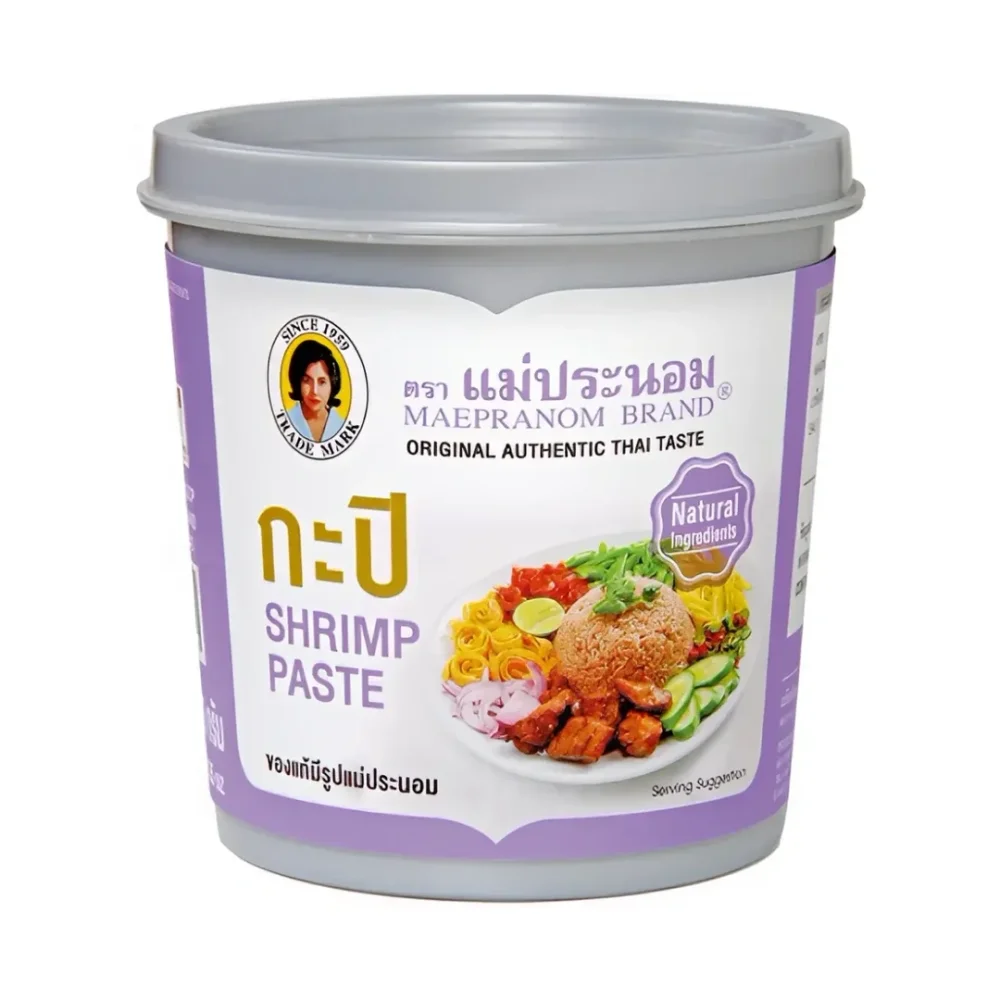
A practical example of ferment-inspired seasoning is Maepranom shrimp paste: just a very small amount in curry, soups, sauces, or stir-fries can change the depth of flavor (especially when the dish “lacks something” but you don’t want to just add salt).
4) Fermented legumes in other forms: tempeh and natto
Not all ferments are sauces and pastes. Some are standalone dishes or full-bodied "mass" for meals. Two good examples of differences are:
- tempeh – firm and cohesive,
- natto – sticky and fibrous; often an “acquired taste,” one must put it in the right context.
This is a good moment for realistic expectations: just because something is a traditional ferment doesn’t mean it will taste “mild” or “universally.” Some ferments are simply strong.
5) Fermented beans as a flavor base: black bean sauce
Another typical Asian principle is the use of fermented beans as a salty umami base for quick meals. In home cooking, this is especially evident in stir-fry, tofu, or noodles where you need to quickly build a strong flavor without long cooking.
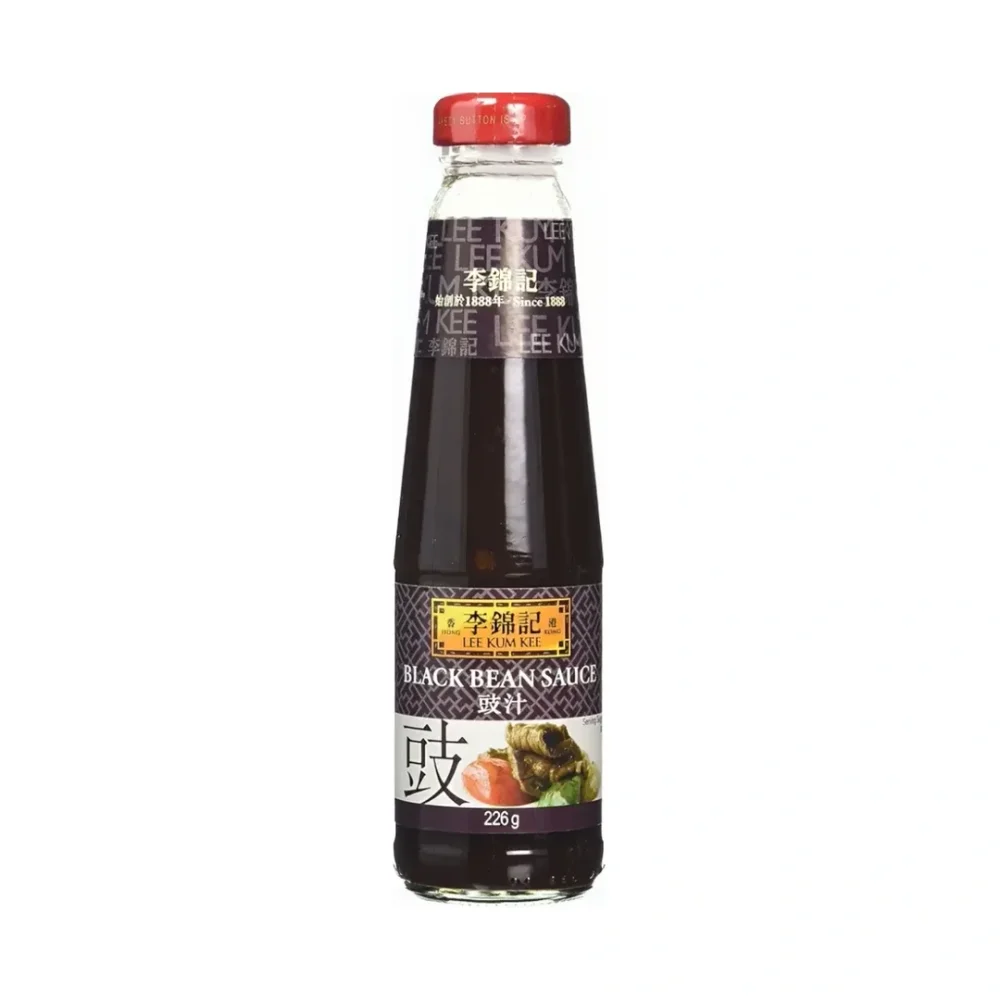
Specifically, something like Lee Kum Kee fermented black bean sauce can work – it’s strong, so it pays to start cautiously and add little by little.
6) Fermented doughs and batters: dosa and idli
In some regions, fermentation does not appear as a sauce but as a dough technology: rice and legumes transform into a fermented batter, from which dishes like dosa or idliare made. This is an important reminder for understanding the topic: fermentation in Asian cuisine is not a “single category of sauces” but a wide range of processes with different results.
How to incorporate fermented foods into everyday cooking: practical onboarding
The best way is not to start with extremes but with small steps that immediately show you the culinary benefits of ferments in the first dishes. Treat it like working with seasonings: the goal is not to “eat as much ferment as possible,” but to use it correctly.
1) Start with one “basic” product
For most households, the simplest start is one of these types: miso, quality fermented soy sauce, kimchi, fish sauce or tempeh. Starting with one helps you better understand what exactly that ferment does to the flavor.
2) Use ferment as a seasoning, not as a “main ingredient”
This is often where the biggest leap in home cooking quality occurs. Small doses work too:
- a teaspoon of miso in sauce or soup (more as a flavor base),
- a bit of kimchi with rice as a contrast,
- a few drops of fish sauce in soup or noodles,
- for strong marine ferments, start comfortably with the tip of a teaspoon and add gradually.
For intense pastes, a simple rule applies: better add twice in small amounts than once “too much” and then have to save the whole pot.
3) Build your dish on a neutral base that lets the ferment shine
Ferments are often best learned on a simple, neutral base – for example, rice. If you want a universal home base for bowls and side dishes, categories like other types of rice (to vary textures and styles) or sushi rice (for dishes where you want to work more distinctly with seasoning and contrast) can be helpful.
The idea is simple: when the base is “calm,” you more easily understand what the ferment does (umami, saltiness, acidity, aroma, aftertaste) and how much you actually need.
4) Expect that some ferments are an “acquired taste”
Natto, some shrimp pastes, or very old ferments can be intense for beginners. This doesn’t mean they are bad – they just require context and getting used to. It helps to start with small amounts and in dishes you already know.
5) Preparation organization: ferment is often a quick “final touch”
Asian cooking often proceeds quickly and in a precise order. When you prepare fermented seasoning in advance (measure into a small dish and have it ready), it is easier to maintain the rhythm of cooking and avoid overcooking aromas or ruining textures. This is practically important especially with quick pans and stir-fries, where there is no time during cooking to “look for” additional ingredients.
Tip: If you are unsure about dosing, do a small side test – season a piece of cooked rice or noodles little by little, then add to the whole dish. ✅
Most common misconceptions and mistakes (and how to quickly fix them)
Misconceptions in expectations
- "Everything fermented tastes similar." No. The differences between miso, doenjang, fish sauce, kimchi, and tempeh are fundamental – both in taste and in use.
- "Fermentation = only health benefits." No. In cooking, fermentation is mainly about flavor, texture, and technique. Health claims need to be formulated carefully and not everything should be lumped into the category of "probiotics."
- "Kimchi is just spicy cabbage." No. Kimchi is a broad family of fermented side dishes with deep cultural and culinary significance.
Misconceptions in substitutions
- "Miso and doenjang are almost the same." They are not. Treat them as distinct ingredients and learn them separately.
- "Fish sauce and soy sauce can be substituted." No. Each has its own flavor logic – if you swap them, you often get a different type of saltiness and a different kind of “depth” than intended.
Mistakes in practical use
- Too large a dose right at the start. Solution: start with a small amount (teaspoon, a few drops, tip of a teaspoon) and add gradually.
- Trying to "force" fermentation into every dish. Fermentation should make sense flavor-wise and stylistically. Sometimes it should be the main contrast (kimchi as a side), other times just a subtle base (paste/sauce in the background).
- Confusing culinary function with health promises. Fermented foods are traditionally valuable, but it's better to use sober language and not create automatic expectations of probiotic effects from every ferment.
What to take away from the article
- Fermentation in Asian cuisine is mainly about flavor and technique: umami, depth, aroma, acidity, and texture.
- Fermented foods are not automatically probiotics – there is an overlap, but it is not the same thing.
- Asian ferments create different "worlds": vegetables (kimchi), soybean pastes and sauces (miso, jang), fish and marine bases, solid products (tempeh, natto) and fermented doughs (dosa, idli).
- Start with a small amount: teaspoon, few drops, tip of a teaspoon – and only then add more.
- The biggest difference is the right choice and no substitution: miso is not doenjang, fish sauce is not soy sauce, and kimchi is not just "spicy cabbage."

Read next
If you want to explore this topic further, continue with these related blog guides and articles:
