


 Česky (CZK)
 Slovensky (EUR)
 Deutsch (EUR)
 Austria
 Belgium
 Bulgaria
 Croatia
 Denmark
 Estonia
 Finland
 France
 Germany
 Greece
 Hungary
 Italy
Italy Latvia
 Lithuania
 Luxembourg
 Netherlands
 Poland
 Portugal
 Romania
 Slovenia
 Spain
Spain Sweden










Typical Malaysian ingredients: how to recognize the "Malaysian" taste and how to recreate it at home
Malaysian cuisine is not a single uniform "national taste," but a practical mix of several traditions that meet and often blend in one territory and often even in one dish. This makes it all the more important to recognize the ingredients that keep reappearing in Malaysian cooking: rice and noodles, coconut, chili and sambal, aromatic herbs, tamarind and lime, and pronounced fermented marine components. In this article, we will arrange them according to their function, explain the differences, and add specific tips on how to start with them without unnecessary mistakes.
🍜 What "typical Malaysian ingredients" mean (and why it's good to understand them as a system)
With Malaysian cuisine, it's useful not to think of "one typical taste," but rather of a building set that repeats in various combinations: a starchy base (rice or noodles), coconut richness, heat from chili and sambal, acidity (tamarind, lime), aromatics (lemongrass, galangal, garlic, shallot, pandan), and depth from salty fermented components (fish and shrimp products).
This combination is typical for Malaysia: bold and rich flavors that make sense because of the balance of salty, spicy, sweet, and sour. When you have the right "functional" ingredients in your kitchen, you are much closer to the Malaysian result than with a random list of exotic bottles.
Core of Malaysian pantry: rice, noodles, and soy products
Rice: the base that makes the outcome (un)convincing
Rice in Malaysia is not just a side dish, but often the main carrier of the entire flavor. In dishes where rice is central (typically mentioned nasi lemak or chicken rice), the quality of rice and correct preparation are crucial: if the rice is bland or badly cooked, even a well-seasoned sauce or sides will lose their appeal.
Noodles: rice and wheat - and they are not interchangeable
Malaysian cuisine works with noodles alongside rice, and it is good to keep in mind that different types of noodles suit different dishes. Swapping the type of noodles (for example, just based on what's at home) can change the texture and how the sauce or broth clings to the noodles – thus changing the entire dish.
Tofu and soy products: practical carriers of sauces and sambal
Tofu and other soy products in the Malaysian context often function as a "sponge" for sauce and spices: they absorb sambal, coconut sauce, and fermented saltiness. In home cooking, this is one of the simplest ways to experience Malaysian flavor without complicated sourcing of fresh ingredients.
Coconut milk: the richness that holds the dish together
Coconut milk is key to Malaysian flavor – it adds fat, roundness, and "body." However, this is where frequent disappointment arises: coconut milk is not one standard. Differences arise in thickness, coconut content, behavior when heated, and overall suitability for rich dishes.
Practically: richer, thicker coconut milk usually works better in richer dishes; with watery or weak products, the resulting dish can easily feel flat and "without Malaysian identity."
If you want to choose wisely, an approach from general selection of Asian ingredients helps: don’t buy by packaging, but by the function of the ingredient in the dish and whether it is a basic product or already a seasoned variant.
👃 Pandan, lemongrass, galangal, garlic, and shallot: the aromatic signature
Malaysian food is often recognized by its aromatic base. The typical list includes:
- lemongrass (adds a fresh citrus scent),
- galangal (an aromatic relative of ginger),
- garlic and shallot (building blocks of the "base"),
- pandan (pronounced aroma, often associated with sweet, coconut tones).
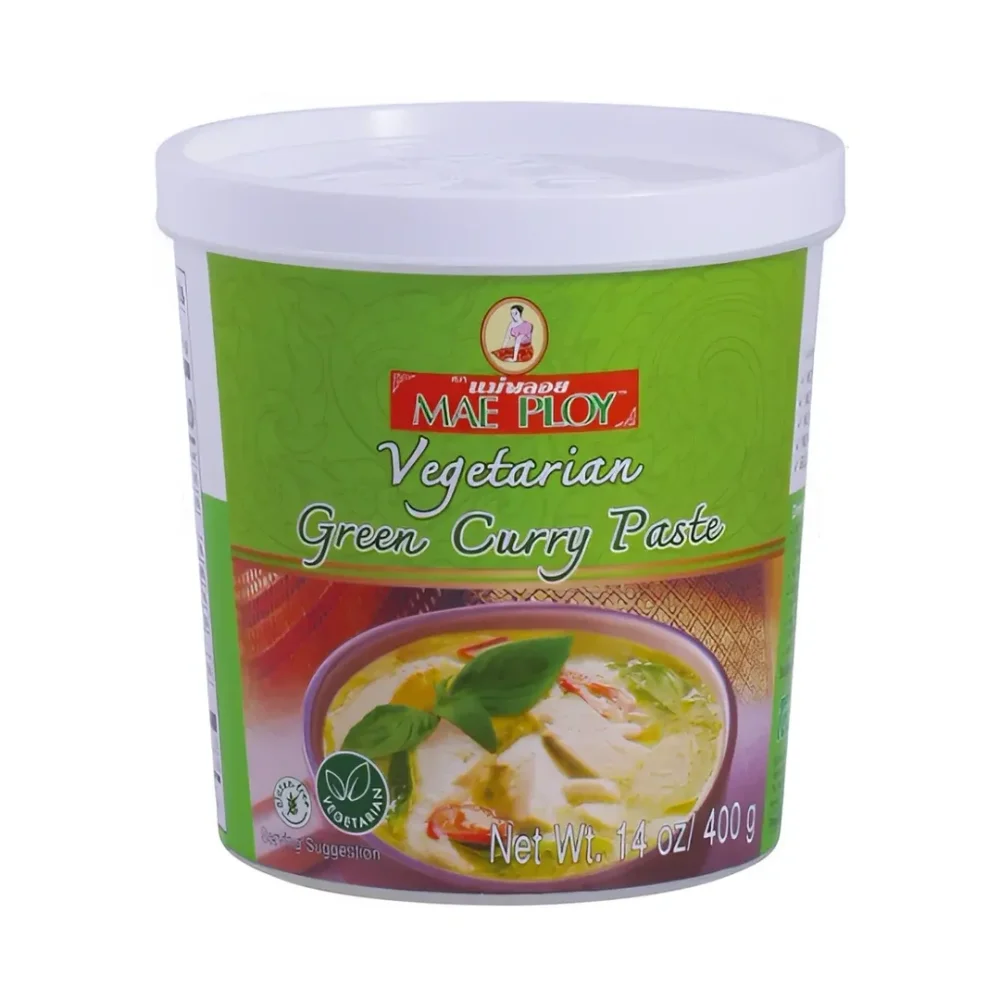
A home shortcut that nonetheless shows the principle well: a ready-made aromatic paste teaches you how the combination of chili + lemongrass + galangal "smells." A practical example can be Mae Ploy green curry paste (vegetarian) — it’s a Thai style, not Malaysian sambal, but it illustrates well how the aromatics behave when cooked in coconut sauce or in stir-fry.
Chili and sambal: one category, many roles
Chili is common in Malaysian cuisine, but the real "organizing" ingredient is often sambal. It’s important to know that the word sambal can cover several different uses:
- table sambal (as a final seasoning),
- cooking base (builds the sauce or pan),
- dip,
- sweeter chili sauce (different logic, different dosing).
This distinction is practical: if you mistakenly use the sweeter chili sauce as a "base" instead of sambal, the result will be not only sweeter but often flatter and less "cooked" in flavor. Conversely, serving a very concentrated cooking base directly on the table will feel rough and overcooked.
Tamarind and lime: acidity that opens up flavor
In Malaysian dishes, working with acidity often repeats – typically through tamarind and lime. The sour component does not just make the dish "sour": it helps lighten coconut, highlight aromatics, and clarify the contours of spiciness.
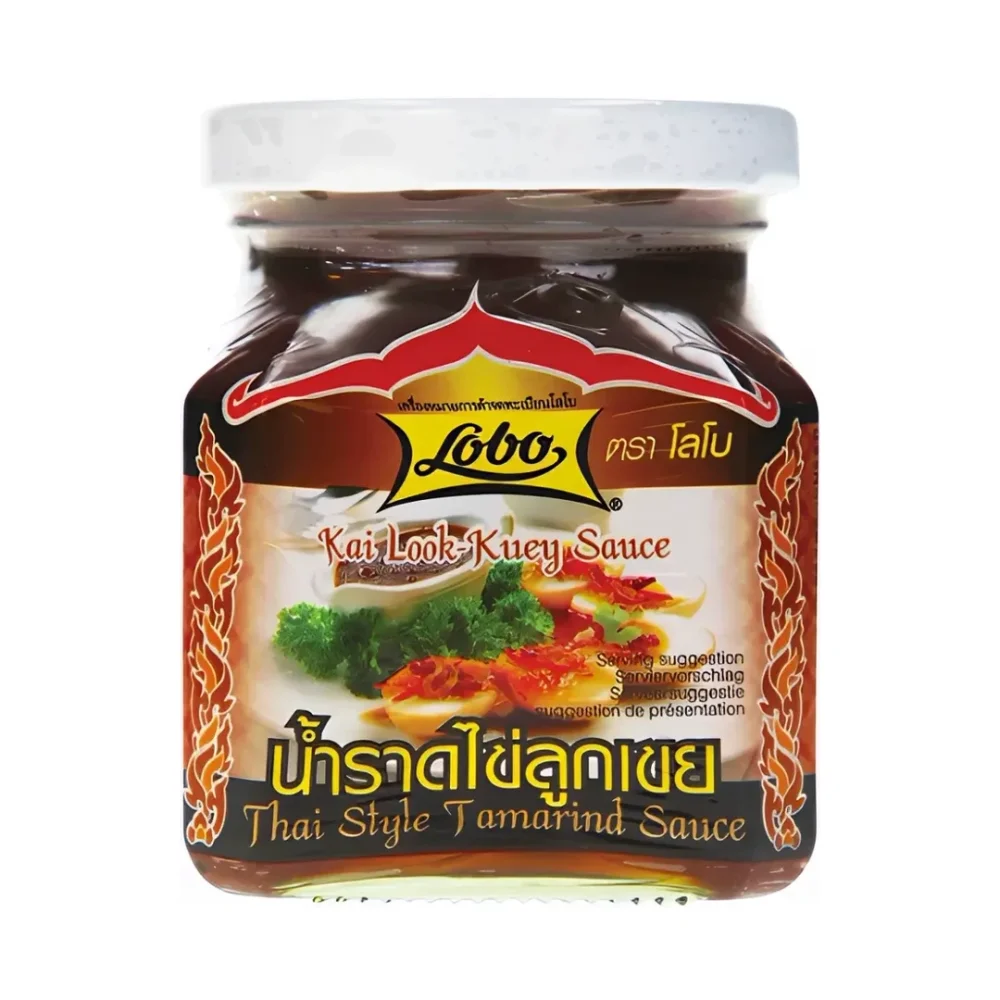
Tamarind appears in practice in various forms (concentrate, paste, sauce). If you want to start simply, an accessible form of tamarind can be a ready-made sauce, for example Lobo tamarind sauce (Thai style). Again: it’s not a "Malaysian universal," but as training for the sweet-sour tamarind note, it works well.
Indicative home dosing (so acidity does not overpower the rest):
- for 2 portions of sauce or broth, start with about 1 teaspoon of tamarind, stir, taste, and possibly add in small steps,
- use lime rather as final adjustment (at the end) rather than something you cook for a long time.
Fermented fish and shrimp products + anchovies: saltiness and depth
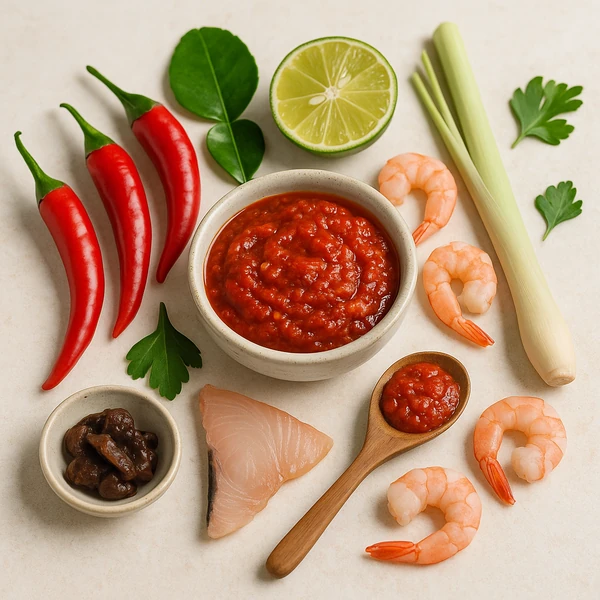
One of the characteristic elements of Malaysian flavor is the combination of aromatics, chili, and coconut richness with fermented marine components. They provide saltiness and umami that is hard to replace with "just salt."
A practical tip for expectations: fermented fish/shrimp seasoning tends to be intense and is dosed in small amounts. If you’re starting out, it’s safer to add less, taste, and then add more.
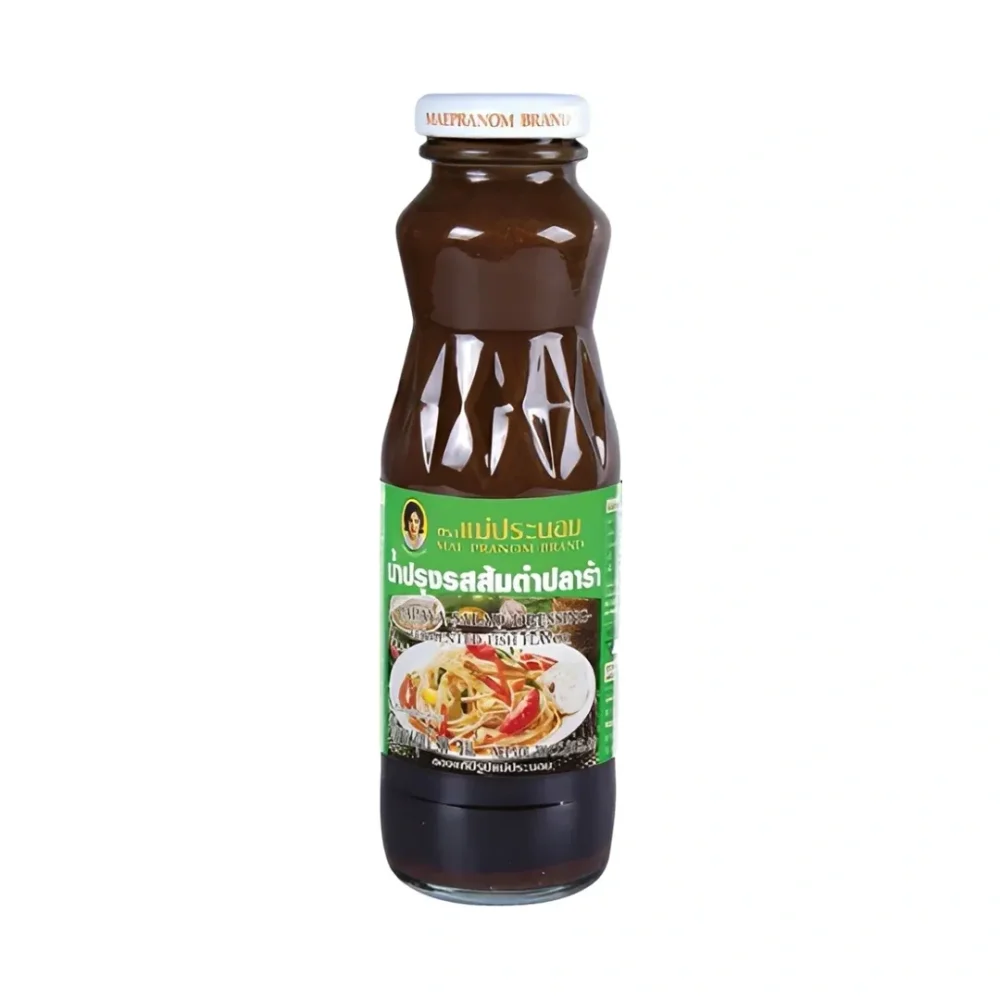
As an example of a finished product that shows the "fermented fish saltiness" direction, you can use Maepranom fermented fish dressing. It's a dressing intended for specific use (not a pure fermented base), but it shows well how pronounced and "deep" fermented fish flavor can be – and why it is used carefully.
In the same family of typical ingredients are also anchovies (anchovies): they add saltiness and crunchy texture and in the Malaysian context are often perceived as a "small ingredient with a big effect."
Peanuts and palm sugar: texture and sweetness that have a function
Peanuts in Malaysian cooking often add texture (crunch, topping) and also "thicken" and round the impression of sauces. It’s not just the nutty flavor but also how the peanut element holds together the spicy and sour tones.
Palm sugar is a typical source of sweetness that in Malaysian cooking is not dessert-like "sugaring" but a counterbalance to acidity and spiciness. Sweetness often plays a balancing role: when a dish is too spicy or too sour, a little touch of sweetness can "lock in" and soften the flavor.
Indicatively: for sauces and dips, it’s better to add sweetness in pinches up to 1/2 teaspoon, taste, and only then adjust. An overly sweet sauce is harder to fix than one that’s slightly "strict."
🍳 How to start with typical ingredients at home: 3 safe methods that work
👃 1) "Coconut + aromatics + chili" as the basis of identity
If you want to quickly get a Malaysian impression, build the base on coconut richness and aromatics. The practical sequence:
- Start in a pan: shallot + garlic (basis).
- Add lemongrass + galangal (aroma).
- Add chili / sambal (heat).
- Pour in coconut milk and briefly cook (body).
Adjust seasoning at the end: acidity (tamarind/lime) and possibly a little sweetness (palm sugar).
2) Dose acidity as a "corrector," not as the main flavor
Tamarind and lime are strong tools. If you’re unsure, stick to the simple rule: you can add sour, but it’s almost impossible to take it away. Add in small doses, always stir and taste after a moment (flavor develops gradually in hot sauce).
3) Use fermented marine ingredients drop by drop and watch closely what you actually have
In practice, there is a big difference between a "basic" fermented ingredient and a finished seasoned product (like a dressing). Finished products often have some flavor preset (salty, sweet, sometimes sour), so adjustments to the rest of the dish are necessary. It helps to ask a simple question: is it a pure base, or an already finished mix?
Most common mistakes and misconceptions: what unnecessarily spoils your result
- "Malaysian cuisine is one." It’s not – it’s multicultural. The practical impact: the same ingredients (coconut, chili, fermentation) can be combined differently depending on the style of dish.
- "It’s basically Thai or Indonesian cuisine." Malaysia shares some ingredients with the surroundings but has its own system of dishes and combinations. Therefore, it’s not worthwhile to blindly substitute everything with one "Southeast Asian" product.
- "Coconut milk is always the same." It’s not. Watery coconut milk easily breaks the character of a dish.
- Swapping noodles "based on appearance." Different noodles behave differently in the pan and in the broth; the wrong type changes texture and thus the whole dish.
- Uncertainty about what "sambal" you have. Table sambal, cooking base, and sweeter chili sauce are not the same. If the type doesn’t fit, neither does the result.
- "Nasi lemak is just coconut rice." It’s not – it’s a whole dish (and cultural symbol) where the combination of several typical components makes sense.
- "Laksa is one dish." It’s not – there are distinctly different types and each variant has a different logic of used ingredients.
What to take away from the article
- You best understand Malaysian flavor through the recurring ingredient system: rice/noodles, coconut, chili and sambal, aromatics, tamarind/lime, and fermented marine components.
- For key categories (coconut milk, noodles, sambal), it is more important to choose the right type for the right use rather than looking for the "most authentic packaging."
- Acidity (tamarind, lime) and sweetness (palm sugar) act as subtle balance correctors – dose in small steps.
- Fermented fish/shrimp ingredients add depth but require careful dosing and a clear distinction whether it is a base or a ready-seasoned product.

Read next
If you want to explore this topic further, continue with these related blog guides and articles:
