


 Česky (CZK)
 Slovensky (EUR)
 Deutsch (EUR)
 Austria
 Belgium
 Bulgaria
 Croatia
 Denmark
 Estonia
 Finland
 France
 Germany
 Greece
 Hungary
 Italy
Italy Latvia
 Lithuania
 Luxembourg
 Netherlands
 Poland
 Portugal
 Romania
 Slovenia
 Spain
Spain Sweden










Fermented foundations of Asian cuisine: how to understand and use them at home
Fermentation is one of the key methods in Asian kitchens to create depth of flavor, umami, aroma, and a "finished taste" – often even in dishes that rely on only a few ingredients. This guide will help you navigate the main groups of fermented bases (from soy sauces through pastes to fish and marine ferments), understand their role, and avoid common mistakes in selection and use.
Fermented sauces and pastes are as fundamental to Asian cooking as good broth, long simmering, or careful roasting are to European cuisines. They are not just "extra seasonings." They often form the very flavor framework of a dish: bringing umami, acidity, aroma, and complexity that cannot be simply replaced with just salt or sugar.
🌶️ What fermentation means in culinary terms (and why it's worth understanding)
In the kitchen, fermentation is a method by which ingredients are deliberately transformed to gain a more pronounced and complex flavor. In Asian kitchens, fermentation creates:
- depth and umami (the feeling of “fullness” of flavor),
- acidity and contrast,
- aroma and long aftertaste,
- and often the impression of a "finished taste", which holds the dish together even when the recipe is simple.
That is why in many Asian households, ferments are not viewed as something “special,” but as a regular part of cooking.
Fermented foods are not automatically “probiotics”
One of the most common shortcuts in thinking is the equation “fermented = probiotic.” In reality, these terms only partly overlap.
Probiotics are living microorganisms which, when administered in adequate amounts, have been proven to bring health benefits. This is a fairly strict definition. Fermented foods are created thanks to microorganisms, but at the time of consumption:
- they may no longer contain enough live cultures,
- they may be heat-treated,
- or they may not be verified and described in a way to speak of “probiotic” in the strict sense.
For home cooking it is therefore more useful to understand fermented bases mainly culinarily: as a tool for flavor, aroma, texture, and depth.
Why fermentation gives Asian cooking its power
Umami and depth
Fermented products often carry a pronounced umami flavor. It is this that can “bind” even a simple dish and give it a feeling of fullness. A typical effect: a few drops of fish sauce or a spoonful of fermented paste makes a bigger difference than adding more salt.
Complex flavor without complex cooking
In many Asian kitchens, part of the “long work” is transferred to the ferment. A few drops of fish sauce, a spoon of miso, or some doenjang can create depth that would otherwise require long-simmered broth or a complicated reduction.
Preservation (and why it’s still visible today)
Historically fermentation solved preservation: how to store fish, vegetables, or legumes out of season and how to create a stable base for everyday cooking. That’s why fish sauces, pickles, “jang,” and other fermented bases are so important in many regions.
Regional identity
Many fermented products are closely tied to a particular community and region. This is well seen, for example, in Korea: kimchi is not just a side dish but a culturally rooted part of dining, and the system jang (ganjang, doenjang, gochujang) forms the basic flavor framework of Korean cuisine.
Main groups of fermented bases in Asia (quick map for orientation)
For practical cooking, it helps to divide fermented bases into several families. This is not an academic classification – rather it helps you understand, what to expect from each group and why they are not automatically interchangeable.
1) Fermented soy sauces and liquid seasonings
This includes the broad family of “soy sauces”: Chinese styles, Japanese shoyu, Korean ganjang and other regional variants. It is important to consider that:
- “Soy sauce” is not one thing – under one name, distinctly different styles meet.
- Different countries use different divisions and names; the words “light” and “dark” do not mean the same everywhere.
- Some products are long-fermented, some are technologically styled; in the kitchen they differ not only in taste but also in role (salty backbone vs. coloring vs. sweeter glazing).
Practical tip from sauce logic: when deciding if something “can be replaced,” ask – what is the main source of saltiness, what carries umami, what adds color and what is more finishing than base. Two dark sauces can work completely differently.
2) Fermented pastes
This group includes, for example, miso, Korean doenjang, gochujang or Chinese chili and bean pastes like doubanjiang. Their common culinary feature: in small amounts, they add “body” and fermentation depth.
Practically: some pastes act as a base for soups and stews, some as seasonings for sauces, marinades, and dips. A good paste often does not behave like "a sauce to pour over," but like a flavor concentrate.
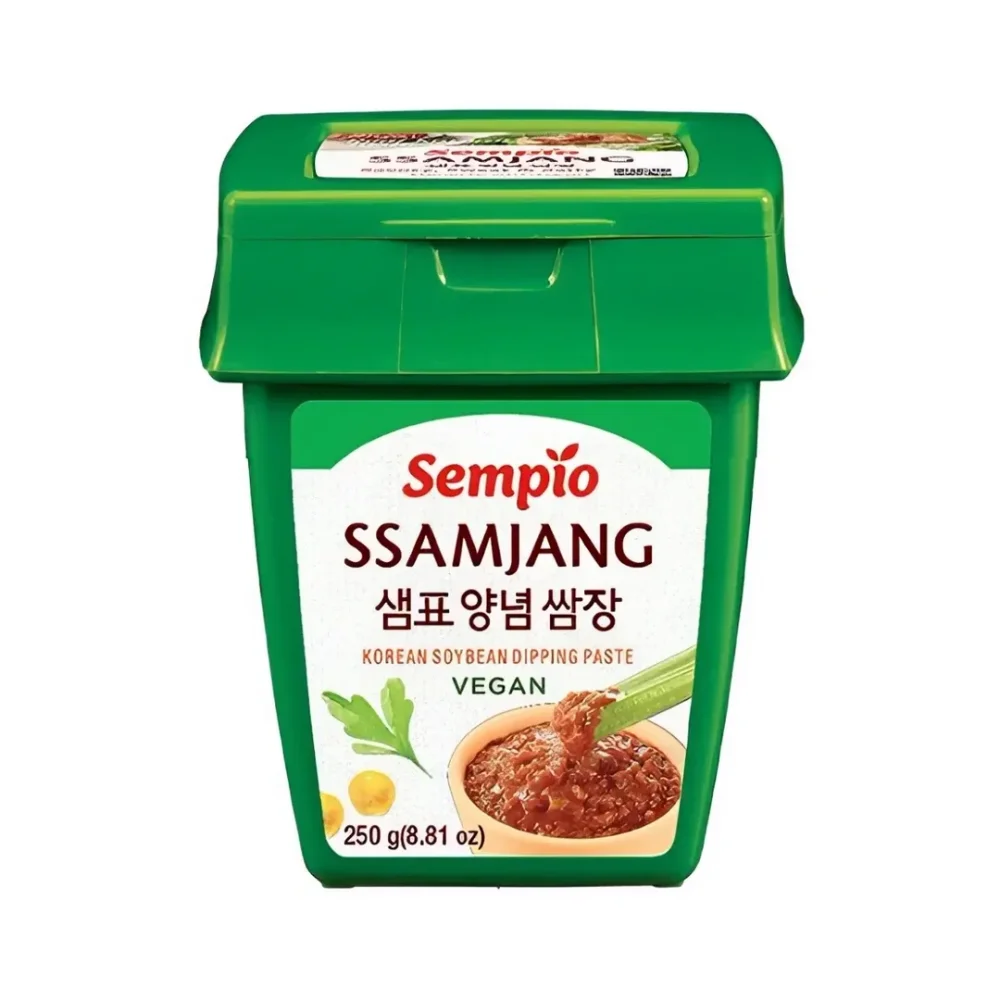
As an example of Korean fermented paste logic, you can consider Sempio ssamjang soy paste: it is thick, intense, and typically used in small amounts – in dips, marinades, or as a flavor support alongside meat and vegetables.
3) Fermented fish and marine bases
Fish sauces are one of the most important fermented bases of Southeast Asia. They are created by fermenting fish and salt, and their strength lies in that in small amounts they give the dish enormous depth.
You will encounter different names by region:
- nước mắm (Vietnam),
- nam pla (Thailand),
- patis (Philippines),
- and there are also intense local variants like pla ra.
How do they work in the kitchen? Rather than a "pouring sauce," they are:
- an umami concentrate,
- part of dressings and dips,
- a tool for connecting sweet, sour and spicy,
- a base for broths, wok dishes and marinades.
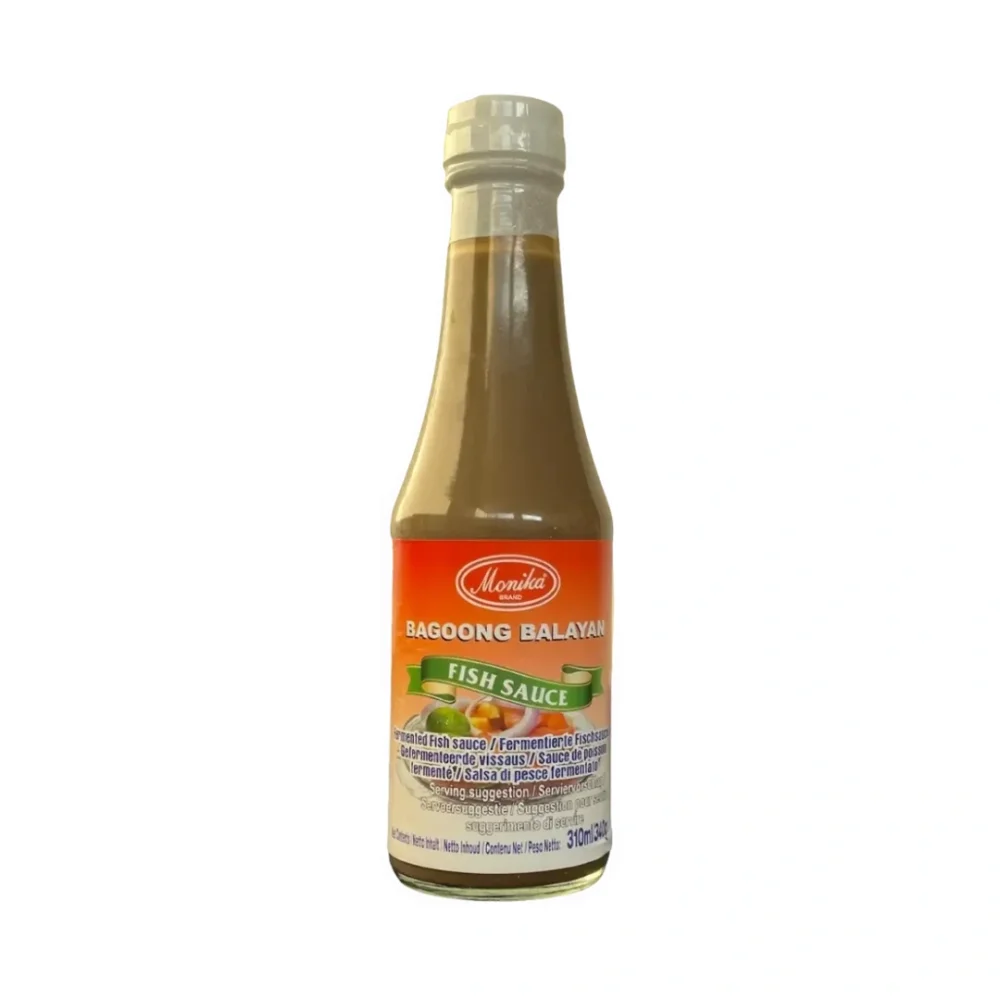
A specific example of this style is Balayan fermented fish sauce – you will typically dose it by drops and taste it because its impact is strong.
Alongside liquid fish sauces there are also fermented pastes (fish, shrimp) and other marine bases. If you want to see this group together, an indicative index is the category fish and shrimp pastes.
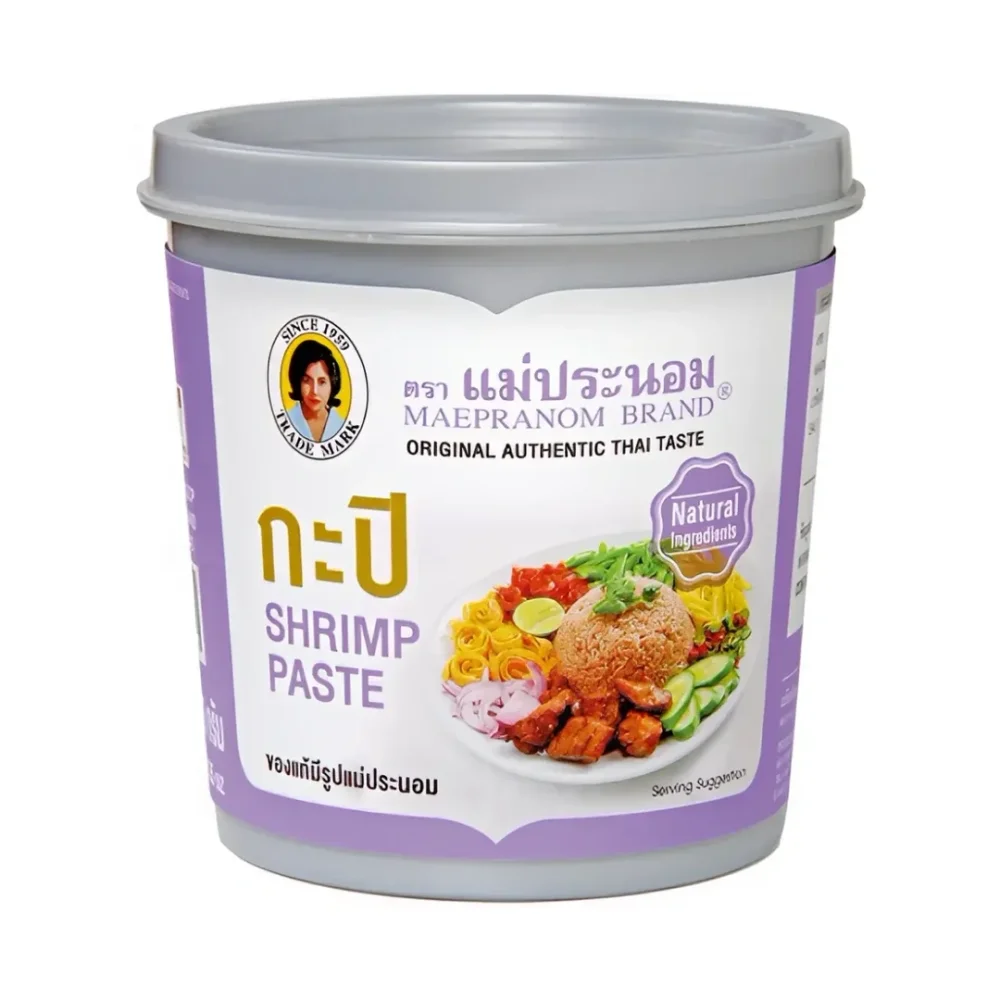
Shrimp pastes are also used for working with marine umami – intense, pronounced and typically used “in pinches.” An example: Maepranom shrimp paste, which is suitable as a small but flavor-strong seasoning for curries, sauces, soups, or stir-fries.
4) Fermented vegetables
This includes kimchi, fermented and pickled cabbage and other regional pickles, leaves or roots. In the kitchen, they often serve as contrast: they add acidity, freshness, and “liveliness” next to rice, noodles, meat or richer dishes.
5) Fermented soy products in solid form
This group includes for example tempeh, natto and some fermented tofu products. Their role differs from sauces: they often function as standalone protein components or distinct side dishes. At the same time, it is good to consider that some of them may be an "acquired taste" for beginners.
6) Fermented doughs and batters
In Asian kitchens there are also fermented doughs and batters. For home orientation it is important to know mainly that fermentation is not limited only to sauces and pastes – it can underlie the specific flavor, aroma or texture of some doughs.
How to start with fermented bases at home: small steps, big effect
The best approach is not to start with extremes, but practically: choose one base and learn to use it so that it improves the dish, not "overpowers" it.
1) Start with one “basic” ferment
For most households the easiest start is:
- miso,
- quality fermented soy sauce,
- kimchi,
- fish sauce,
- or tempeh.
2) Use the ferment as a seasoning (not necessarily as the main ingredient)
Beginner dosing can be kept very low – and that's correct. Practical guidelines:
- fish sauce: start with a “few drops,” mix, taste; you can always add more, but not take away.
- fermented pastes: work with “a little” or “a teaspoon” – a small dose often does more than you expect.
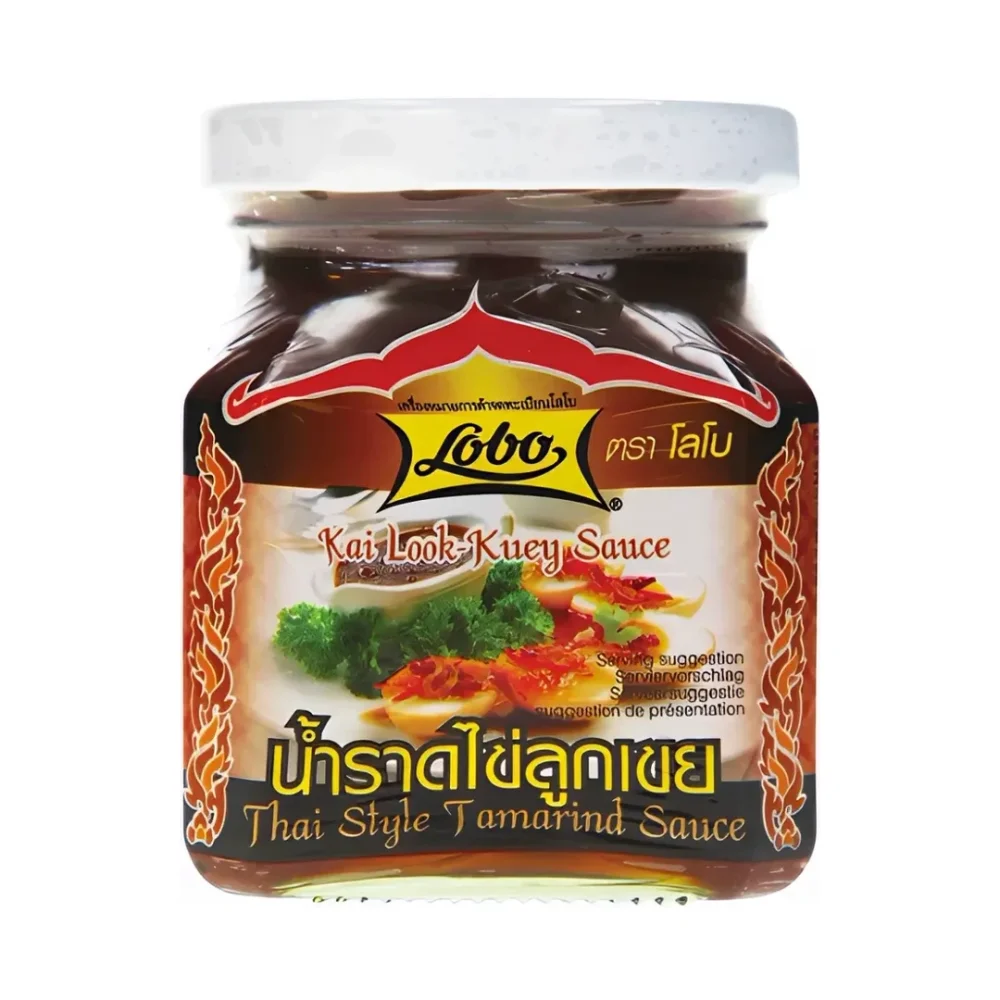
Fish sauce is often used not only in cooking but also in dressings and dips – this is where it best shows how it connects sweet, sour, and spicy. If you want to try this principle at home without cooking, put a small amount of fish sauce into a simple dressing and balance it with something sweet and sour. A practical helper for Thai style is for example tamarind sauce (Thai style)which helps build a sweet and sour base into which the fermented umami integrates well.
🍳 3) Choose the right ferment according to the kitchen situation
- When you want to quickly add umami: miso, soy sauce, fish sauce, doenjang.
- When you want acidity, freshness, and contrast: kimchi and other fermented vegetables.
- When you want a deep base for soups and stews: doenjang, miso, gochujang in smaller amounts, fish or shrimp pastes.
- When you want a standalone fermented protein component: tempeh, natto.
- When you want to work with the tradition of Korean fermentation: kimchi, doenjang, gochujang, ganjang.
- When you want to work with Japanese fermentation: miso, shoyu, natto, and koji products.
4) Expect that some ferments are an acquired taste
Natto, some shrimp pastes or very old ferments can be intense for a beginner. That doesn't mean they are “bad.” They just require context, proper dosing, and a bit of getting used to.
Common mistakes and misunderstandings (and how to avoid them)
- Confusing “fermented” with “probiotic”: fermentation is primarily a culinary tool. If you are interested in the health aspect, stick to sober language: fermented foods may contain live microorganisms, but this is not automatic.
- The idea that dark and salty sauces are interchangeable: dark color can mean longer fermentation, different sugar content, different texture, or regional style. It’s safer to think functionally: what is the source of saltiness, umami, color, and sweetness.
- Fish sauce as a “pouring sauce”: often works better as an umami concentrate in the base of a dish or in dressing/dip. Start drop by drop and taste.
- Too large a dose of fermented paste right away: with pastes (especially sea-based and some legume pastes) it pays to start with a small amount and add gradually.
- Confusing fermented pastes with non-fermented pastes: not every “paste” in Asian cuisine is a fermented product. Some pastes are rather chili/spice mixtures and have a different role than miso, doenjang, or fish ferments. If you’re unsure, stick to what type it belongs to (ferment = umami/depth; seasoning paste = aroma/spiciness).
What to take away from the article
- Fermentation is one of the main ways in Asian kitchens to create umami, depth, aroma, and “finished taste” even in simple dishes.
- Fermented foods are not automatically probiotics – culinarily what matters most is what they do with flavor.
- Basic groups of ferments: soy sauces, fermented pastes (miso/doenjang/gochujang), fish and sea bases (fish sauce and pastes), fermented vegetables (kimchi), firm soy ferments (tempeh/natto), and also fermented doughs.
- In practice, the best approach is “a little at a time”: a few drops of fish sauce, a teaspoon of paste, taste, then add.
- Sauces and pastes are not automatically interchangeable – think by function (saltiness/umami/color/sweetness/finishing).

Read next
If you want to explore this topic further, continue with these related blog guides and articles:
