


 Česky (CZK)
 Slovensky (EUR)
 Deutsch (EUR)
 Austria
 Belgium
 Bulgaria
 Croatia
 Denmark
 Estonia
 Finland
 France
 Germany
 Greece
 Hungary
 Italy
Italy Latvia
 Lithuania
 Luxembourg
 Netherlands
 Poland
 Portugal
 Romania
 Slovenia
 Spain
Spain Sweden










Thai curries and their colors: why it's not just about "different shades" and how to choose the right one
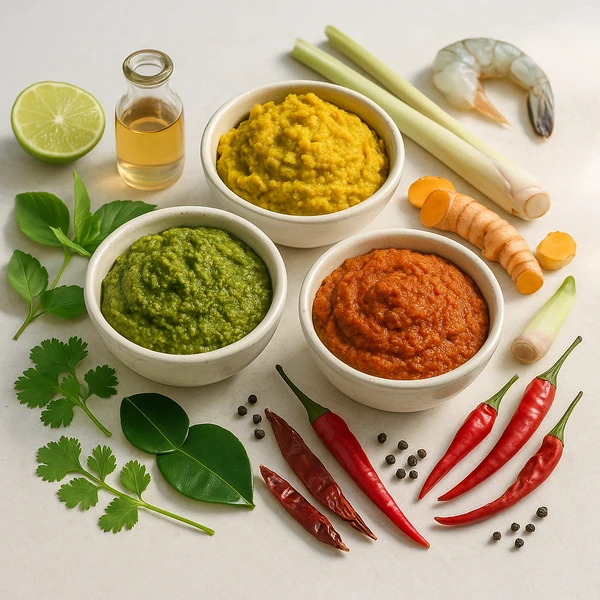
Green, red, yellow, panang, massaman... In Europe, Thai curries are often described mainly by color, as if it were one sauce in several variations. In reality, these are different flavor systems based on different pastes, different aromatics, different "coconutiness" and suitability for both quick cooking and slow simmering. This guide will help you understand the differences and especially choose a curry that makes sense for your dish and taste.
Why Thai curries are not just "different colors of the same sauce"
Thai curries are among the most famous dishes of Southeast Asia, but at the same time they are often a source of confusion: "I'll take some curry paste, add coconut milk, and that's it." But color in Thai curries typically does not mean just a cosmetic difference. In practice, it is about different base pastes, different aromatic logic, and often a different way that spiciness, sweetness, acidity, and saltiness work in a dish.
It is useful to think of Thai curries as a family of dishes that share the common method of construction (paste as a start), but have a different "personality" of the resulting sauce.
What "curry" means and why the paste (not curry powder) is key in Thailand
The term "curry" is broad and does not mean one specific thing across Asia. In Western usage, the word curry often means a dish in a sauce ("sauce/gravy") seasoned with a blend of ground spices; the origin of the term is usually linked to the Tamil word kari. But importantly, in practice there is no one universal model of "curry sauce" that applies the same everywhere.
In Thai cuisine, the fundamental difference is that many curries are not primarily based on a dry spice mix like curry powder, but on curry paste. Paste is a concentrated aromatic base (chili + aromatics + other ingredients) that is first fragranced and only then the rest of the dish is built on it.
What typically holds Thai curries together:
- curry paste as a starting point,
- coconut milk as a carrier (in many styles),
- fish sauce or another salty/umami component,
- sweetness and acidity as balancing,
- relatively quick sauce construction compared to some South Asian curries, which are often built longer.
This is precisely a good key to understanding the "colors": the color is a shortcut for a specific paste and its associated flavor profile.
The five most common worlds of Thai curry: green, red, yellow, panang, massaman
The following five types appear most frequently. For all of them, the goal is not to guess the color on the plate, but to understand, what kind of flavor energy to expect from them and for what type of dish they are practical.
👃 Green curry: freshness and pronounced aromatics
Green curry is a good choice when you want a fresher, distinctly aromatic dish. In practice, it often feels "lively": the sharpness and aromatics should be readable but still balanced with the coconut base and correct seasoning.
If what attracts you about Thai curry is herbal freshness, green is often the most direct route – and at the same time the type where you most quickly notice if you have balanced the sauce well with saltiness, sweetness, and acidity.
Red curry: a universal choice for quick coconut curry
Red curry is often considered one of the most universal starters if you want a quick coconut curry for an everyday meal. In practice, it tends to have a "more direct" character: it pairs well with common ingredients (meat, vegetables, tofu) and it is easy to learn the basic logic of Thai balance on it.
For a start, it is a type where it is easiest to fine-tune the result: if the sauce is flat, often better solving saltiness/umami or adding acidity helps; if it is "heavy", acidity and proper dosing of sweetness can help.
Yellow curry: easy entry and a "warmer" spiced impression
Yellow curry is also among the most reliable options for quick cooking. If you want to start with something straightforward, yellow (together with red) is one of the safest choices. Practically it fits when you want a coconut curry that is understandable and works well in a regular home kitchen.
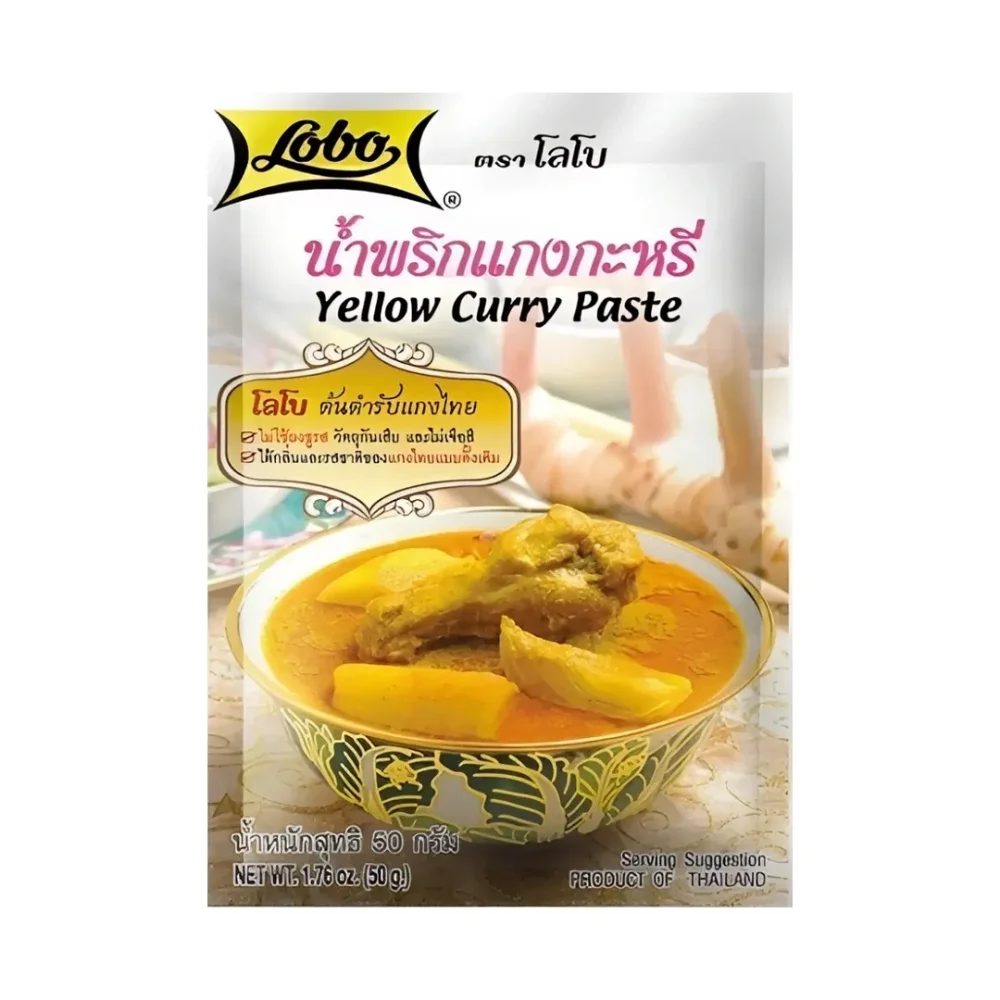
As a specific example of a ready base, you can use Lobo yellow curry paste – a type of product on which you can well practice the basic procedure: briefly fragrance it and only then build the sauce.
Panang: richer, “restaurant-style” and more pronounced sauce
Panang is suitable when you want a sauce that feels thicker and more intense. In practice, this often means a “richer” impression and a taste that should have a firmer body. If you already know red or yellow and want a step towards a more pronounced, concentrated sauce, panang is often a logical next step.
Massaman: deeper flavor and curry for slower simmering
Massaman is best understood as a curry suited for slow simmering and a “deeper” flavor. It often works great with meat and also with ingredients that like time (typically mentioned pairing with potatoes and onions). So if you’re not looking for a quick sauce in 20 minutes but rather a more substantial dish with longer cooking, massaman makes a lot of sense.
How to choose the right "color" based on taste and dish
The most practical approach is to choose not based on what sounds exotic, but based on what kind of experience you want on the plate and what ingredients you will be cooking.
- I want freshness and a coconut character: green and red curries often work well.
- I want quick coconut curry without much risk: red or yellow is usually the easiest start.
- I want a more pronounced, thicker sauce: panang.
- I want slower simmering and deeper flavor: massaman (and count on it being a “different cooking mode” than quick curry).
At the same time, an important thing applies: Thai curry is not just about spiciness. Even spicy curry in a good version should hold together thanks to the balance of saltiness, sweetness, and acidity.
How to build Thai curry at home in practice: paste, coconut, saltiness, sweetness, acidity
Thai curry usually cooks faster than some South Asian curries, but it depends even more on the right steps. This is the universal logic you can use across colors.
1) Paste is the start, not a finished sauce
Curry paste should function as a concentrated base. To taste "Thai," it needs to first be fragranced (brief sautéing), only then fluids come in. If the paste is just stirred into coconut milk without fragrancing, the dish may seem flat and "rawly" spiced.
2) Coconut milk is not just for softening – it is a carrier
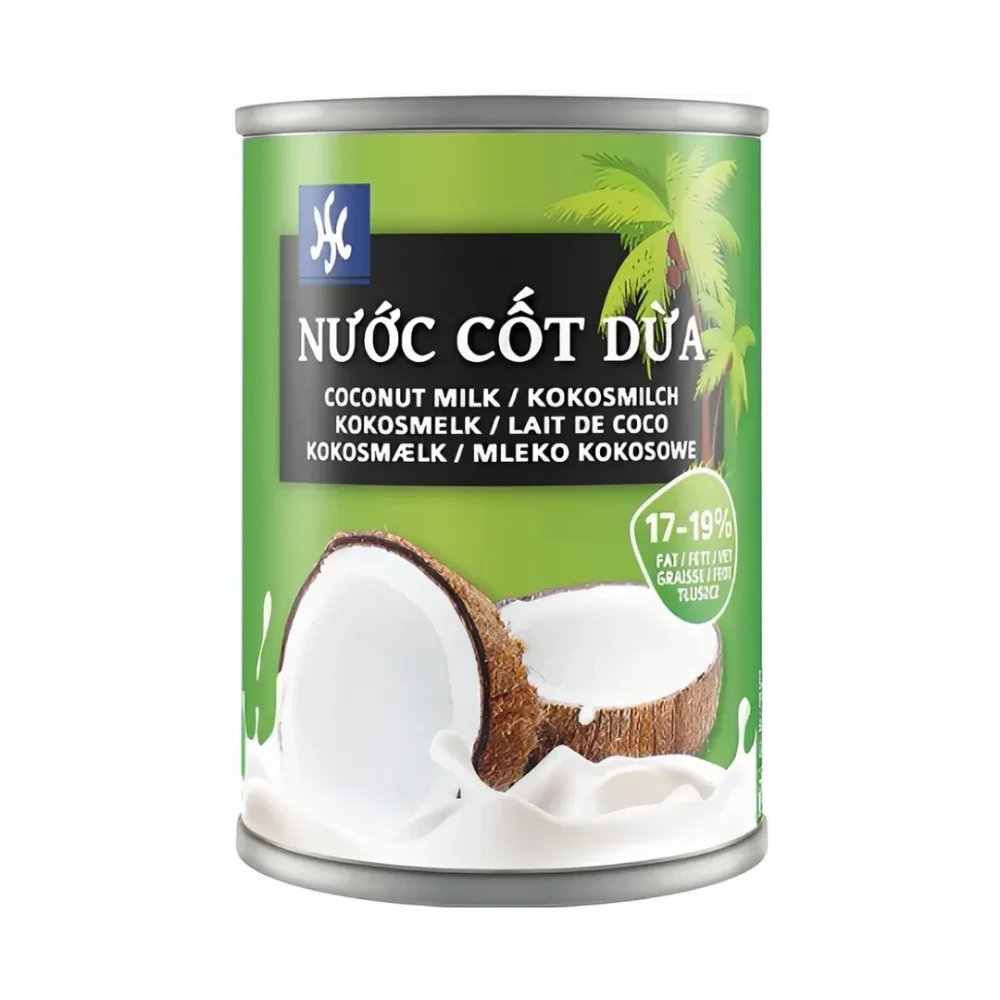
In coconut curries, coconut milk is a flavor carrier: it absorbs the aromatics from the paste and spreads it throughout the sauce. For a fuller, creamier result, it makes sense to use coconut milk with higher fat content – for example, H&S coconut milk 17–19%. If you want to try various versions first and choose a style, a guide for coconut milkhelps too.
3) Saltiness and umami: fish sauce is added in small steps
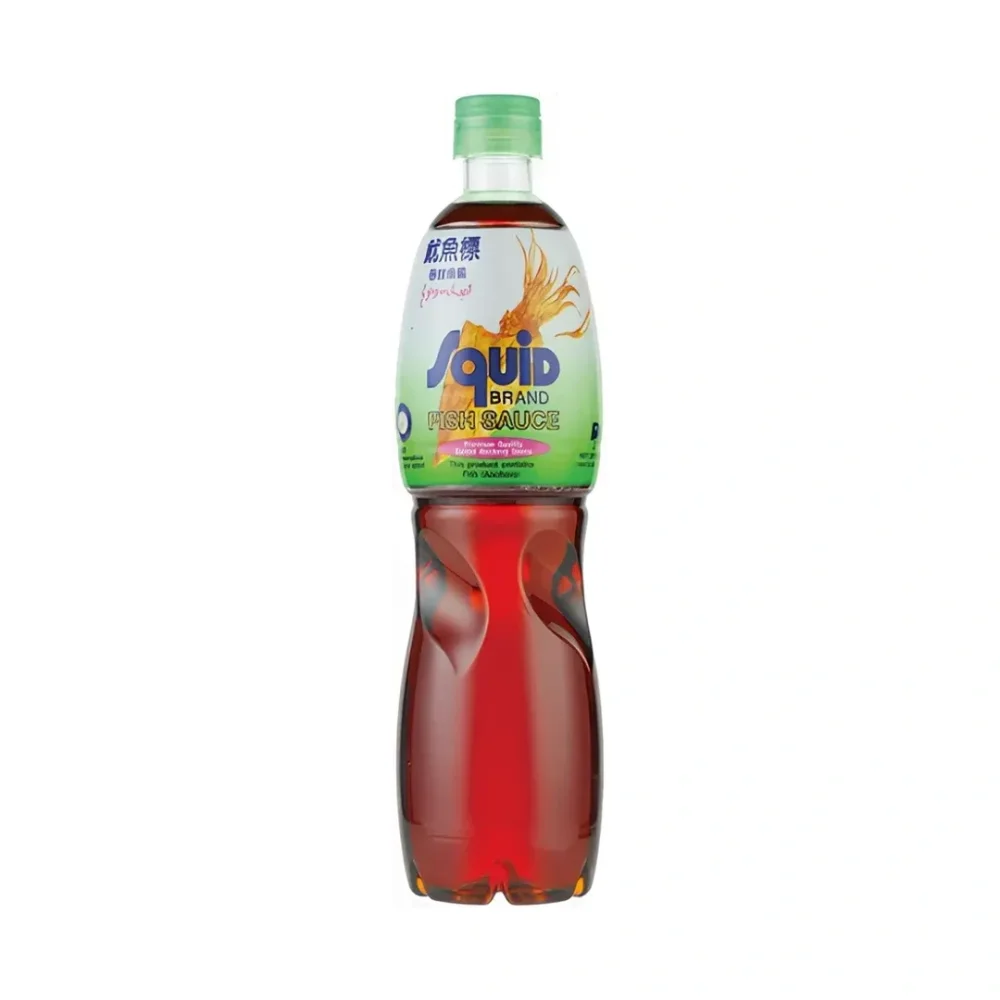
In Thai cuisine, saltiness and umami are often provided by fish sauce. It is very concentrated – the goal is not a "fishy taste," but depth and flavor structure in the sauce. Therefore add it gradually and always taste. A typical example of the Thai style is Squid fish sauce.
4) Sweetness and acidity: without them the curry easily falls apart
The Thai taste relies on balancing contrasts. In curry, this shows in that even if you have a good paste and coconut milk, the sauce can still feel "heavy" or "one-dimensional" if it lacks sweetness and especially acidity.
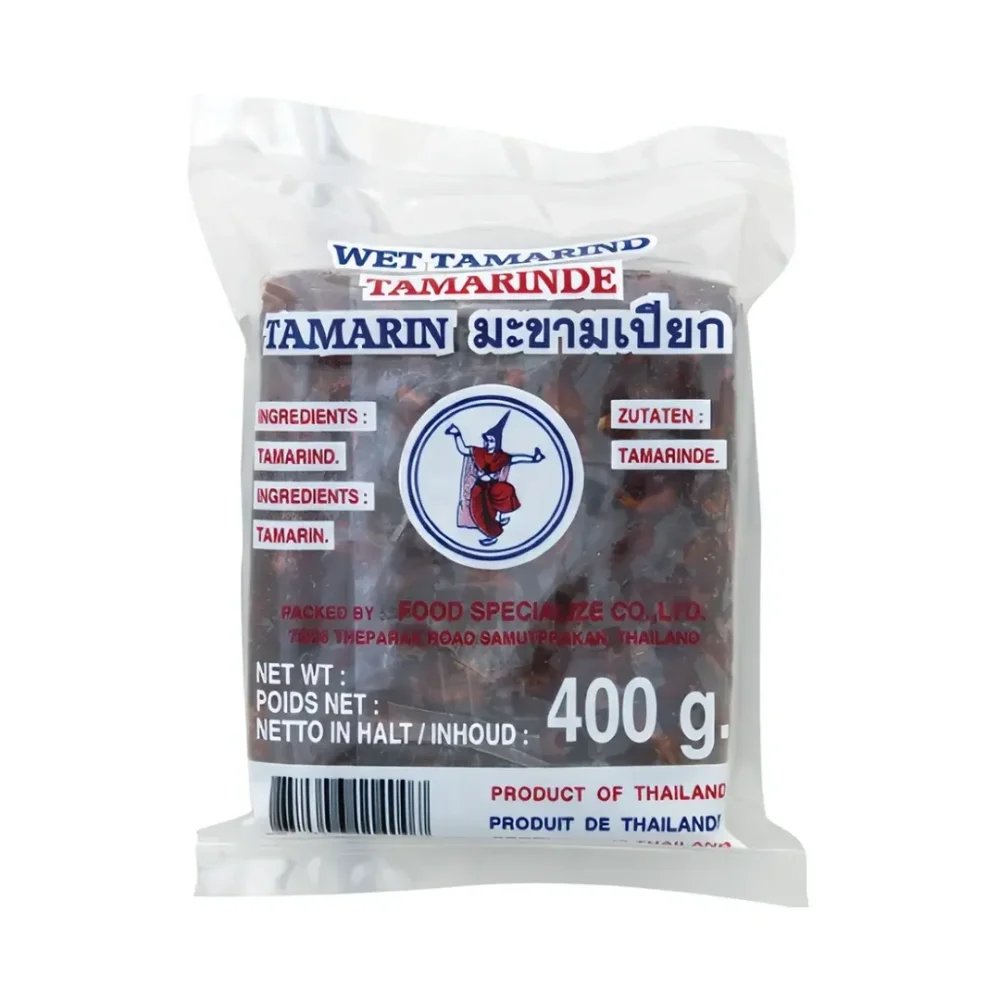
One of the typical tools for sweet-sour balancing is tamarind. A practical ingredient for home adjustment is Thai Dancer tamarind pulp: you can prepare part of the sour component from it and add gradually until the sauce "opens up."
5) How to recognize "quality Thai curry paste" (and why it matters)
Paste quality is not recognized just by brand. Practically, it is useful to check whether the paste feels like an honest aromatic base or more like a filler mass that colors and salts but doesn’t give depth.
Positive signs:
- Specifically listed aromatic ingredients (not just vague "spice mix"),
- clear composition without unnecessarily long list of additives,
- distinct main flavor logic (herbs/chili/spices, possibly tamarind),
- consistency that doesn’t feel "starchy" or too diluted with water.
Warning signs:
- Very general composition without clear main ingredients,
- emphasis on sugar, starch, or thickening even in the paste itself,
- aroma built more on flavor enhancers than on herbs and spices,
- paste that smells flat, sharp, or just "salty" after opening.
Important restriction for some diners: Thai pastes often contain fish components or shrimp paste; some may contain gluten or traces of allergens from production. If you cook for vegetarians/vegans or allergy sufferers, this is something to check before taking the paste as a "universal" base.
Common mistakes and misunderstandings (and how to quickly fix them)
Confusion: Thai curry ≠ curry powder
The most common shortcut is trying to make Thai curry with just "curry" spices. Thai curry typically relies on a paste that carries different types of aromatics and a different flavor structure. When you want Thai curry, start with the paste and proper balancing, not just a dry mix.
The paste was not fragranced (or on the contrary, was burnt)
Without fragrancing, the sauce is often flat; when burnt, it is bitter and "tight." The solution is a short, controlled sauté before adding liquids. If you burn it once, another dose of coconut milk usually won’t "save" it - bitterness remains as it’s in the base.
"It is somehow salty": missing balance, not more salt
Thai curry easily ends up tasting vaguely salty or heavy. The instinct is to add salt, but often it helps more to add acidity (for example tamarind) and small, targeted adjustments of sweetness. This concretizes the flavor and the sauce stops being just “salty coconut.”
Mistake in expectations: spiciness is not the only goal
Thai spiciness should support the other flavors, not overpower them. If the curry is just spicy and nothing more, the balance usually collapsed – often due to missing acidity, sweetness, or poorly built saltiness/umami.
Confusion of types: "curry" is not one category (beware of Japanese curry)
In a European environment, "curry" can mean many things. A typical example of confusion is Japanese curry, which is commonly made on a roux base (a block base with thickening), not on Thai paste. Japanese curry tends to be thicker, less spicy, and more "comfort food." So if you want a Thai result, stick to the Thai paste logic and coconut carrier, not the roux approach.
What to take away from the article
- The colors of Thai curries are not cosmetics: these are different flavor systems (green, red, yellow, panang, massaman).
- Thai curry is mainly based on curry paste, not curry powder – the paste is the start and is first fragranced.
- Coconut milk is a carrier of flavor, fish sauce often addresses saltiness and umami in small doses.
- Good curry achieves balance: without acidity and sweetness the sauce easily "flattens" or becomes heavy.
- For a start, red or yellow is usually the easiest; for a richer sauce, panang; for slower stewing, massaman.

Read next
If you want to explore this topic further, continue with these related blog guides and articles:
