


 Česky (CZK)
 Slovensky (EUR)
 Deutsch (EUR)
 Austria
 Belgium
 Bulgaria
 Croatia
 Denmark
 Estonia
 Finland
 France
 Germany
 Greece
 Hungary
 Italy
Italy Latvia
 Lithuania
 Luxembourg
 Netherlands
 Poland
 Portugal
 Romania
 Slovenia
 Spain
Spain Sweden










Red, green, yellow, panang, and massaman: what to expect
A practical guide to the five most common Thai curry pastes — red, green, yellow, panang, and massaman. I will explain the basic flavor profiles, when to choose each paste, how to use it at home, and what to watch out for when selecting and storing.
🌶️ What is “curry paste” and how to understand it
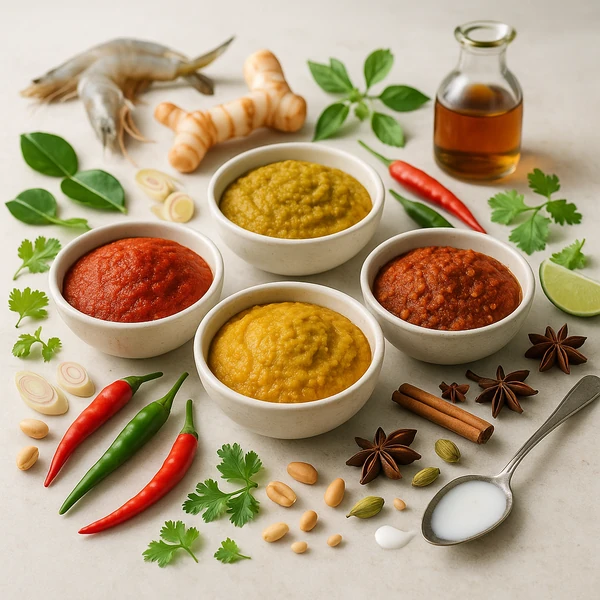
The term “curry paste” in the European context summarizes several different types of seasoning bases. Simply put, four main families can be distinguished, which differ in composition and use:
- Thai curry pastes – wetter, concentrated bases made from chili, lemongrass, galangal, garlic, shallot, and possibly shrimp paste; briefly sautéed in fat and diluted with coconut milk or broth.
- Indian and British-Indian masalas – dry or wet spice blends (masala), regional variants differ and it is often more reasonable to talk about specific styles than one universal paste.
- Japanese curry bases (roux) – usually do not take the form of a wet paste but a thick roux; the flavor is rounded and milder.
- Malaysian-Indonesian and other regional styles – local versions of pastes and blends with their own fermented or nutty tones.
Overview of the five basic Thai pastes — what to expect from them
Green (green)
Green curry paste is based on green chilies and fresh aromatic herbs; it feels lively and herbal. In home practice, it is often spicier than people expect from European restaurants. It pairs well with coconut milk, chicken, tofu, eggplant, beans, or fish. If you are hesitant about the spiciness, always start with a smaller amount and adjust seasoning.
Red (red)
Red paste is chili-oriented but traditionally balanced with other aromatics (lemongrass, galangal, garlic, shallot, coriander root). It is very versatile — suitable for sauces with coconut milk as well as quick stir-fries. The level of spiciness depends greatly on the specific brand.
Yellow (yellow)
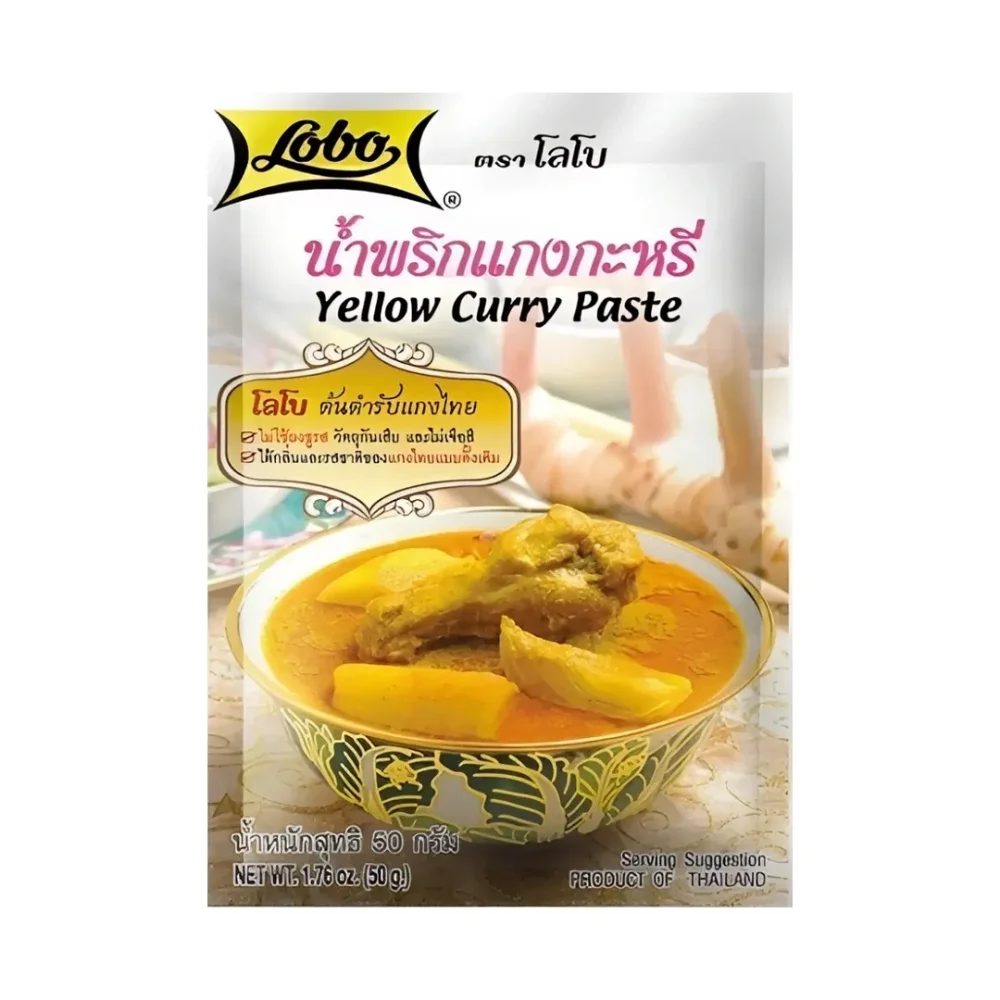
Yellow curry paste has a milder, rounder profile in practice and is often more accessible for beginners. In home use, it is usually briefly fried in fat and diluted with coconut milk or broth; an illustrative example of a product is Lobo Yellow Curry Paste 50 g, which serves as such a fragrant base.
Panang
Panang often appears as a more concentrated and less herbal variant in practice; culinary practice perceives it as warmer and sometimes with milder nutty tones. It is used when you want a thicker, velvety sauce.
Massaman
Massaman tends to be warmer and spicier in flavor; in home cooking, people choose it when they want a less herbal and more “warm” spiced profile. For both styles (panang and massaman), it is common for peanut or warm tones to appear in flavor, thus leaning more toward depth than a herbaceous-fresh line.
How to choose paste: what to read on the label and signs of quality
When choosing a paste, follow function, not just color. Specific signs to focus on when reading the label or smelling for the first time:
- Positive signs: clearly listed aromatic ingredients (e.g., lemongrass, galangal, garlic), appropriate salt content, a clear list without unnecessary additives, consistency corresponding to a paste (not too “thin” or watery).
- Warning signs: very general list of ingredients, high proportion of sugar, starches, and thickeners in the paste itself, flat or chemical aroma upon opening.
- Allergens and restrictions: shrimp/fish ingredients are common in Thai pastes — check labeling for vegetarians/vegans; some pastes may contain gluten or allergen traces from production.
🍳 Practical use at home — technique, approximate dosing, and combinations
Basic kitchen procedure for sauce with coconut milk (approximate):
- Heat neutral oil or a bit of butter in a wok or pan.
- Add the paste and briefly (about 30–60 seconds) sauté it to release aromas. Approximate starting doses: for 2 servings start with ~1 teaspoon (5 ml) of paste; for 4 servings 2 teaspoons — be especially cautious with green pastes as they tend to be spicier. (These values are approximate starting points; adjustment according to saltiness and spiciness of the specific paste is common.)
- Add protein and vegetables, stir briefly, then dilute with H&S 17–19% coconut milk or broth; for 2–3 servings, 200–400 ml of coconut milk according to desired consistency is common.
- Season stepwise: first taste — the paste can contain a significant amount of salt. Adjust saltiness and umami with a few drops of fish sauce, acidity with tamarind (e.g. Lobo tamarind sauce) or lime.
- To increase spiciness, use a purer chili paste like Sambal Oelek instead of adding salt; for vegan versions, replace fish ingredients with miso, fermented mushrooms, or umami concentrate (see section Substitutions).
For quick stir-fries or glazing, use a smaller amount of paste (a tablespoon for 3–4 portions is often too much). Remember many pastes already contain salt and sugar — taste and adjust gradually.
Storage and shelf life
- After opening, most curry pastes last longer when stored in the refrigerator and if scooped out with a clean spoon; pastes are sensitive to drying edges, oxidation, and aroma loss.
- Fermented pastes and sauces are generally more stable, but the rule still applies: protect from light, heat, and air.
- The most common mistake is leaving the opened paste on the counter for a long time; regularly check the smell and appearance (drying edges, mold) and discard the contents if in doubt.
Common mistakes and how to fix them
- Buying based only on color: color does not tell everything about spiciness or flavor profile — read ingredients and smell.
- Expecting green to always be mild: it is often spicier and more herbal than home cooks imagine; start with less and taste.
- Not reading allergens: many pastes contain shrimp or fish components — this is also a reason to read labels.
- Poor storage: scooping with a wet or dirty spoon and leaving it in warmth quickly deteriorates quality.
- Over-relying on soy sauce as a substitute for fish sauce: soy sauce replaces some saltiness but misses all fermented umami nuances; it’s better to combine soy sauce with mushroom or fermented base.
Takeaways from the article
- Curry paste is not one product — the most common Thai pastes (red, green, yellow, panang, massaman) differ in ingredient base and functional role in the dish.
- When choosing, look for specifically listed aromatic ingredients; avoid pastes with a dominant amount of sugar, starches, or chemical aroma.
- In the kitchen always proceed stepwise: briefly sauté the paste, gradually dilute (with coconut milk or broth), season with fish sauce/tamarind to taste.
- Store opened pastes in the refrigerator, use clean utensils, and protect them from light and heat — this will preserve aroma and prolong shelf life.

Read next
If you want to explore this topic further, continue with these related blog guides and articles:
