


 Česky (CZK)
 Slovensky (EUR)
 Deutsch (EUR)
 Austria
 Belgium
 Bulgaria
 Croatia
 Denmark
 Estonia
 Finland
 France
 Germany
 Greece
 Hungary
 Italy
Italy Latvia
 Lithuania
 Luxembourg
 Netherlands
 Poland
 Portugal
 Romania
 Slovenia
 Spain
Spain Sweden










How not to cloud or oversalt stock: a practical guide to clarity and taste control
In Asian cuisine, stock is often not "just the liquid for soup," but the flavor foundation that carries umami, defines the character of the dish, and connects all other components. That's why it's worth controlling two things that most commonly spoil homemade stocks: cloudiness (when you want a clear style) and oversalting (when you forget the stock is only the beginning and will be built on and sometimes reduced further).
Why clarity of stock is examined in such detail in Asian cooking
Those who understand stocks understand a large part of Asian cooking: many dishes don't rely on complicated procedures but on how "finished" the liquid base appears. In some styles the goal is an almost crystalline stock (typically attention is mentioned to clarity of stock in phở), elsewhere the aim is robust aromatics (for example in laksa) or fermented depth (in Korean jjigae).
It's also important that visual clarity is not the same as flavor clarity. A stock can be crystalline yet bland. Conversely, it can be slightly cloudy but flavorfully correct. The key is that it tastes intentional, not chaotic.
Before you start: stock is not automatically soup (and this explains many cases of oversalting)
Stock
A stock is a flavor base. Sometimes it's drunk on its own, but more often it serves as a platform for another dish (a noodle bowl, hotpot, braise, sauce…).
Soup
A soup is a finished dish: stock + other components, composition, textures and final seasoning. Therefore in Asian soups the stock is usually not just "something things float in" – it is the core that carries umami and defines the character.
Basic sauce
A basic sauce is a liquid or semi-liquid system with a different viscosity, concentration and purpose than stock. It can be derived from stock, but it is not identical to it. And importantly: sauces (soy, fish, oyster, hoisin…) often bring pronounced saltiness and umami – which is why it's so easy to oversalt a stock if you don't account for them in advance.
What kind of stock are you actually making: light quick vs long-simmered (and what that does to "scum" and salt)
In Asian cuisine there are at least two major worlds of stock side by side:
- Light quick stock – its concerns are often delicacy, clarity and precision. It will typically be more sensitive to vigorous boiling, unnecessary stirring and poor timing of aromatics.
- Long-simmered bone stock – tolerates more intense extraction and its "fullness" can rely on a different logic than a quick stock.
Cloudiness is therefore not always automatically a mistake. The mistake is mainly a mismatch between goal and technique: you want a clear style (for example for a delicate noodle base), but you cook as if making a rich, long-simmered stock.
And similarly with salt: once you understand stock as a foundation, it makes sense to salt cautiously – because it can further reduceor be combined with other salty components (soy and fish sauces, tsuyu, sauce bases, pastes).
5 most common causes of cloudiness (and how to fix them in practice)
If you want a clean, clear style, the problem most often breaks down into a few concrete points.
1) Too vigorous boiling
Aggressive boiling is one of the most reliable ways to cloud your stock and "break" flavor clarity. The practical advice is simple: keep the stock at only a gentle simmer – so the liquid moves but doesn't boil wildly.
2) Unremoved impurities at the start
At the start foam and small impurities often release. If you leave them in the pot they will continue to break down and the stock will cloud more easily. In practice this means: watch the surface at the beginning and periodically skim it clean (without unnecessarily disturbing the whole pot).
3) Poorly timed aromatics
Not everything should be in the pot for the same amount of time. The basics mention that different components (bones, meat, spices, mushrooms, seaweed, herbs) give their best result at different times and with different handling. If you add delicate aromatics too early or cook them too long, they often lose precision and the stock can taste tired.
4) Overcooking delicate ingredients
This is a common source of "dulling": the stock may be technically clear but flavor-wise blurred. Delicate components often should leave a signature, not be cooked away. Practically: when working with something fragile (typically herbs/seaweed), consider whether their role should be short and precise.
5) Unnecessary stirring and breaking of ingredients in the pot
The more you manipulate the pot's contents, the more tiny particles you release into the liquid. If you're aiming for a clear style, it's better to let the stock "do its work" and disturb the pot only when necessary.
How not to oversalt stock: controlling saltiness in a kitchen where flavor is often built from sauces
Oversalting stock most commonly happens when two things are forgotten: (1) the stock is a foundation and (2) Asian cooking often introduces additional concentrated salty components – and they don't add up "linearly," but quickly tip the whole dish.
Safest strategy: salt after straining and after deciding what the stock will be used for
- If the stock is to be a platform for a noodle bowl, salt from other components will typically still enter it.
- If it is to become a braising base, you often account for longer time and sometimes reduction – which will intensify saltiness.
- If you will build a quick sauce or finishing seasoning on it, you will often add a soy/fish/oyster component that is itself concentrated.
Keep in mind that sauces are not interchangeable (and each salts differently)
One common mistake is the assumption that "dark and salty" means the same thing. For sauces this isn't true: color and viscosity can indicate entirely different things (different fermentation, different sugar content, different umami profile). So it's useful to distinguish what a sauce will add to your stock:
- salty umami (for example soy sauces, fish sauces),
- color and rounding (some dark styles of soy sauces),
- finishing effect (some citrus-soy styles like ponzu are understood more as a finishing seasoning than as a cooking base).
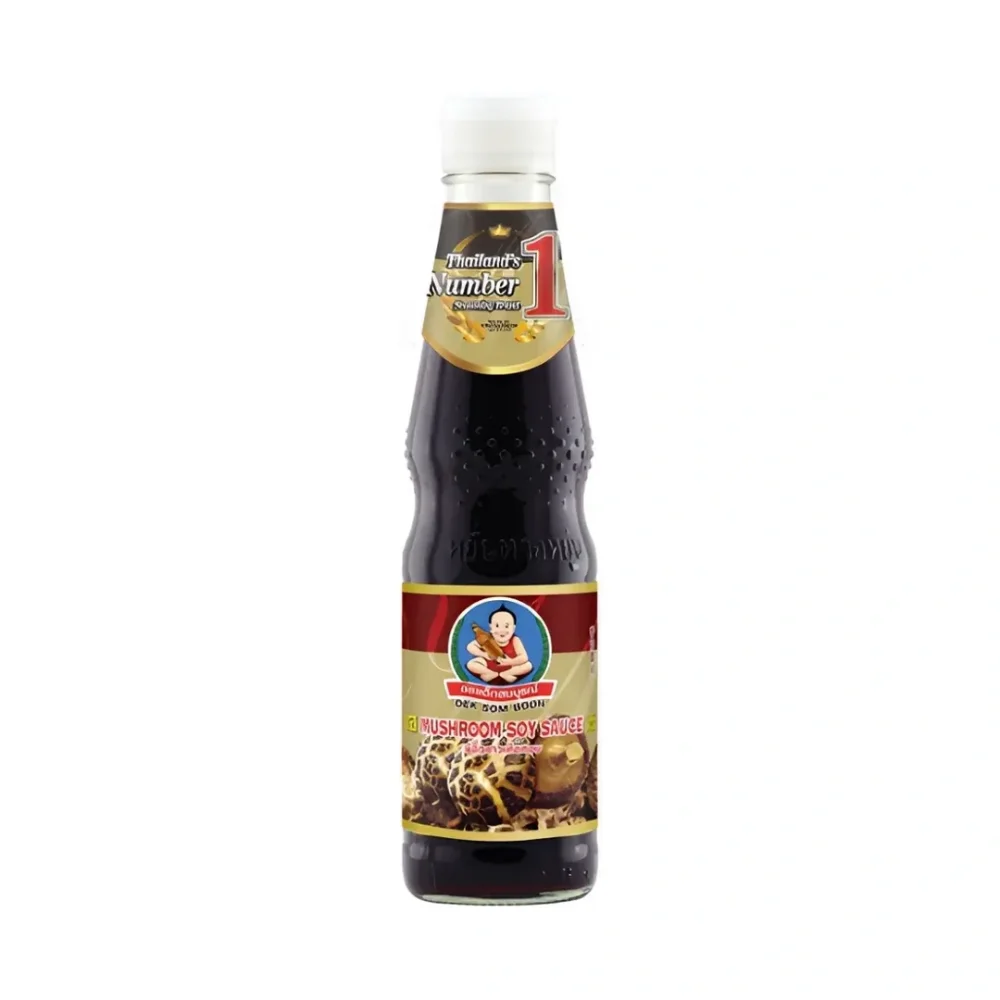
If you want to gently "lift" umami without immediately overshooting saltiness, you can work with a small amount of flavored soy styles – for example a few drops of Dek Som Boon mushroom soy sauce. The idea is small doses: it complements umami, but saltiness still needs to be monitored carefully.
The same applies doubly to fish sauce: the basics emphasize that it is very concentrated and in small amounts extraordinarily potent. If you want to add saltiness in this direction, it's sensible to proceed truly drop by drop and taste continuously. For orientation and selection of styles, a guide to fish saucescan help.
When you need a quick "stock" base, still keep salt under control
For quick cooking (soups, sauces, noodles) powdered bouillons can sometimes be useful – but the important logic remains: add gradually and don't assume the base should be finished on its own.
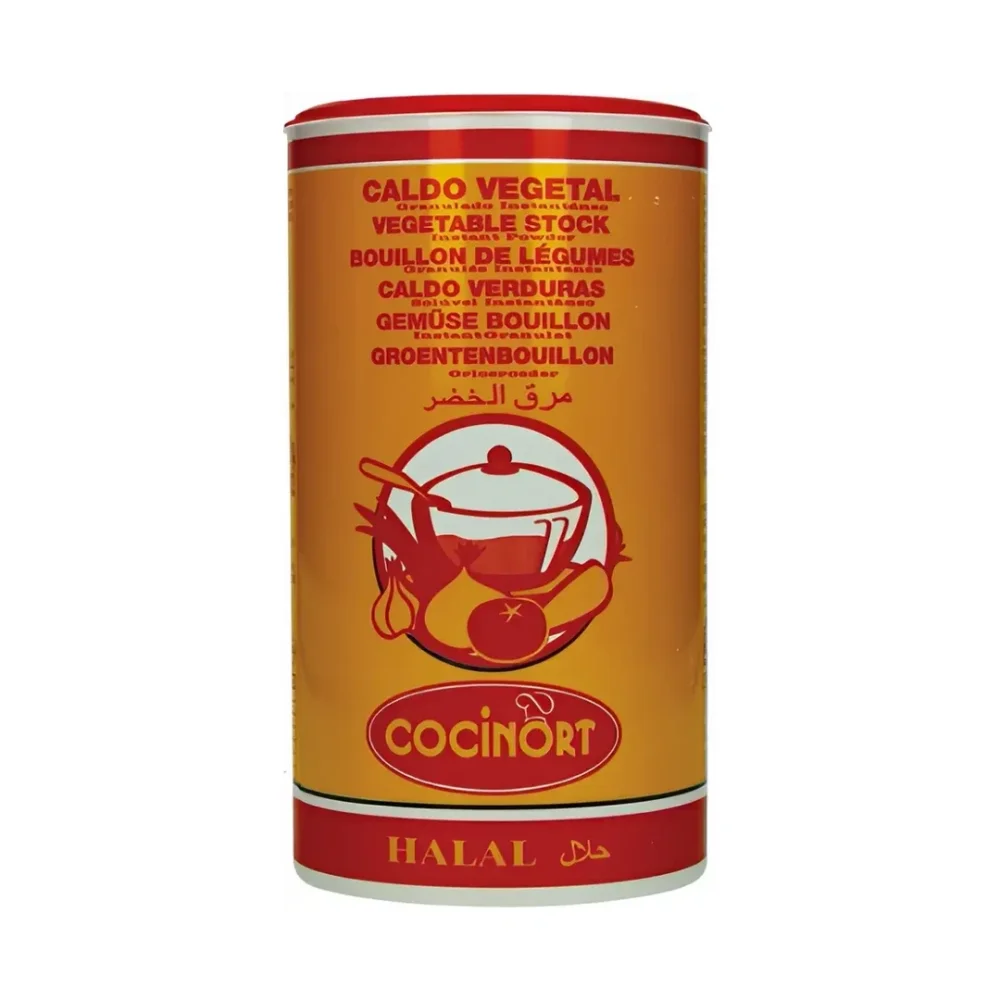
- For a more neutral start you can use Cocinort vegetable powdered bouillon – dose carefully and treat it as a base, not the final flavor.
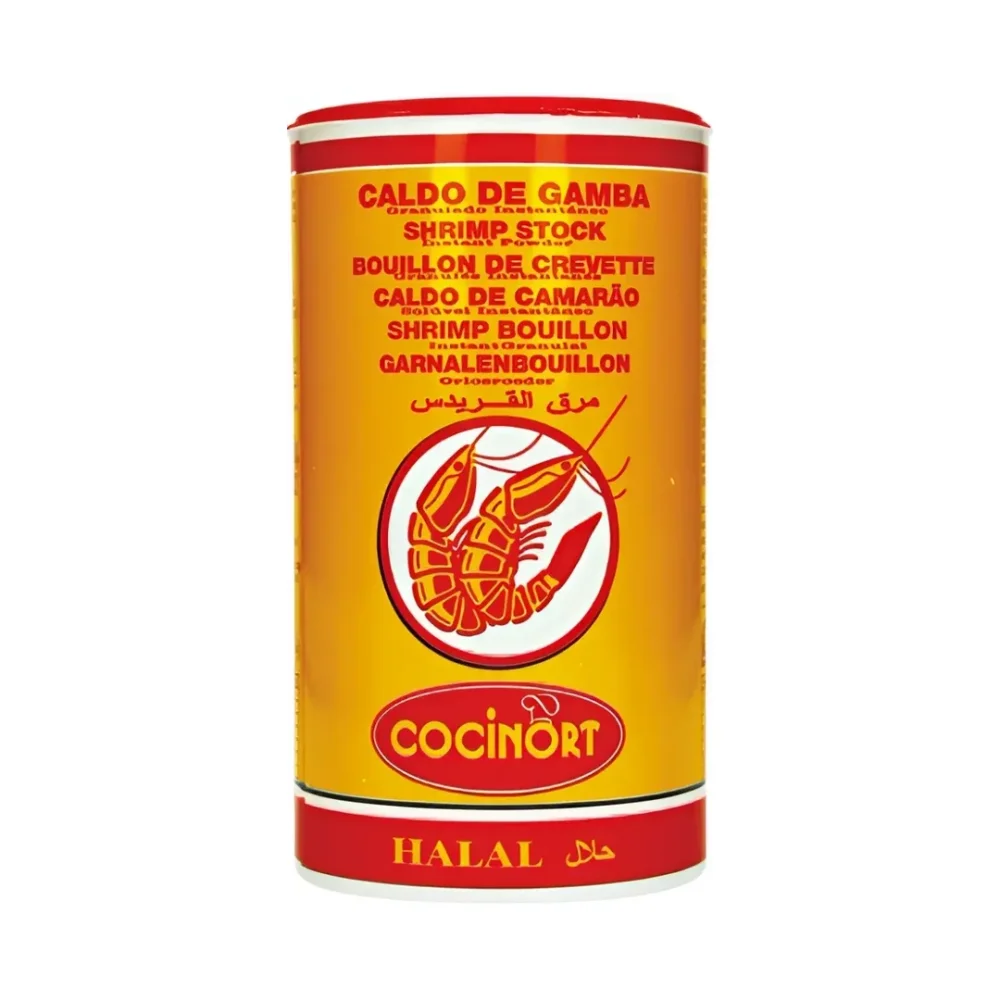
- If you aim for a maritime depth in noodles or soup, there is also a Cocinort shrimp powdered bouillon, which quickly creates a pronounced base – all the more reason to dose in smaller steps and finish seasoning at the end.
Practical procedure at home: how to start and what to watch step by step
Here is a simple onboarding that works across different stock styles without being "one universal recipe."
- First name the role of the stock. Should it be a delicate base? A rich carrier? An aromatic signature? (According to the materials this is one of the things that most distinguishes a "good stock" from a liquid that is just "pretty good").
- Start by controlling the temperature. Once the liquid begins to boil too vigorously, you increase the risk of cloudiness and flavor fatigue. Prefer a calm simmer.
- Watch the surface right from the start. It's worth removing impurities and foam early because later they break down and the stock "grays."
- Don't stir without reason. If you want a clear style, unnecessary stirring and breaking ingredients is a direct path to cloudiness.
- Add aromatics thoughtfully. The sources explicitly emphasize that different components need different times. A common mistake with delicate ingredients is cooking them for too long.
- After straining, create a "clean point." Only now does it make the most sense to decide whether the stock will go into soup, a noodle bowl, braising or a sauce – and to salt it accordingly.
- Add salt so you keep room for sauces. If you know you'll go the soy route, work with a smaller base amount of salt and finish at the end using the chosen sauce (see for guidance soy sauces).
- For noodle bowls remember that the "base" can sit between the stock and the sauce. A typical example is Japanese tsuyu: Yamamori Tsuyu works as a quick "stock" base and as a dip. This is where mistakes in saltiness occur most often – because tsuyu is already a concentrated seasoning, not a pure stock.
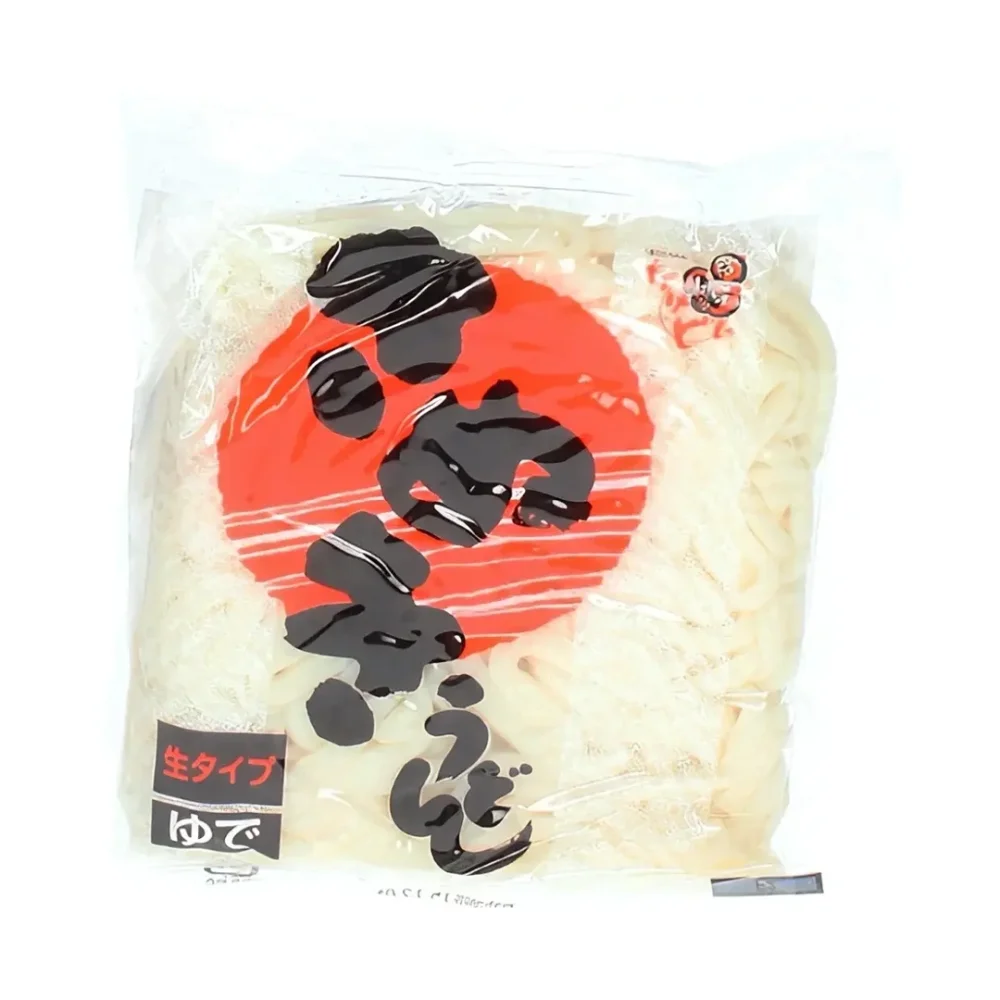
If you want to try the stock right away in a simple bowl, a practical choice is noodles that only need a short heat and don't burden you with extra technique – for example Miyatake pre-cooked udon noodles. Even more, this will highlight whether the stock is clear and properly salted.
Common mistakes and misunderstandings (⚠️ so the result is clear and not "dull")
- "Cloudiness = always bad" – not true. The real mistake is when you want a clear style (for example a delicate stock soup) but cook in a way that doesn't technically lead to it.
- "If the stock is clear, it's good" – not necessarily. The materials stress the difference between visual and flavor clarity: a translucent liquid can be boring, while a slightly cloudy one can be flavorfully precise.
- Using aggressive boiling as a universal solution – many stocks don't suffer from being short but from being cooked too aggressively. The result is often cloudiness and a "tired" taste.
- Salting at the start regardless of next steps – the most common path to oversalting. Once the stock will be reduced further or combined with other salty components (soy/fish/oyster sauces, sauce bases), the saltiness will quickly swing over.
- Swapping sauces based only on color and saltiness – the sources explicitly state that sauces are not automatically interchangeable. Dark color and viscosity can mean different things, so it's worth thinking: what does it add (salty umami / color / sweetness / finishing effect)?
Key takeaways from the article
- First define the role of the stock (delicate base vs rich carrier vs aromatic signature). Without that it's easy to cook a "pretty good" liquid that is then hard to use.
- For a clear style temperature and the beginning are crucial: avoid vigorous boiling and remove impurities in time.
- Timing of ingredients determines flavor: delicate ingredients are often ruined by being in the pot unnecessarily long.
- Deal with the salt only with regard to the next steps: broths are often reduced or combined with other salty components.
- Sauces are not interchangeable — and in a kitchen where the sauce often forms the flavor backbone of the dish, this is the quickest way to avoid over-salting.

Read next
If you want to explore this topic further, continue with these related blog guides and articles:
