


 Česky (CZK)
 Slovensky (EUR)
 Deutsch (EUR)
 Austria
 Belgium
 Bulgaria
 Croatia
 Denmark
 Estonia
 Finland
 France
 Germany
 Greece
 Hungary
 Italy
Italy Latvia
 Lithuania
 Luxembourg
 Netherlands
 Poland
 Portugal
 Romania
 Slovenia
 Spain
Spain Sweden










Typical Chinese dishes: overview of groups and what to taste
Chinese cuisine represents many different worlds of flavors. In this article, you will find an overview of the main groups of typical dishes, representative dishes (what they are and how they taste), practical tips for starting at home, and the most common mistakes to avoid.
🌶️ What is really typical for Chinese cuisine
Chinese cuisine is not a single uniform cuisine, but an extensive family of regional traditions. Nevertheless, there are common principles that help interpret the dishes: a strong emphasis on technique (cutting, temperature, timing), striving for flavor balance, efficient use of ingredients, and a culture of sharing – dishes are often served in the middle of the table and combined during the meal. These principles explain why you find both delicate dim sum and bold stewed or spicy Sichuan dishes side by side.
Key groups of Chinese dishes and representative examples
Dim sum and steamed bites (Cantonese world)
What it is: A set of small courses – steamed or fried dumplings, rolls, and small dishes, traditionally served with tea (a brunch form). Typical examples: har gow (steamed shrimp dumplings), siu mai (open meat/scallop dumplings), char siu bao (steamed buns with roasted pork). How it tastes: generally delicate, fresh, texture plays an important role (soft dough vs. juicy filling). How to recognize: serving in bamboo baskets, many steamed creations, emphasis on individual small portions.
Peking duck and roasted specialties
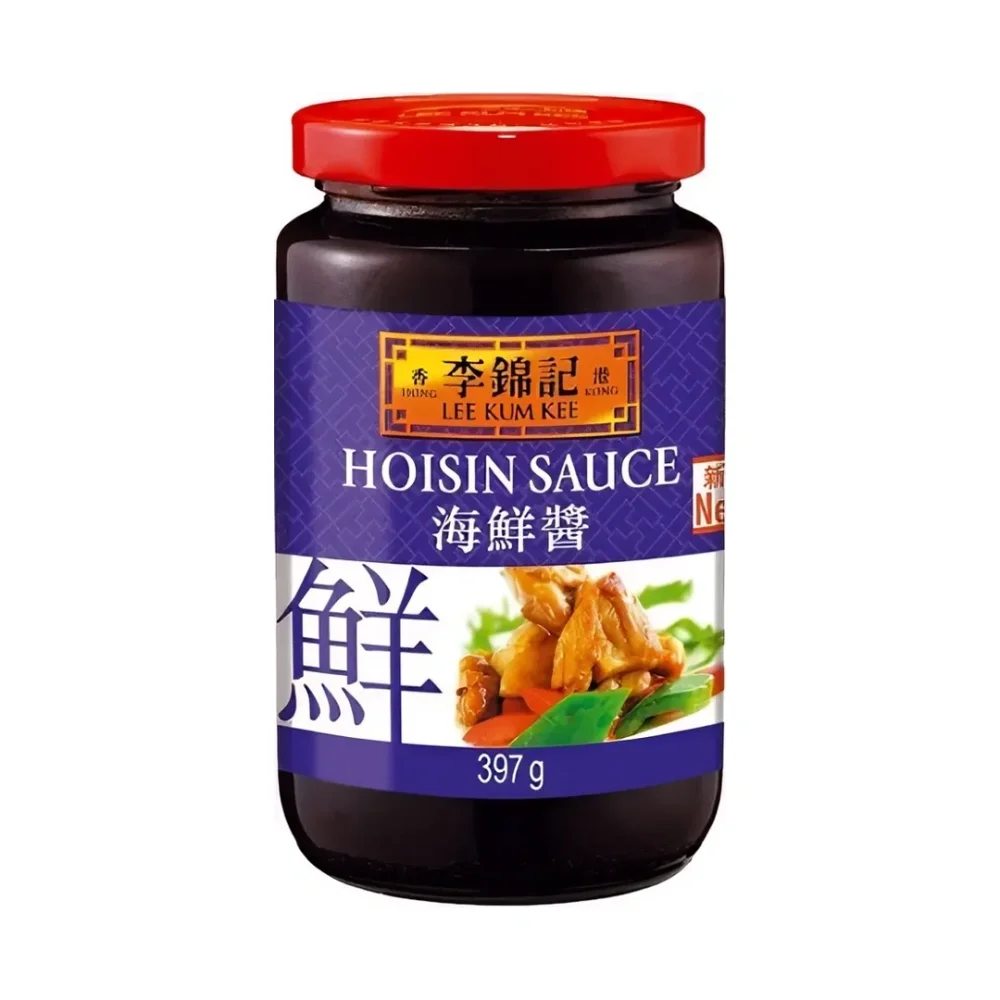
What it is: whole duck with crispy skin and glossy surface, often carved at the table. How it tastes: contrast of crispy skin and juicy meat, complemented by sweet-salty or umami glazes. What is typical: serving rhythm (thin pancakes or leaves, side dishes) and emphasis on roasting technique. Sweet-salty pastes are often used for glazing and seasoning; a good example is hoisin – a sweet-salty sauce suitable for glazes and dips (Hoisin sauce Lee Kum Kee 397 g).
Dumplings: jiaozi, xiao long bao, and wontons
What it is: a group of filled dough pieces differing in shape, dough type, and preparation. Jiaozi – classic Chinese dumplings (boiled, steamed, or fried), common in the north. Xiao long bao – small steamed “storages” with soup filling, delicate and juicy, typical for Jiangnan/Shanghai area. Wonton – small folded pockets, often served in broth. How they taste: jiaozi are heartier, xiao long bao distinctly umami and soupy, wontons lighter and softer in broth. How to recognize: difference in dough thickness (xiao long bao very thin), serving style (in a bowl with broth for wontons).
Hotpot (shared pot) and ma la
What it is: table communal cooking of ingredients in hot broth; varies by region. Ma la hotpot (Sichuan) is characterized by broth with chili and Sichuan pepper that gives a spicy‑numbing effect. How it tastes: from light clear broths to intensely spicy and aromatic ma la; the combination of flavors from broth, dips, and personal preferences is essential. How to recognize: shared cooking at the table, wide selection of sliced meat, vegetables, and tofu for dipping.
Noodle soups and wok stir‑fry – two different worlds
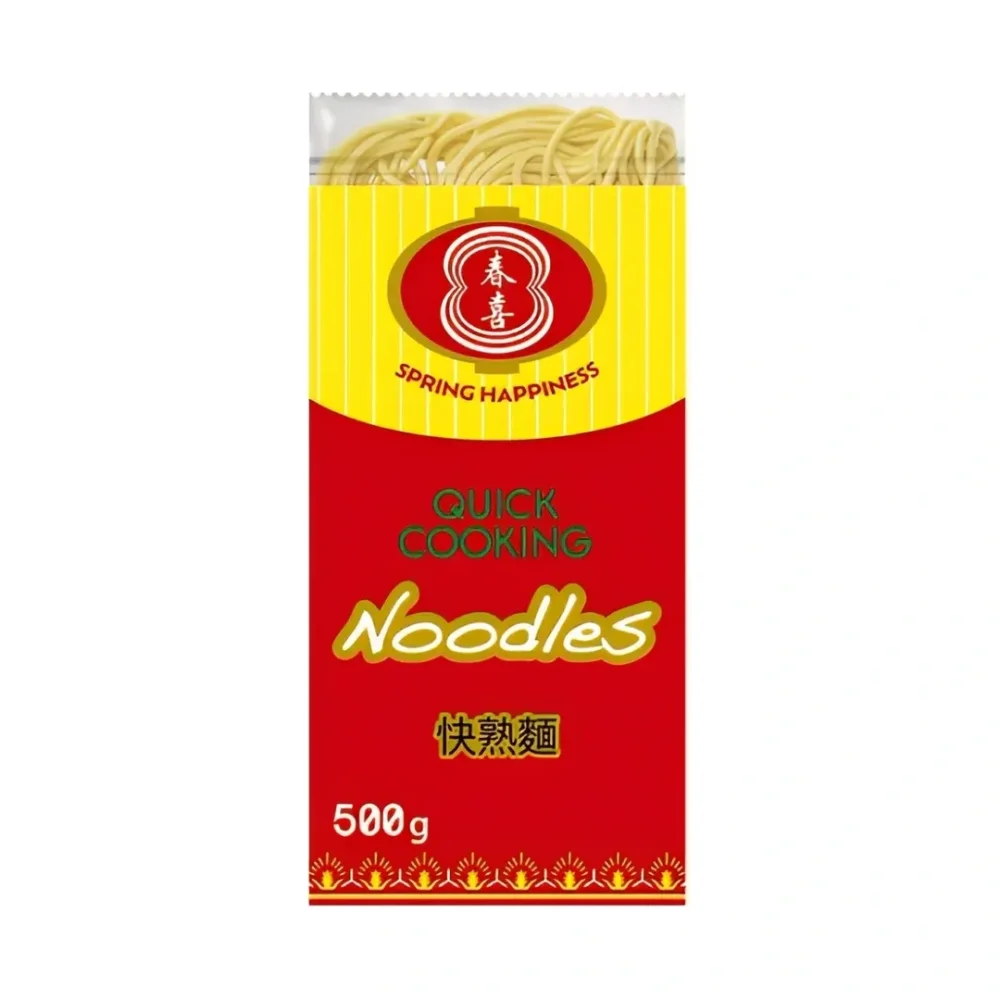
What it is: noodle soup is a dish centered around broth and toppings; stir‑fry relies on quick cooking at high temperature with distinctive texture. How it tastes: soups emphasize quality broth (clear or thick), while stir‑fries rely on freshness of ingredients, wok aroma, and well-balanced sauce. How to recognize: soups served in bowls with visible broth; stir‑fries on a plate without much liquid, often contrasting crispy and soft. A practical choice for noodles both for pan and soup: versatile wheat noodles that soften quickly, available as quick noodles Spring Happiness 500 g.
Braised and red-cooked dishes
What it is: slow braising in soy sauce, sugar, broth, and spices (method known as “red braising”). A typical example is red-cooked pork – pieces of meat glazed with a shiny, rich sauce. How it tastes: full, sweet-sour to umami, often gaining a “depth” of flavor from long cooking. What distinguishes it: cooking time and ability to create a thick, glossy sauce.
Tofu, fermentation, and pickled specialties
What it is: tofu in many forms (fresh, braised, fried) and local fermented products (pickled vegetables, fermented tofu), which add aromatic depth. How it tastes: from mild and creamy to strongly aromatic and salty in fermented varieties. What is typical: the role of fermentation and pickling as a preservation and flavor intensification method.
How to start at home: pantry, first dishes, and simple rules
For the first step into Chinese home cooking, it is worth acquiring a few universal items and learning some basic ratios. Below are recommendations approximately for an average household.
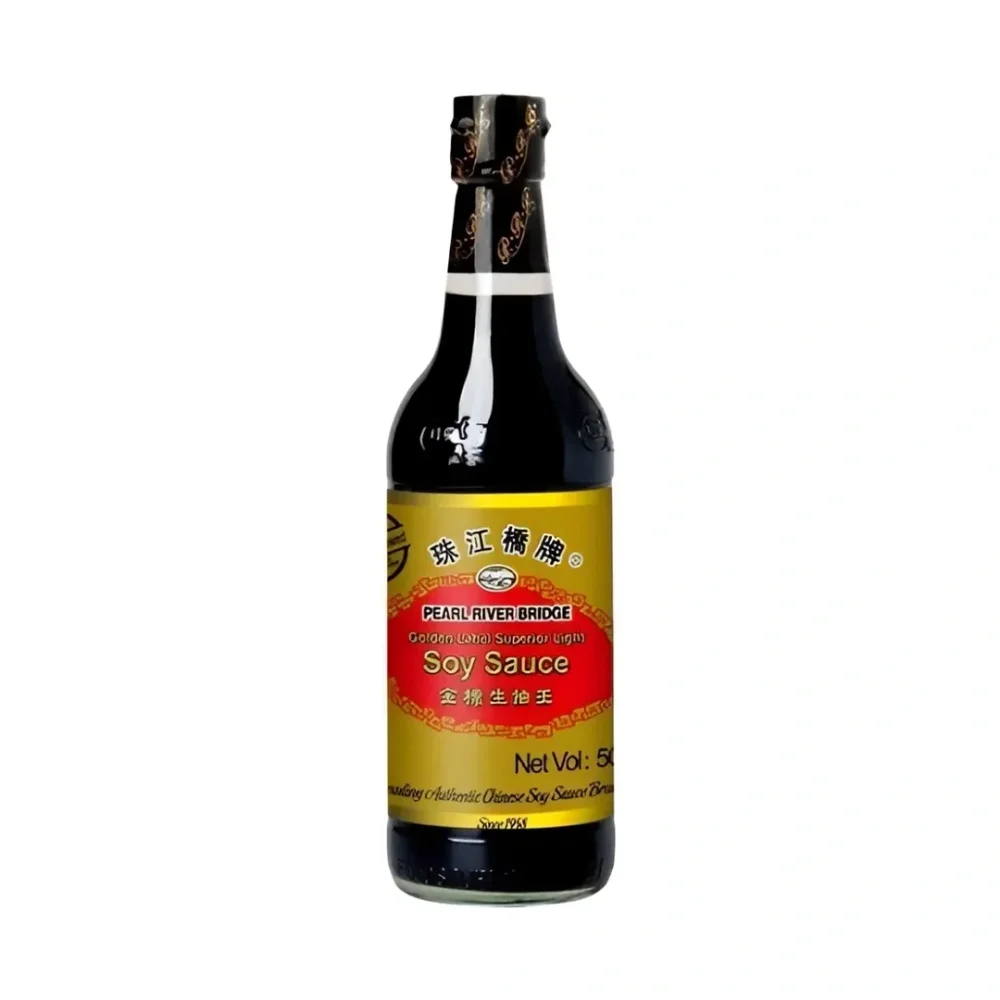
- Basic pantry: light soy sauce for seasoning (e.g. Light soy sauce P.R.B. 500 ml), hoisin for glazes and dips (Hoisin sauce Lee Kum Kee 397 g or broader category of Hoisin sauces), rice vinegar for acidity balancing (P.R.B. rice vinegar 500 ml) and umami boosters (oyster sauces — category Oyster sauces).
- Noodles and rice: basic wheat noodles that soften quickly are versatile (quick noodles Spring Happiness 500 g). Also invest in quality rice (type depending on region: short-grain sticky for the south, long-grain for other uses).
- First simple dishes: start with stir‑fries (quick sautéing at high heat) and one lukewarm braised dish. Stir‑fries for 2 people (approximate): 300–350 g vegetables + 200 g thinly sliced meat or tofu; marinade/sauce: 1 tablespoon light soy sauce, 1/2 tablespoon oyster or 1/2 tablespoon hoisin, 1 teaspoon rice vinegar, 1/2–1 teaspoon sugar; add starch for a perfect glossy binding of sauce with food. Maintain high heat and short cooking time.
- Tips for noodle soups: broth is the core of the dish — for the first preparation use chicken or vegetable broth as a base, add simple toppings (spring onion, roasted meat, mushrooms), and noodles cooked al dente.
Common mistakes and how to fix them
- Too much dark soy sauce: leads to overly dark and salty dishes. Fix: dilute with broth, add a bit of rice vinegar and sugar to balance.
- Wok overloaded with ingredients: high temperature is lost and food tends to steam. Solution: work in batches, stir-fry quickly, and set aside finished pieces.
- Mixing sauces without purpose: hoisin is a sweet-salty glaze/dip, not a universal soy substitute. For seasoning sauce, choose light soy and oyster sauce for depth; use hoisin for glazing and dips.
- Overcooked noodles: for stir-fry it is good to cook noodles a bit shorter, or rinse with cold water to prevent them from becoming gummy in the pan.
- Expecting “Chinese” = only fried pieces in dark sauce: European versions often show only a narrow slice. Look for menu terms like dim sum, hotpot, braised, steamed, or dumpling and soup names that show a wider range of styles.
What to take away from the article
- “Chinese cuisine” means many regions and techniques — view it through dish groups (dim sum, dumplings, hotpot, noodles, braising, etc.).
- For each group it is key to recognize the dish’s focus: broth (noodle soups), dough and filling (dumplings), sauce vs. quick heat treatment (stir-fry), slow reductions (braised).
- For a home start, buy a few pantry items (light soy, hoisin, rice vinegar, basic noodles) and first try stir-fry and one braised or soup variant.
- Avoid the most common mistakes: don’t overdo soy sauce, don’t overload the wok, and respect the difference between techniques (broth vs. wok).

Read next
If you want to explore this topic further, continue with these related blog guides and articles:
