


 Česky (CZK)
 Slovensky (EUR)
 Deutsch (EUR)
 Austria
 Belgium
 Bulgaria
 Croatia
 Denmark
 Estonia
 Finland
 France
 Germany
 Greece
 Hungary
 Italy
Italy Latvia
 Lithuania
 Luxembourg
 Netherlands
 Poland
 Portugal
 Romania
 Slovenia
 Spain
Spain Sweden










MSG, preservatives and allergens: what to really watch for on labels of Asian ingredients
Asian sauces and pastes often have bold packaging, but the small print is what matters. If you want clarity in your purchase, it's worth stopping to worry about one “scary” abbreviation and instead adopting a few simple checks: the order of ingredients, the difference between a base and a seasoned product, and careful reading of allergens. This article shows what to watch for so the ingredient works in your cooking – and so it doesn't surprise you at home with its flavor, saltiness, or composition.
Why there is so much confusion around MSG, preservatives and allergens
The most common problem with Asian ingredients is not “bad” quality. It is a poor choice for a specific use: one expects fermented depth, but buys a sauce mainly based on water and flavor enhancers; one wants a subtle final seasoning, but chooses a concentrate that should only be a small part of the sauce.
Add to that a second type of confusion: mixing up concepts authenticity, flavor strength and quality. Strong flavor can be great, but it can also be “constructed” in a way that suits only a certain style of cooking. And the fastest way to recognize that is from the label.
Label as the fastest filter: ingredient order and highlighted allergens
In Asian sauces, pastes, and flavorings, often what matters most on the packaging is the least obvious: list of ingredients and allergen labeling. In the European context, there is a simple rule that is worth using as the first filter: ingredients are listed in descending order by weight. This means that the first few items usually determine how the product will behave in the dish.
- What is at the top? This is the “backbone” of the product.
- Is the base fermented, or rather diluted? The label often reveals more than the name on the front.
- Are the key ingredients overwhelmed by sugar, starches, or additives? Then it is often a different type of sauce than expected.
- How are allergens labeled? For some households, this is the most important check of all.
Practical shortcut: when a product promises a strong mushroom or fish flavor, but the label begins with water and sweeteners/thickeners, you are buying more of a seasoned sauce than an ingredient based on original (fermented) components.
🍳 Basic vs seasoned product: same category, different role in the kitchen
One of the most common shopping mistakes is to treat all products in one “category” as interchangeable. But with Asian ingredients, it is often more important than the category name to distinguish whether you hold a base, or a fully seasoned product.
When it is a “base” (and what to expect from it)
You typically buy a base product in order to build flavor in the dish: add it bit by bit, combine it with other ingredients and adjust the final profile according to what you are cooking. This is exactly where it makes sense to monitor whether the label matches what you want – for example, so the main character ingredient is not drowned in sugar and thickeners.
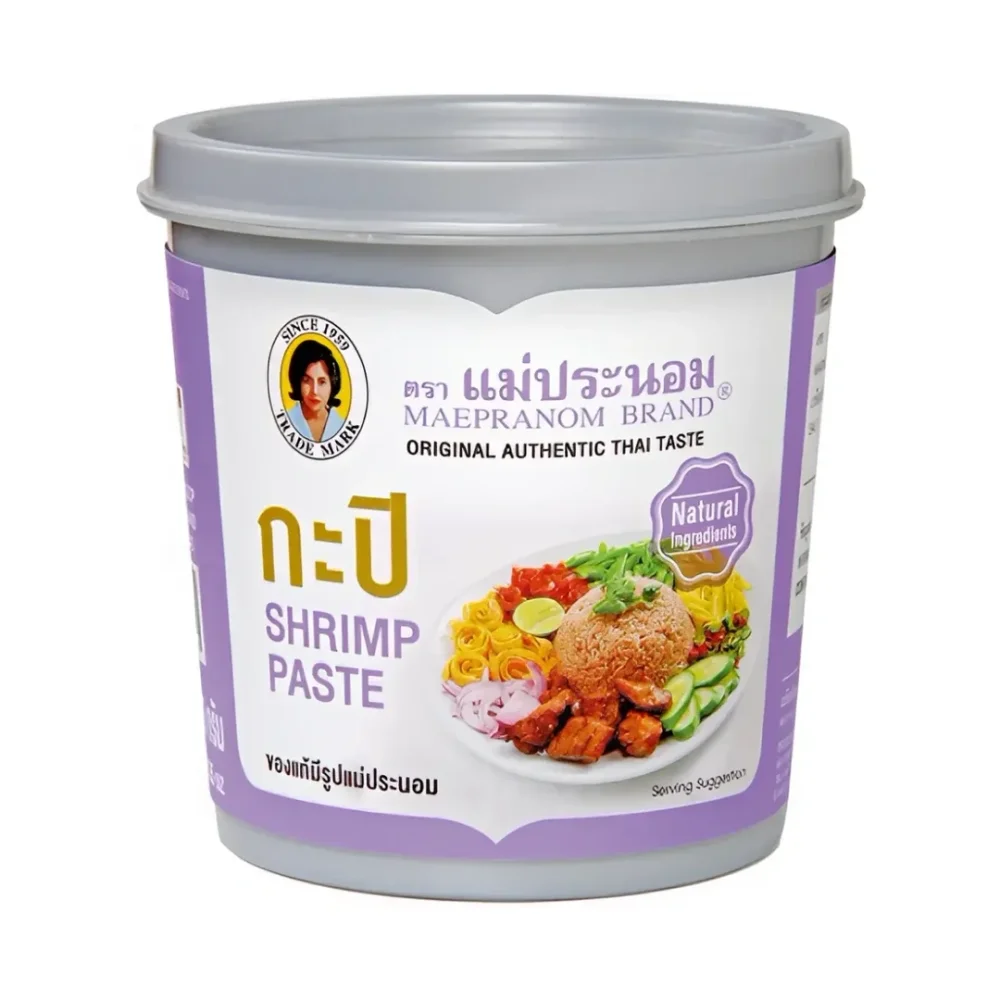
As an example of a “strong base,” you can imagine a concentrated marine seasoning like Maepranom shrimp paste. It is not a universal “everything” sauce – on the contrary: such ingredients are usually used in small quantities and their role in the dish is significant.
When it is a “seasoned” product (and why that’s not bad)
Seasoned products are often designed to be easy to use and serve as a quick solution: add it, stir, done. In practice, this can be an advantage – you just need to know that such a product usually has a different composition structure and role in the dish.
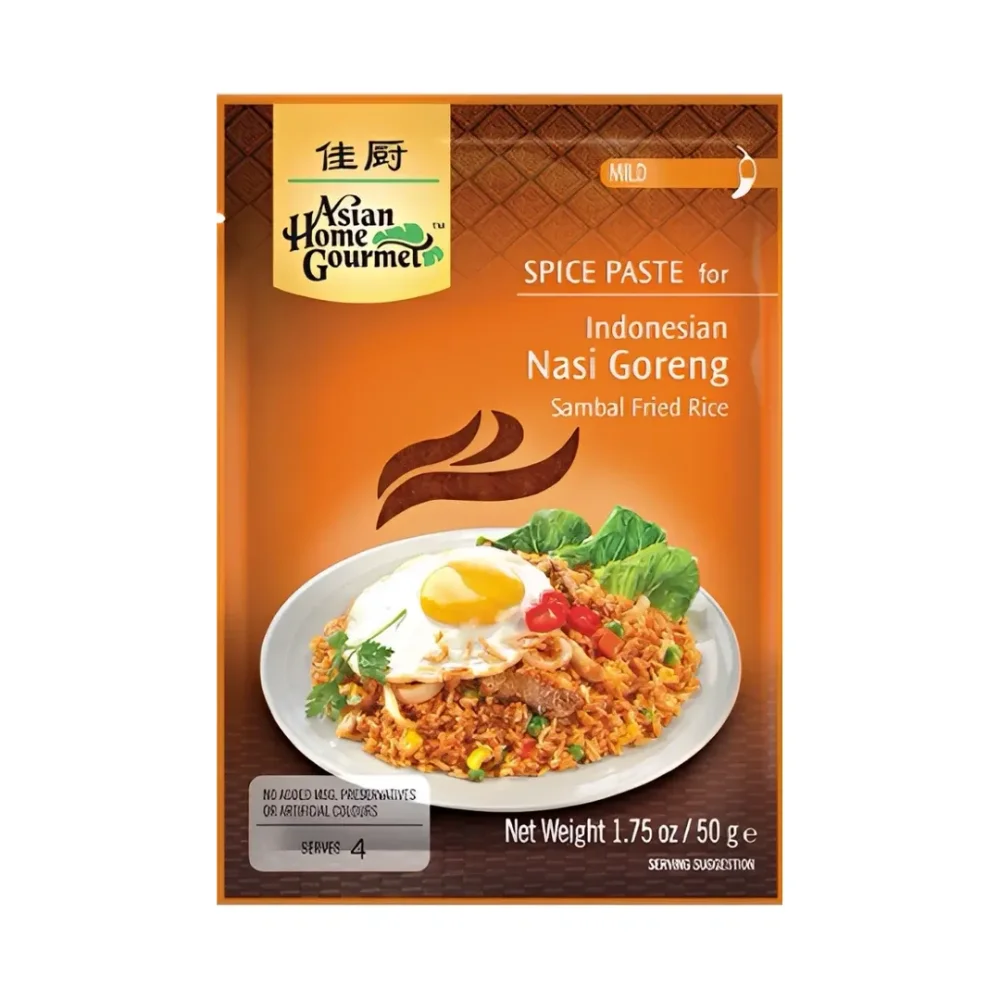
A typical example is a ready-made mix for quick meals, like Nasi Goreng AHG rice paste. For this type of product it is even more important to read the label to understand how much the mix is already “balanced” (salty/sweet/spicy) – so you don’t unnecessarily oversalt or oversweeten the rest of the dish with additional ingredients at home.
What to really watch from the “triad”: MSG, preservatives, allergens
Most people start looking on labels for a specific word (usually MSG) and overlook what’s essential: what kind of product it is and whether it matches your restrictions and cooking style. If you want a practical system, the triad can be ordered by how much it actually helps you decide.
Allergens: the first and non-negotiable check
Allergens are the only part of the “triad” that you often can’t skip with improvisation in practice. Even if you like the ingredient, it may be problematic for someone in your household – and it is especially important with some Asian flavorings.
- If you deal with allergies, treat the label as the only reliable source – not the impression from the name or smell.
- With seafood products (e.g., oyster, fish, shrimp ingredients) you need to be doubly careful – partly because their role in cooking is often “umami base” and they are added to many dishes.
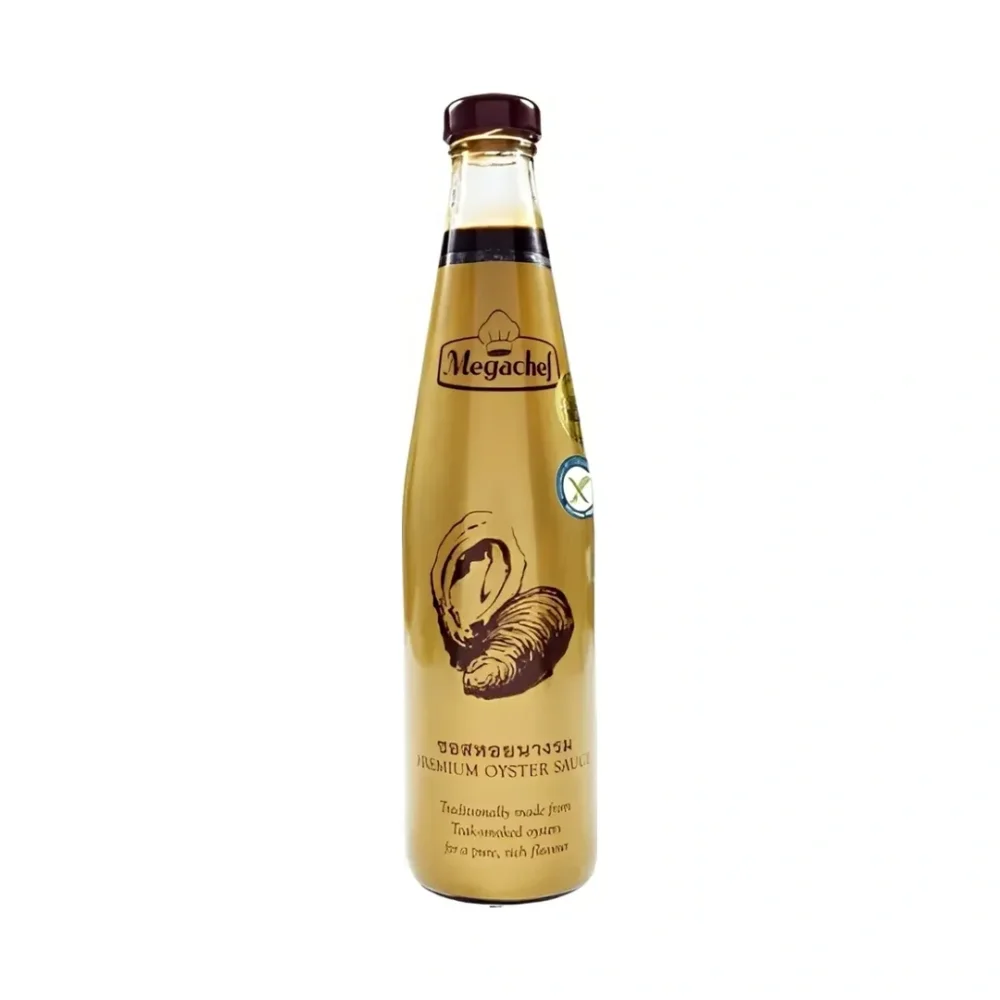
A practical example for households monitoring gluten: there are also sauce variants targeted for gluten-free use, for example Megachef gluten-free oyster sauce. Even here, the deciding factor is the specific label and your needs.
MSG (monosodium glutamate): when to deal with it practically
MSG is a topic that appears often with Asian ingredients – mainly because it is a strong and easily recognizable “symbol” of additives. From a practical shopping perspective, it makes sense to ask two questions:
- Do I avoid MSG due to personal preference? Then the simple rule is: check the label and stick to what it says.
- Do I consider MSG as shorthand for “artificially flavored”? Then don’t focus on just one item. Often the whole product tells more: whether it’s based on a fermented ingredient, or rather on water and flavorings.
In practice, MSG alone won’t tell you if the product is good for your cooking. It helps more to understand the product type (base vs seasoned) and its role: otherwise you will pick a “work” sauce for stir-fry differently than a final seasoning that goes into the dish almost without further corrections.
Preservatives and other additives: treat them as a product type signal
With preservatives and other additives, it’s useful to think less “ideologically” and more practically: they often serve mainly as a signalof how the product is constructed (and what to expect from it). If the label shows the key flavor component is not part of the base but somewhere “back,” you often get a product that functions more like a finished seasoning than an ingredient with a distinct character.
🍳 Practical procedure when shopping and first use at home
Good selection doesn’t mean buying the “best” item in absolute terms. It means choosing the item that does exactly what you need in your dishes: in marinade, a wok pan, a dip, a sauce for rice or noodles.
✅ Five-step checklist for sauces and pastes
- Allergens first (if you deal with them, there is no point addressing anything else first).
- The first 3–5 ingredients: do they match what you expect from the product?
- Base vs seasoned product: do you want a building block or a finished flavor?
- Planned use: will it be the dominant flavor (final seasoning), or just one of the smaller components (cooking in sauce)?
- Simplicity of your home kitchen: if you cook occasionally, it’s worth choosing more universal and fewer bottles – and only add specialized items over time.
How to dose strong flavorings so the dish doesn’t “run away”
With intense ingredients (pastes, marine flavorings, umami sauces), the most common mistake is overdoing it. It can be fixed, but it costs unnecessary extra ingredients.
- Start with a small amount and add gradually. For some products, the difference between “rounded” and “oversalted” really is a small step.
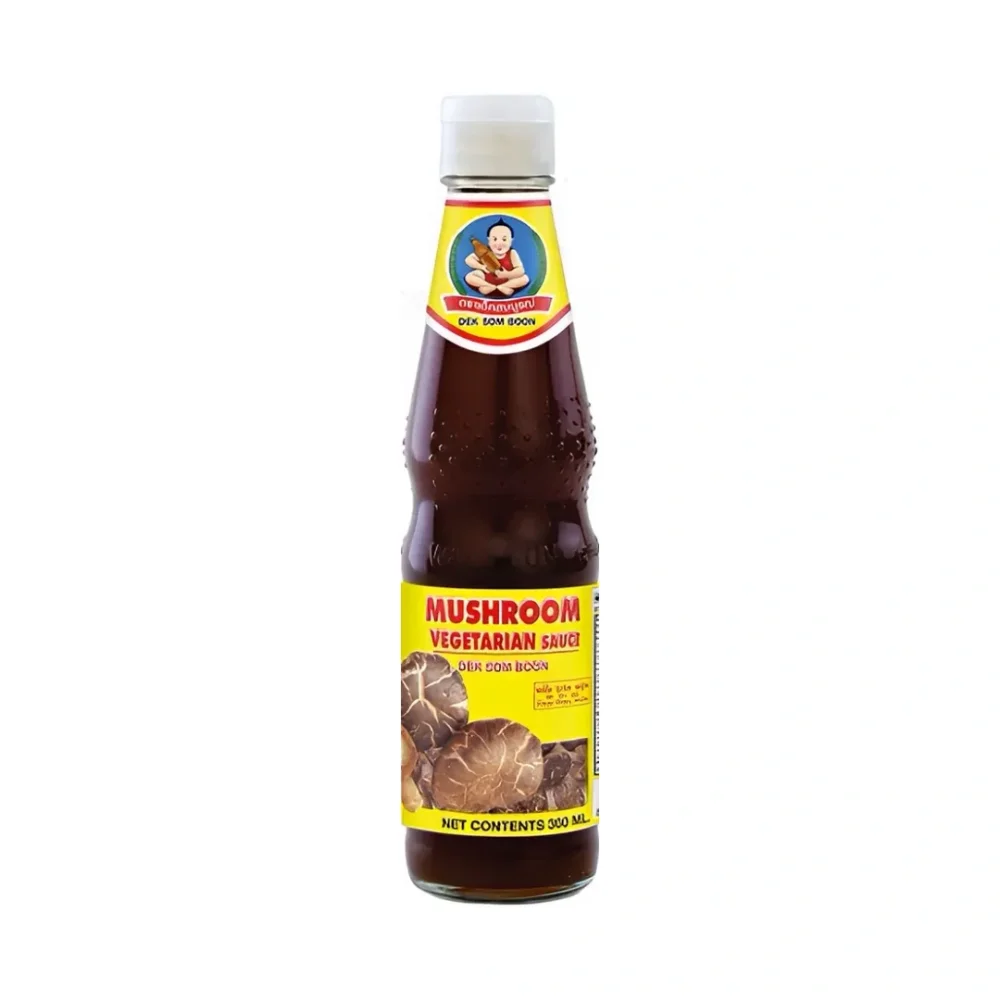
- If you’re afraid of marine/fermented notes, start with a gentler umami base. An example can be Dek Som Boon vegetarian mushroom sauce, which can round out flavor without a “fishy” impression (but the specific use and your preferences always decide).
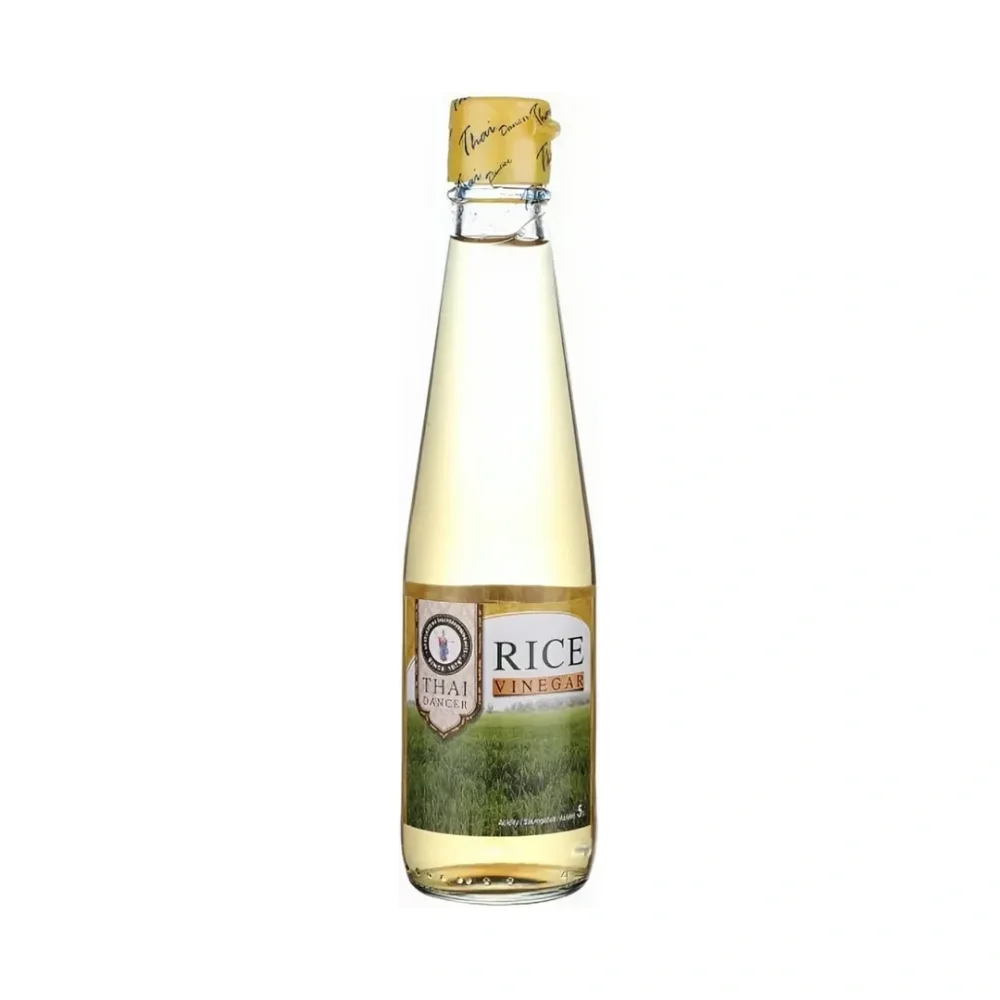
- If you’ve already oversalted the dish, often adding volume (vegetables, rice, noodles) or balancing with acidity helps. Mild acidic components, like Thai Dancer rice vinegar – add in small amounts so the dish doesn’t turn into a “salad.”
How to build stocks by functional groups (not random bottles)
The smartest approach is not to buy everything at once, but to build the home base by functional groups. Usually, it makes sense to have one universal soy sauce, one acidic component, one spicy product, basic rice, one or two types of noodles, and one aromatic finishing oil – and depending on what you cook, either fish sauce or miso. Only after the first several dishes does it make sense to add more types and specialized pastes.
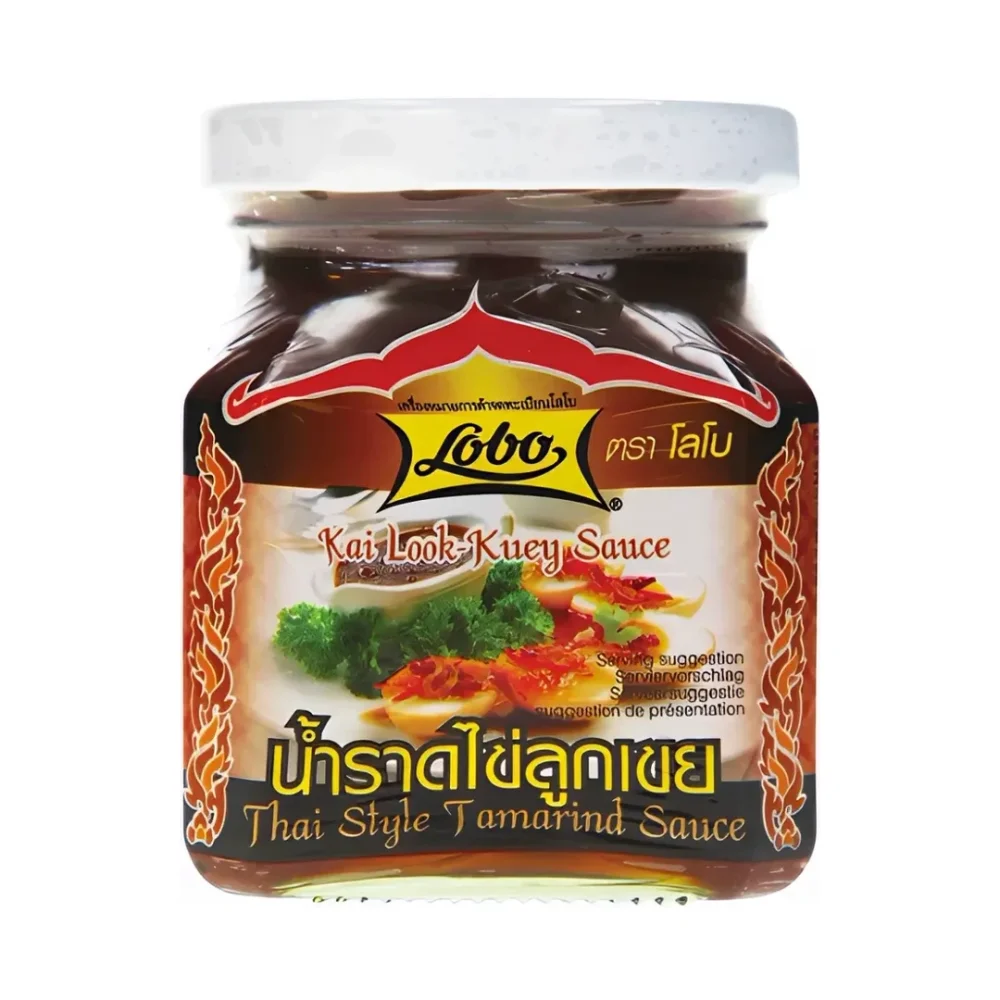
Ready sauces for specific styles (sweet and sour, tamarind, etc.) should be seen as a “quick shortcut” for a certain dish type, not as a universal ingredient. An example of a style-specific seasoned sauce is Lobo tamarind sauce (Thai style) – it fits perfectly in specific combinations but can feel out of place in another cuisine if you treat it like a regular “acidic component.”
Storage after opening: safety, quality, and texture are not the same
Although the article is mainly about labels, storage is closely related: many disappointments don’t come from a bad purchase but from the ingredient losing aroma, flavor clarity, or texture over time. With Asian products, the simple division of “good vs bad” often doesn’t apply – the product may still be safe but already flavor-tired.
- Dry things protect from moisture (rice, dried noodles, starches).
- Aromatic and oily things protect from light, heat and air.
- Opened sauces and pastes keep clean and well-closed; for many, refrigeration after opening often makes sense mainly to preserve quality.
- A simple discipline helps: separate at home “opened liquid sauces” and “opened pastes” and occasionally check what just takes up space.
Most common mistakes and how to recognize them quickly
- Fixation on one word (MSG) and ignoring what is the main component of the product. Fix that by always reading the first ingredients and clarifying the role of the product in the dish.
- The assumption that "stronger = better quality". A strong ingredient can be great, but it may not be universal. Some things work cold, while others only in a wok pan.
- Buying "specialties" without a base. When you lack universal building blocks at home, you will have to improvise and the result will be unstable.
- Poor storage of opened sauces and pastes: the product may not be spoiled, but it will "fade" in flavor and you then get the impression that it was bad already when purchased.
What to take away from the article
- Good selection of Asian ingredients means choosing based on function, not based on packaging impression or one abbreviation.
- The label is the fastest filter: the order of ingredients indicates what characterizes the product, and allergens are the first mandatory check.
- The key difference is base vs flavored product – the same category "name" can mean a completely different role in the kitchen.
- A simple rule applies to intense sauces and pastes: start with a small amount, adjust gradually and have an acidic component on hand for balance.
- Don't treat storage only as "shelf life": often it is mainly about the ingredient not losing quality before you manage to use it up.

Read next
If you want to explore this topic further, continue with these related blog guides and articles:
